



Pull to refresh
Logo
Daily Brief
Following
Why Ranks Sign Up
India's Skyroot reaches orbit with first private rocket

India's Skyroot reaches orbit with first private rocket

New Capabilities

Vikram-1 makes India the third country with a private company that can independently launch to orbit

Today: Vikram-1 reaches orbit

Overview

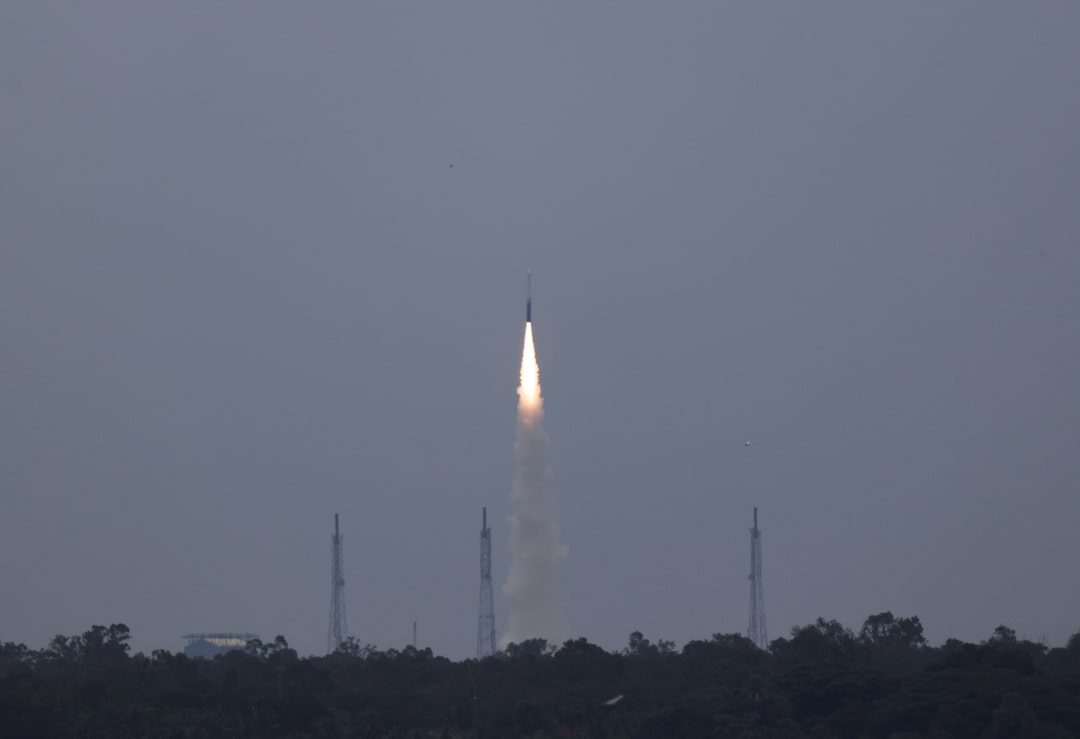
Until this week, only two countries had a homegrown private company that could put a rocket into orbit on its own: the United States and China. On July 18, India became the third. A Hyderabad startup called Skyroot Aerospace flew its Vikram-1 rocket from Sriharikota and placed customer satellites into a 450-kilometer orbit.

Governments have run India's launches for decades through the Indian Space Research Organisation. A private company reaching orbit means paying customers now have a second door to space in India, and it opens after just one prior test flight from Skyroot.

Why it matters

Small-satellite operators worldwide gain a new low-cost launch provider, and India joins a club of two in private orbital launch.

Questions about this story

No questions yet — be the first to ask.

Key Indicators

3rd
Country with private orbital launch
India follows the United States and China as the third nation with a private firm that can reach orbit independently.
450 km
Target orbit altitude
Vikram-1 released its payloads into a planned 450-kilometer low Earth orbit.
350 kg
Payload capacity to low orbit
The rocket is built to carry up to 350 kilograms of small satellites to low Earth orbit.
$60M
Latest funding round
Skyroot raised $60 million in May 2026 to scale Vikram-1 and build the larger Vikram-2.

Voices

Curated perspectives — historical figures and your fellow readers.

Ever wondered what historical figures would say about today's headlines?

Sign up to generate historical perspectives on this story.

Play

Exploring all sides of a story is often best achieved with Play.

Log in to play. Track your picks, climb the leaderboards. Log in Sign Up
Predict 3 ways this could play out. Contrarian picks score more — points lock when the scenario resolves. Log in to play
Higher or Lower Two numbers from this story. Guess which is bigger. 5 rounds to set a streak. Log in to play
Connections Sixteen names from the news. Find the four hidden groups of four. Log in to play

People Involved

Organizations Involved

Timeline

June 2020 July 2026

4 events Latest: Today
Tap a bar to jump to that date
  1. Vikram-1 reaches orbit

    Today Milestone

    Skyroot launches Vikram-1 from Sriharikota and places customer payloads into a 450-kilometer orbit. A technical issue at T-minus 5 minutes delays liftoff 35 minutes.

  2. Skyroot becomes India's first space unicorn

    Funding

    A $60 million round led by Sherpalo and GIC values the company at $1.1 billion and funds Vikram-1 and Vikram-2.

  3. Vikram-S makes a suborbital hop

    Milestone

    Skyroot flies Vikram-S, the first privately built Indian rocket to reach space. It does not reach orbit.

  4. India opens space to private firms

    Policy

    The government creates IN-SPACe to let private companies build and launch rockets and use ISRO facilities.

Historical Context

2 moments from history that rhyme with this story — and how they unfolded.

September 2008

SpaceX Falcon 1 reaches orbit (2008)

After three failed launches nearly bankrupted the company, SpaceX flew its Falcon 1 rocket to orbit on the fourth try. It was the first privately developed liquid-fueled rocket to reach orbit from the ground.

Then

The success won SpaceX a NASA cargo contract that kept it alive.

Now

SpaceX grew into the dominant commercial launch provider and proved private firms could do what only governments had done.

Why this matters now

Falcon 1 is the template Skyroot is following: a startup reaching orbit with a small rocket, then scaling up. Skyroot did it on its first orbital attempt, not its fourth.

2018 to 2024

China lets private firms build rockets (2018–2024)

After Beijing opened its space sector, startups such as LandSpace and iSpace built orbital rockets. iSpace reached orbit in 2019; LandSpace flew a methane-fueled rocket to orbit in 2023.

Then

China gained several private launch companies competing for small-satellite business.

Now

China became the second country with independent private orbital launch, the milestone India now matches.

Why this matters now

China's path shows what a government-opened space sector can produce. India's Skyroot is now at the point China's iSpace hit in 2019.

Sources

(4)