Anchor

US consumer confidence drops to second-lowest on record as gas prices jump
Money MovesUniversity of Michigan index falls to 47.8; inflation expectations climb to 4.6% and a Fed rate hike is priced near-certain
Yesterday: Consumer sentiment plunges to second-lowest on recordNew here? Follow stories to track developments over time. Create a free account to get updates when stories you care about change.
Overview
Updated 2 hours agoAmerican consumers turned sharply more pessimistic in early September. The University of Michigan's Consumer Sentiment Index fell to 47.8, the second-lowest reading since 1952, down from 51.7 in August.
The trigger is energy. Diesel hit a record $6.06 a gallon, gasoline averages $4.30, and the Iran conflict that began in February keeps supply disrupted. Consumers now expect 4.6% inflation over the next year, up from 4.0%, and traders price a Federal Reserve rate hike at next week's meeting as near-certain.
The damage is entirely forward-looking. The expectations index plunged 11.1% while current conditions slipped just 1.9%, so consumers see an energy shock getting worse, not a collapse today. The five-year outlook held steady, which suggests households don't expect the damage to become permanent.
Why it matters
Elevated inflation expectations push the Fed toward hiking, squeezing households already facing record fuel prices, and risk stalling consumer spending into 2027.
Questions about this story
Free account needed to ask — your question is kept and asked for you right after sign-up. Answers are public.
No questions yet — be the first to ask.
Key Indicators
47.8
Consumer Sentiment Index (September preliminary)
Second-lowest reading since the survey began in 1952, down from 51.7 in August.
4.6%
Year-ahead inflation expectations
Up from 4.0% in August, the highest since June 2026.
3.4%
Annual CPI inflation (August)
Energy costs rose more than 16% year over year in the August report.
$6.06/gal
National average diesel price
Record high, the first time above $6; up 63% from a year ago.
~86%
Market odds of September Fed rate hike
Implied by fed funds futures after the August CPI release.
Related Media
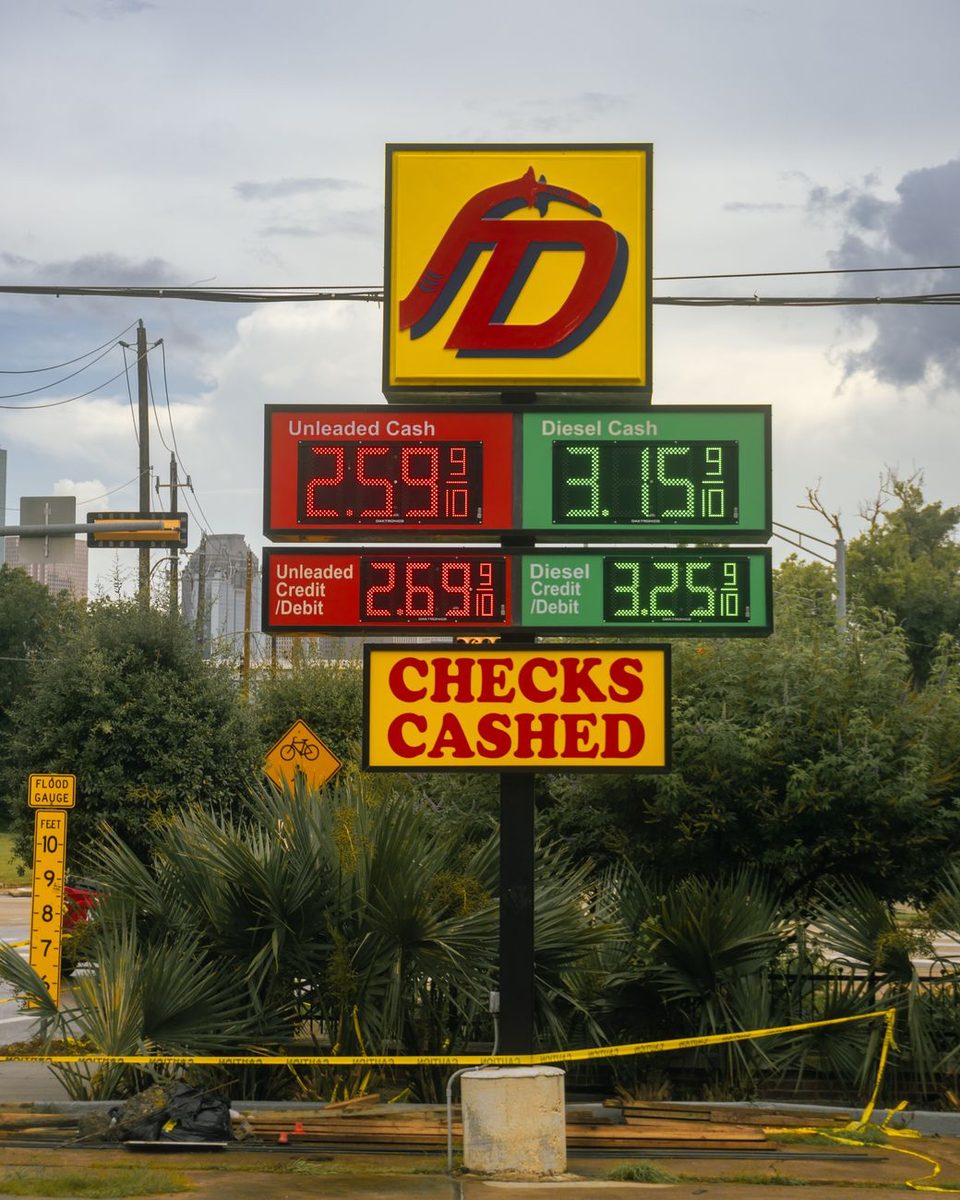
Gas station signboard displaying fuel prices and checks cashed in Houston, TX.
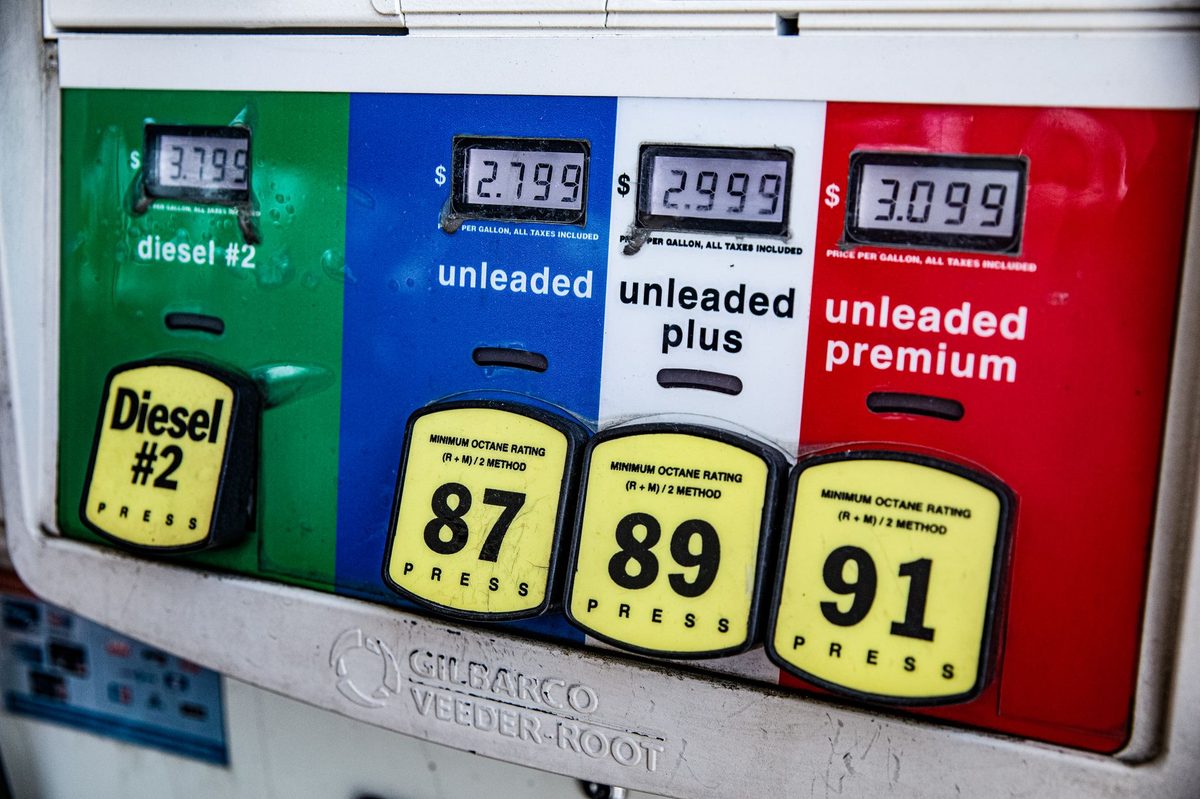
Close-up of a vintage gas pump station showing fuel prices and octane ratings in Los Angeles.
Detailed view of the US Federal Reserve System seal on currency with yellow digital numbers.
49 views
2:21
U.S. consumer confidence drops to seven-month low amid ...
WITN-TV
3.5K views
2:17
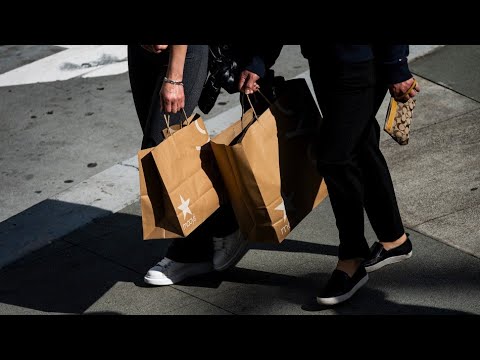
Consumer Sentiment Falls to a Record Low on Inflation Concerns
Bloomberg Television

169 views
6:19
Decoding the Consumer: Sentiment vs. Confidence
ETFDb
Images from Openverse under Creative Commons licenses. Videos from YouTube.
Voices
Curated perspectives — historical figures and your fellow readers.
Play
Exploring all sides of a story is often best achieved with Play.
Most of these play right now — no account needed. Sign up to save scores, keep a streak, and unlock Debate and Predict.
Log in
Sign Up
Higher or Lower
A number from this story, against one from elsewhere in the news — guess which is bigger, then keep the chain going. 5 rounds, 3 strikes; a miss costs a strike and resets your streak.
Example
Anchor
EU tariff revenue
$52B
Big for this kind of number
Mystery
Pentagon AI contract
?
Round 1
Streak: 0
Mystery
?
Keyboard: ↓/L lower · ↑/H higher
0 pts
Best streak: 0 · Rounds: 0
0 points — sign up to put that on the leaderboard.
Now try on this story
Connections
Sixteen names from the news. Find the four hidden groups of four. Four mistakes max.
Loading today's puzzle…
0/4 groups
Mistakes
Sign up to keep a daily streak — a new puzzle lands every day.
Now try on this story
Exit debate?
Your progress in this debate will be lost.
How it works
- 1 Two AI personas square off on this story.
- 2 You predict who'll win each round — correct picks earn XP.
- 3 One crossfire question is yours to fire. Pick it carefully.
Couldn't generate a topic
Select Your Champions
Choose one persona for each side of the debate
DEBATE TOPIC
Choose personas with different perspectives for a more dynamic debate.
SIDE A (PRO)
Select debater for this side:
No debate personas available right now.
SIDE B (CON)
Select debater for this side:
No debate personas available right now.
VS
Get ready to make your prediction...
Round of
Claim
Evidence
Stakes
Crossfire Answer
Closing Statement
Claim
Evidence
Stakes
Crossfire Answer
Closing Statement
Your Crossfire Question
Generating arguments...
Who's Got This Round?
Make your prediction before the referee scores
The referee scores both sides on
Correct predictions earn +20 XP
· Press 1 or 2 to pick
Evidence
40%
Logic
30%
Detail
20%
Style
10%
Round Results
Your Pick
Not this time
(%)
Overall Score
/10
Your Pick
Not this time
(%)
Overall Score
/10
Set the Crossfire
Pick the question both personas must answer in the final round
Crafting crossfire questions...
Choosing a question earns +10 XP crossfire bonus
🏆
Total XP Earned
Cred Change
Predictions
Debate Oracle! You called every round!
Sharp Instincts! You know your debaters!
The Coin Flip Strategist! Perfectly balanced!
The Contrarian! Bold predictions!
Inverse Genius! Try betting the opposite next time!
XP Breakdown
Base completion
+20 XP
Rounds played ( rounds x 5 XP)
+ XP
Correct predictions ( correct x 20 XP)
+ XP
Crossfire bonus
+10 XP
Accuracy
%
Prediction History
Round
You picked:
✓
✗
Now try on this story
Keep debating to level up your credibility and unlock achievements
People Involved
Organizations Involved
University of Michigan Surveys of Consumers
University research survey
Producer of the monthly Consumer Sentiment Index
The University of Michigan's monthly household survey, in continuous operation since 1946, produces the Consumer Sentiment Index.
Board of Governors of the Federal Reserve System
Central Bank
Deciding whether to raise rates at September FOMC meeting
The US central bank, whose Federal Open Market Committee sets the federal funds rate.
U.S. Bureau of Labor Statistics (BLS)
Federal statistical agency
Publishes CPI data showing 3.4% annual inflation in August
The federal agency that publishes the Consumer Price Index (CPI).
American Automobile Association (AAA)
Motorist association and data provider
Source of national fuel price data
Tracks national average fuel prices, a widely cited gauge of consumer costs.
Timeline
February 2026 September 2026
5 events
Latest: Yesterday
Tap a bar to jump to that date
-
Federal Reserve rate decision
Upcoming Central BankFederal Reserve rate decision; markets price roughly 86% chance of a hike.
-
Consumer sentiment plunges to second-lowest on record
Latest Economic DataConsumer sentiment plunges to 47.8, second-lowest since 1952; year-ahead inflation expectations hit 4.6%.
-
August CPI shows 3.4% annual inflation
Economic DataAugust CPI shows 3.4% annual inflation; gasoline up 27.4%, fuel oil up 52% from a year ago.
-
Consumer sentiment hits record low
Economic DataConsumer sentiment hits record low in May preliminary reading.
-
Iran conflict begins
GeopoliticalIran conflict begins; energy supply disruptions push oil and fuel prices up.
Scenarios
1
Federal Reserve hikes at September meeting
Likely
Resolves by Sep 17, 2026
Discussed by: Traders pricing fed funds futures; Reuters and WSJ market coverage
After the August CPI showed 3.4% annual inflation and the Michigan survey returned record-low confidence, markets put the odds of a hike at about 86%. A hike would be the first tightening move aimed at containing rising inflation expectations. If the Fed instead holds rates, it would signal tolerance of inflation above target to avoid a growth slowdown.
2
Stagflation persists through year-end
Possible
Resolves by Dec 15, 2026
Discussed by: RSM economists and others tracking persistent high inflation with slow growth
If energy supply stays disrupted and the Fed's response is seen as too slow or too aggressive, inflation expectations could stay entrenched near 4.6%. That combination of high prices and weak growth keeps consumer sentiment near record lows and pressures spending into 2027.
3
Energy shock eases, confidence recovers
Uncertain
Resolves by Dec 15, 2026
Discussed by: Geopolitical analysts watching the Iran conflict; energy traders
If the Iran conflict de-escalates and oil supply recovers, fuel prices would fall, easing the biggest driver of consumer pessimism. Year-ahead inflation expectations would moderate and confidence could rebound from record lows. The five-year outlook already holding steady suggests consumers see the squeeze as temporary.
Historical Context
2 moments from history that rhyme with this story — and how they unfolded.
1973-1980
1973-1980 Oil Shocks and Stagflation
The 1973 OPEC oil embargo and the 1979 Iranian revolution sent energy prices soaring twice in one decade. Inflation hit double digits, and the Fed initially kept rates too low, letting inflation expectations become entrenched. Paul Volcker's hikes to nearly 20% in 1980-81 finally broke the spiral.
Then
The 1980-82 recession pushed unemployment above 10%.
Now
Inflation fell below 4% by 1983. The episode became the textbook case for why central banks must act before expectations de-anchor.
Why this matters now
The Fed now faces a parallel choice between hiking to contain rising expectations, as Volcker did, and waiting, at the risk of stagflation. The 1970s shows the cost of acting too late.
2021-2023
2022 Inflation Surge (2021-2023)
Post-pandemic demand collided with Russia's invasion of Ukraine, sending oil and food prices soaring. CPI peaked at 9.1% in June 2022, the highest in 40 years. The Federal Reserve responded with its most aggressive tightening since the 1980s, hiking rates from near zero to over 5%.
Then
Rate hikes cooled demand, oil prices fell, and inflation dropped to roughly 3% by mid-2023. Consumer sentiment plunged to then-record lows before recovering.
Now
The episode showed the Fed could bring inflation down without a severe recession, though the process took about two years.
Why this matters now
Today's shock is also energy-driven, with diesel at records and inflation running at 3.4%. The 2022 path suggests expectations can re-anchor if supply recovers and the Fed acts credibly.
Sources
(8)Related Stories
Wall Street confronts stagflation trap as job losses collide with an oil shock
Money Moves
Updated May 30
The Fed's last mile: inflation stuck above target as rate cuts stall
Money Moves
Updated May 20
US gasoline tops $4 on Labor Day for first time as Iran war tightens fuel supply
Built World
Updated 5 days ago
US diesel prices hit record high as conflicts squeeze global supply
Built World
Updated 7 hours ago
Strong August jobs report raises odds of Fed rate hike
Rule Changes
Updated 5 days ago
American consumer spending divergence
Money Moves
Updated May 27