
Pull to refresh
Logo
Daily Brief
Following
Why Ranks Sign Up
Astronomers capture first direct image of a cosmic web filament

Astronomers capture first direct image of a cosmic web filament

New Capabilities

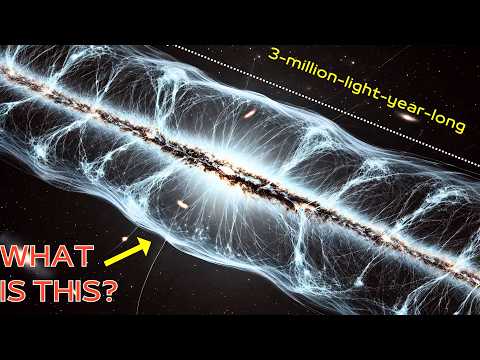
MUSE spectrograph reveals a 3-million-light-year hydrogen bridge between two early galaxies

Yesterday: First high-definition direct filament image published

Overview

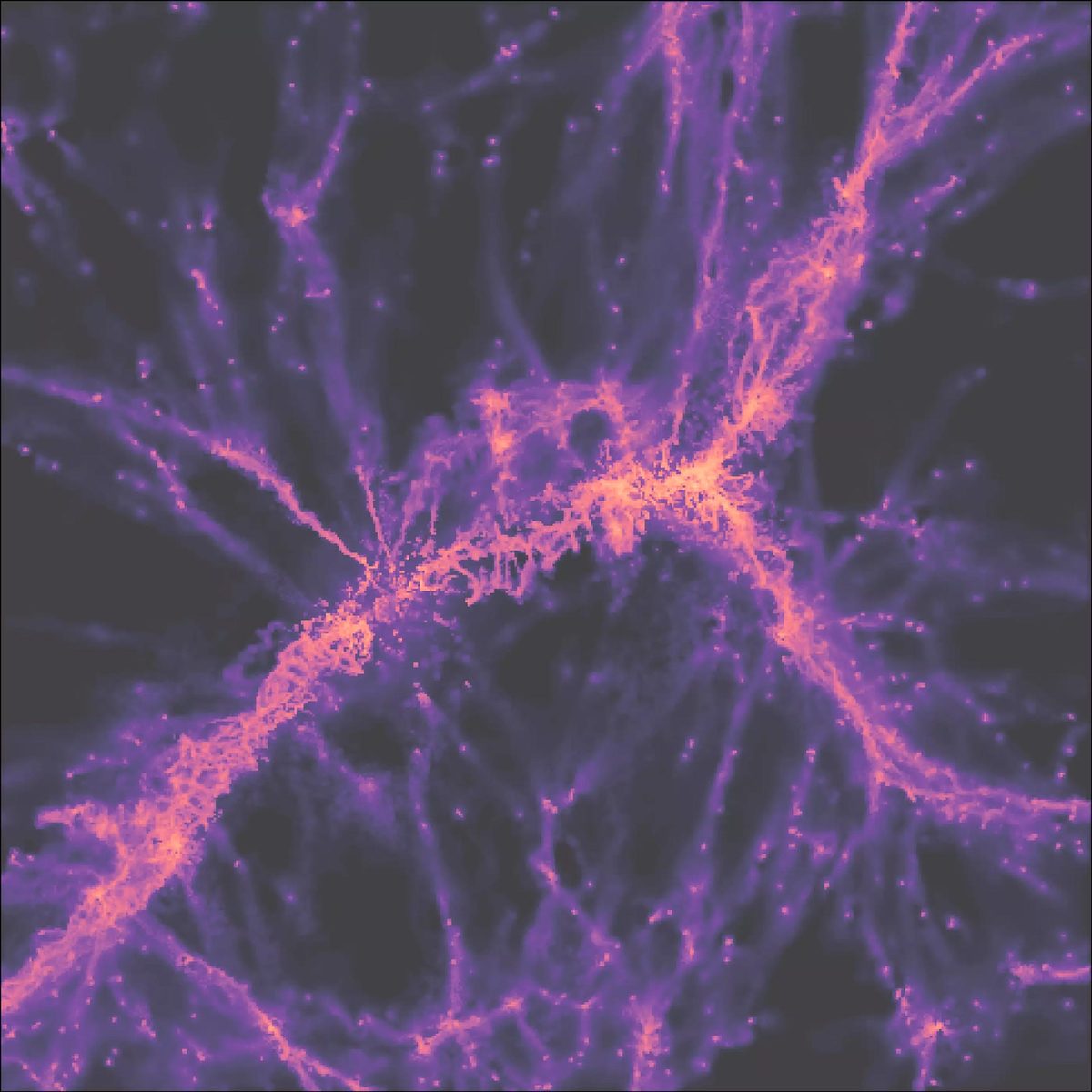
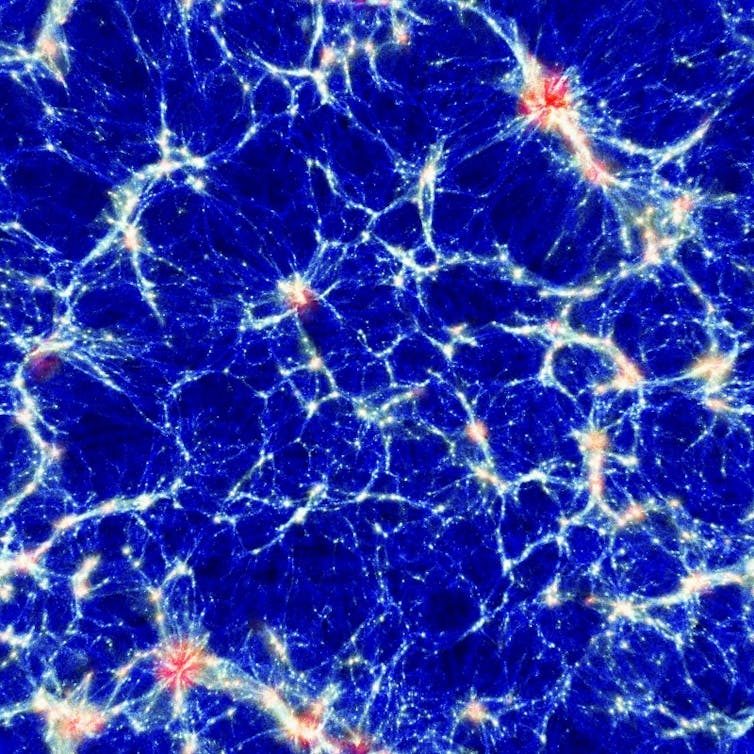
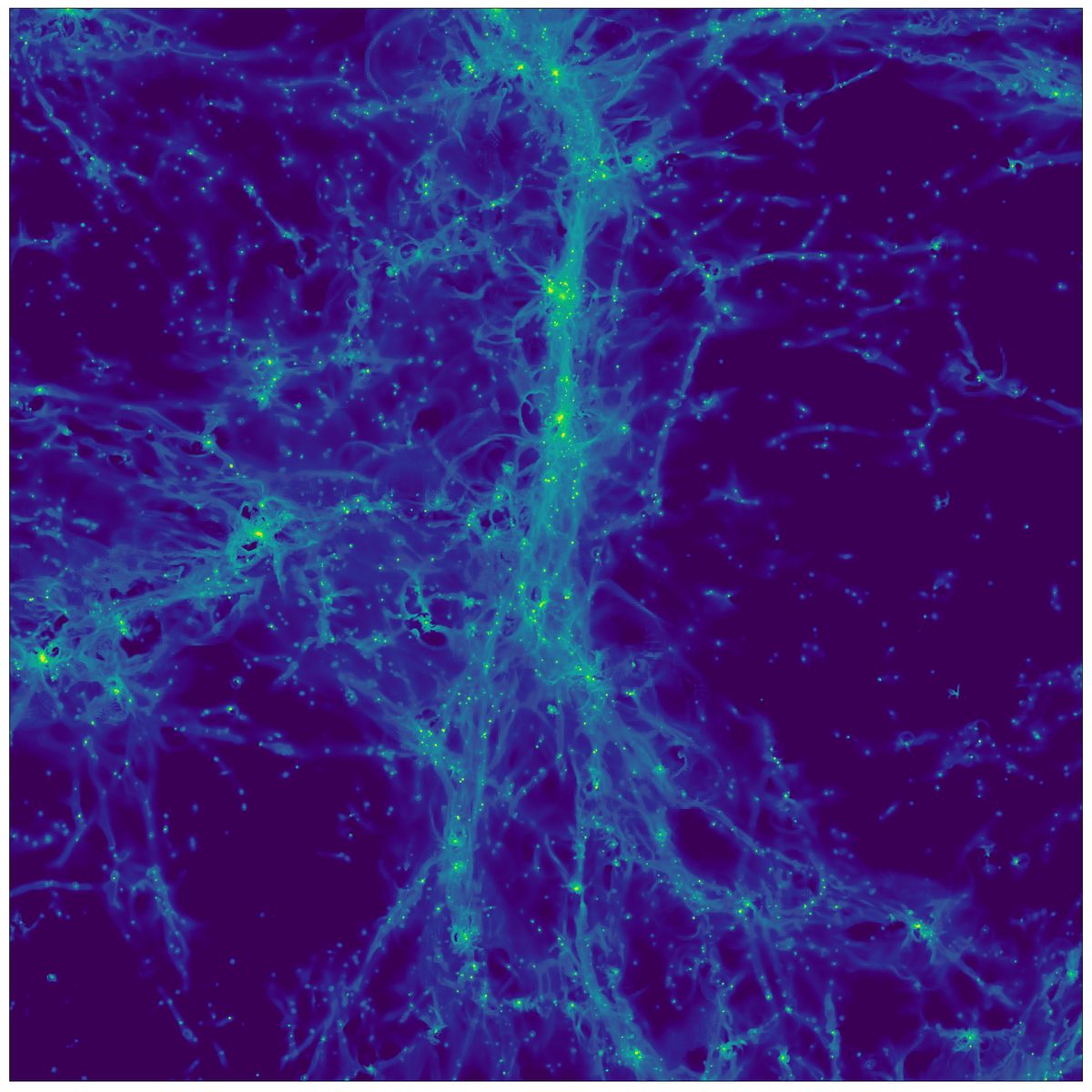
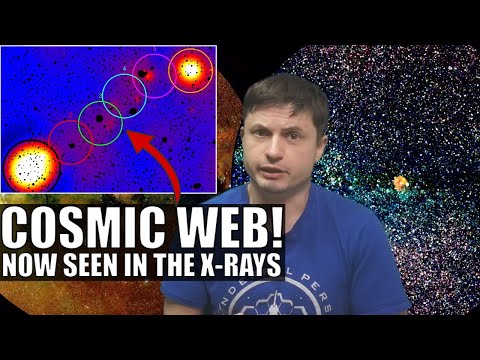
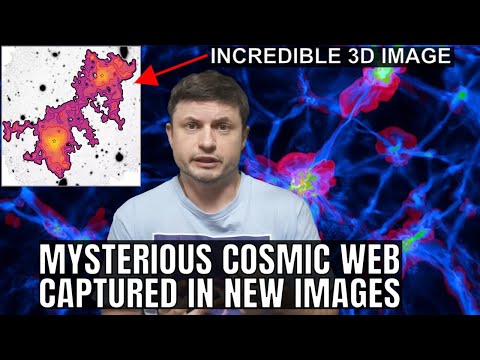
For decades, astronomers have predicted the cosmic web: vast filaments of hydrogen gas threading the universe between galaxies. On May 16, 2026, an international team published the first sharp, direct image of one — a 3-million-light-year strand feeding two galaxies as they appeared 12 billion years ago.

The image tests one of cosmology's central predictions. Cold dark matter models say galaxies sit at intersections of this gaseous web, drawing material from filaments to grow. Until now, that picture rested on simulations and faint statistical traces.

Why it matters

Direct images of the cosmic web turn a decades-old prediction into observational data, letting astronomers test how galaxies actually get fed.

Play on this story Voices Debate Predict

Key Indicators

3M ly
Filament length
Span of the hydrogen bridge between the two galaxies.
12B yr
Lookback time
Light from the filament left when the universe was about 2 billion years old.
100s hrs
Observation time
VLT/MUSE exposure needed to detect the faint hydrogen emission.
1st
High-definition image
First direct sharp picture of a single cosmic web filament.

Voices

Curated perspectives — historical figures and your fellow readers.

Ever wondered what historical figures would say about today's headlines?

Sign up to generate historical perspectives on this story.

Play

Exploring all sides of a story is often best achieved with Play.

Log in to play. Track your picks, climb the leaderboards. Log in Sign Up
Predict 3 ways this could play out. Contrarian picks score more — points lock when the scenario resolves. Log in to play

People Involved

Organizations Involved

Timeline

  1. First high-definition direct filament image published

    Publication

    Milano-Bicocca and MPA team release a sharp image of a 3-million-light-year filament feeding two galaxies 12 billion years ago.

  2. First image of a filamentary structure

    Discovery

    Umehata's team images cosmic web gas around the SSA22 protocluster in Science, but at low spatial resolution.

  3. Slug Nebula reveals cosmic web gas

    Discovery

    Cantalupo and colleagues publish in Nature the first detection of intergalactic hydrogen lit up by a nearby quasar.

Historical Context

Cosmic microwave background discovery (1965)

May 1965

What Happened

Arno Penzias and Robert Wilson, working at Bell Labs in Holmdel, New Jersey, found a persistent microwave hiss they could not eliminate from their horn antenna. Princeton physicists Robert Dicke and Jim Peebles identified the signal as leftover radiation from the Big Bang, cooled to about 3 Kelvin. The two groups published back-to-back papers in Astrophysical Journal Letters.

Outcome

Short Term

The detection became the strongest evidence for the Big Bang model and ended a long debate with steady-state cosmology.

Long Term

Penzias and Wilson shared the 1978 Nobel Prize in Physics. Later satellites (COBE, WMAP, Planck) mapped the CMB in detail and fixed the universe's age, geometry, and composition.

Why It's Relevant Today

Like the cosmic microwave background, the cosmic web was predicted decades before anyone could see it directly. Direct observation moves cosmology from inference to measurement.

Event Horizon Telescope's first black hole image (2019)

April 2019

What Happened

On April 10, 2019, the Event Horizon Telescope collaboration released the first direct image of a black hole's shadow, at the center of the galaxy M87. The image required combining data from eight radio telescopes on four continents, observed in 2017 and processed for two years. Einstein's general relativity had predicted such shadows in 1915.

Outcome

Short Term

The image made global headlines and won the 2020 Breakthrough Prize in Fundamental Physics. A second image, of the Milky Way's central black hole Sgr A*, followed in 2022.

Long Term

EHT data now constrain black hole spin and test general relativity in strong-gravity regimes. The collaboration is working toward time-lapse movies of plasma near event horizons.

Why It's Relevant Today

Both projects took decades of theory, years of observation, and turned a predicted object into an actual picture. The cosmic web image follows the same pattern: hard evidence replaces models.

First direct detection of gravitational waves (2015)

September 2015

What Happened

On September 14, 2015, LIGO's twin detectors in Louisiana and Washington recorded the merger of two black holes 1.3 billion light-years away. The signal lasted 0.2 seconds and matched Einstein's 1916 prediction of spacetime ripples. LIGO announced the result in February 2016.

Outcome

Short Term

Rainer Weiss, Barry Barish, and Kip Thorne shared the 2017 Nobel Prize in Physics. Detector networks expanded to include Virgo in Italy and KAGRA in Japan.

Long Term

Gravitational wave astronomy is now a routine field. LIGO-Virgo-KAGRA has cataloged dozens of mergers, opening a new way to study compact objects.

Why It's Relevant Today

Another century-old prediction finally observed. Each direct detection of a long-predicted phenomenon turns one branch of theory into a working measurement tool.

Sources

(3)