

Logo
Daily Brief
Following
Why
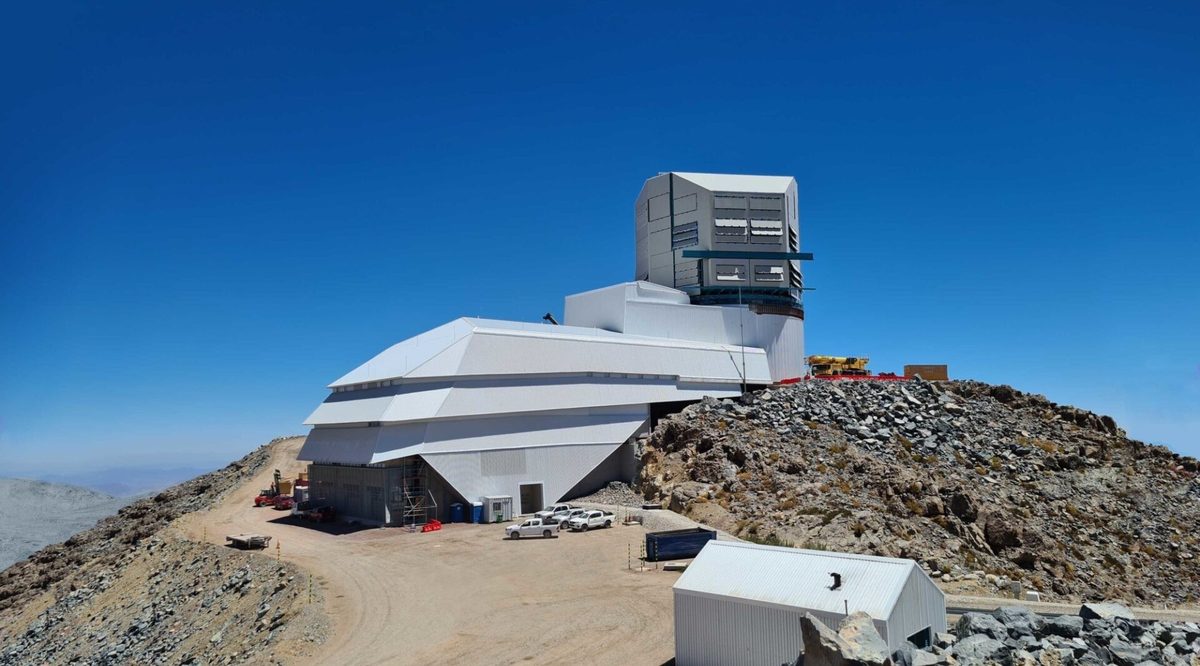
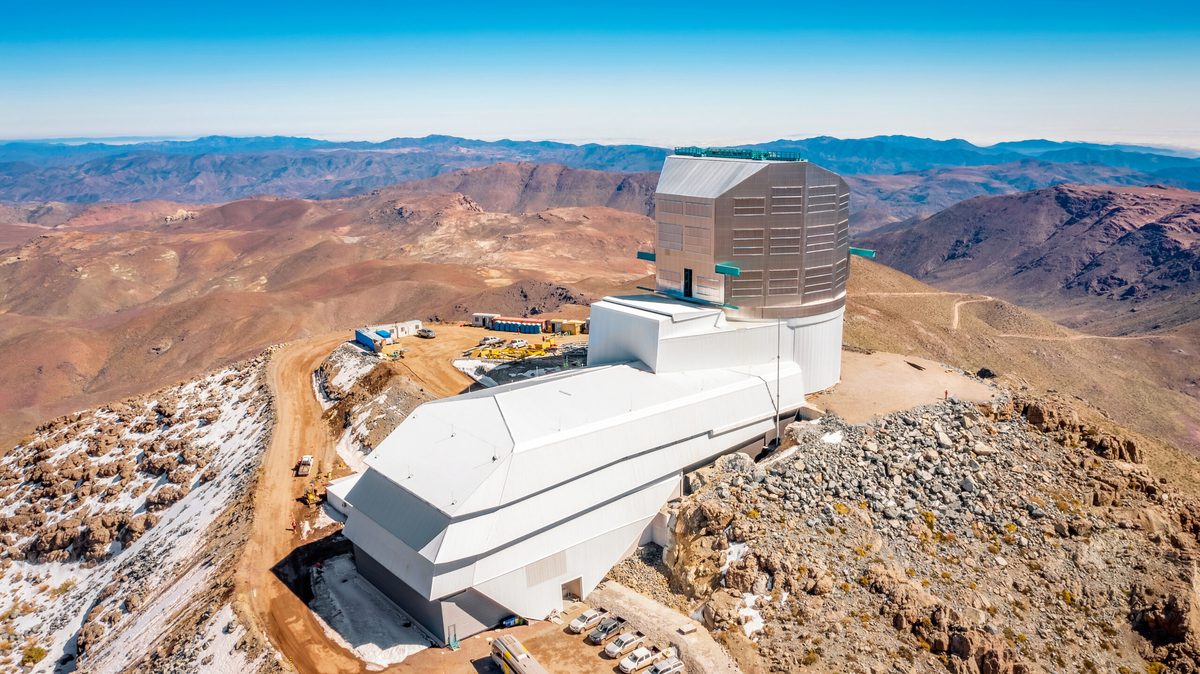
The Rubin Observatory Opens Its Eye on 20 Billion Galaxies

The Rubin Observatory Opens Its Eye on 20 Billion Galaxies

World's largest astronomy camera begins decade-long survey to map dark matter and catch exploding stars

Overview

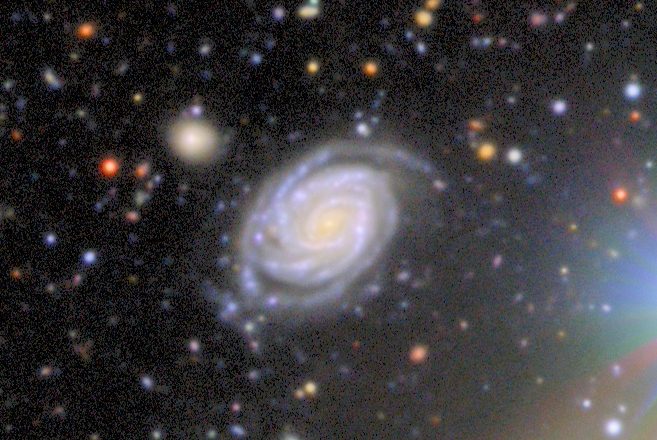
On June 23, 2025, the Vera C. Rubin Observatory released its first images—and they're staggering. A 3.2-gigapixel camera, the largest ever built for astronomy, captured 10 million galaxies in a single frame. In just 10 hours of test observations, it found 2,104 asteroids nobody knew existed, including seven near-Earth objects. This isn't a telescope taking pretty pictures—it's a time machine that will photograph the entire Southern Hemisphere sky every three nights for a decade.

The stakes are cosmic. Rubin will catalog 20 billion galaxies, 17 billion stars, and millions of supernovae to create the most precise map of dark matter ever made. Dark matter and dark energy make up 95% of the universe, but we can't see them directly—Rubin will trace their fingerprints by watching how they bend light from distant galaxies. It will also spot potentially hazardous asteroids, catch stars exploding in real time, and generate 10 million alerts per night about things changing in the cosmos. The project took 24 years and over $800 million. Now the real work begins.

Key Indicators

3.2
Gigapixels per image
Largest astronomy camera ever built, each image requires 400 4K screens to display
20B
Galaxies to be cataloged
Will observe approximately 20 billion galaxies over 10-year survey
2,104
Asteroids found in 10 hours
Discovered during initial test observations, including 7 near-Earth objects
10M
Alerts per night
Real-time notifications of changing phenomena across the cosmos

People Involved

Vera Rubin
Vera Rubin
Astronomer (1928-2016) (Observatory namesake, pioneering dark matter researcher)
Željko Ivezić
Željko Ivezić
Director, Rubin Observatory Construction Project (Leading observatory operations launch)

Organizations Involved

VE
Vera C. Rubin Observatory
Federal Research Observatory
Status: Transitioning from construction to operations

Federal observatory in Chile housing world's largest astronomy camera for 10-year sky survey.

SL
SLAC National Accelerator Laboratory
DOE National Laboratory
Status: Completed LSST Camera construction

Department of Energy lab at Stanford that built the world's largest astronomy camera.

NA
National Science Foundation
Federal Agency
Status: Primary funder and operations overseer

Federal agency funding telescope and operations in partnership with DOE.

Timeline

  1. First Light Images Released

    Public Announcement

    Rubin Observatory releases first public images in Washington D.C., showing 10 million galaxies and 2,104 newly discovered asteroids.

  2. Science Validation Surveys Begin

    Operations

    Science Validation surveys start acquiring images consistent with planned LSST operations.

  3. First Photons Detected

    Technical Milestone

    Complete telescope and camera combination detects first photons. Commissioning observations begin.

  4. Camera Installed on Telescope

    Construction

    3.2-gigapixel LSST Camera mounted on Simonyi Survey Telescope.

  5. Camera Arrives at Observatory

    Construction

    LSST Camera shipped from SLAC to Chile and delivered to observatory.

  6. LSST Camera Completed

    Construction

    SLAC completes construction of 3.2-gigapixel camera after 9 years of work.

  7. Ivezić Becomes Director

    Leadership

    Željko Ivezić succeeds Steve Kahn as Director of Rubin Observatory Construction Project.

  8. Observatory Renamed for Vera Rubin

    Announcement

    LSST renamed Vera C. Rubin Observatory—first major U.S. astronomy facility named for a woman.

  9. Primary Mirror Arrives in Chile

    Construction

    8.4-meter primary mirror shipped from Houston to Chile, arrives at summit site.

  10. Vera Rubin Dies

    Memorial

    Pioneering dark matter astronomer Vera Rubin dies at age 88 in Princeton, New Jersey.

  11. Site Construction Starts in Chile

    Construction

    Construction begins on Cerro Pachón summit. SLAC simultaneously starts building LSST Camera in new clean room.

  12. Construction Funding Authorized

    Funding

    NSF authorizes construction funding after Final Design Review in December 2013. Official construction begins.

  13. Ranked Top Ground Project

    Planning

    2010 Astrophysics Decadal Survey ranks LSST as top-priority large ground-based project.

  14. Mirror Construction Begins

    Construction

    University of Arizona's Steward Observatory Mirror Lab starts building 8.4-meter primary mirror with private funding.

  15. Decadal Survey Recommends LSST

    Planning

    Astronomy and Astrophysics in the New Millennium report recommends Large-aperture Synoptic Survey Telescope as major initiative.

Scenarios

1

Dark Matter Mystery Solved by 2030

Discussed by: MIT Technology Review, NSF public statements, LSST Dark Energy Science Collaboration

Rubin's gravitational lensing measurements of billions of galaxies produce the most precise dark matter map ever created, revealing its distribution and properties with unprecedented clarity. By 2028-2030, the accumulated data allows physicists to narrow down dark matter candidates, potentially identifying whether it consists of weakly interacting massive particles (WIMPs), axions, or something unexpected. This scenario assumes the full 10-year survey proceeds without major technical issues and that dark matter's gravitational signature is strong enough to distinguish between competing theories. The probability depends on whether dark matter particles interact in detectable ways beyond gravity.

2

Observatory Prevents Catastrophic Asteroid Impact

Discussed by: Northeastern University planetary defense experts, NASA Office of Inspector General reports, Space.com analysis

Rubin detects a previously unknown near-Earth asteroid on a collision course with Earth, providing years of warning that allows for successful deflection mission. With the capacity to find 90% of potentially hazardous asteroids over 140 meters and discover millions of new asteroids in its first two years, Rubin dramatically improves humanity's asteroid catalog. The observatory's ability to image the entire Southern sky every three nights means it will spot threats other telescopes miss. This becomes a defining achievement if a large asteroid is discovered with sufficient lead time (5-10 years) to mount a deflection mission using kinetic impactor or gravity tractor methods.

3

Data Deluge Overwhelms Analysis Capacity

Discussed by: Scientific American reporting on data management challenges, observatory technical documentation

Rubin generates 20 terabytes nightly and 10 million alerts per night—an unprecedented data flood. If automated analysis pipelines fail to keep pace or if the scientific community lacks sufficient computing infrastructure to process the avalanche, valuable discoveries could be buried in unexamined data for years. The observatory produces more optical astronomy data in one year than all previous telescopes combined, requiring new AI-driven analysis tools and massive computing resources. Success depends on whether the data management systems scale as planned and whether enough astronomers develop the skills to work with such large datasets. Early signs suggest systems are working, but the true test comes when full operations begin.

4

Unexpected Discovery Reshapes Cosmology

Discussed by: Nature reporting, cosmologist interviews, historical precedent from Hubble discoveries

Rubin discovers something nobody predicted—analogous to how Hubble's observations led to the Nobel Prize-winning discovery that cosmic expansion is accelerating. With 20 billion galaxies, 17 billion stars, and millions of transient events under continuous observation, the odds of stumbling onto something genuinely novel are high. This could be a new class of astronomical object, an unexpected structure in the universe's large-scale organization, or anomalies that challenge standard cosmological models. As astronomers note, the most exciting discoveries from really good new telescopes are often the ones nobody anticipated. The vast scale and time-domain capabilities make Rubin a prime candidate for paradigm-shifting surprises.

Historical Context

Hubble Space Telescope First Light (1990)

1990-2025

What Happened

Hubble launched in April 1990, but its first images were blurry—engineers discovered the mirror was ground too flat by a fraction of a hair's width. After a repair mission in 1993, Hubble became the most productive scientific instrument in history. Over 35 years, it confirmed black holes in galaxy cores, measured exoplanet atmospheres, found the most distant galaxies known, and proved the universe's expansion is accelerating (a Nobel Prize-winning discovery).

Outcome

Short term: Initial embarrassment turned to triumph after repair; transformed public engagement with astronomy

Long term: Generated more citations than any other scientific instrument; operated far beyond planned 15-year lifespan

Why It's Relevant

Rubin follows Hubble's playbook: achieve first light, work through commissioning challenges, then spend a decade revolutionizing astronomy. But where Hubble stared deep at small patches, Rubin photographs the entire sky repeatedly—complementary approaches to cosmic mysteries.

James Webb Space Telescope Deployment (2021-2022)

2021-2022

What Happened

After decades of delays and $10 billion in costs, Webb launched on Christmas Day 2021 and executed the most complex space telescope deployment ever: unfolding a tennis court-sized sunshield and aligning 18 hexagonal mirror segments. First images released July 2022 exceeded expectations, showing the universe's earliest galaxies 13.5 billion years ago with infrared clarity Hubble couldn't match.

Outcome

Short term: Flawless deployment defied skeptics; first images captivated public and scientific community

Long term: Operating beyond L2 orbit, revolutionizing studies of early universe, exoplanet atmospheres, star formation

Why It's Relevant

Webb and Rubin represent complementary strategies: Webb stares deep in infrared to see the universe's first light, while Rubin surveys wide in optical wavelengths to map dark matter and catch transient events. Together they provide the most complete cosmic census ever attempted.

Sloan Digital Sky Survey First Light (1998)

1998-2008

What Happened

The Sloan Digital Sky Survey pioneered large-scale digital sky surveys, mapping one-third of the sky and cataloging hundreds of millions of celestial objects. Its publicly available datasets enabled thousands of discoveries, from mapping the Milky Way's structure to identifying distant quasars. SDSS demonstrated that comprehensive sky surveys produce unexpected dividends across all astronomy fields.

Outcome

Short term: Created largest astronomical database of its time; enabled new research methodologies

Long term: Data remains heavily used 25+ years later; legacy surveys continue with upgraded instruments

Why It's Relevant

Rubin is SDSS's direct descendant but with far greater scale: 20 billion galaxies versus SDSS's hundreds of millions, and time-domain capabilities SDSS lacked. If SDSS generated thousands of papers, Rubin could generate tens of thousands by surveying deeper, wider, and repeatedly.