
Pull to refresh
Logo
CRISPR map of the MYC locus reveals a druggable RNA element

CRISPR map of the MYC locus reveals a druggable RNA element

New Capabilities

A base-pair screen of a 10-kilobase cancer gene finds a conserved 3' UTR site that controls where MYC protein goes, not how much is made.

Overview

Updated Yesterday

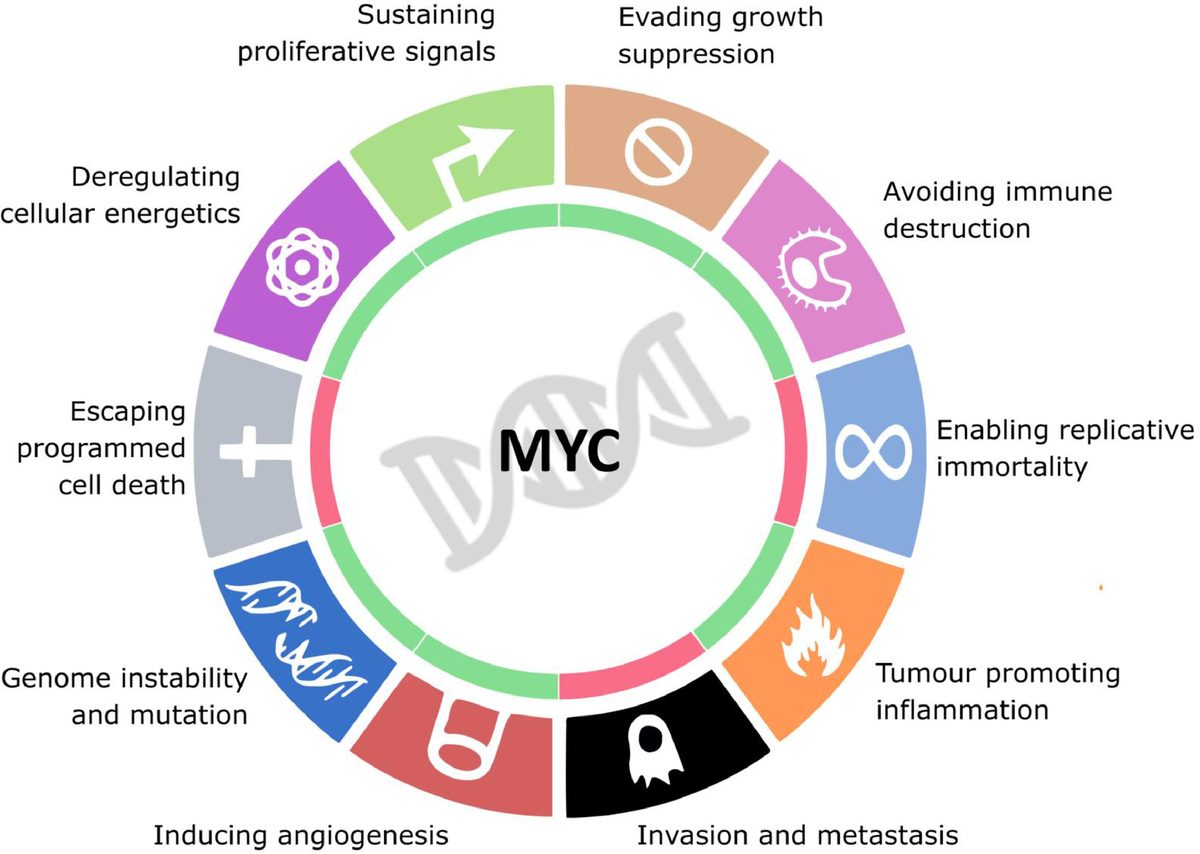
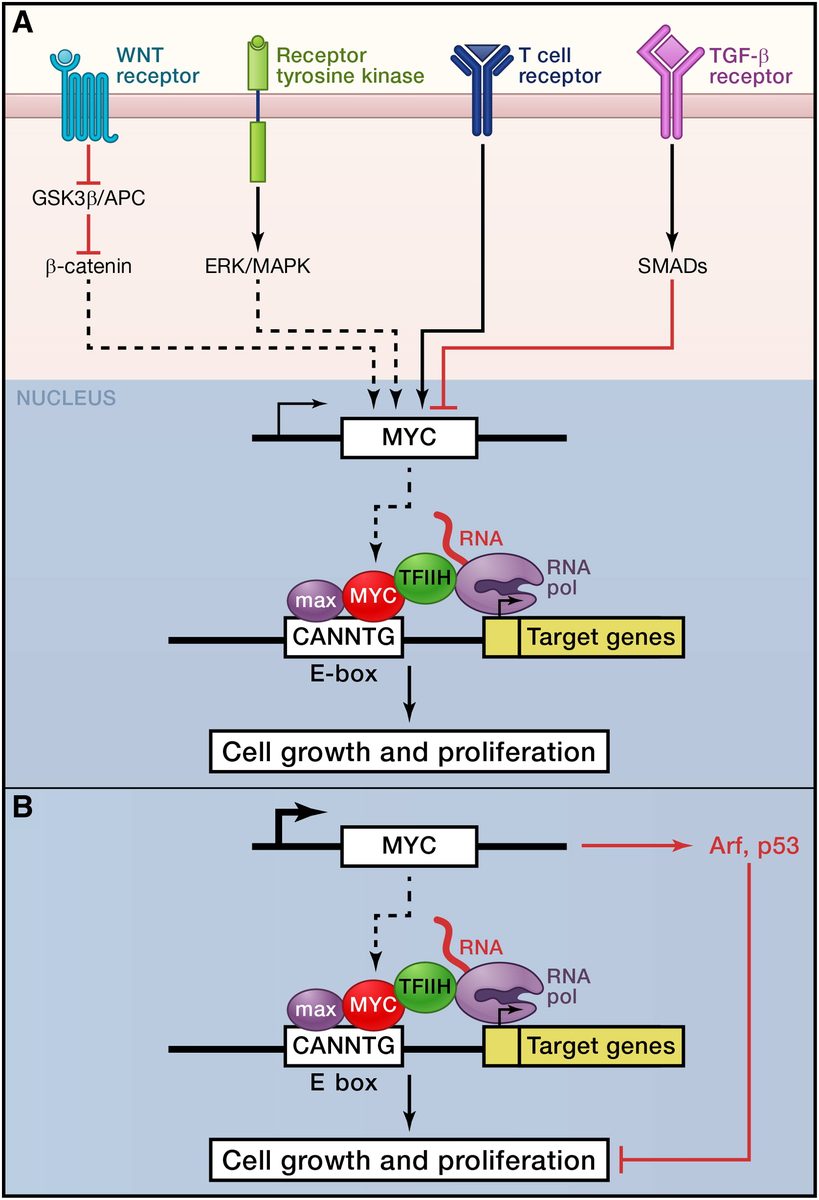
For decades, the MYC oncogene has been considered hard to drug: it makes a transcription factor, not an enzyme with a ready pocket. A new Cell paper maps every base pair in a 10-kilobase stretch of the locus and finds that most of what matters for cancer cell growth is noncoding.

One noncoding site, an ultraconserved element in the 3' untranslated region, controls where MYC protein ends up rather than how much is made. Antisense oligonucleotides that block it selectively killed MYC-dependent cancer cells in culture.

Why it matters

If the mechanism holds in animals, it gives drug developers a way to disable MYC in tumors without chasing the protein itself.

Questions about this story

Free account needed to ask — your question is kept and asked for you right after sign-up. Answers are public.

No questions yet — be the first to ask.

Key Indicators

67%
Share of essential MYC locus base pairs that are noncoding
The screen found that most base pairs required for cell growth sit outside protein-coding sequence.
10 kb
Locus size screened
The team mutagenized 10 kilobases of the human MYC locus at base-pair resolution.
82
Vertebrate genomes with perfect conservation of the 7-nucleotide element
The first seven nucleotides, CACAACC, are identical across at least 82 vertebrate genomes.
8 nt
Deletion length from the strongest CRISPR cut
The sg723 guide produced a predominant 8-nucleotide CACAACCT deletion and a less frequent 2-nucleotide deletion.
4
Antisense oligonucleotides tested
All four partially overlapping, 2'-MOE-modified oligos reduced viability in MYC-dependent cell lines.

Voices

Curated perspectives — historical figures and your fellow readers.

Sign up to generate historical perspectives on this story.

People Involved

Organizations Involved

Timeline

1 event Latest: 5 days ago
  1. Cell publishes base-pair map of the MYC locus

    Latest Publication

    CRISPR saturation mutagenesis of a 10-kilobase MYC region finds an ultraconserved 3' UTR element that antisense oligonucleotides can target.

Scenarios

1

Independent labs confirm the MYC localization mechanism

Possible Resolves by End of 2027

Discussed by: Authors of the Cell paper and independent RNA biologists

The paper reports that deleting or blocking the 3' UTR element moves MYC mRNA away from the nuclear periphery and pushes MYC protein into the cytoplasm. Replication by groups not involved in the original study would turn a single-lab finding into a general mechanism for controlling transcription factor localization.

2

3' UTR-targeting antisense oligos advance to animal testing

Possible Resolves by Q2 2028

Discussed by: RNA therapeutics researchers

The Cell paper tested four 2'-MOE antisense oligonucleotides in cultured cancer cell lines. The next test is whether the same chemistry shrinks MYC-dependent tumors in mice without dose-limiting toxicity.

3

Finding stays a lab curiosity with no therapeutic follow-up

Uncertain Resolves by End of 2029

Discussed by: Drug-development analysts

Many academic RNA findings never attract a development partner. If no company or consortium picks up the 3' UTR antisense approach, the result remains a mechanistic observation about MYC biology rather than a drug program.

Historical Context

2 moments from history that rhyme with this story — and how they unfolded.

December 2016

Nusinersen approval (2016)

The Food and Drug Administration approved nusinersen for spinal muscular atrophy. It was an antisense oligonucleotide that binds RNA and changes how it is spliced, rather than destroying it.

Then

The drug became the first approved treatment for the inherited neuromuscular disease.

Now

It showed that steric-blocking antisense chemistry could be a marketed medicine, not just a lab tool.

Why this matters now

The MYC study uses the same steric-blocking strategy, binding RNA without triggering its destruction.

1980s-2020s

The undruggable MYC problem (1980s-2020s)

MYC is one of the most frequently overactive genes in cancer, but its protein is a transcription factor with no deep binding pocket. Small molecules have struggled to block it directly.

Then

Most drug efforts focused on upstream pathways or on indirect ways to lower MYC levels.

Now

MYC remained a high-value but hard-to-hit target across solid tumors and blood cancers.

Why this matters now

Targeting a noncoding RNA element instead of the protein offers a route around the pocket problem.

Sources

(6)