Cuba's power grid collapses repeatedly as US oil blockade cuts fuel supply
Built World
Four nationwide blackouts in March leave 10 million without power; airlines suspend flights as Cuba receives no foreign oil for over 90 days amid US blockade
Four nationwide blackouts in March leave 10 million without power; airlines suspend flights as Cuba receives no foreign oil for over 90 days amid US blockade
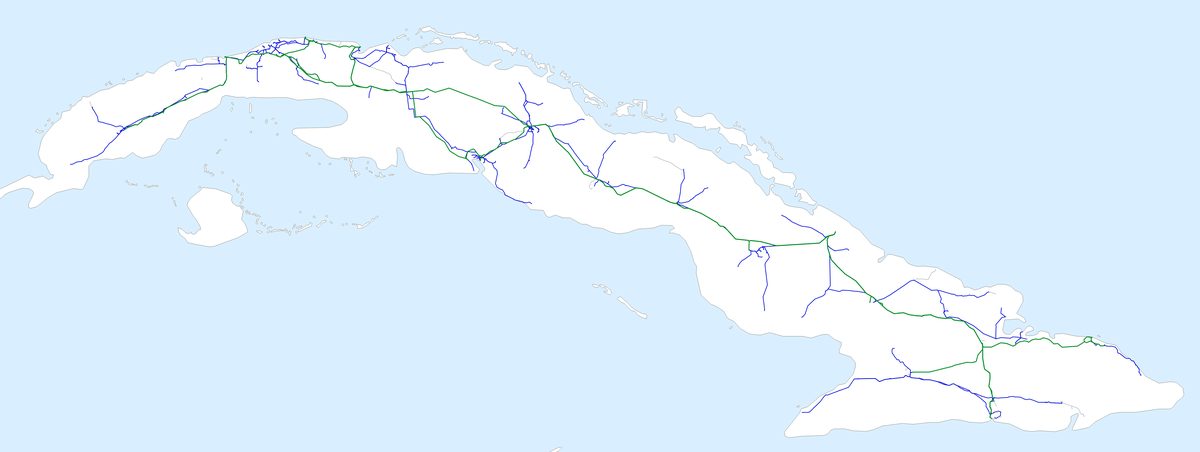
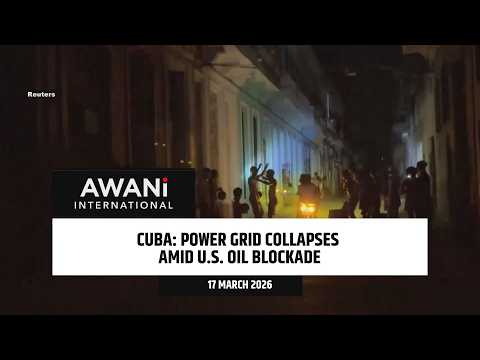
Cuba's national power grid collapsed for the fourth time in March on March 21, leaving more than 10 million people without electricity. The failure at the Nuevitas thermoelectric plant in Camagüey province triggered a cascading collapse across the entire system, which was restored by March 23.
The island has not received an oil shipment from any foreign supplier in over 90 days—since late December 2025. The United States imposed diplomatic pressure and tariffs on countries selling oil to Cuba. Cuba produces only 40 percent of the fuel it needs domestically, leaving the aging Soviet-era grid operating on fumes as thermoelectric plants fail repeatedly.
Why it matters
The blockade has halted oil supplies for 90 days, leaving 10 million without power repeatedly. It demonstrates how dependent Cuba is on foreign energy and shows the immediate human impact when imports stop.
Questions about this story
Free account needed to ask — your question is kept and asked for you right after sign-up. Answers are public.
No questions yet — be the first to ask.
Key Indicators
4
Nationwide blackouts in March 2026
Grid collapsed on March 4, March 16, and March 21 (noted as fourth in cumulative reporting), each triggered by thermoelectric plant failures and cascading system effects.
>90 days
Without foreign oil shipments
Cuba has received virtually no oil imports since late December 2025, now exceeding three months as of late March.
Air France, Air Canada
Major airlines suspending Cuba flights
Jet fuel shortages from oil blockade force suspensions through mid-2026, crippling tourism.
14 events
Latest: March 29th, 2026 · 6 months ago
Showing 8 of 14
JK to step
Tap a bar to jump to that date
Jump to
March 2026
Air France suspends flights to Cuba amid jet fuel shortage
LatestEconomic
Air France halted Paris-Havana flights until at least June 15 due to Cuba's worsening jet fuel crisis from the US oil blockade and Venezuela supply cutoff; Air Canada had already suspended routes, further isolating the island economically.
Third nationwide blackout strikes Cuba
Infrastructure
The Nuevitas thermoelectric plant in Camagüey province failed unexpectedly, triggering a cascading collapse across the entire grid. Emergency micro-island systems were activated to power hospitals and water systems.
Nuevitas thermoelectric plant failure triggers third nationwide blackout
Infrastructure
An unexpected failure at the Nuevitas thermoelectric plant in Camagüey province caused a cascading collapse across Cuba's entire electrical grid. The Ministry of Energy and Mines activated emergency micro-island systems to restore power to hospitals and water systems. Full restoration was achieved by March 23.
Russian oil tanker approaches Cuba; US warns delivery prohibited
Diplomatic
The Russian-flagged tanker Anatoly Kolodkin was reported 3,000 nautical miles from Cuba—the island's first potential oil delivery of 2026. The US stated Cuba is "prohibited from taking Russian oil."
Full national grid collapse leaves Cuba dark for 29 hours
Infrastructure
Cuba's entire electrical system disconnected, leaving all 10 million inhabitants without power. Restoration took 29 hours. Díaz-Canel confirmed no oil had been received in over three months.
Protesters storm Communist Party headquarters in Moron
Unrest
In the most violent incident of the crisis, protesters in Moron, Ciego de Avila province, ransacked and set fire to a Communist Party headquarters. Five people were arrested. Video appeared to show gunfire.
First March blackout hits western Cuba
Infrastructure
A blackout struck western Cuba including Havana, leaving millions without power as fuel-starved thermoelectric plants failed.
February 2026
Supreme Court strikes down tariff mechanism
Legal
In a 6-3 decision, the Supreme Court ruled that the International Emergency Economic Powers Act does not authorize the president to impose tariffs, invalidating the executive order's enforcement tool. The administration continued the blockade through other means.
UN human rights experts condemn oil blockade
Diplomatic
United Nations human rights experts formally condemned the executive order as "a serious violation of international law" and an illegal fuel blockade with extraterritorial effects.
January 2026
Trump signs executive order declaring national emergency on Cuba
Policy
Executive Order 14380 authorized tariffs on any country selling oil to Cuba, targeting Venezuela, Mexico, Russia, and Algeria. Mexico—which supplied 44% of Cuba's oil—subsequently halted shipments.
December 2025
US seizes Venezuelan oil tankers bound for Cuba
Military
The United States seized tankers carrying Venezuelan oil destined for Cuba and declared a blockade on Venezuelan oil exports, cutting off Cuba's largest remaining supplier.
January 2025
Cuba's oil imports decline sharply through 2025
Economic
Oil imports fell roughly 35% year-over-year, from about 69,400 to 45,400 barrels per day, as Venezuelan supplies dwindled and aging infrastructure constrained domestic production.
October 2024
Hurricane Oscar strikes during ongoing blackout
Natural disaster
Hurricane Oscar made landfall near Baracoa with 130 km/h winds while the grid remained down, killing at least six people and compounding infrastructure damage.
Cuba's grid collapses nationwide after major plant failure
Infrastructure
The Antonio Guiteras thermoelectric plant in Matanzas failed, triggering a cascading collapse that left all 10 million Cubans without power. The grid collapsed four times during restoration attempts.
Discussed by: NPR, CNBC, and energy analysts tracking the Anatoly Kolodkin's transit
If the approaching Russian tankers reach Cuba without US interception, the delivery could provide enough fuel to stabilize thermoelectric generation for several weeks. This would not resolve the underlying infrastructure decay but would buy time for further solar park construction and diplomatic negotiations. The key question is whether the US follows through on its warning that Cuba is "prohibited" from accepting the oil, and what enforcement mechanism it uses after the Supreme Court struck down the tariff authority.
2
Blockade holds, grid fragments into permanent micro-islands
Possible
Discussed by: Foreign Policy, Ricardo Torres at American University, Cuban energy officials
If no significant oil deliveries reach Cuba in the coming weeks, the national grid may become functionally unrecoverable as a unified system. Cuba would rely permanently on its decentralized micro-island approach—solar parks, natural gas generators, and diesel backups serving isolated zones. This would leave large portions of the population with only a few hours of electricity per day and accelerate economic contraction and emigration.
3
Sustained protests force political concessions on one or both sides
Uncertain
Discussed by: Time, Al Jazeera, Foreign Policy analysts warning of state collapse
With over 150 protests in March and a rare attack on a Communist Party office, domestic pressure is building. If unrest escalates further, it could force the Cuban government toward political concessions—or push the US to offer limited humanitarian relief to avoid being seen as causing a collapse. The US has explicitly demanded regime change as a precondition for relief, while Cuban leadership has shown no willingness to step aside. A standoff that produces neither outcome is the most likely near-term result.
4
Solar expansion accelerates, reducing oil dependency over 2-3 years
Possible
Discussed by: Ember energy analysts, Microgrid Media, Cuban Ministry of Energy
Cuba has already tripled solar generation to 20% of output in one year with Chinese financing, and plans to add 1,200 megawatts of additional solar capacity in 2026. If battery storage investment follows—analysts estimate 500-600 megawatts needed by 2028—Cuba could reduce its oil dependency enough to withstand future supply disruptions. However, this requires $8-10 billion over a decade that Cuba does not have, and solar cannot yet cover peak evening demand without storage.
Historical Context
3 moments from history that rhyme with this story — and how they unfolded.
1 of 3
1991-2000
Cuba's 'Special Period' after Soviet collapse (1991-2000)
When the Soviet Union dissolved, Cuba lost approximately 80% of its imports and its primary oil supplier overnight. GDP fell by 35% between 1990 and 1993. Daily caloric intake dropped below 1,900 calories. Rolling blackouts of 16-18 hours per day became routine across the island.
Then
Cuba survived through extreme austerity, urban agriculture programs, and limited market reforms. Tourism was opened to generate hard currency.
Now
Venezuela's Hugo Chávez filled the Soviet gap beginning in 2000, trading subsidized oil for Cuban doctors and teachers—a lifeline that sustained Cuba for two decades but created a new dependency.
Why this matters now
Cuba's current crisis mirrors the Special Period's core dynamic: the sudden loss of a primary oil patron. But in 2026, there is no replacement patron waiting. China is investing in solar but has not offered to replace oil supplies at scale.
2 of 3
October 1962
Cuban Missile Crisis naval blockade (1962)
President John F. Kennedy imposed a naval quarantine around Cuba to prevent Soviet missile deliveries, bringing the US and Soviet Union to the brink of nuclear war. The blockade lasted 13 days and was narrowly targeted at offensive weapons, not fuel or food.
Then
The Soviets withdrew missiles in exchange for a US pledge not to invade Cuba and the quiet removal of US missiles from Turkey.
Now
The crisis led to the installation of a direct communication hotline between Washington and Moscow and accelerated arms control talks.
Why this matters now
The New York Times described the 2026 oil blockade as the "first effective US blockade since the Cuban Missile Crisis." Unlike 1962, the current blockade targets fuel rather than weapons, directly affecting the civilian population, and has no superpower counterpart willing to risk confrontation to break it.
3 of 3
September 2017 - May 2018
Puerto Rico grid collapse after Hurricane Maria (2017)
Hurricane Maria destroyed Puerto Rico's electrical grid, leaving 3.4 million people without power. Full restoration took 11 months. The island's aging infrastructure—similar in vintage to Cuba's—was a major factor in the slow recovery. At least 2,975 people died, many from lack of electricity for medical equipment and refrigerated medication.
Then
The Federal Emergency Management Agency (FEMA) mounted the largest disaster response in US history but was widely criticized for its slow pace.
Now
Puerto Rico committed to rebuilding with microgrids and solar, but progress has been slow. The disaster accelerated emigration, with over 100,000 residents leaving the island permanently.
Why this matters now
Cuba is experiencing a similar grid fragmentation, but without access to federal disaster funds or reconstruction support. Cuba's micro-island approach mirrors the microgrid strategy Puerto Rico adopted—born of the same necessity when a centralized grid cannot be sustained.