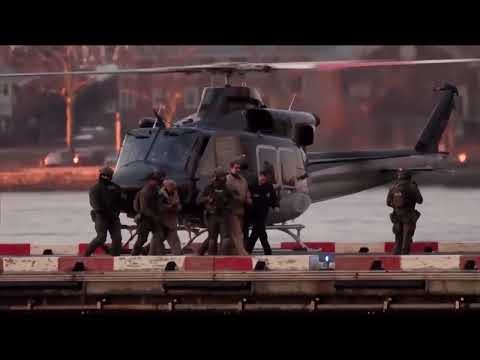
The USS Nimitz carrier strike group entered the Caribbean on May 21. The Pentagon was developing military options for Trump while the US intelligence community mapped how Cuba would respond to an attack. One day after issuing a $100 million aid offer and indicting Raúl Castro, Secretary of State Rubio said a negotiated settlement was unlikely.
Cuba's June 5 deadline for foreign shippers to exit GAESA is now two weeks away. Axios reported May 17 that Cuba had acquired more than 300 attack drones from Russia and Iran; Díaz-Canel warned two days later that a US strike would trigger 'a bloodbath.' Trump, meanwhile, called Cuba a 'failed state' and promised embargo announcements 'fairly soon.'
Why it matters
The US is developing war plans and offering aid at the same time. Cuba has two weeks to decide which is real.
Questions about this story
Free account needed to ask — your question is kept and asked for you right after sign-up. Answers are public.
1
Why does the Trump administration care about Cuba?
Cuba hosts Chinese and Russian intelligence operations 90 miles from the US coast — that's the national security core — but the policy is also driven by Marco Rubio's personal history, Florida politics, and a broader Trump push to clear hostile-power footholds from the Western Hemisphere.
Why it matters: If the intelligence threat is real, it reframes the standoff as great-power competition rather than a Cold War relic — and makes a negotiated exit harder, since China and Russia aren't part of any deal.
—Rubio explicitly named Cuba as a national security threat because it hosts Russian and Chinese intelligence services on the island; CSIS identified at least four Chinese signals intelligence facilities there, one near Guantanamo Bay.
—Russia maintains its own intelligence base in Cuba and has reportedly recruited Cubans to fight in Ukraine — giving Moscow a forward operating position the Trump administration sees as intolerable.
—Rubio is the son of Cuban immigrants and the architect of the pressure campaign; his Senate career was built on hardline Cuba policy, and Florida's Cuban-American community is a core political constituency.
—The Cuba push fits a wider pattern: Trump captured Venezuelan President Maduro in January 2026, cutting Cuba's main oil supply (Venezuela had been its primary supplier since the early 2000s), suggesting Cuba is one node in a broader effort to dismantle left-aligned governments aligned with US adversaries in Latin America.
Defense Priorities and some realist analysts argue the intelligence-threat framing is overstated — that China's Cuba facilities are limited in capability and the 'homeland threat' rationale is a pretext for an ideologically driven regime-change agenda that has failed for 64 years.
Russia frames the Nimitz deployment and oil blockade as purely aggressive, not defensive — arguing the US is manufacturing a threat to justify military action it had already decided to take, a view Cuba's government echoes when it calls the Raúl Castro indictment a 'fabricated dossier.'
AI-generated with web search — may be wrong. Check the linked sources.
Key Indicators
2,010
Prisoners pardoned April 3
Cuba's largest single release in years, but excludes all those convicted of 'crimes against authority,' meaning no documented political prisoners were freed
~270K
Barrels on stranded Russian tanker
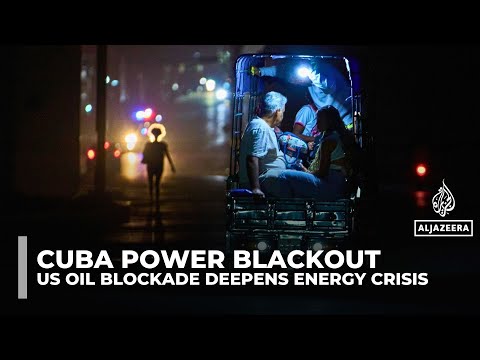
The Universal has been adrift in the Atlantic since late April with no confirmed delivery. Cuba exhausted its remaining oil by May 14 with no new supply arriving.
Zero
Fuel reserves as of May 14
Energy Minister Vicente de la O Levy declared 'absolutely no fuel, oil, and absolutely no diesel' as the national grid collapsed in eastern provinces and protests broke out near Havana.
7.2%
Projected GDP decline (2026)
Cuba's economy is contracting sharply under the combined loss of Venezuelan oil and tightened US sanctions
Jun 5
GAESA compliance deadline
Foreign companies must exit GAESA dealings by June 5 or face secondary sanctions. Hapag-Lloyd and CMA CGM have already halted Cuba bookings, pulling an estimated 60% of the island's maritime cargo capacity.
Images from Openverse under Creative Commons licenses.
Videos from YouTube.
Voices
Curated perspectives — historical figures and your fellow readers.
Ayn Rand
(1905-1982) ·Cold War · philosophy
Fictional AI pastiche — not real quote.
"When a regime built on the premise that the individual exists to serve the state finds itself begging for oil to keep the lights on, it has achieved the perfect monument to its own philosophy — darkness. The prisoner releases are not mercy; they are the currency of a bankrupt collectivism, paying its debts in human beings it should never have owned."
100% found this insightful
Ever wondered what historical figures would say about today's headlines?
Sign up to generate historical perspectives on this story.
36 events
Latest: May 21st, 2026 · 5 months ago
Showing 8 of 36
JK to step
Tap a bar to jump to that date
Jump to
May 2026
Trump says USS Nimitz is meant to 'help' Cuba, not intimidate it; hints at upcoming embargo announcements
LatestStatement
Asked whether the Nimitz was sent to pressure Havana, Trump replied: 'Not at all. We're going to help them.' He called Cuba 'a failed state' with no electricity or food and said his administration would make Cuba-related announcements 'fairly soon.'
Rubio says Cuba deal probability is 'not high'
Statement
Secretary of State Rubio told reporters that while Trump preferred a negotiated outcome, 'the likelihood of that happening, given who we're dealing with right now, it's not high.' He said Cuba poses a national security threat because of its ties to China and Russia.
Russia warns USS Nimitz signals planned US military intervention in Cuba
International
Russia's Foreign Ministry issued a written statement calling the Nimitz deployment 'a calculated signal' designed to show that armed intervention against Cuba 'can be carried out.' Moscow compared the strategy to US actions in Venezuela and pledged to strengthen ties with Havana.
CBS News: Pentagon developing military options for Trump on Cuba
Military
CBS News, citing two US officials, reported the Pentagon had begun developing military options for Trump and the intelligence community was analyzing how Cuba would respond to a US attack. Officials said no presidential decision had been made.
Rubio delivers Spanish-language video address to Cuban people, offers 'new relationship'
Statement
Rubio released a Spanish-language video on Cuba's nominal independence day, offering $100 million in food and medicine through the Catholic Church — not GAESA. He described a 'new Cuba' where citizens could vote, own businesses, and speak without fear of imprisonment.
Díaz-Canel calls Raúl Castro indictment a 'political maneuver'
Statement
Díaz-Canel rejected the indictment as 'a political maneuver, devoid of any legal foundation, aimed solely at padding the fabricated dossier they use to justify military aggression.' He called Raúl Castro a hero and Brothers to the Rescue a 'narco-terrorist' group.
Díaz-Canel warns US attack on Cuba would trigger 'a bloodbath'
Statement
Cuba's president said a US military assault would 'cause a bloodbath with incalculable consequences' and insisted Cuba 'poses no threat' to the United States. The warning came one day after reports that Cuba had acquired more than 300 attack drones.
Axios reports Cuba acquired 300+ attack drones from Russia and Iran
Military
Axios reported Cuba had acquired more than 300 military drones of varying capabilities from Russia and Iran since 2023, stashed at strategic locations across the island. US officials said Cuba had begun discussing using them to strike the Guantanamo Bay base, US naval vessels, and possibly Key West. CIA Director Ratcliffe had warned Cuban officials against hostilities during his May 14 visit.
Cuba's power grid collapses; protests break out near Havana
Crisis
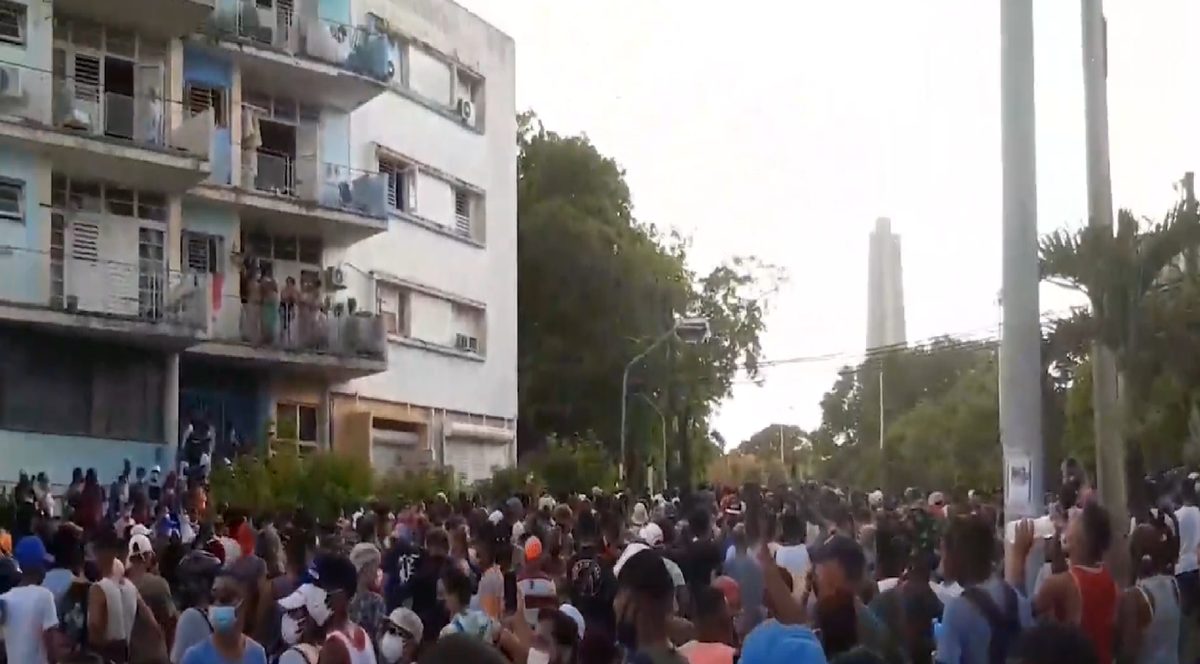
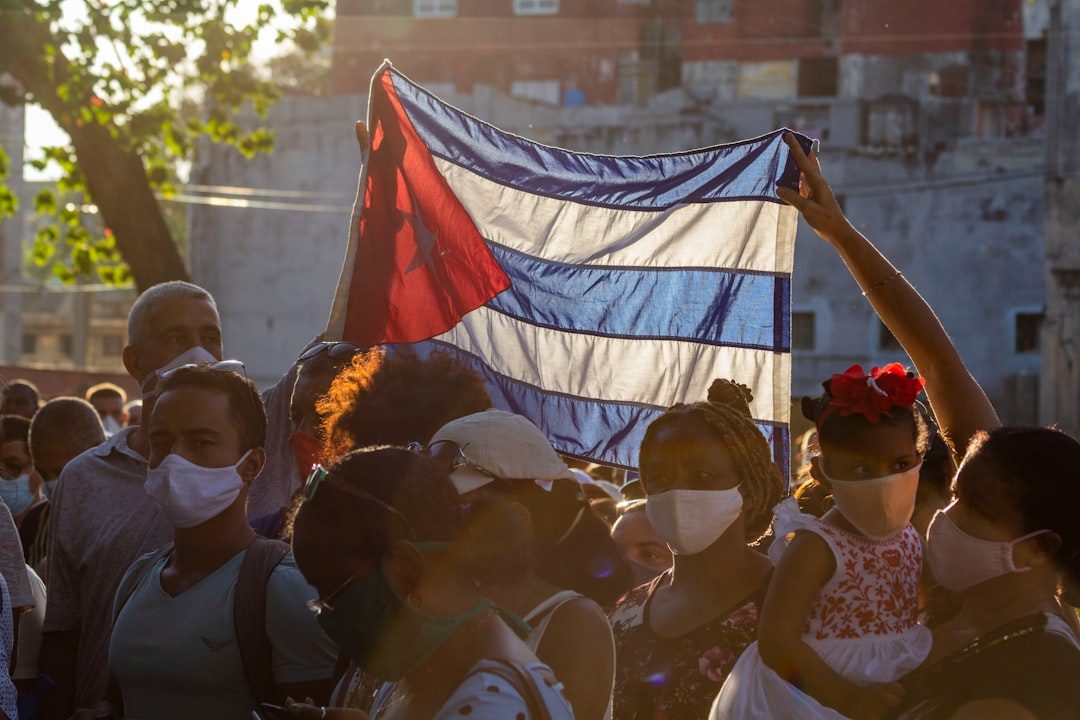
Energy Minister Vicente de la O Levy declared 'absolutely no fuel, oil, and absolutely no diesel' as the national grid failed across eastern provinces. Residents in Havana neighborhoods banged pots and set fire to trash cans — the first street protests since 2021.
CIA Director Ratcliffe visits Havana; US offers $100 million in humanitarian aid
Diplomacy
CIA Director John Ratcliffe flew to Havana to meet Interior Minister Lazaro Alvarez Casas, Raulito Rodriguez Castro, and Cuba's intelligence chief, delivering Trump's conditions for economic engagement. The State Department simultaneously offered $100 million in food and medicine to be distributed through the Catholic Church.
Hapag-Lloyd and CMA CGM suspend Cuba bookings
Economic
Two of the world's largest container shipping lines halted all Cuba bookings, citing the GAESA designation under EO 14404. Together they handle an estimated 60% of Cuba's maritime cargo by volume.
Russia pledges more oil for Cuba; Universal tanker remains adrift
Relief
Russia reaffirmed support for Cuba and said it would consider additional oil shipments if needed. The Universal tanker, however, has been drifting in the Atlantic since late April with 270,000 barrels of diesel and no confirmed arrival date — leaving Cuba's grid without a clear resupply timeline.
State Department designates GAESA under new executive order
Policy
Six days after the executive order, the State Department made the first formal designations under EO 14404, sanctioning GAESA and a board member. Rubio announced the action, vowing to intensify pressure on Cuba's military elite.
UN experts warn US fuel blockade amounts to 'energy starvation'
Assessment
UN human rights experts (OHCHR) said the fuel blockade creates 'energy starvation' — conditions in which fuel scarcity cripples essential services. They cited a healthcare backlog of more than 96,000 surgeries including 11,000 for children, and said the blockade violates international human rights norms.
Rubio meets new SOUTHCOM commander with Cuba map displayed behind them
Military
Rubio attended the Heads of Mission Conference in Doral, Florida, photographed alongside General Francis Donovan, the new SOUTHCOM commander, with a large Cuba map on the wall. Asked what was discussed, Rubio said only: 'It had something to do with Cuba.' The US deployed additional personnel to SOUTHCOM in the following days.
Díaz-Canel warns 36-country delegates of 'imminent' US military aggression
Statement
Cuba's president told international solidarity delegates from 36 countries that US military aggression was imminent and invoked Cuba's 'War of All the People' defensive doctrine. He said every Cuban was armed and prepared to fight back.
Cuba holds May Day marches amid escalating US sanctions
Protest
Thousands joined government-organized marches across Cuba on International Workers Day. The demonstrations came hours before Trump signed a new executive order targeting GAESA.
Trump signs Executive Order 14404, hitting GAESA with secondary sanctions
Policy
The order extends secondary sanctions to GAESA, Cuba's military-owned conglomerate controlling roughly 40% of the island's economy, giving foreign companies 30 days to wind down dealings. It also authorizes sanctions against individuals acting as Cuban government agents or responsible for repression.
Trump says US will 'take over' Cuba 'almost immediately' at Florida event
Statement
Speaking at the Forum Club of the Palm Beaches in West Palm Beach, Trump described a carrier stopping just outside Cuban waters after an Iran operation: 'We will be taking over almost immediately. They'll say, Thank you very much. We give up.' The White House did not clarify whether the remarks reflected operational planning.
April 2026
Díaz-Canel gives defiant Bay of Pigs anniversary speech
Statement
On the 65th anniversary of the Bay of Pigs invasion — and Cuba's declaration as a socialist state — Díaz-Canel told a crowd: 'Cuba is not a failed state. Cuba is a besieged state.' He warned of guerrilla-style resistance to any US military action and said he was not stepping down.
US delegation lands in Havana for first direct talks since 2016
Diplomacy
A US government aircraft landed in Cuba for the first time since 2016. The American delegation met with Raúl Guillermo Rodríguez Castro, a close Castro family associate and previously identified back-channel interlocutor. US officials reportedly presented conditions including releasing named political prisoners, allowing Starlink satellite internet, and market reforms — with a two-week deadline. Cuba later denied any ultimatum was issued.
Human Rights Watch: Cuba's pardons exclude all political prisoners
Assessment
Human Rights Watch confirmed that the 2,010 prisoners pardoned on April 3 included no one held for political activity. Cuba's exclusion of those convicted of 'crimes against authority' means the roughly 760–1,214 documented political prisoners (depending on the monitoring organization) remain imprisoned. Amnesty International called for their immediate release.
Hundreds of Cuban women march against US energy blockade in Havana
Protest
Hundreds of women organized by Cuba's government-aligned Federation of Cuban Women marched in Havana under the slogan 'Tumba el bloqueo' (Tear down the blockade). Deputy Prime Minister Inés María Chapman, Deputy Foreign Minister Josefina Vidal, and Mariela Castro — daughter of Raúl Castro — led the march.
Cuba announces pardon of 2,010 prisoners
Concession
Cuba's largest mass release in years, framed as a Holy Week humanitarian gesture. Those convicted of murder, sexual assault, or 'crimes against authority'—a category covering most political prisoners—are excluded.
March 2026
First oil tanker reaches Cuba in three months
Relief
The Russian tanker Anatoly Kolodkin arrived at the Bay of Matanzas carrying 730,000 barrels of crude—enough for roughly 12 days. Trump said he had 'no problem' with the delivery.
Third nationwide blackout in a single month
Crisis
An unexpected shutdown at the Nuevitas thermoelectric plant triggered Cuba's third grid collapse of March, with rural areas enduring outages exceeding 24 hours.
Nationwide blackout as Cuba's grid collapses
Crisis
Cuba's power grid failed completely—the first of three total collapses in March—leaving the island's 11 million residents without electricity as fuel reserves hit zero.
Díaz-Canel acknowledges secret talks with US
Diplomacy
Cuba's president confirmed that direct negotiations with Washington had begun, describing them as being in a 'first phase' aimed at establishing an agenda.
Cuba releases 51 prisoners citing Vatican ties
Concession
Cuba announced the release of 51 inmates as a goodwill gesture toward the Holy See, including the first confirmed releases of political prisoners from the July 2021 protests.
Trump says regime change is 'a question of time'
Statement
Trump publicly predicted the fall of Cuba's government, escalating rhetorical pressure as the island's energy crisis deepened.
February 2026
Cuban Foreign Minister meets Pope Leo XIV
Diplomacy
Bruno Rodríguez Parrilla visited the Vatican as Díaz-Canel's special envoy, laying the groundwork for the prisoner releases that followed.
January 2026
Executive Order 14380 creates oil blockade
Policy
Trump declared a national emergency and authorized tariffs on imports from any country supplying oil to Cuba, effectively sealing the island off from foreign fuel.
Trump declares end of Venezuelan oil to Cuba
Statement
Trump announced that no more oil or funding would flow from Venezuela to Cuba, formalizing the cutoff caused by Maduro's removal.
US military captures Venezuelan President Maduro
Military
Operation Absolute Resolve removed Nicolas Maduro from power, killing 32 Cuban military and intelligence officers defending his compound and severing Cuba's primary oil lifeline.
January 2025
Rubio reactivates Helms-Burton Act Title III
Legal
Secretary Rubio withdrew Biden's suspension of the right to bring lawsuits over confiscated property in Cuba, opening US courts to claims against companies doing business with the Cuban government.
Trump redesignates Cuba as State Sponsor of Terrorism
Policy
On his first day in office, Trump revoked Biden's removal of Cuba from the terrorism list, reimposing the designation and reversing Obama-era travel and financial relaxations.
Scenarios
1
Cuba negotiates economic opening while preserving one-party rule
Possible
Discussed by: Center for Strategic and International Studies (CSIS); Council on Foreign Relations analysts; some State Department officials
Cuba agrees to release political prisoners, open ports and energy sectors to foreign investment, and permit limited private enterprise—modeled loosely on Vietnam's economic liberalization—while the Communist Party retains political control. The US eases the oil blockade and some sanctions in exchange for verifiable reforms. This requires both sides to accept less than their stated maximums: Washington drops its demand that Díaz-Canel go, and Havana allows meaningful economic restructuring. The Vatican-brokered prisoner releases and the acknowledged direct talks suggest this path is already being explored.
2
Economic collapse triggers internal regime change
Possible
Discussed by: Trump administration officials; Cuban exile organizations in Miami; some Congressional Republicans
Continued oil deprivation and grid failures push Cuba past a breaking point. Food and fuel shortages spark protests larger than July 2021, and elements of the military or Communist Party move against Díaz-Canel to negotiate with Washington from a position that the current leadership cannot. This is the outcome the Trump administration appears to be pursuing with its stated goal of forcing leadership change. However, Cuba's security apparatus has decades of experience suppressing dissent, and the July 2021 protests—the largest since 1994—were contained within days.
3
Russia and China increase support, blunting US pressure
Uncertain
Discussed by: Moscow foreign ministry; some European analysts; Cuban state media
Russia's oil deliveries expand from emergency relief to a steady supply line, with China potentially following. Moscow has already sent one tanker and is preparing a second. If external actors provide enough energy to stabilize Cuba's grid, Havana can outlast the blockade without making political concessions. Trump's statement that he has 'no problem' with the Russian delivery complicates enforcement. The limiting factor is whether Russia and China see sufficient strategic value in sustaining Cuba to absorb the cost and risk of US secondary sanctions.
4
Stalemate hardens into prolonged humanitarian crisis
Likely
Discussed by: United Nations experts; World Food Programme; human rights organizations
Neither side blinks. Cuba makes enough incremental concessions—prisoner releases, economic tweaks—to maintain international sympathy without fundamentally changing, while the US maintains the blockade without escalating to direct intervention. Cuba limps along with intermittent Russian oil deliveries and a permanently degraded grid, producing a slow-motion humanitarian emergency that neither resolves the political standoff nor triggers acute regime collapse. This mirrors the 1990s 'Special Period' after Soviet aid disappeared, when Cuba endured a decade of severe deprivation without political change.
5
US military action forces regime change before year-end
Unlikely
Discussed by: Implicit in Trump's May 1 public remarks; flagged by security analysts following the SOUTHCOM visit; Cuba exile groups in Miami
Trump's remark about 'taking Cuba almost immediately' after Iran, Rubio's SOUTHCOM meeting, and additional US personnel deployments to Southern Command have raised the prospect of direct military action. Cuba invokes its 'War of All the People' doctrine and warns that any attack would bring 'immense losses' for both countries. US officials say military action is not imminent but have left it 'on the table.' The scenario depends on whether Cuba's economy collapses before Washington decides to act — and whether any Iran conflict creates political cover.
Historical Context
3 moments from history that rhyme with this story — and how they unfolded.
1 of 3
1991-2000
Cuba's 'Special Period' after Soviet collapse (1991–2000)
When the Soviet Union dissolved, Cuba lost an estimated $4–6 billion in annual subsidies overnight. Gross domestic product fell 35% between 1990 and 1993. Cubans survived on 1,800 calories a day—below the minimum recommended intake—and Havana's streets emptied of cars as fuel vanished. The government distributed one million Chinese bicycles.
Then
Cuba legalized the US dollar, opened farmers' markets, and permitted limited self-employment for the first time since the 1960s—significant economic concessions that stopped short of political reform.
Now
The regime survived. The Communist Party maintained control through a decade of severe deprivation, demonstrating that economic crisis alone does not guarantee political change in Cuba's system.
Why this matters now
The current crisis mirrors the Special Period's dynamics—sudden loss of a patron's oil supply, grid failures, food shortages—but with one key difference: in the 1990s, there was no active external power demanding regime change as the price of relief.
2 of 3
July 2010 – March 2011
Cuba's Black Spring prisoner releases (2010–2011)
Cuba released all 75 dissidents jailed during the 2003 'Black Spring' crackdown, brokered by Cardinal Jaime Ortega of Havana and Spanish diplomats. Most prisoners were offered exile to Spain. The last two—Félix Navarro Rodríguez and José Daniel Ferrer—walked free in March 2011. Ferrer refused exile, saying, 'The best place to fight is here inside.'
Then
The releases improved Cuba's international image and facilitated quiet diplomatic engagement with the Obama administration.
Now
Short-term political detentions actually surged after the releases—from 2,074 in 2010 to 6,424 in 2013—as Cuba replaced long-term imprisonment with rapid-cycle harassment.
Why this matters now
Establishes the pattern playing out again in 2026: the Catholic Church brokers prisoner releases framed as religious goodwill, Cuba gains diplomatic cover, but the underlying repressive apparatus adapts rather than reforms.
Belarus's President Alexander Lukashenko released over 430 political prisoners in a series of deals with the Trump administration, including Nobel Peace Prize laureate Ales Bialiatski and opposition figures Maria Kolesnikova and Viktar Babaryka. In exchange, the US lifted sanctions on Belarus's potash sector.
Then
High-profile prisoners gained freedom, and Belarus recovered access to critical export revenue.
Now
Critics argued the deals rewarded Lukashenko for creating the hostage crisis in the first place and set a precedent for authoritarian governments to monetize political imprisonment.
Why this matters now
Offers a direct contemporary template for the Cuba negotiations: authoritarian government trades prisoners for sanctions relief in graduated steps, with each side testing the other's willingness to escalate or concede. The Atlantic Council warned this model creates perverse incentives for future detentions.