
Pull to refresh
Logo
Tshisekedi signs referendum law opening a path to a new constitution

Tshisekedi signs referendum law opening a path to a new constitution

Rule Changes

The law replaces a 2005 statute and sets the rules for a public vote on constitutional change, which opponents fear could remove presidential term limits.

Overview

Updated 1 hour ago

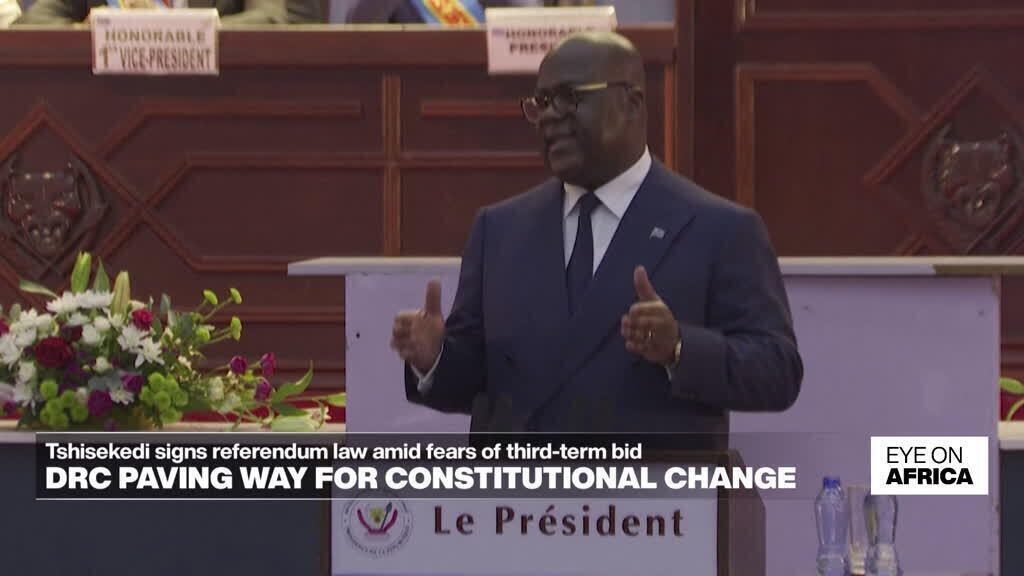
President Félix Tshisekedi signed Law No. 26/045 on 9 November 2026. The ordinance was read out on national television the next day, replacing a 2005 law that had governed the referendum which produced Congo's current constitution.

The new text lets a referendum adopt a new constitution or amend existing provisions, including ones the current charter shields from parliamentary revision. Whether that reaches the two-term presidential limit is the question now hanging over the 2028 election.

Why it matters

Congo's next presidential election is due in 2028. This law gives the sitting president a legal route to change the rules before then.

Questions about this story

Free account needed to ask — your question is kept and asked for you right after sign-up. Answers are public.

No questions yet — be the first to ask.

Key Indicators

346
National Assembly votes in favor
The revised text passed 346 to zero on 23 October 2026, with one abstention and an opposition boycott.
78
Senate votes in favor
Senators approved the same text 78 to zero on 31 October 2026.
100,000
Citizen signatures needed to trigger a referendum
The law lets 100,000 Congolese citizens petition either parliamentary chamber to call a vote.
8
Chapters in the new law
Roughly 50 articles cover initiative, convocation, campaign, voting, observers and penalties.
2028
Year Tshisekedi's second term ends
The scheduled presidential election falls at the end of his constitutional second term.

Voices

Curated perspectives — historical figures and your fellow readers.

Sign up to generate historical perspectives on this story.

People Involved

Organizations Involved

Timeline

June 2026 November 2026

7 events Latest: Today
Tap a bar to jump to that date
  1. Opposition and majority react

    Today Statement

    André Mbata says a new constitution is now possible; critics warn of a third-term route.

  2. Ordinance read on national television

    Announcement

    Deputy presidential spokesperson Roger Kalenga reads portions of the new law on RTNC.

  3. Tshisekedi signs Law No. 26/045

    Legislation

    The ordinance sets the conditions for organising a referendum in Congo.

  4. Senate approves the text 78-0

    Legislation

    Final parliamentary passage sends the bill to the president.

  5. National Assembly approves revised text 346-0

    Legislation

    Opposition lawmakers boycott the vote; one abstention is recorded.

  6. Parliament first passes the referendum bill

    Legislation

    Both chambers approve an initial version of the text replacing the 2005 referendum law.

Scenarios

1

Referendum called to adopt a new constitution before 2028

Possible Resolves by Q2 2028

Discussed by: André Mbata and the presidential majority; Congolese and international press covering the law

The presidency or a parliamentary majority uses the new law to convene a referendum on a replacement constitution. That text would define new term rules, and the vote would be held before the 2028 election calendar forces the issue. The law's own statement of reasons cites a constitutional basis for adopting a new constitution by referendum in cases of absolute necessity.

2

Article 220 holds and term limits survive

Uncertain Resolves by End of 2028

Discussed by: Congolese legal analysts and opposition figures citing Article 220

Any referendum touching the number or length of presidential mandates runs into Article 220, which bars constitutional revision on that subject. The Constitutional Court would have to rule on whether a referendum can override that shield. If it says no, the law remains a procedural framework and the 2028 election proceeds under current rules.

3

Referendum used for narrower questions, not term limits

Possible Resolves by End of 2028

Discussed by: André Mbata, who says a new constitution is possible but not obligatory

The government uses the law for limited constitutional questions or ordinary policy referendums, leaving the presidential term untouched. This matches the majority's framing of the law as closing a legal gap rather than as a vehicle for a third term.

Historical Context

2 moments from history that rhyme with this story — and how they unfolded.

December 2005

DRC constitutional referendum (2005)

Congolese voters approved a new post-transition constitution in a referendum held under the 2005 referendum law that Law No. 26/045 now replaces. The charter set a two-term presidential limit and created the institutions that govern the country today.

Then

The constitution was promulgated in February 2006 and paved the way for the 2006 elections.

Now

Its Article 220 made the number and duration of presidential mandates unamendable by parliament, a shield that now sits directly in the path of any referendum on term limits.

Why this matters now

The new law explicitly replaces the statute used for that 2005 vote, and the constitution it produced contains the very protections the current debate is about.

December 2015

Rwanda removes presidential term limits (2015)

Rwandan voters approved a constitutional referendum that allowed President Paul Kagame to run for a third term. Parliament had amended the constitution first, and the referendum ratified the change.

Then

Kagame ran and won in 2017, extending his rule past the limit set after the 1994 genocide.

Now

The vote became the reference case for how a referendum can be used to reset presidential term limits in the Great Lakes region.

Why this matters now

It shows the mechanism critics of the Congolese law are watching for: a popular vote used to convert an unamendable term limit into an amendable one.

Sources

(8)