

Pull to refresh
Logo
DR Congo sentences 66 soldiers to death for fleeing rebel fighting

DR Congo sentences 66 soldiers to death for fleeing rebel fighting

Force in Play

A Goma military court convicted the troops of cowardice, mutiny and disobedience after they abandoned positions in Walikale.

Overview

Updated 25 minutes ago

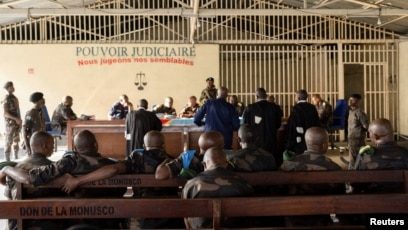
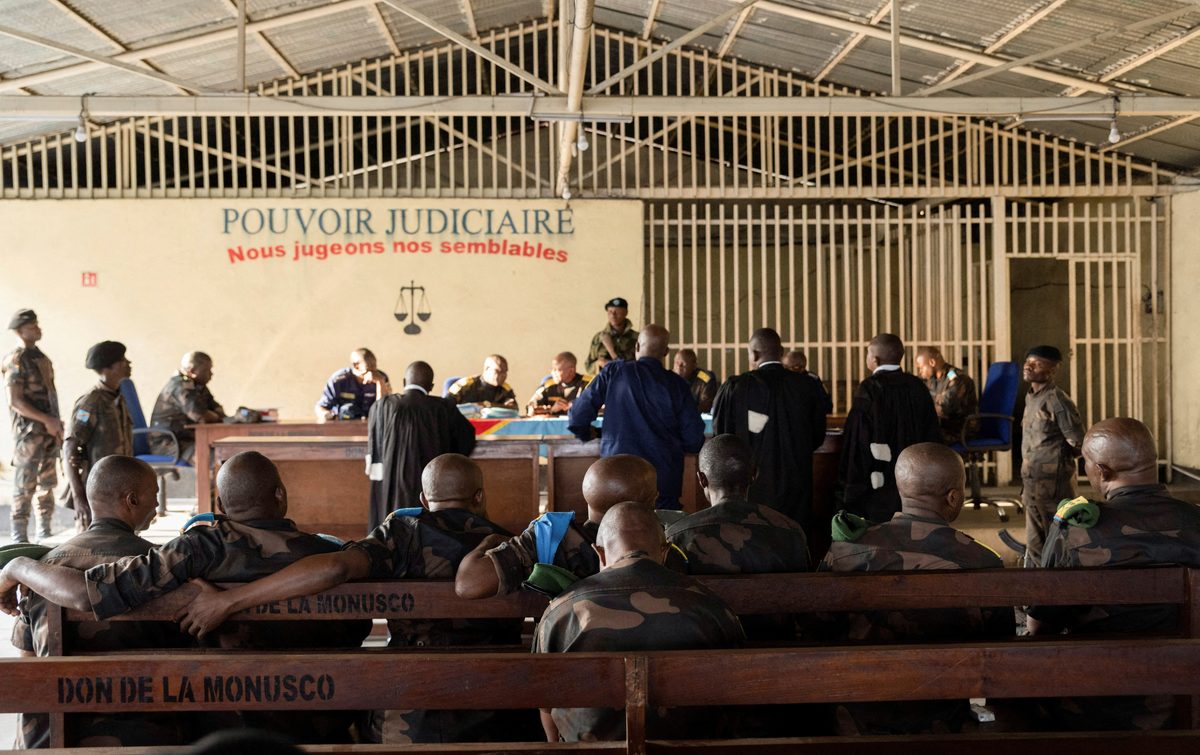
A military court in Walikale, in eastern Democratic Republic of Congo, sentenced 66 soldiers to death on 6 November for cowardice, mutiny and disobeying orders. The troops, from the 3415th Regiment, were arrested on 20 October after abandoning positions in Ntonto village during clashes with the Front for the Refoundation of the Nation (FRN). Four soldiers were acquitted and one sergeant received 10 years.

The verdict is the latest use of capital punishment to enforce discipline in the Congolese army, which has lost ground to the FRN across North and South Kivu. Congo lifted a 20-year moratorium on the death penalty in March 2024. Since January 2025, military courts have convicted at least 507 soldiers and handed down 381 death sentences, according to RFI. No formal executions have been carried out since the moratorium ended.

Why it matters

Kinshasa is using death sentences to enforce discipline in an army that a Pentagon think tank analysis described as fragmented and poorly paid.

Questions about this story

Free account needed to ask — your question is kept and asked for you right after sign-up. Answers are public.

No questions yet — be the first to ask.

Key Indicators

66
Soldiers sentenced to death
Verdict issued by the Goma garrison military court sitting in Walikale.
71
Soldiers tried
Four were acquitted and one sergeant received a 10-year prison term.
381
Death sentences since January 2025
Figure compiled by French broadcaster RFI from military court records.
507
Soldiers convicted since January 2025
Total military convictions reported by RFI over the same period.
27
Death sentences in October 2026
A separate group sentenced for withdrawing from the frontline.
235,000
Congolese army troops
Size of the FARDC cited in a Pentagon think tank analysis.

Voices

Curated perspectives — historical figures and your fellow readers.

Sign up to generate historical perspectives on this story.

People Involved

Organizations Involved

Timeline

March 2024 November 2026

6 events Latest: Today
Tap a bar to jump to that date
  1. Army statement on Walikale verdict publicized

    Today Statement

    The 34th Military Region's account of the trial and sentences circulates in Congolese and international media.

  2. 71 soldiers arrested in Walikale

    Military

    Troops of the 3415th Regiment are detained in Ngora after fleeing positions in Ntonto village.

  3. Congo lifts death penalty moratorium

    Policy

    The government ends a 20-year pause on executions, citing the need to remove traitors from the army.

Scenarios

1

No executions follow; the sentences stay symbolic

Likely Resolves by Nov 10, 2027

Discussed by: BBC News and RFI, which report no formal executions since the moratorium ended

Congo has not carried out a formal execution since lifting its moratorium in March 2024. The 66 condemned soldiers join hundreds of others under death sentence. If the pattern holds, the verdicts function as a deterrent threat rather than a prelude to firing squads.

2

Congo carries out its first executions since 2024

Unlikely Resolves by Q2 2027

Discussed by: Human rights groups including Amnesty International, which opposed the 2024 reinstatement

Rights groups warned that reinstating capital punishment would lead to executions and that military trials fall short of fair-trial standards. A decision to execute the Walikale group would test whether the death penalty is a threat or a practice.

3

Military courts hand down more mass death sentences

Likely Resolves by Q1 2027

Discussed by: RFI, whose count shows 381 death sentences since January 2025

The Walikale ruling follows 27 death sentences in October alone. With the FRN advancing and units breaking under pressure, more courts-martial are likely to produce similar batches of convictions.

4

FRN advances on Walikale, undercutting the court's deterrent

Possible Resolves by Q1 2027

Discussed by: Telegraph reporting and army spokesman Major Dieudonne Kasereka

FRN forces reportedly advanced about 30 miles toward Walikale and took Bunyakiri and Kambali. If the town falls, the court that issued the sentences would be operating under rebel threat, and the discipline campaign would compete with the insurgency for control of the ground.

Historical Context

3 moments from history that rhyme with this story — and how they unfolded.

March 2024

DR Congo lifts death penalty moratorium (March 2024)

Congo ended a 20-year pause on capital punishment, saying it needed to remove traitors from the army. The government said the penalty would also apply to people involved in armed groups, insurrection, treason and war crimes.

Then

Rights groups criticised the decision. No formal executions followed.

Now

Military courts began issuing death sentences in volume: 381 since January 2025, according to RFI.

Why this matters now

The Walikale verdict is a direct product of that 2024 decision, applied to soldiers accused of fleeing rather than to rebel leaders.

October 2025

Joseph Kabila sentenced in absentia (October 2025)

A Congolese court sentenced former president Joseph Kabila to death on charges including war crimes and treason. He denied the accusations and did not appear to defend himself.

Then

The sentence had no immediate physical effect; Kabila remained outside the country.

Now

A year later he was named leader of the FRN, making the death sentence a political fact in the war.

Why this matters now

It shows capital punishment in Congo is used against both rank-and-file soldiers and political opponents, and that a death sentence does not remove a defendant from the conflict.

2025-2026

M23 and FRN offensive in eastern Congo (2025-2026)

The M23 rebellion, which Congo and UN experts say Rwanda backs, seized large parts of mineral-rich eastern Congo. In October 2026 the coalition was renamed the FRN and Kabila took its leadership. Talks in Doha failed.

Then

Congolese units withdrew from positions, and the army turned to mercenaries and the Wazalendo militia.

Now

The FRN pushed into South Kivu and advanced toward Walikale, the town where the court-martial sat.

Why this matters now

The retreats that produced the Walikale court-martial are the same retreats that let the FRN advance on the court's own location.

Sources

(7)