Anchor

Guinea-Bissau expands presidential powers in referendum backed by military government
Rule ChangesNew constitution reshapes West African nation's political system ahead of December elections
2 days ago: BBC confirms constitution approvedNew here? Follow stories to track developments over time. Create a free account to get updates when stories you care about change.
Overview
Updated 1 hour agoGuinea-Bissau voters approved a new constitution on Sunday that hands the president sweeping powers — the authority to appoint and dismiss the prime minister and cabinet, create or abolish ministries, and dissolve parliament in a grave political crisis. The vote, organized by the military government that seized power last November, passed with 70% support on turnout of nearly 60%, according to the National Electoral Commission.
The change replaces a semi-presidential system that has existed since 1993, in which parliament appointed a prime minister who formed a cabinet. That arrangement produced repeated clashes between presidents and prime ministers — a cycle the military says justified its intervention. Critics, including the main opposition party, call the new charter a power grab that concentrates authority in one office and risks entrenching military-backed rule.
Why it matters
If the new constitution holds, Guinea-Bissau abandons a power-sharing model designed to prevent autocracy and hands one office control of government — with December elections under military supervision deciding who wields it.
Questions about this story
Free account needed to ask — your question is kept and asked for you right after sign-up. Answers are public.
No questions yet — be the first to ask.
Key Indicators
70%
Voters in favor of new constitution
Against 30% opposed, per provisional results from the National Electoral Commission.
~60%
Voter turnout
About 544,060 of registered voters cast ballots in the referendum.
65
New parliamentary seats
Down from 102 seats under the previous constitution; constituencies cut from 29 to 12.
$90K
Presidential candidate deposit
New financial requirement of 50 million CFA francs to contest the presidency.
Related Media
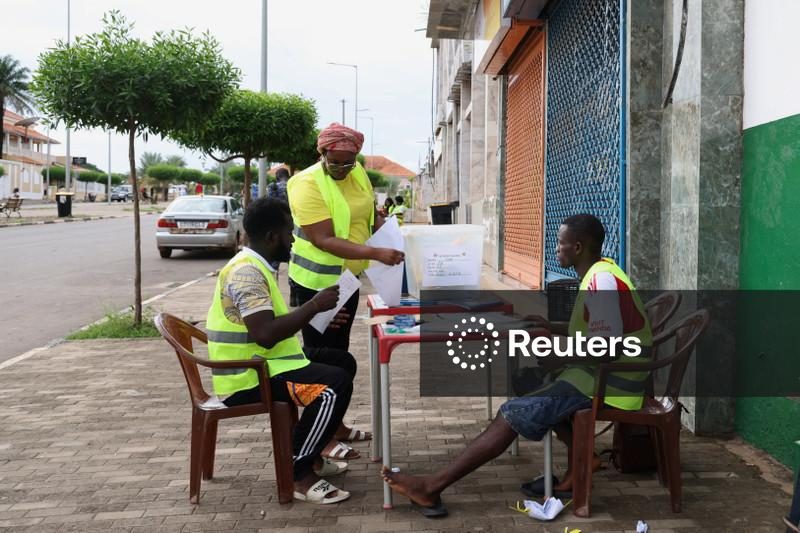
Licensable picture: Ballot counting begins after the polls close in the Guinea-Bissau constitutional referendum | Reuters Connect

28 views
1:18
Guinea-Bissau holds referendum on expanding presidential ...
AP Archive
169 views
0:38
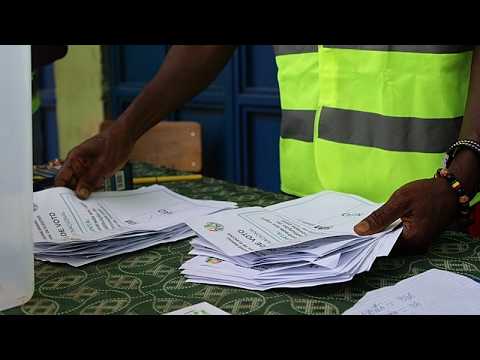
Guinea-Bissau votes on stronger presidency as military ...
africanews
621 views
1:02
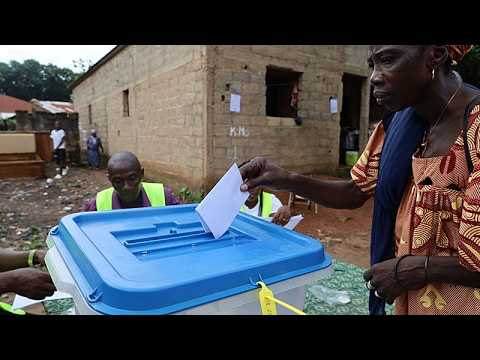
Guinea-Bissau votes in referendum to rewrite constitution and ...
euronews
Images from Openverse under Creative Commons licenses. Videos from YouTube.
Voices
Curated perspectives — historical figures and your fellow readers.
Play
Exploring all sides of a story is often best achieved with Play.
Most of these play right now — no account needed. Sign up to save scores, keep a streak, and unlock Debate and Predict.
Log in
Sign Up
Higher or Lower
A number from this story, against one from elsewhere in the news — guess which is bigger, then keep the chain going. 5 rounds, 3 strikes; a miss costs a strike and resets your streak.
Example
Anchor
EU tariff revenue
$52B
Big for this kind of number
Mystery
Pentagon AI contract
?
Round 1
Streak: 0
Mystery
?
Keyboard: ↓/L lower · ↑/H higher
0 pts
Best streak: 0 · Rounds: 0
0 points — sign up to put that on the leaderboard.
Now try on this story
Timeline
Guinea-Bissau expands presidential powers in referendum backed by military government
Order five events from this story, oldest at top. Each in the right slot scores 1 — neighbours within one slot count too. Your previous result — green ✓ for exact slots, yellow ~ for off by one. Cards now in true chronological order.
Loading puzzle…
Tap 💡 Free hint to lock the oldest into slot 1 — that leaves just four to order. Type pills are clues.
0/5
Exact slot
0/5
Within 1
Sign up to save your score and track a streak across stories.
Now try on this story
Connections
Sixteen names from the news. Find the four hidden groups of four. Four mistakes max.
Loading today's puzzle…
0/4 groups
Mistakes
Sign up to keep a daily streak — a new puzzle lands every day.
Now try on this story
Exit debate?
Your progress in this debate will be lost.
How it works
- 1 Two AI personas square off on this story.
- 2 You predict who'll win each round — correct picks earn XP.
- 3 One crossfire question is yours to fire. Pick it carefully.
Couldn't generate a topic
Select Your Champions
Choose one persona for each side of the debate
DEBATE TOPIC
Choose personas with different perspectives for a more dynamic debate.
SIDE A (PRO)
Select debater for this side:
No debate personas available right now.
SIDE B (CON)
Select debater for this side:
No debate personas available right now.
VS
Get ready to make your prediction...
Round of
Claim
Evidence
Stakes
Crossfire Answer
Closing Statement
Claim
Evidence
Stakes
Crossfire Answer
Closing Statement
Your Crossfire Question
Generating arguments...
Who's Got This Round?
Make your prediction before the referee scores
The referee scores both sides on
Correct predictions earn +20 XP
· Press 1 or 2 to pick
Evidence
40%
Logic
30%
Detail
20%
Style
10%
Round Results
Your Pick
Not this time
(%)
Overall Score
/10
Your Pick
Not this time
(%)
Overall Score
/10
Set the Crossfire
Pick the question both personas must answer in the final round
Crafting crossfire questions...
Choosing a question earns +10 XP crossfire bonus
🏆
Total XP Earned
Cred Change
Predictions
Debate Oracle! You called every round!
Sharp Instincts! You know your debaters!
The Coin Flip Strategist! Perfectly balanced!
The Contrarian! Bold predictions!
Inverse Genius! Try betting the opposite next time!
XP Breakdown
Base completion
+20 XP
Rounds played ( rounds x 5 XP)
+ XP
Correct predictions ( correct x 20 XP)
+ XP
Crossfire bonus
+10 XP
Accuracy
%
Prediction History
Round
You picked:
✓
✗
Now try on this story
Keep debating to level up your credibility and unlock achievements
People Involved
Umaro Sissoco Embaló
Former president (2019-2025) and former army brigadier general
Deposed in November 2025 coup; disputed his removal
Fernando Dias
Opposition presidential candidate (PAIGC-backed)
Claimed victory in disputed November 2025 election; removed by coup
General Na Man
Leader of the November 2025 coup and transitional military government
In power as head of transition, overseeing December 2026 elections
Organizations Involved
African Party for the Independence of Guinea and Cape Verde (PAIGC)
Political Party
Boycotted the referendum; main opposition force
Guinea-Bissau's main opposition party, which led the independence movement and dominated politics for decades.
National Electoral Commission
Government Agency
Announced provisional referendum results
Guinea-Bissau's election authority, which published the 70%-30% referendum result on September 1, 2026.
Timeline
November 2025 September 2026
6 events
Latest: 2 days ago
Tap a bar to jump to that date
-
BBC confirms constitution approved
Latest ConfirmationBBC News reports the referendum passed, confirming new presidential powers and electoral rule changes ahead of December elections.
-
Election commission announces results
DevelopmentNational Electoral Commission reports 70% in favor, 30% against, turnout near 60%. Reuters and BBC report provisional figures.
-
Referendum held
ReferendumVoters cast ballots on the new constitution. PAIGC urges boycott. Provisional results show 70% approval on ~60% turnout.
-
Transitional council approves constitutional text
LegislativeThe 65-member Transitional National Council, with 15 military seats and 10 presidential appointees, approves the proposed constitution.
-
Military stages coup
CoupMilitary seizes power one day before the electoral commission is due to announce presidential results. Ballots are destroyed and opposition leaders detained.
-
Disputed presidential election held
ElectionPresident Umaro Sissoco Embaló and opposition candidate Fernando Dias both claim victory. Election commission delays announcing results.
Historical Context
3 moments from history that rhyme with this story — and how they unfolded.
1980s-1993
João Bernardo Vieira's autocratic rule and the 1993 constitution (1980-1999)
Vieira ruled Guinea-Bissau for 19 years, concentrating power within the executive, politicizing the military, and facilitating abuses of power and impunity. The 1993 constitution adopted a semi-presidential system specifically to end overconcentration of power in the presidency.
Then
Vieira was deposed in 1998-99 after a brutal civil war; the power-sharing system took hold.
Now
The semi-presidential system created chronic president-prime minister conflict, but prevented the re-emergence of a single dominant executive — until now.
Why this matters now
The 2026 referendum explicitly reverses the 1993 constitutional settlement, undoing the anti-authoritarian design that followed Vieira's rule.
2023-2025
The 2023 parliamentary elections and Embaló's power struggle (2023-2025)
Proponents of the semi-presidential system won a 54-48 parliamentary majority in June 2023. President Embaló, a former brigadier general, refused to accept the power-sharing arrangement — dissolving parliament repeatedly, installing his own prime minister, and creating a shadow cabinet of military and police-linked advisors. He postponed elections twice.
Then
Governance stalled; institutions collapsed into personal rivalry between president and parliament.
Now
The gridlock provided the military's stated justification for the November 2025 coup and the constitutional rewrite.
Why this matters now
The coup leaders cite exactly this conflict as the problem the new constitution solves — transferring power definitively to the presidency.
2020s
Coup waves in West Africa (2020-2025)
Guinea-Bissau joins a wave of West African coups — Mali (2020, 2021), Guinea (2021), Burkina Faso (2022), Niger (2023). Each junta has promised elections and constitutional reforms; several have extended their stays through fabricated transition timelines.
Then
Military governments in Mali, Burkina Faso, and Niger all postponed promised elections and expanded their own powers.
Now
ECOWAS sanctions and diplomatic pressure have weakened as juntas consolidate power and align with external partners like Russia.
Why this matters now
The pattern raises the risk that Guinea-Bissau's 'transition' follows the regional precedent of consolidating military-backed rule behind a constitutional façade.
Sources
(10)Related Stories
Benin's democratic model erodes as opposition is systematically excluded from elections
Rule Changes
Updated May 31
Kazakhstan replaces its constitution, centralizing power in the presidency
Rule Changes
Updated May 30
Zambia's Hichilema wins a second term as president
Rule Changes
Updated Aug 18
Peru's revolving presidential door
Rule Changes
Updated May 29
Algeria elects a new parliament in second vote of the Tebboune era
Rule Changes
Updated Jul 5
Ethiopia holds 2026 election with Tigray region excluded
Rule Changes
Updated Jun 1