
Pull to refresh
Logo
DARPA's NOM4D builds a truss in orbit without astronauts

DARPA's NOM4D builds a truss in orbit without astronauts

New Capabilities

Caltech's robot assembled the first section of a 1.4-meter antenna in space; the full 11-bay structure will not be finished before the mission ends

Overview

Updated 1 hour ago

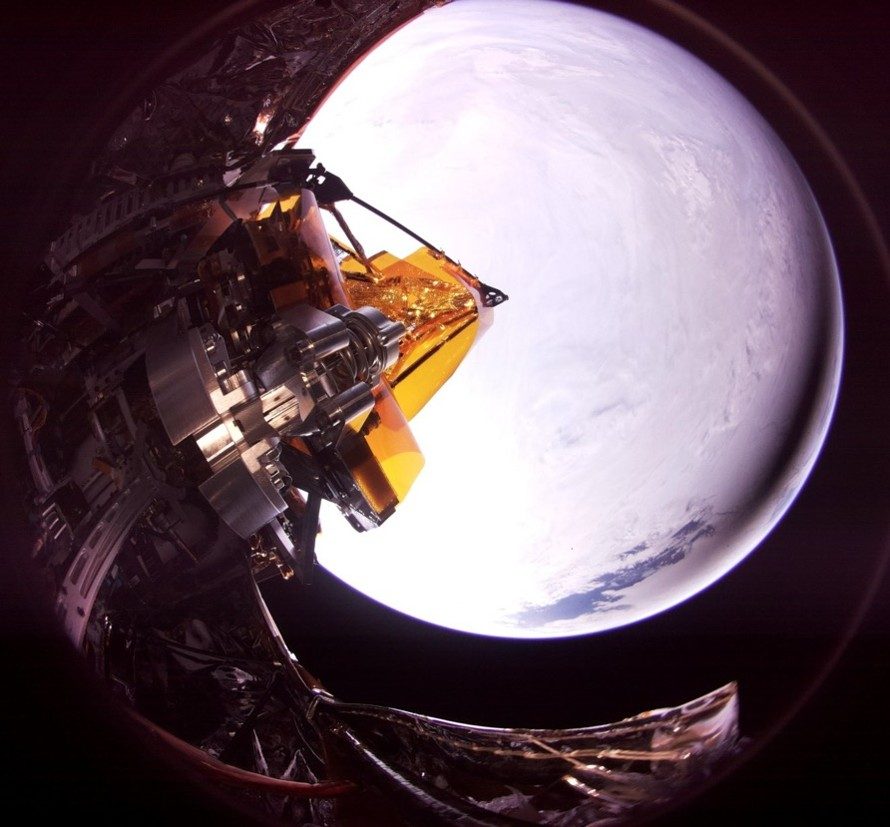
A payload roughly one cubic meter in size rode a SpaceX rideshare rocket into orbit on March 30, 2026. Inside were composite struts, aluminum joints, a perforated reflective film and an armlike robot. Over the following months the robot picked up those parts and built a section of a truss in open space, with no astronaut involved.

DARPA calls it the first automated assembly of a structure in orbit. Until now, large space hardware has either been folded to fit inside a rocket fairing or bolted together by astronauts on spacewalks. Building from loose parts changes the constraint: the pieces no longer have to survive launch as one folded object, and the finished structure can be wider than any fairing.

Why it matters

Building structures from loose parts in orbit could free antennas and solar arrays from the size limit of a rocket fairing.

Questions about this story

Free account needed to ask — your question is kept and asked for you right after sign-up. Answers are public.

No questions yet — be the first to ask.

Key Indicators

1
Truss bays assembled in orbit
Caltech completed the initial section of an 11-bay design; time ran out before more could be built.
11
Bays in the complete truss
A finished ASTRA reflector would carry 11 bays of perimeter truss and a stretched reflective surface.
1.4 m
Demonstration reflector diameter
The flight article is small by design; the concept is meant to scale to structures hundreds of meters across.
15
Months from demo decision to launch
DARPA redirected the program's final phase to a flight test and had a working payload in orbit 15 months later.

Voices

Curated perspectives — historical figures and your fellow readers.

Sign up to generate historical perspectives on this story.

People Involved

Organizations Involved

Timeline

2022 December 2026

6 events Latest: Today
Tap a bar to jump to that date
  1. ASTRA mission scheduled to end

    Upcoming Mission timeline

    Caltech says the payload is unlikely to finish the full 11-bay truss before its mission closes.

  2. First automated assembly reported in orbit

    Today Milestone

    A robot joins composite struts and joints into a truss bay and attaches a reflective film, with no crew aboard.

  3. ASTRA launches to low-Earth orbit

    Launch

    Caltech's payload flies as one of 10 payloads on Momentus's Vigoride 7, launched by SpaceX's Transporter-16.

  4. Illinois experiment due at the space station

    Upcoming launch

    A separate NOM4D team plans to cure a composite cylinder in orbit and return it for testing.

  5. Final phase redirected to orbital demos

    Program decision

    Citing faster-than-expected progress, DARPA replaces planned laboratory work with two small flight demonstrations.

  6. DARPA starts NOM4D

    Program launch

    The agency funds work on building large structures in orbit from raw materials rather than folding them for launch.

Scenarios

1

ASTRA closes out with a single truss bay built

Likely Resolves by End of 2026

Discussed by: Caltech and DARPA program statements

Caltech has already said the payload hit time limits and that finishing all 11 bays appears unlikely before the mission ends in December. If the mission stops at the initial section, the flight still counts as a proof of concept but leaves the full assembly sequence untested in space.

2

Full 11-bay reflector assembled in orbit

Unlikely Resolves by End of 2026

Discussed by: Caltech mission team

Completing the design would require the manipulator to build, tension and push out 10 more bays through brief daily command windows. The team has said the concept works but the hardware needs simplification and refinement, which points to a later flight rather than this one.

3

DARPA funds a second orbital assembly demonstration

Possible Resolves by Q2 2028

Discussed by: DARPA NOM4D program office

NOM4D was always meant to inform future systems rather than field one. A follow-on would likely fund a simplified builder and a larger truss, since the agency's stated target is structures hundreds of meters across, far beyond what a 1.4-meter test article shows.

4

Illinois composite experiment flies and returns a test article

Possible Resolves by End of 2027

Discussed by: University of Illinois Grainger College of Engineering

The second NOM4D flight takes a different approach: curing resin into a structural cylinder on the space station instead of joining prefabricated parts. Its value depends on getting the specimen back to Earth for strength testing.

Historical Context

3 moments from history that rhyme with this story — and how they unfolded.

December 1993 - May 2009

Hubble servicing missions (1993-2009)

Astronauts on five space shuttle flights captured the Hubble Space Telescope and worked on it in open space, replacing instruments and repairing a mirror flaw. Each mission required a crew, a shuttle and years of training.

Then

The 1993 mission corrected Hubble's blurred vision and restored the telescope's scientific output.

Now

Servicing extended Hubble's life by decades but ended when the shuttle retired, since no replacement crew vehicle existed.

Why this matters now

Hubble showed that structural work in orbit is possible. It also showed the cost: every repair needed people on site, which is what the Caltech payload is trying to replace.

December 2021 - January 2022

James Webb Space Telescope sunshield deployment (2022)

Webb's 6.5-meter mirror and tennis-court-sized sunshield had to fold to fit inside a five-meter rocket fairing, then unfold through hundreds of sequenced steps after launch. Mission controllers had no way to reach the hardware if a step failed.

Then

The deployments succeeded and the telescope began science operations in 2022.

Now

Webb's design became the reference case for how much complexity folding adds, and how unforgiving a one-way deployment is.

Why this matters now

Folding is the current answer to the fairing limit. Building in orbit offers an alternative that does not depend on a single successful unfurling sequence.

February 2020

MEV-1 docks with Intelsat 901 (2020)

Northrop Grumman's Mission Extension Vehicle-1 latched onto a working communications satellite in geostationary orbit and took over its station-keeping, extending its life by years. It was the first commercial docking of one satellite with another.

Then

Intelsat 901 returned to service, and a second vehicle performed a similar mission.

Now

Robotic servicing became a commercial line of business, but the work involved attaching to existing hardware rather than building new structure.

Why this matters now

Robots in orbit have so far grabbed and moved finished satellites. NOM4D is testing whether they can also put a structure together from parts.

Sources

(6)