
Pull to refresh
Logo
Victoria bans data centres from residential areas

Victoria bans data centres from residential areas

Rule Changes

New rules require renewable power, non-drinking water and a 150-metre buffer from homes

Today: Cabinet approves sustainable data centre plan

Overview

Updated 1 hour ago

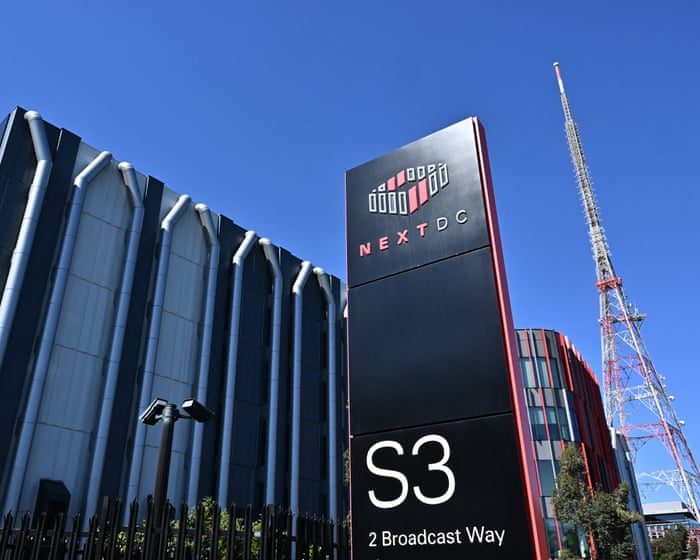
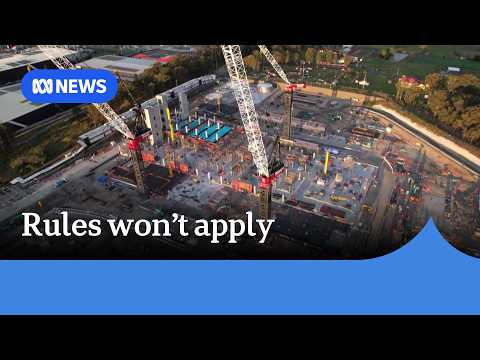
A proposed $1.5 billion data centre at the foot of the West Gate Bridge would draw more power than an entire regional city. On Monday, Victoria's state cabinet voted to restrict where such facilities can be built.

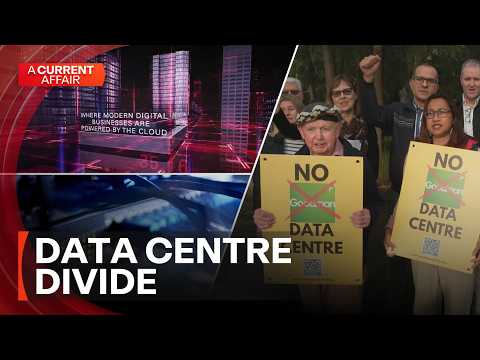
Data centres will be banned from residential zones across Victoria, kept at least 150 metres from any home, and required to generate their own renewable electricity and cool their facilities with non-drinking water. The plan reverses the government's earlier promise to make Victoria Australia's data centre capital, following years of community backlash in Melbourne's west, where 50 centres already operate.

The rules are not retrospective. Any project approved before the law passes next year proceeds under existing conditions, which has developers racing to secure fast-tracked approvals before the window closes.

Why it matters

If enacted, these rules push Victoria's data centre boom into industrial zones and give other Australian states a template for restricting AI infrastructure.

Questions about this story

Free account needed to ask — your question is kept and asked for you right after sign-up. Answers are public.

No questions yet — be the first to ask.

Key Indicators

50
Data centres operating in Victoria
Concentrated around Melbourne's west, up from one built in 2012.
840 MW
Maximum permitted grid draw
Permitted at full capacity, though currently consuming about a quarter of that.
150 m
Minimum buffer from any home
New facilities must sit at least this far from residential properties.
225 MW
Power draw of NextDC's proposed M3 expansion
The Footscray site's planned 10-hectare expansion runs 24/7 with homes within 15 metres.

Voices

Curated perspectives — historical figures and your fellow readers.

Ever wondered what historical figures would say about today's headlines?

Sign up to generate historical perspectives on this story.

People Involved

Organizations Involved

Timeline

August 2026 September 2026

6 events Latest: Today
Tap a bar to jump to that date
  1. Carroll unveils data centre restrictions

    Upcoming Announcement

    Premier Ben Carroll releases rules banning data centres from residential zones, near schools and within 150 metres of homes, with renewable power and non-drinking water mandates.

  2. Cabinet approves sustainable data centre plan

    Today Decision

    Victoria's cabinet signs off the Sustainable Data Centre Action Plan after months of community pressure.

  3. NextDC lobbying letter becomes public

    Disclosure

    The Guardian reports NextDC used AI to lobby a minister to fast-track its 225MW Footscray expansion.

  4. West Gate data centre proposal draws opposition

    Proposal

    A $1.47 billion facility proposed in Spotswood would draw more power than a regional city, fuelling local backlash.

  5. Yarraville residents halt power pole work

    Protest

    Residents block Jemena crews installing poles to feed data centre demand; the company pauses the rollout.

  6. Energy ministers set renewable generation principle

    Decision

    The Energy and Climate Change Ministerial Council agreed data centres must bring new firm renewable generation online to cover their own demand.

Scenarios

1

Victoria's parliament passes the data centre act

Likely Resolves by Q2 2027

Discussed by: Premier's office, AFR, Guardian

The government introduces implementing legislation in the current sitting. With Labor's parliamentary majority and cabinet already united, the state passes a Sustainable Data Centre Act in the first half of 2027. Developers build new facilities in industrial precincts, comply with the renewable energy and water mandates, and negotiate community benefit agreements.

2

Developers rush approvals before the rules bite

Likely Resolves by Mar 1, 2027

Discussed by: Guardian analysis, industry sources

Because the rules are not retrospective, developers file fast-tracked applications under the existing Development Facilitation Program before the law passes. NextDC's M3 expansion and the $1.5 billion West Gate proposal are the test cases. If approved in time, they operate under the old grid and water arrangements, frustrating communities that pushed for the restrictions.

3

Hyperscalers shift planned capacity to other states

Possible Resolves by Q3 2027

Discussed by: Anthony Carbines (counter-claim), industry watchers

If the renewable-supply and water conditions raise development costs above rival states, Amazon, Microsoft or Google could divert planned Victorian facilities to New South Wales or Queensland, where rules remain looser. Minister Carbines insists the guardrails will not deter them. The local investment guarantee and job-training requirements are designed to offset any loss of community support.

Historical Context

3 moments from history that rhyme with this story — and how they unfolded.

1995-2005

Mobile phone tower siting regulation (1990s-2000s)

Rapid mobile network expansion triggered NIMBY campaigns around schools and homes across Australia. Councils introduced siting setbacks and co-location requirements to manage the conflict.

Then

Tower proposals faced years of appeals, and carriers redesigned sites to reduce community impact.

Now

Federal rules standardised consultation and siting, allowing the network to expand while local government retained some control.

Why this matters now

It is the clearest precedent for regulating essential digital infrastructure's placement near homes, and the consultation and buffer rules now proposed for data centres mirror those tower regulations.

2004-2015

Victorian wind farm siting battles (2000s-2010s)

Wind developers proposed large turbine clusters across rural Victoria. Residents near sites on the Surf Coast and in the Western District campaigned against visual and noise impacts, stalling projects through planning appeals.

Then

Several projects were delayed or redesigned, and setback requirements from dwellings became standard in state planning policy.

Now

The conflict produced Australia's renewable energy zone model, which earmarks specific regions for generation rather than letting developers site anywhere.

Why this matters now

The same buffer-from-homes tool now applied to data centres was forged in Victoria's wind farm fights, and the renewable energy zone precedent is directly cited in proposals to zone data centres into industrial precincts.

2011-2017

Coal seam gas moratoriums in Australia (2011-2017)

Coal seam gas exploration spread across farming regions of New South Wales and Victoria. Landowner and environmental campaigns pushed Victoria to impose a moratorium in 2014 and a fracking ban in 2016.

Then

The bans froze exploration investment across the states that adopted them.

Now

The episode established that extractive industrial activity requires an explicit social licence, and later federal-state agreements resumed development only under tighter environmental law.

Why this matters now

Data centres now follow the same path from community backlash to moratorium to legislation, with local councils in Maribyrnong, Hume and Brimbank already declaring moratoria before the state acted.

Sources

(10)