
Pull to refresh
Logo
Deacero casts first billet at its Ramos II minimill in Coahuila

Deacero casts first billet at its Ramos II minimill in Coahuila

Built World

A $600 million scrap-fed plant enters commissioning nine months late, aimed at the large structural beams Mexico imports

Overview

Updated Yesterday

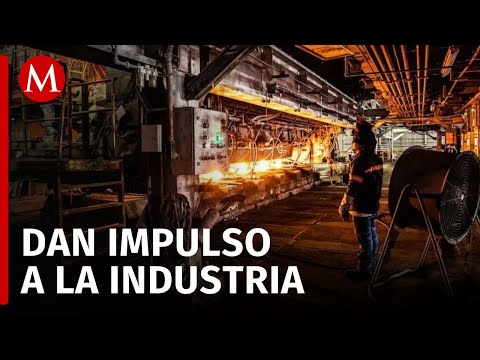
Deacero cast its first steel billet at Ramos II on Nov. 2, 2026, starting commissioning at a $600 million minimill in Ramos Arizpe, Coahuila. The plant is roughly nine months behind the February 2026 start date the company set when it announced the project in 2024.

That first billet came from the existing furnace next door, not from the new 150-tonne furnace still being tested. Beam blanks follow, then structural sections up to 27 inches deep, shapes Deacero has never made and Mexico currently buys from abroad.

Why it matters

Mexico imports the large beams this mill will roll. At capacity it replaces some, restoring output Coahuila lost when AHMSA shut.

Questions about this story

Free account needed to ask — your question is kept and asked for you right after sign-up. Answers are public.

No questions yet — be the first to ask.

Key Indicators

$600M
Ramos II investment
Budget set at the June 2024 project launch.
$1.3B
Cumulative Ramos Arizpe investment
Includes the mill Deacero built at the site in 2011 and 2012.
1M tonnes
Stated annual capacity
Deacero's June 2024 figure; earlier statements said 1.2 million and 1.5 million tonnes.
150 t
New electric arc furnace
Danieli furnace at Steelmaking Plant No. 2, still in commissioning.
~9 months
Delay behind planned start
Measured from the February 2026 startup date set in 2024.

Voices

Curated perspectives — historical figures and your fellow readers.

Sign up to generate historical perspectives on this story.

People Involved

Organizations Involved

Timeline

December 2022 November 2026

8 events Latest: Yesterday
Tap a bar to jump to that date
  1. Ramos II startup reported, with the $600 million figure recirculating

    Latest Report

    Several outlets describe a fresh $600 million commitment that is the same budget announced in June 2024.

  2. Trade press: first billet is a test, not commercial output

    Report

    Cluster Industrial reports no date has been confirmed for reaching full capacity.

  3. First billet cast at Ramos II

    Milestone

    The caster runs on liquid steel from the existing Plant No. 1 furnace while the new furnace is commissioned.

  4. A third capacity figure surfaces

    Statement

    A Deacero spokesperson tells Reforma the project raises company capacity by 1.2 million tonnes a year.

  5. Deacero launches Ramos II with Coahuila's governor

    Announcement

    $600 million budget, 1 million tonnes a year, and a February 2026 startup target.

  6. Danieli contracted for a 1.5 million tonne minimill

    Contract

    Trade press reports the equipment order with startup scheduled for the first quarter of 2026.

  7. Deacero outlines a 1.2 million tonne fourth mill

    Announcement

    The company describes its planned plant at Ramos Arizpe as a 1.2 million tonne facility.

  8. AHMSA halts steelmaking in Monclova

    Industry

    Mexico's largest integrated blast furnace plant stops operating after the Federal Electricity Commission cuts its power.

Scenarios

1

Beam blanks roll at Ramos II within weeks

Likely Resolves by Q1 2027

Discussed by: Danieli, in its Nov. 2 commissioning statement

Danieli said beam-blank production would start in the weeks after the first billet. Beam blanks are the semifinished shapes the new rolling mill turns into structural sections up to 27 inches deep. A successful cast would move the plant from testing the caster to testing the mill itself.

2

New electric arc furnace starts at Steelmaking Plant No. 2

Likely Resolves by Q2 2027

Discussed by: Danieli and Deacero commissioning statements

The 150-tonne furnace is the core of the project. Until it runs, the caster depends on liquid steel from the older Plant No. 1 furnace, which caps output. Starting the new furnace is the step that lets Ramos II melt its own scrap at design rate.

3

Ramos II reaches full commercial production

Possible Resolves by End of 2027

Discussed by: Cluster Industrial and MexicoNow, which reported no date has been set

The first billet was a commissioning test. Deacero has not published a date for commercial output, a reconciled capacity figure, or a final project cost. Reaching commercial production would mean the plant runs at its stated rate and ships sections to buyers rather than to test rolls.

Historical Context

3 moments from history that rhyme with this story — and how they unfolded.

December 2022

Altos Hornos de México shutdown (2022)

Altos Hornos de México, the country's largest integrated blast furnace plant, stopped operating in Monclova at the end of 2022 after the Federal Electricity Commission cut its power supply. The plant had anchored Coahuila's steel industry for decades, turning iron ore and coke into steel.

Then

Coahuila lost its main source of primary steelmaking.

Now

The state's output came to rest on scrap-fed electric arc furnaces, including Deacero's Ramos Arizpe mills.

Why this matters now

The mayor of Ramos Arizpe has said Deacero's investment could bring the municipality toward production levels AHMSA once reached. Ramos II runs on scrap, not iron ore.

2011-2013

Deacero's first Ramos Arizpe mill (2011-2013)

Deacero built a mill at Ramos Arizpe in 2011 and 2012, and it has operated since 2013. It rolls structural sections smaller than the 27-inch shapes Ramos II is designed to make.

Then

Deacero established a rolling presence in southeast Coahuila.

Now

The site became the base for a second phase, bringing cumulative investment there to about $1.3 billion.

Why this matters now

Ramos II is phase two on the same site. Sharing the existing melt shop is what let the company start the new caster before the new furnace was ready.

1989

Nucor's Crawfordsville minimill (1989)

Nucor started a minimill in Crawfordsville, Indiana, that cast thin slabs and rolled them in one continuous line. Integrated mills of the era cast thick slabs and reheated them before rolling.

Then

The plant showed scrap-fed electric furnace steel could be rolled into flat products at lower capital cost.

Now

Competitors adopted thin-slab casting, and minimills took share from integrated producers in product lines those mills had dominated.

Why this matters now

Ramos II is the same bet at a smaller scale: melt scrap, cast near-final shapes, and take a product line — heavy structural sections — that importers currently supply.

Sources

(6)