

Pull to refresh
Logo
Daily Brief
Following
Why Ranks Sign Up
Scientists map world's largest deep-sea whale graveyard

Scientists map world's largest deep-sea whale graveyard

New Capabilities

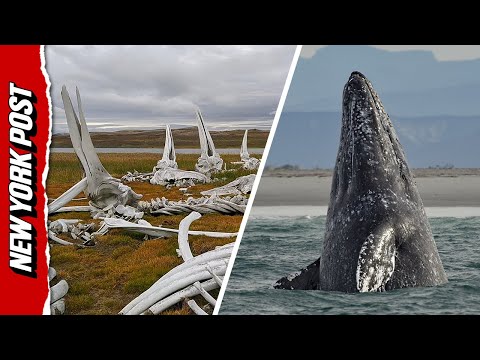
A crewed Chinese submersible documented nearly 500 whale skeletons along a 1,200-kilometer scar on the Indian Ocean floor, some 5.3 million years old.

Today: Findings published in Nature

Overview

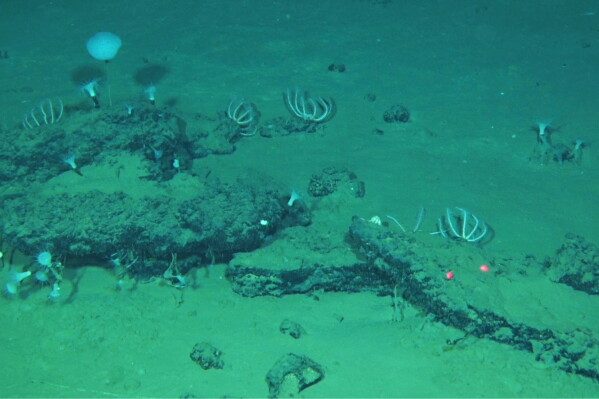
At 7,002 meters down, where sunlight never reaches, a Chinese crewed submersible found bones. Then hundreds more. Across a 1,200-kilometer trench on the Indian Ocean floor, researchers counted nearly 500 dead whales, the oldest skull dated to 5.3 million years ago.

The site is the biggest, deepest and oldest whale graveyard ever found. It shows how a single whale carcass feeds deep-sea life for decades, and how this stretch of seafloor has been collecting that bounty for millions of years.

Why it matters

A single dead whale feeds the deep ocean for decades. This site proves that nutrient cycle has run on the seafloor for over 5 million years.

Questions about this story

No questions yet — be the first to ask.

Key Indicators

~485
Whale-fall sites recorded
476 fossilized whales plus five active whale-fall ecosystems.
7,002 m
Maximum depth
Deepest whale fall ever documented, in the hadal zone.
1,200 km
Length of the graveyard
The stretch of the Diamantina Fracture Zone surveyed.
5.26M yrs
Age of oldest skull
The remains span from 5.26 million to about 120,000 years old.
32
Submersible dives
Crewed Fendouzhe dives that mapped and sampled the site in 2023.

Voices

Curated perspectives — historical figures and your fellow readers.

Ever wondered what historical figures would say about today's headlines?

Sign up to generate historical perspectives on this story.

Play

Exploring all sides of a story is often best achieved with Play.

Log in to play. Track your picks, climb the leaderboards. Log in Sign Up
Predict 3 ways this could play out. Contrarian picks score more — points lock when the scenario resolves. Log in to play
Higher or Lower Two numbers from this story. Guess which is bigger. 5 rounds to set a streak. Log in to play
Connections Sixteen names from the news. Find the four hidden groups of four. Log in to play

People Involved

Organizations Involved

Timeline

1987 June 2026

4 events Latest: Today
Tap a bar to jump to that date
  1. Findings published in Nature

    Today Publication

    Chinese scientists report the biggest, deepest and oldest whale graveyard known, with the oldest skull dated to 5.26 million years.

  2. First Diamantina whale fall spotted

    Discovery

    During a Fendouzhe dive in the Diamantina Fracture Zone, researchers spot a single whale carcass on the seafloor.

  3. First whale-fall ecosystem found

    Background

    Craig Smith's team discovers a whale skeleton off California crawling with deep-sea life, launching the study of whale falls.

Historical Context

3 moments from history that rhyme with this story — and how they unfolded.

1987

First whale fall discovered off California (1987)

Craig Smith's team, using a Navy submersible, found a whale skeleton on the seafloor off Southern California. Animals had colonized the bones, feeding on fats locked inside. It was the first time scientists saw a whale carcass as a living ecosystem.

Then

Researchers realized a single whale could feed deep-sea life for decades after death.

Now

Whale falls became a recognized field, with dozens of new species found on sunken carcasses worldwide.

Why this matters now

That single skeleton started the science the Diamantina survey now scales up to nearly 500 carcasses at once.

2004

Osedax 'bone-eating worms' described (2004)

Scientists at the Monterey Bay Aquarium Research Institute described Osedax, worms with no mouth or gut that bore into whale bone. They use acid and symbiotic bacteria to extract nutrients from the skeleton.

Then

The worms explained how whale bones break down and feed life on the seafloor.

Now

Osedax turned up at whale falls across the globe, showing the process is worldwide.

Why this matters now

These same bone-eating worms swarm the Diamantina carcasses, the engine that recycles each skeleton into the deep-sea food web.

Discovered early 1900s

La Brea Tar Pits, ongoing excavation

In downtown Los Angeles, natural asphalt seeps trapped Ice Age animals for tens of thousands of years. The pits yielded millions of fossils, from dire wolves to mammoths, packed into one site.

Then

The pits gave paleontologists an unmatched record of Ice Age life in one place.

Now

La Brea remains a benchmark for any fossil site where remains pile up over long spans.

Why this matters now

Paleontologist Nick Pyenson calls the Diamantina graveyard the marine version of La Brea: a single place collecting bones across millions of years.

Sources

(5)