

Pull to refresh
Logo
Daily Brief
Following
Why Sign Up
Underwater data centers move from prototype to commercial buildout

Underwater data centers move from prototype to commercial buildout

Built World

Shanghai's wind-powered subsea facility goes live as partners commit to a 500-megawatt cluster

Today: Shanghai brings world's first wind-powered subsea data center online

Overview

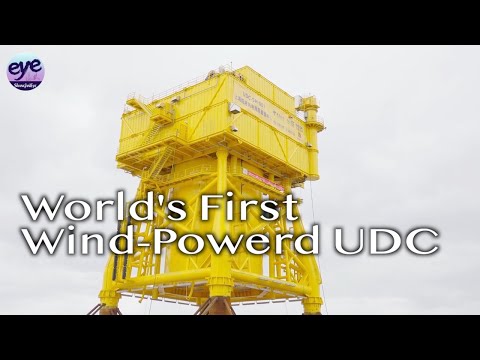
A sealed steel capsule now sits on the seabed off Shanghai's Nanhuizui coast, drawing more than 95% of its power from offshore wind turbines and pulling cold seawater across its servers. It is the world's first wind-powered underwater data center, and its operators have signed deals to scale the design into a 500-megawatt cluster.

Why it matters

AI's power and water demands are outrunning the grid; subsea data centers point to a way around both bottlenecks at once.

Key Indicators

1.15
Power Usage Effectiveness (PUE)
Ratio of total facility power to server power. The global average for land-based data centers is about 1.5; lower is better.
95%+
Share of electricity from offshore wind
Direct supply from nearby turbines, with grid backup for the remainder.
500 MW
Planned cluster capacity
Target size of the follow-on subsea cluster agreed by Hicloud, Shenergy, China Telecom, and CCCC.
0
Liters of freshwater used for cooling
Seawater replaces the millions of liters a comparable land facility would consume each year.
22.8%
Reduction in total power consumption
Operator estimate versus an equivalent land-based facility, driven mostly by passive seawater cooling.
12,000 t
Annual carbon emissions cut
Operator estimate of CO₂ avoided each year compared with a land-based equivalent on China's grid mix.

Interactive

Exploring all sides of a story is often best achieved with Play.

Ever wondered what historical figures would say about today's headlines?

Sign up to generate historical perspectives on this story.

Sign Up

Debate Arena

Two rounds, two personas, one winner. You set the crossfire.

People Involved

Organizations Involved

Timeline

  1. Shanghai brings world's first wind-powered subsea data center online

    Deployment

    Hicloud confirms the Lin-gang underwater data center is operating off Nanhuizui, drawing more than 95% of its power from offshore wind and reporting a Power Usage Effectiveness (PUE) below 1.15.

  2. Partners commit to 500-megawatt subsea cluster

    Commercial deal

    Hicloud, Shenergy Group, China Telecom, and China Communications Construction Company sign agreements to scale the Lin-gang design into a 500 MW offshore wind-powered subsea data center cluster.

  3. First commercial underwater data module deployed in Hainan

    Deployment

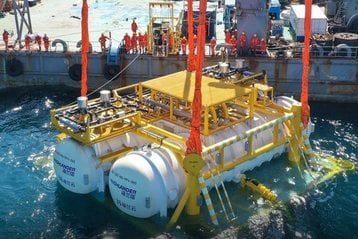
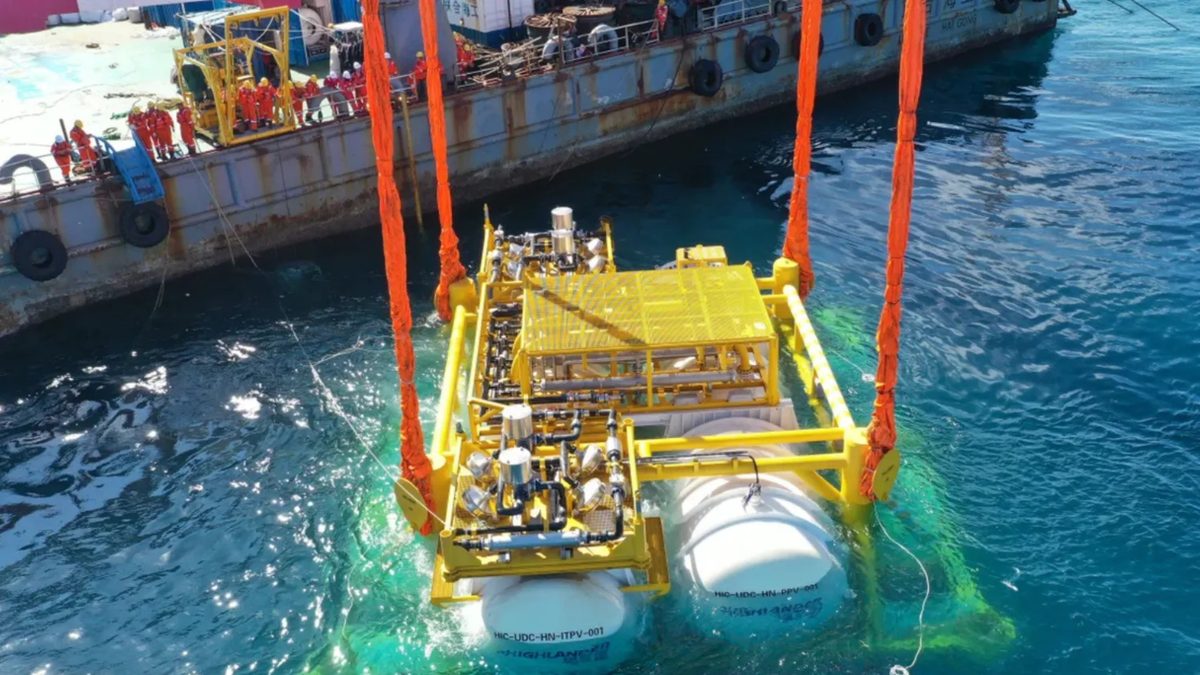
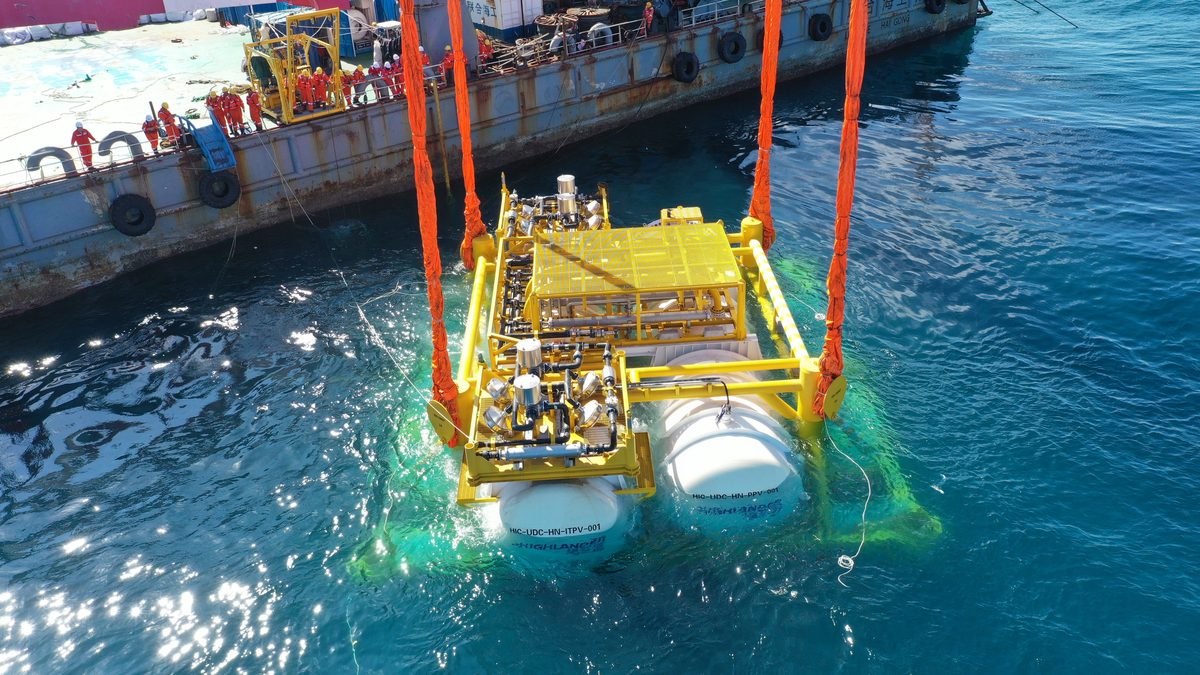
    Highlander drops the first commercial underwater data module off Hainan's Lingshui coast, beginning China's move from research to paying workloads.

  4. Microsoft retrieves Natick capsule with strong reliability result

    Research result

    Microsoft pulls the Northern Isles capsule back up. Server failure rate is one-eighth that of an identical land-based control, validating the sealed-environment thesis.

  5. Microsoft sinks Northern Isles capsule off Scotland

    Deployment

    A 40-foot pressurized capsule with 855 servers is lowered onto the seabed near the Orkney Islands for a two-year endurance test.

  6. Microsoft begins Project Natick

    Research

    Microsoft Research starts a multi-year program to test whether commercial servers can run reliably inside sealed, seabed-mounted capsules.

Scenarios

1

China builds out the 500 MW cluster, subsea becomes a Chinese specialty

Discussed by: Data Center Dynamics; Tom's Hardware coverage of the Hicloud announcement

The Lin-gang capsule meets its PUE and uptime targets. Hicloud and partners build out the planned 500 MW cluster over the next several years, anchored to Shanghai's offshore wind buildout. Subsea data centers stay mostly a Chinese specialty, used to absorb AI training loads that the inland grid cannot easily power. Western hyperscalers watch closely but do not copy the model at scale.

2

Western hyperscalers fund parallel subsea programs

Discussed by: Microsoft Project Natick alumni; data center analysts at Uptime Institute

Lin-gang's operating data convinces Microsoft, Amazon, or Google to revive or fund their own subsea programs, especially in markets where coastal grid capacity is tight (Ireland, Northern Virginia's offshore alternatives, parts of Japan and Korea). Marine permitting and union labor constraints slow Western deployments, but at least one hyperscaler announces a pilot within two to three years.

3

Maintenance failures stall the buildout

Discussed by: Skeptical engineers cited in earlier Project Natick coverage

Sealed capsules that fail in service are economic write-offs, since you cannot send a technician inside. If the early Lin-gang pods hit cascading hardware issues, or if a capsule has to be hauled up early, the 500 MW plan slips or shrinks. Subsea remains a research curiosity, and Chinese cloud growth shifts back to inland sites with cheap coal and nuclear power.

4

Floating data centers, not submerged ones, win the next round

Discussed by: Marine infrastructure analysts; floating-platform startups

Floating offshore data center designs, where the IT hall sits on a platform above the waterline, prove easier to service and almost as efficient when paired with seawater cooling loops. Shanghai's submerged design becomes a niche, while the broader offshore data center market consolidates around floating platforms tied to offshore wind.

Historical Context

Microsoft Project Natick (2018–2020)

August 2018 – September 2020

What Happened

Microsoft Research lowered a 40-foot sealed capsule containing 855 servers onto the seabed off Scotland's Orkney Islands. After two years underwater, the team retrieved the capsule and counted failures. Servers inside had failed at one-eighth the rate of an identical control rack on land.

Outcome

Short Term

Microsoft never turned Natick into a commercial product. The reliability data was the headline takeaway and the press cycle moved on within months.

Long Term

Every serious underwater data center proposal since, including Hainan and now Shanghai Lin-gang, leans on Natick's reliability numbers as proof the basic engineering works.

Why It's Relevant Today

Lin-gang is the first commercial-scale answer to the question Natick raised but never resolved: can sealed subsea capsules carry real production workloads, not just a research demo? The Shanghai project is essentially Natick built for paying customers and tied to offshore wind.

UK offshore wind scale-up (2010–2020)

2010 – 2020

What Happened

British offshore wind grew from a few hundred megawatts of pilot projects to more than 10 gigawatts of installed capacity in a decade. Costs fell roughly 70% as turbine size, installation vessels, and seabed cabling matured. Projects like Hornsea One showed gigawatt-class offshore farms were buildable on commercial terms.

Outcome

Short Term

Offshore wind moved from subsidy-heavy demonstration to one of the cheapest new sources of power in the UK by the late 2010s.

Long Term

It set the template for marine industrial buildout: a few state-backed pilots, then a contractor base (vessels, cable layers, port hubs) that could replicate sites quickly. China's offshore wind sector now plays the same role for projects like Lin-gang.

Why It's Relevant Today

The 500 MW Lin-gang cluster only pencils out because Shanghai's offshore wind is already cheap and the marine contractor base (CCCC and others) is in place. The same conditions that made gigawatt-class offshore wind routine are what make subsea data centers thinkable now.

Hainan underwater data center launch (2022)

December 2022

What Happened

Highlander dropped the first commercial underwater data module off Lingshui, on the south coast of Hainan island. The pod ran live cloud workloads on the seabed, becoming the first paying subsea data center anywhere. More modules followed over the next two years.

Outcome

Short Term

Hainan proved the operating model on a small scale and gave Chinese regulators a working facility to permit and study.

Long Term

It set the engineering and regulatory baseline that the Shanghai Lin-gang project, larger and tied to offshore wind, builds directly on.

Why It's Relevant Today

Lin-gang is the second act. Hainan showed that capsules could host real workloads; Shanghai is the test of whether the model scales with renewable power and a hyperscale plan attached.

Sources

(4)