

Pull to refresh
Logo
Daily Brief
Following
Why Sign Up
Scientists pull biodiversity data from thin air using environmental DNA

Scientists pull biodiversity data from thin air using environmental DNA

New Capabilities
By Newzino Staff |

Airborne eDNA matures from zoo experiment to continental-scale ecosystem monitoring tool

April 14th, 2026: Nature feature consolidates the field's leap from curiosity to deployment

Overview

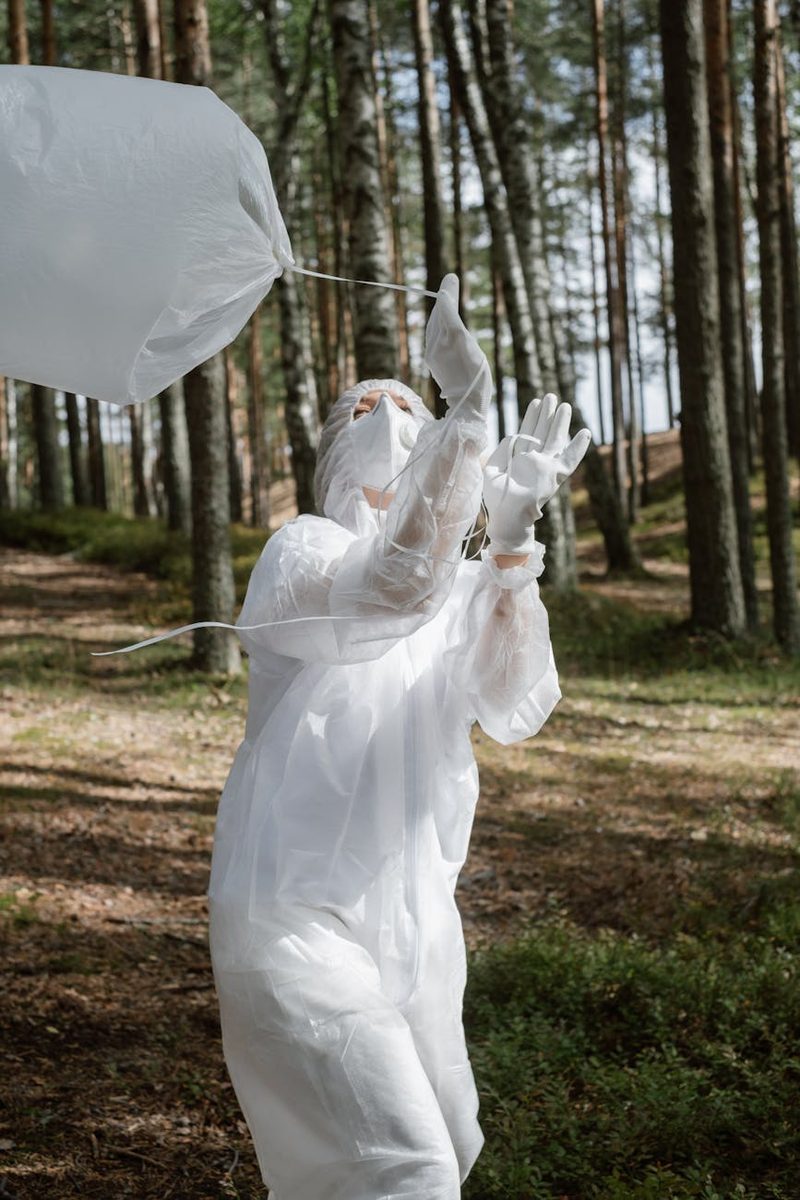
For most of conservation history, counting wildlife meant walking into a forest with binoculars, traps, or camera arrays. A new method does the work without ever seeing the animal: filter the air, sequence the DNA fragments floating in it, and read off which species were nearby. By April 2026, the technique has detected 120 vertebrate species in a Zambian savanna in four days, recovered three decades of biodiversity change from filters Sweden archived for nuclear monitoring, and reduced field-to-result turnaround to 48 hours.

Why it matters

Biodiversity loss is hard to measure and harder to act on. Airborne DNA gives policymakers a cheap, repeatable signal of what's vanishing — and when.

Key Indicators

2,700+
Genera reconstructed from Swedish archive
Recovered from 34 years of weekly air filters originally collected to monitor radioactive fallout.
120
Vertebrate species detected in Zambia
Found in four days of air sampling in the Luangwa Valley, including 16 of 17 species seen by camera traps.
48 hours
Field-to-result turnaround
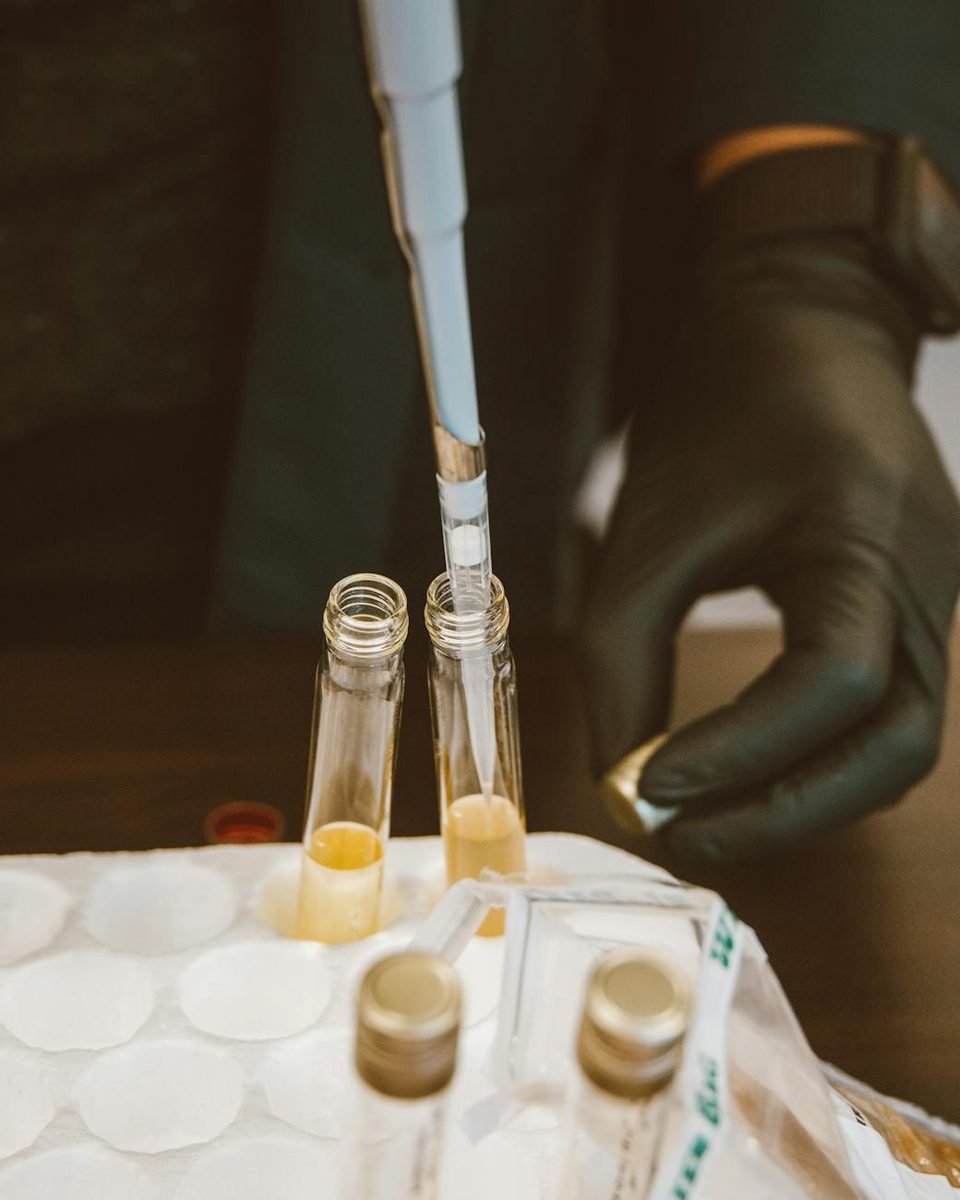
Mobile labs now extract, sequence, and analyse airborne DNA on site within two days.
$50–$200
Per-sample analysis cost
DNA extraction, PCR, and sequencing for one air sample. Passive collectors run under $100 in hardware.
1960s
Earliest usable archived filters
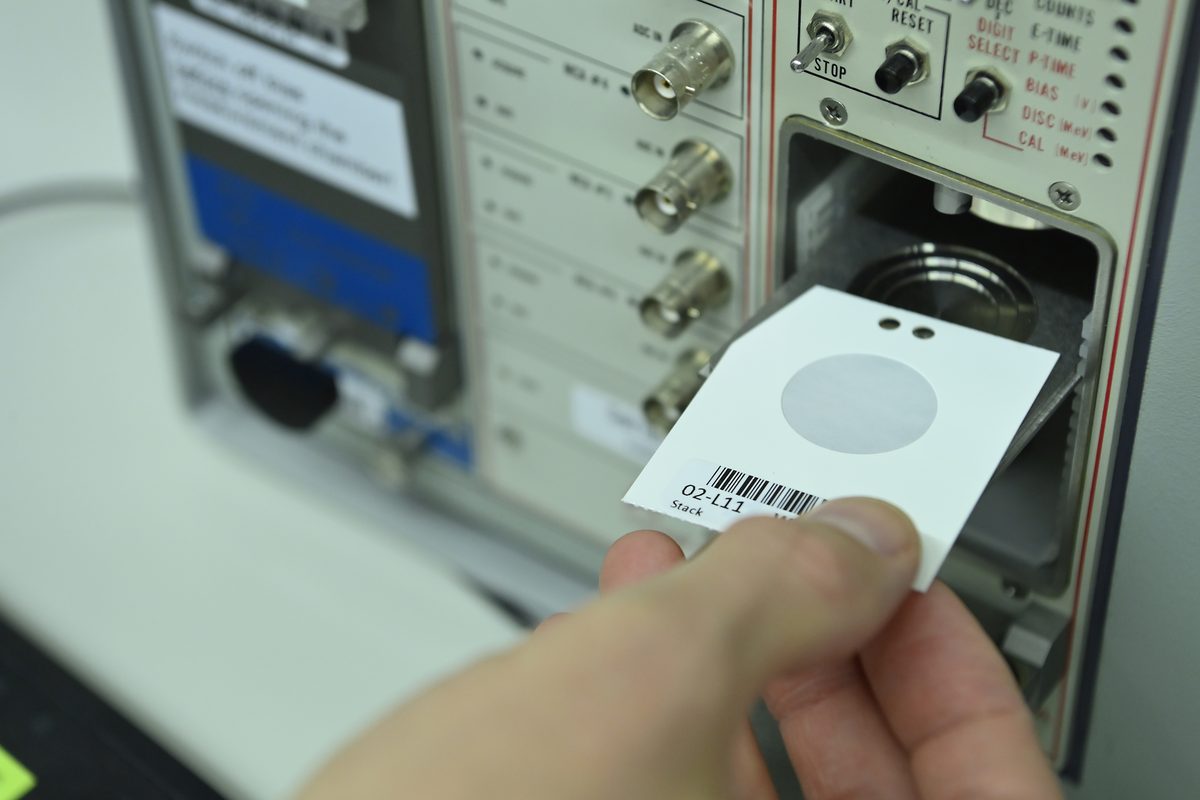
Air-quality and radionuclide stations worldwide hold decades of preserved DNA — never intentionally collected.

Interactive

Exploring all sides of a story is often best achieved with Play.

Ever wondered what historical figures would say about today's headlines?

Sign up to generate historical perspectives on this story.

Sign Up

Debate Arena

Two rounds, two personas, one winner. You set the crossfire.

People Involved

Organizations Involved

Timeline

  1. Nature feature consolidates the field's leap from curiosity to deployment

    Coverage

    A widely-shared Nature feature surveys the technology's applications: biodiversity tracking, invasive species early warning, crop pathogen surveillance, and historical reconstruction.

  2. Zambia field study detects 120 vertebrate taxa in four days

    Research

    Six air samplers in the Luangwa Valley match camera-trap detections and add many smaller, nocturnal, and cryptic species.

  3. Swedish team reconstructs 34 years of boreal biodiversity from archived filters

    Publication

    FOI researchers publish in Nature Communications, recovering 2,700+ genera and documenting a decline tied to forest management.

  4. Researchers realise air-quality stations have been collecting eDNA by accident for decades

    Insight

    A paper argues that thousands of pollution-monitoring stations worldwide already hold biodiversity data in their used filters.

  5. Both zoo papers published simultaneously in Current Biology

    Publication

    Joint publication establishes airborne eDNA as a real method and sparks rapid uptake by ecology labs worldwide.

  6. Two teams independently demonstrate airborne DNA capture at zoos

    Research

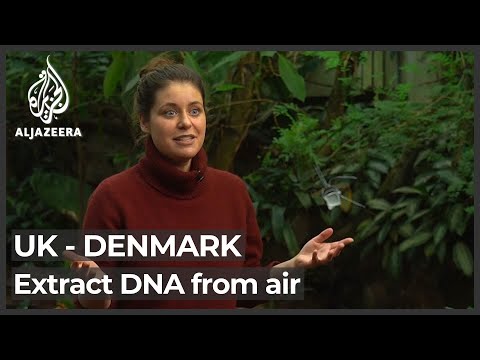
    Clare's group at Hamerton Zoo (UK) and Bohmann's at Copenhagen Zoo show that air filters can identify dozens of vertebrate species without contact.

Scenarios

1

Air-quality networks become global biodiversity sensors by 2030

Discussed by: Authors of the 2023 Current Biology commentary; USGS researchers; FOI team

Existing national pollution-monitoring networks adopt minor changes to filter handling and storage. Tens of thousands of stations begin generating standardised biodiversity data alongside air-quality data, giving governments the first continuous, comparable record of species presence at continental scale.

2

Customs agencies deploy airborne eDNA at major ports for invasive-species screening

Discussed by: USGS pilot programs; biosecurity researchers

Sampling air inside shipping containers proves cheap enough to roll out at major ports of entry. Customs agencies catch agricultural pests and pathogens before goods are unloaded, displacing the current sampling-and-inspection model that lets most containers through unchecked.

3

Method plateaus as a research tool, never reaches operational scale

Discussed by: Skeptics in the eDNA community

Quantification problems persist: airborne DNA detects what's there but struggles to tell you how much. Standardisation across labs proves harder than expected, sequencing costs do not fall fast enough for routine deployment, and the technology stays useful for one-off surveys rather than continuous monitoring.

4

Privacy and surveillance concerns trigger regulatory pushback

Discussed by: Bioethicists; civil liberties groups (emerging discussion)

As sensitivity improves, airborne samples reliably pick up human DNA alongside wildlife. Regulators move to restrict sampling in public spaces, and the field bifurcates into permissive jurisdictions deploying widely and cautious ones limiting use to controlled research sites.

Historical Context

Aquatic eDNA in fisheries management (2008–present)

2008 onward

What Happened

Researchers showed in 2008 that water samples from a French pond could detect the presence of invasive American bullfrogs. Within a decade, U.S. and European fisheries agencies were using water-based eDNA to track Asian carp invasions in the Great Lakes and to confirm the presence of endangered fish without nets.

Outcome

Short Term

Aquatic eDNA shifted from novelty paper to standard tool in roughly ten years, with U.S. Fish and Wildlife Service adopting it for invasive carp surveillance.

Long Term

Created the methodological and regulatory groundwork — sample collection standards, lab pipelines, legal weight in environmental impact assessments — that airborne eDNA is now inheriting and accelerating through.

Why It's Relevant Today

The aquatic version of this story took about a decade to go from proof-of-concept to operational use. Airborne eDNA appears to be moving faster, partly because it can borrow that infrastructure wholesale.

Ice-core paleoclimate reconstruction (1960s–present)

1966 onward

What Happened

When researchers drilled the Camp Century ice core in Greenland in 1966, they recovered air bubbles trapped over thousands of years. Scientists realised they could read past atmospheric composition directly from material that had been accumulating for an unrelated reason — glacial flow.

Outcome

Short Term

Ice cores became the foundational dataset for paleoclimate science.

Long Term

Established the principle that the most valuable scientific archives are often created accidentally, by processes that preserve material long before anyone knows what to do with it.

Why It's Relevant Today

FOI's Kiruna filter archive is the airborne-DNA equivalent: material preserved for one purpose (radionuclide monitoring) turning out to hold answers to entirely different questions decades later.

Sewage epidemiology during COVID-19 (2020–2022)

March 2020–2022

What Happened

Wastewater treatment plants began sequencing sewage to track SARS-CoV-2 prevalence and variants across whole cities. The CDC stood up the National Wastewater Surveillance System in 2020. By 2022, sewage data was detecting variant arrivals days before clinical testing.

Outcome

Short Term

Wastewater surveillance gave public health officials a population-level signal that did not depend on individual testing behaviour.

Long Term

Demonstrated that environmental sampling can outperform direct measurement for population-scale questions, and that the sampling infrastructure can be retrofitted from existing systems built for other purposes.

Why It's Relevant Today

The wastewater playbook — retrofit existing infrastructure, sequence what's already being collected, get population-level signal cheaper than individual measurement — is now being applied to air for biodiversity instead of sewage for pathogens.

Sources

(8)