


Pull to refresh
Logo
Oklahoma meteor crater redated, tied to Devonian mass extinction

Oklahoma meteor crater redated, tied to Devonian mass extinction

New Capabilities

Zircon dating shifts the Ames impact from 467 to 370 million years ago

2 days ago: New zircon dating published

Overview

Updated 1 hour ago

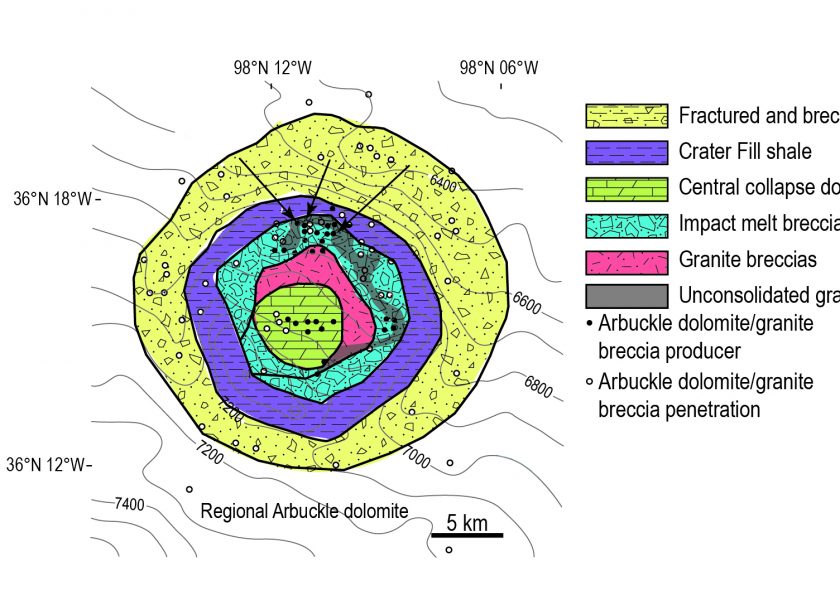
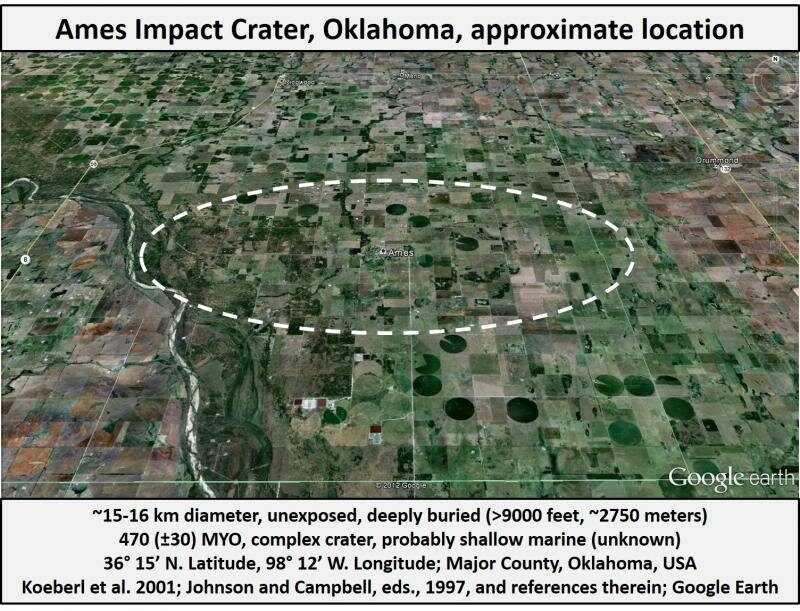
A meteor crater buried beneath Oklahoma is nearly 100 million years younger than scientists thought. Zircon crystals from the Ames impact structure date the strike to about 370 million years ago, not 467 million years ago as previously believed.

The new date removes Ames from the Ordovician Meteor Event, a bombardment once linked to a possible ring of debris around Earth. Instead, the impact lines up with the Frasnian-Famennian mass extinction, which killed a large share of marine life about 372 million years ago.

Why it matters

The redating moves a major impact from the Ordovician bombardment to the Devonian extinction era, reshaping both theories.

Questions about this story

Free account needed to ask — your question is kept and asked for you right after sign-up. Answers are public.

No questions yet — be the first to ask.

Key Indicators

369.7 ± 5.9 Ma
New zircon date for Ames impact
Weighted mean of youngest dated zircons from impact-melt rock.
~100 million years
Age shift from previous estimate
Previous estimate placed the impact at 467 million years ago in the Ordovician.
17.4 million barrels
Oil produced from crater since 1991
Wells inside the crater have also produced 79.5 billion cubic feet of natural gas.
2.7 km
Sedimentary rock covering the crater
The crater is buried beneath a shallow sea deposit laid down after the impact.

Voices

Curated perspectives — historical figures and your fellow readers.

Ever wondered what historical figures would say about today's headlines?

Sign up to generate historical perspectives on this story.

Organizations Involved

Timeline

1991 ~370 Ma

3 events Latest: 2 days ago
  1. Ames impact occurs

    Upcoming Geological event

    A meteor strikes what is now Oklahoma, creating a crater about 1.6 miles wide beneath a shallow sea.

  2. New zircon dating published

    Latest Scientific discovery

    UT Austin researchers publish U-Pb zircon dates showing the Ames impact occurred 369.7 ± 5.9 Ma, not 467 Ma.

  3. Oil production begins at Ames crater

    Economic

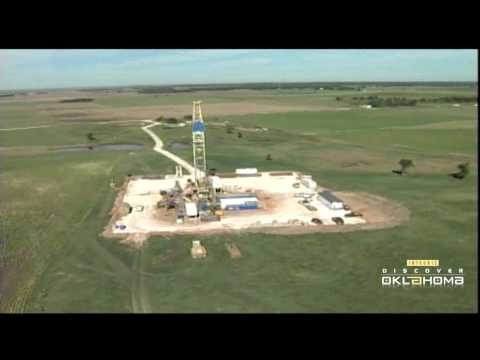
    Wells strike oil three kilometers down inside the crater, beginning production that continues today.

Scenarios

1

Devonian impact cluster confirmed

Possible Resolves by End of 2027

Discussed by: Researchers at UT Austin and other geochronology groups

The new Ames date joins other North American impacts with Middle to Late Devonian dates, including Flynn Creek in Tennessee (382 Ma), Nicholson Lake in Canada (385 Ma), and the Alamo impact in Nevada (355-382 Ma). If more structures in the 38th Parallel group get redated to the Devonian, it would confirm a cluster of impacts at this time.

2

Ames linked to Frasnian-Famennian extinction

Uncertain Resolves by End of 2027

Discussed by: The UT Austin research team and extinction researchers

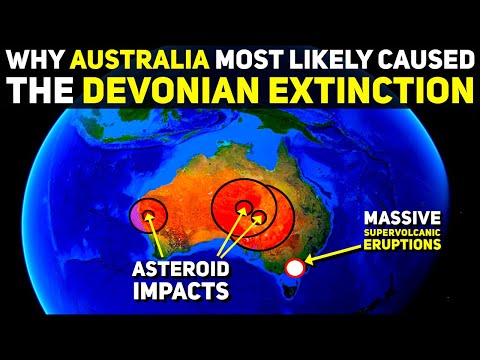
The new date (369.7 ± 5.9 Ma) overlaps the Frasnian-Famennian boundary (~372 Ma), one of Earth's major extinction events. The impact alone was likely not large enough to cause the extinction, but it may have contributed alongside reduced oxygen, super-volcanism, or a nearby supernova. Further research could establish a causal link.

3

Ordovician Meteor Event theory revised

Likely Resolves by End of 2027

Discussed by: Researchers studying the OME and the Great Ordovician Biodiversification Event

Ames was a key data point for the Ordovician Meteor Event, a bombardment once linked to a possible ring of debris around Earth. With Ames removed, the theory may need revision. A published paper could reassess the OME's remaining impact structures and its proposed link to the biodiversification event.

Historical Context

3 moments from history that rhyme with this story — and how they unfolded.

1980-1991

Chicxulub impact and the dinosaur extinction (1980-1991)

Scientists discovered a giant impact crater buried beneath Mexico's Yucatan Peninsula, dating to 66 million years ago. The discovery followed the 1980 proposal by Luis and Walter Alvarez that an asteroid impact caused the dinosaur extinction.

Then

The Chicxulub crater became the leading explanation for the Cretaceous-Paleogene extinction, which killed about 75% of Earth's species.

Now

Impact dating became a standard tool for testing extinction theories, showing how a single well-dated crater can transform understanding of a mass die-off.

Why this matters now

Like Chicxulub, the Ames redating connects a specific impact to a mass extinction event, showing how precise dating can reshape extinction theories.

2000s-present

Ordovician Meteor Event theory (2000s-present)

Researchers proposed that a ring of debris around Earth caused a bombardment of impacts about 467 million years ago. The event was linked to the Great Ordovician Biodiversification Event, a rapid diversification of marine life.

Then

The theory gained support from multiple impact structures dated to the Ordovician, including Ames.

Now

Ames was a key data point. Its removal from the OME weakens the theory's evidence base and may require revision of the proposed link to biodiversification.

Why this matters now

The Ames redating directly challenges the OME theory by removing one of its key impact structures, forcing a reassessment of the bombardment hypothesis.

Late Devonian

Alamo impact, Nevada (355-382 Ma)

The Alamo impact in Nevada left impact-related deposits dated to the Middle to Late Devonian, contemporaneous with the new Ames date. It is part of the 38th Parallel Structures, a line of impact features across North America.

Then

The Alamo deposits have been studied for their link to Devonian environmental disturbances.

Now

The Alamo impact, along with Flynn Creek and Nicholson Lake, now forms a potential Devonian impact cluster with Ames, supporting the idea of multiple impacts at this time.

Why this matters now

The Alamo impact's Devonian age provides a contemporaneous comparison for the redated Ames structure, supporting the Devonian impact cluster hypothesis.

Sources

(8)