
Pull to refresh
Logo
Daily Brief
Following
Why Sign Up
DJI races to launch its most advanced drone before US market closes

DJI races to launch its most advanced drone before US market closes

New Capabilities
By Newzino Staff |

The Avata 360's 8K 360-degree FPV flight marks a new category — and possibly the last new DJI product Americans can buy

Today: DJI launches Avata 360 globally

Overview

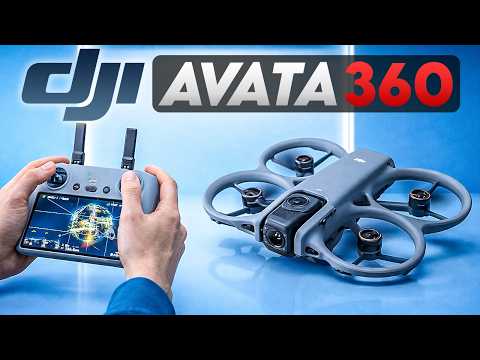
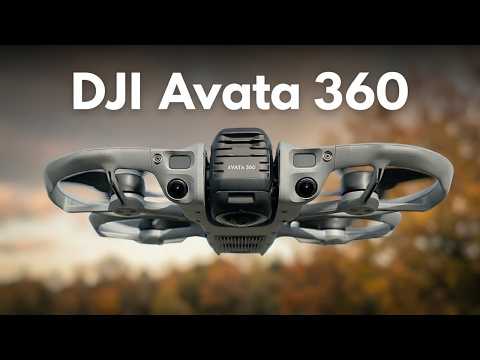
DJI controls roughly 77% of the American consumer drone market. On December 22, 2025, the Federal Communications Commission (FCC) blocked all new foreign-made drones from receiving the radio-frequency authorization required for legal US sale. DJI got the Avata 360 — a drone that shoots 8K spherical video while flying at high speed — approved 34 days before the window shut. On March 26, the company launched it globally, creating a product category that did not previously exist: native 360-degree first-person-view flight in a single aircraft.

Why it matters

The world's leading drone maker may be permanently locked out of the US market, leaving American buyers with fewer options at higher prices.

Key Indicators

~77%
DJI's US consumer drone market share
DJI dominates the American market it may soon be unable to sell new products into.
$499
Avata 360 starting price
Over $1,100 less than the Insta360 Antigravity A1, its closest 360-degree FPV competitor.
34 days
Margin before the ban
DJI secured FCC authorization on November 19, 2025 — just 34 days before the December 22 cutoff.
0
Security audits completed
The law required a national security audit of DJI before the ban. No agency completed one.

Interactive

Exploring all sides of a story is often best achieved with Play.

Ever wondered what historical figures would say about today's headlines?

Sign up to generate historical perspectives on this story.

Sign Up

Debate Arena

Two rounds, two personas, one winner. You set the crossfire.

People Involved

Organizations Involved

Timeline

  1. DJI launches Avata 360 globally

    Product Launch

    DJI launched the world's first 8K 360-degree FPV drone, starting at $499. The US retail launch was delayed to March 30, but the product is legally cleared for American sale under its grandfathered FCC authorization.

  2. DJI sues FCC in federal court

    Legal

    DJI filed a petition in the US Court of Appeals for the Ninth Circuit (Case 26-1029), arguing the FCC exceeded its authority, violated due process, and imposed the ban without evidence. The legal team includes a former US Solicitor General.

  3. FCC quietly revokes certain DJI authorizations

    Restriction

    The FCC revoked some DJI and Autel equipment authorizations granted shortly before the December 22 deadline. The specific models affected were not publicly disclosed.

  4. FCC blocks all new foreign drone authorizations

    Restriction

    With no security audit completed, the FCC added all foreign-produced drones and critical components to its Covered List. Models with existing FCC authorization were grandfathered; no new foreign models can be approved.

  5. Insta360 launches Antigravity A1

    Product Launch

    Insta360 launched the first consumer 360-degree FPV drone at $1,599 — beating DJI to market in the new category but at a significantly higher price point.

  6. DJI Avata 360 receives FCC authorization

    Regulatory

    The FCC granted equipment authorization for the Avata 360 under model number DVN3NT, 34 days before the foreign drone ban took effect.

  7. Trump signs drone executive orders

    Executive Action

    President Trump signed two executive orders — "Restoring American Airspace Sovereignty" and "Unleashing American Drone Dominance" — directing federal agencies to reduce dependence on foreign-made drones.

  8. NDAA Section 1709 signed into law

    Legislative

    The fiscal year 2025 National Defense Authorization Act included a provision requiring a security audit of DJI within one year. If no audit was completed, the automatic consequence was addition to the FCC's Covered List.

  9. Countering CCP Drones Act passes US House

    Legislative

    The House passed the bill by a wide margin. It would have directly banned DJI drones from US communications infrastructure. The Senate did not pass the standalone bill.

  10. DJI added to Commerce Entity List

    Restriction

    The Trump administration placed DJI on the same trade blacklist as Huawei, restricting the company's access to US components and technology. The designation cited allegations of involvement in surveillance of Uyghur populations.

  11. US Army bans DJI drones

    Restriction

    The US Army issued a memo directing all units to stop using DJI drones, citing unspecified "cyber vulnerabilities." This marked the first major US government action against DJI.

Scenarios

1

Court overturns FCC ban, DJI regains full US market access

Discussed by: Legal analysts at Wiley Rein, drone industry publications including DroneDJ and DroneXL

The Ninth Circuit rules that the FCC overstepped its statutory authority by using telecommunications regulation as a de facto trade ban, or that DJI's due process rights were violated because no security audit was ever conducted. DJI would regain the ability to seek FCC authorization for new products. This outcome would restore competition in the US drone market but would likely prompt Congress to pass more explicit legislation targeting Chinese drones.

2

Ban holds, DJI sells only grandfathered models until stock runs out

Discussed by: UAV Coach, drone industry analysts, FCC watchers at Wiley Rein

The court upholds the FCC's action. DJI continues selling its existing portfolio of pre-approved drones — including the Avata 360, Mavic 4 Pro, and older models — but can never introduce new products in the US. Over several years, the grandfathered lineup becomes outdated, and DJI's US presence fades. American competitors like Skydio expand but primarily in enterprise and government segments, leaving a gap in consumer and cinematic drone markets.

3

FCC revokes Avata 360 authorization, accelerating DJI's US exit

Discussed by: Wiley Rein legal analysis, Bloomberg reporting on FCC enforcement actions

The FCC exercises its authority to revoke the Avata 360's grandfathered authorization, as it did with certain other DJI models in January 2026. This would block the product's US sale entirely and signal that grandfathering protections are unreliable. Such a move would strengthen DJI's legal arguments about due process but could effectively end DJI's US retail presence years earlier than the natural phase-out.

4

Negotiated settlement allows DJI US sales under security conditions

Discussed by: Industry groups including the Association for Uncrewed Vehicle Systems International (AUVSI), bipartisan Congressional voices

Political or diplomatic pressure — potentially tied to broader US-China trade negotiations — produces a framework where DJI can sell in the US under specific security conditions, such as US-based data storage, third-party code audits, or manufacturing transparency requirements. This would mirror the approach some countries have taken with Huawei's telecom equipment, allowing conditional market access rather than a blanket ban.

Historical Context

Huawei and the FCC Covered List (2019-2022)

May 2019 – November 2022

What Happened

The FCC added Huawei, the Chinese telecommunications giant, to its Covered List beginning in 2019, blocking the company from US communications infrastructure. The ban expanded in stages: first barring new equipment from US networks, then requiring carriers to physically remove existing Huawei gear through a $1.9 billion "rip and replace" program.

Outcome

Short Term

US carriers spent years removing Huawei equipment. Huawei's US revenue dropped to near zero. The company pivoted to markets in Africa, Southeast Asia, and the Middle East.

Long Term

Huawei remained the world's largest telecom equipment maker despite US exclusion. The Covered List mechanism was validated as a tool for blocking foreign technology, setting the precedent now applied to drones.

Why It's Relevant Today

The DJI ban uses the exact same FCC Covered List mechanism developed for Huawei. The Huawei precedent suggests DJI will likely remain dominant globally even if fully excluded from the US, and that the legal challenges face an uphill battle.

Kaspersky Lab US ban (2017-2024)

September 2017 – September 2024

What Happened

The US government banned federal agencies from using Kaspersky antivirus software in 2017, citing concerns about Russian government influence over the Moscow-based company. In June 2024, the Commerce Department banned all US sales of Kaspersky products, giving existing users until September 29, 2024 to find alternatives. Kaspersky denied the allegations but announced it was winding down US operations.

Outcome

Short Term

Kaspersky's US customer base migrated to competitors like Norton, Bitdefender, and CrowdStrike. The company laid off its US workforce.

Long Term

Kaspersky continued operating globally but was permanently excluded from the world's largest software market. The ban demonstrated that national security designations, once applied, are rarely reversed.

Why It's Relevant Today

Like DJI, Kaspersky was a market-leading foreign technology company banned from the US without public disclosure of specific security evidence. The Kaspersky case suggests that once a company is designated a national security risk, the political dynamics make reversal extremely difficult regardless of the legal merits.

Japanese auto import restrictions (1981-1994)

May 1981 – 1994

What Happened

Facing pressure from Detroit automakers losing market share, the Reagan administration negotiated "voluntary" export restraints with Japan in 1981, limiting Japanese car imports to 1.68 million vehicles per year. Japanese manufacturers responded by building US factories, moving upmarket with brands like Lexus and Acura, and increasing per-vehicle profit margins.

Outcome

Short Term

Japanese import volumes fell and US automakers gained temporary relief. Car prices rose an estimated $1,000-$2,500 per vehicle for American consumers.

Long Term

Japanese manufacturers built extensive US manufacturing operations, ultimately becoming more embedded in the American economy than before. The restrictions accelerated Japanese innovation rather than containing it.

Why It's Relevant Today

The parallel to DJI is instructive: trade restrictions on a dominant foreign manufacturer raised prices for American consumers without ultimately preventing the restricted companies from innovating or competing globally. If DJI follows this pattern, the ban may harm American buyers more than DJI itself.

Sources

(11)