
Pull to refresh
Logo
Energy Department expands Genesis Mission with 12 new AI science awards

Energy Department expands Genesis Mission with 12 new AI science awards

New Capabilities

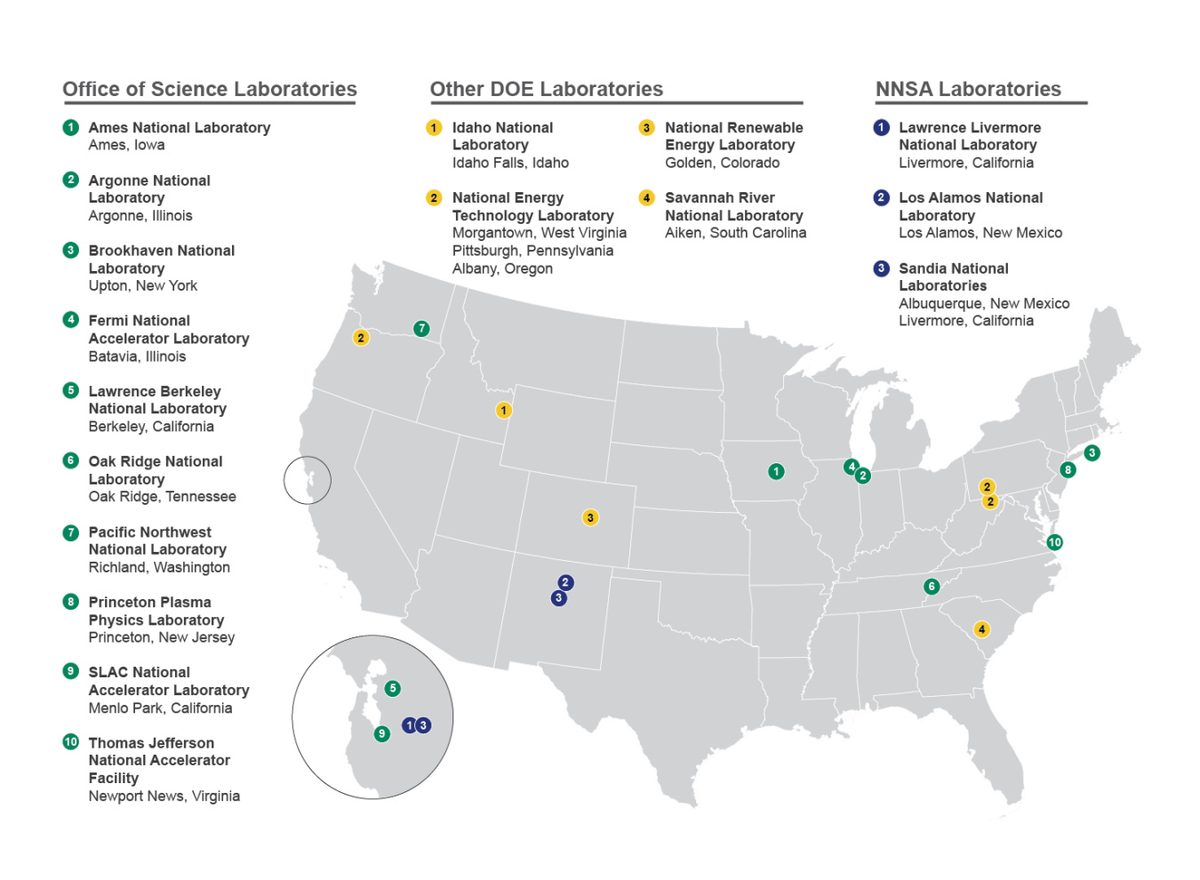
Super Intelligence push pairs AI with national labs across fusion, quantum, and materials science

Yesterday: DOE announces 12 Phase II Genesis Mission awards

Overview

Updated 39 minutes ago

The Department of Energy is betting that artificial intelligence can double the pace of American science. On Thursday, it moved $159 million into 12 projects that put AI to work on fusion reactors, quantum computers, and new materials.

The awards are Phase II of the Genesis Mission, launched in July. The program now spans 297 teams in all 50 states, with one job: make AI a working research partner in the national labs rather than a subject to study.

Why it matters

If the Genesis Mission works, AI becomes a working lab partner across everything the DOE funds — fusion, quantum, materials — not a research topic.

Questions about this story

Free account needed to ask — your question is kept and asked for you right after sign-up. Answers are public.

No questions yet — be the first to ask.

Key Indicators

$159M
Phase II awards announced Oct 8
12 new projects spanning universities and national labs.
14
Total Phase II projects
Two earlier projects bring the Phase II roster to 14.
297
Teams in inaugural cohort
Across all 50 states, per DOE.
$215M
Quantum Genesis Q Competition
Planned funding for quantum computers with 100+ logical qubits by 2028.

Voices

Curated perspectives — historical figures and your fellow readers.

Ever wondered what historical figures would say about today's headlines?

Sign up to generate historical perspectives on this story.

People Involved

Organizations Involved

Timeline

June 2026 October 2026

4 events Latest: Yesterday
Tap a bar to jump to that date
  1. DOE announces 12 Phase II Genesis Mission awards

    Latest Funding

    $159 million funds fusion, quantum error correction, geothermal, and materials projects, bringing Phase II to 14 total. DOE also unveiled a $20 million graduate fellowship pilot for 2027.

  2. Quantum Genesis Q Competition opens

    Funding call

    DOE invites companies to propose quantum computers with at least 100 logical qubits; up to $215 million planned.

  3. Genesis Mission Phase I announced

    Program launch

    DOE unveils the mission and initial science projects; inaugural cohort grows to 297 teams.

  4. DOE launches Quantum Genesis initiative

    Program launch

    Department sets a 2028 target for the first fault-tolerant, scientifically relevant quantum computer.

Scenarios

1

Congress funds Genesis Mission in FY2027 budget

Possible Resolves by Mar 1, 2027

Discussed by: Appropriations watchers and DOE officials, who call the 297-team roster the mission's inaugural cohort

The mission's long-term survival depends on the FY2027 appropriations cycle. If Congress includes a Genesis Mission funding line, the program locks in multi-year stability and DOE can plan later phases. If not, the portfolio shrinks to already-committed projects and the 'double the productivity of science' goal stalls.

2

Quantum Genesis Q Competition awards contracts

Likely Resolves by End of 2027

Discussed by: DOE Office of Science, which set a 2028 deployment target

The Q Competition, opened in September with up to $215 million planned, invites companies to propose fault-tolerant quantum systems. If DOE selects winners and signs contracts, the U.S. gets a concrete path to a scientific quantum computer. A slow competition or a funding shortfall would push the 2028 target back.

3

Fusion digital twin guides first SPARC campaign

Possible Resolves by End of 2028

Discussed by: Commonwealth Fusion Systems and DOE project listings

CFS's Phase II award funds a digital twin that simulates SPARC operations in control-room time, letting operators plan experiments between pulses. If the twin is used during a real SPARC campaign, it validates the mission's core premise: AI as an operational partner. Timing depends on SPARC construction, which has slipped before.

Historical Context

2 moments from history that rhyme with this story — and how they unfolded.

2017-2023

Exascale Computing Project (2017-2023)

DOE coordinated supercomputer development across three national labs, producing Frontier, Aurora, and El Capitan, the world's first exascale systems capable of a quintillion operations per second.

Then

Frontier went live in 2022 as the first exascale machine, followed by Aurora and El Capitan.

Now

Established DOE's model of distributed, lab-led computing development under tight federal coordination.

Why this matters now

Same agency, same distributed-laboratory structure, same ambition. The Exascale project shows DOE can deliver large-scale scientific computing initiatives — and sets the precedent for how Genesis Mission results will be judged.

1990-2003

Human Genome Project (1990-2003)

A coordinated international effort to sequence the human genome, co-funded by DOE and NIH, completed two years ahead of schedule and under budget.

Then

Delivered the reference human genome in 2003, transforming biology and medicine.

Now

Became the model for collaborative big science, showing that pooled federal infrastructure can compress discovery timelines.

Why this matters now

Like the Genesis Mission, it was a bet that coordinated infrastructure could transform a field — and DOE was a partner in it. The mission's promise of AI-accelerated discovery echoes the genome project's compression of timelines.

Sources

(7)