
Pull to refresh
Logo
Daily Brief
Following
Why
America's longest shadow war: two decades of counterterrorism in Somalia

America's longest shadow war: two decades of counterterrorism in Somalia

Force in Play
By Newzino Staff | |

U.S. and Somali forces wage an escalating campaign against al-Shabaab as the militant group proves resilient despite territorial losses

6 days ago: Badhadhe Operation Kills 60+ Al-Shabaab Fighters

Overview

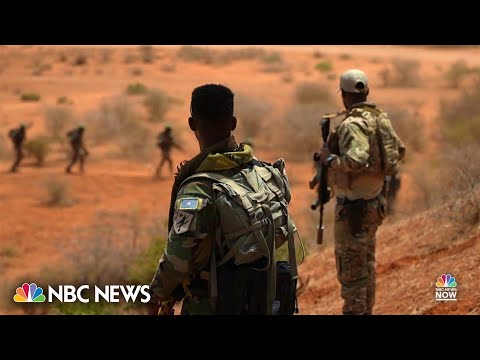
Since 2007, the United States has conducted hundreds of airstrikes and special operations raids against al-Shabaab in Somalia—more than in any other country outside of declared war zones. On February 16, 2026, Jubaland regional forces and American troops completed a four-day operation in the Badhadhe District, killing more than 60 al-Shabaab fighters and destroying militant camps, communication centers, and depots containing over 100 different types of explosives.

The operation reflects a dramatic escalation under the second Trump administration: United States Africa Command conducted 124 airstrikes in Somalia during 2025—twelve times the number under Biden in 2024—and executed 26 more in the first month of 2026 alone. Yet al-Shabaab, with an estimated 7,000 to 12,000 fighters, remains the strongest and best-financed al-Qaeda affiliate globally, controlling vast swaths of southern Somalia and conducting attacks that killed more Somalis in 2022 than any year since 2017.

Key Indicators

60+
Al-Shabaab fighters killed
Casualties from the February 2026 Badhadhe District operation
124
U.S. airstrikes in 2025
Twelve times the number conducted in 2024, reflecting major escalation
~400
U.S. troops deployed
American forces stationed primarily in Puntland's Bari region
7,000-12,000
Estimated al-Shabaab fighters
Group's strength remains uncertain due to continuous recruitment

Interactive

Exploring all sides of a story is often best achieved with Play.

Ever wondered what historical figures would say about today's headlines?

Sign up to generate historical perspectives on this story.

Sign Up

Debate Arena

Two rounds, two personas, one winner. You set the crossfire.

People Involved

Hassan Sheikh Mohamud
President of Somalia (In office since May 2022; previously served 2012-2017)
Ahmed Mohamed Islam (Ahmed Madobe)
President of Jubaland (Serving third term since November 2024; contested by federal government)
General Dagvin R.M. Anderson
Commander, U.S. Africa Command (Assumed command August 2025)

Organizations Involved

Al-Shabaab
Al-Shabaab
Militant Islamist Organization
Status: Al-Qaeda affiliate controlling substantial territory in southern Somalia

Al-Shabaab is the largest, best-financed al-Qaeda affiliate globally, with an estimated 7,000-12,000 fighters and control over large swaths of south-central Somalia.

United States Africa Command (AFRICOM)
U.S. Unified Combatant Command
Status: Conducting escalated counterterrorism operations in Somalia

AFRICOM conducts U.S. military operations across Africa, with Somalia as its most active counterterrorism theater.

Jubaland State of Somalia
Federal Member State
Status: Key southern buffer zone bordering Kenya; governance disputed

Jubaland is a semi-autonomous federal state in southern Somalia bordering Kenya, formed in 2013 and led since inception by Ahmed Madobe.

Timeline

  1. Badhadhe Operation Kills 60+ Al-Shabaab Fighters

    Military

    Jubaland forces with U.S. support complete four-day operation, destroying militant camps, communications centers, and depots with over 100 types of explosives.

  2. Jubaland Forces Score Victory in Kuda

    Military

    Jubaland security forces capture Kuda town in Badhadhe District, described as one of most decisive defeats ever inflicted on al-Shabaab in southern Somalia.

  3. Al-Shabaab Assassination Attempt on President Mohamud

    Attack

    Militants detonate explosives targeting presidential motorcade near Villa Somalia, killing four bystanders. President survives.

  4. Al-Shabaab Launches Major Counteroffensive

    Military

    Al-Shabaab captures dozens of towns, reclaiming territory lost in 2022-2023 as government offensive stalls and African Union forces draw down.

  5. Somalia Launches 'Total War' Against Al-Shabaab

    Military

    President Mohamud announces offensive to eliminate al-Shabaab within five months. Campaign recaptures over 215 locations through 2023.

  6. Al-Shabaab's Largest Cross-Border Attack

    Military

    Approximately 2,000 al-Shabaab fighters launch incursion into Ethiopia—group's largest operation outside Somalia.

  7. Biden Redeploys U.S. Forces to Somalia

    Policy

    President Biden reverses predecessor's withdrawal, redeploying roughly 400 troops to support counterterrorism operations.

  8. Trump Administration Orders Troop Withdrawal

    Policy

    President Trump orders withdrawal of approximately 700 U.S. troops from Somalia as part of broader drawdown.

  9. Mogadishu Truck Bombing Kills Over 500

    Attack

    A truck bomb explodes in Mogadishu's Hodan district, making it Somalia's deadliest terrorist attack. Al-Shabaab suspected but never claimed responsibility.

  10. Garissa University Massacre

    Attack

    Al-Shabaab fighters kill 148 people at Kenyan university, Kenya's second-deadliest attack in history.

  11. Westgate Mall Attack in Nairobi

    Attack

    Al-Shabaab gunmen storm upscale Kenyan mall, killing 67 people in four-day siege. Group cites Kenya's military presence in Somalia.

  12. Al-Shabaab Formally Merges with Al-Qaeda

    Statement

    Leader Ahmed Abdi Godane pledges allegiance to Ayman al-Zawahiri, making al-Shabaab an official al-Qaeda affiliate.

  13. Ethiopia Invades Somalia, Topples Islamic Courts Union

    Military

    U.S.-backed Ethiopian forces oust the Islamic Courts Union from Mogadishu. Al-Shabaab, its youth militia wing, breaks away and begins insurgency.

  14. Operation Enduring Freedom – Horn of Africa Launched

    Military

    U.S. establishes Combined Joint Task Force – Horn of Africa at Camp Lemonier, Djibouti, to prevent terrorist regrouping after Afghanistan.

Scenarios

1

Al-Shabaab Pushed to Remote Strongholds, Shifts to Insurgent Tactics

Discussed by: International Crisis Group, Combating Terrorism Center at West Point

Sustained U.S. airstrikes and Somali offensives degrade al-Shabaab's conventional military capacity, forcing the group to abandon urban areas and major supply routes. Rather than collapse, the group transitions to classic insurgent tactics—targeted assassinations, improvised explosives, and terrorist attacks in regional capitals. This mirrors the group's 2011-2016 evolution after losing Mogadishu.

2

Federal-Regional Tensions Fracture Counterinsurgency

Discussed by: Africa Center for Strategic Studies, International Crisis Group

The constitutional dispute between Mogadishu and Jubaland over Ahmed Madobe's third term escalates into open political rupture. Coordination between federal forces and regional militias breaks down, creating gaps that al-Shabaab exploits. The group expands its territorial control in the Lower Juba region as Somali forces turn inward.

3

Al-Shabaab Threatens Mogadishu as African Union Draws Down

Discussed by: UN Security Council, African Union Mission in Somalia, The Soufan Center

As the African Union Support and Stabilization Mission in Somalia (AUSSOM) reduces troop levels through 2026, al-Shabaab accelerates its offensive toward the capital. The group's 2025 gains in Middle Shabelle and Hiraan regions position fighters closer to Mogadishu than at any point since 2011. Without additional international support, Somali forces struggle to defend both recaptured territory and the capital.

4

Escalation Cycle: More Strikes, More Recruitment, No Resolution

Discussed by: New America Foundation, Council on Foreign Relations, Chatham House

The dramatic increase in U.S. airstrikes generates tactical successes—leaders killed, camps destroyed—but fails to address al-Shabaab's resilience. Civilian casualties from strikes fuel recruitment. The group continues to forcibly conscript fighters and tax businesses across territory it controls. Two decades of counterterrorism operations extend indefinitely without strategic resolution.

Historical Context

Ethiopia's Somalia Intervention (2006-2009)

December 2006 - January 2009

What Happened

Ethiopian forces, backed by the United States, invaded Somalia to oust the Islamic Courts Union, which had seized Mogadishu and much of southern Somalia. The ICU collapsed within weeks, but its youth militia—al-Shabaab—refused to surrender. Initially numbering around 400 fighters, al-Shabaab swelled to thousands as Somalis rallied against what they viewed as foreign occupation.

Outcome

Short Term

Ethiopian forces captured major cities but faced persistent guerrilla attacks. Al-Shabaab emerged as the dominant insurgent faction by late 2008.

Long Term

The intervention radicalized al-Shabaab, transforming a contained youth militia into a full al-Qaeda affiliate that continues to control significant Somali territory two decades later.

Why It's Relevant Today

The 2006 intervention demonstrates how military campaigns against Somali Islamists can eliminate one threat while creating a more resilient successor—a pattern the current campaign may be repeating.

Operation Linda Nchi and Jubaland's Creation (2011-2013)

October 2011 - May 2013

What Happened

Kenya launched Operation Linda Nchi ('Protect the Nation') to push al-Shabaab from the Somalia-Kenya border region after a series of kidnappings. Kenyan forces partnered with Ahmed Madobe's Ras Kamboni militia—defectors from al-Shabaab—and captured the strategic port city of Kismayu in September 2012. Kenya then backed the creation of Jubaland as a federal state with Madobe as president.

Outcome

Short Term

Al-Shabaab lost its largest revenue source when Kismayu fell. The group retaliated with the 2013 Westgate mall attack in Nairobi.

Long Term

Jubaland became a buffer against al-Shabaab but also a source of constitutional conflict. Kenya's military integration into AMISOM formalized regional counterterrorism cooperation.

Why It's Relevant Today

The February 2026 Badhadhe operation occurred in the same region Kenyan and Jubaland forces liberated in 2011-2012, showing both the durability of those gains and al-Shabaab's continued presence in the area.

U.S. Drawdown and Return (2020-2022)

December 2020 - May 2022

What Happened

President Trump ordered the withdrawal of approximately 700 U.S. troops from Somalia in December 2020, part of a broader 'endless wars' drawdown. Troops were repositioned to neighboring Kenya and Djibouti, commuting into Somalia for operations. President Biden reversed the withdrawal in May 2022, redeploying roughly 400 troops to support Somalia's new offensive.

Outcome

Short Term

The withdrawal period saw no major shift in al-Shabaab's capabilities; U.S. strikes continued via 'over-the-horizon' operations.

Long Term

Biden's redeployment coincided with Somalia's most successful offensive in a decade, though the campaign subsequently stalled.

Why It's Relevant Today

The back-and-forth on troop levels illustrates how U.S. Somalia policy shifts with administrations. The current Trump administration's escalation—124 strikes in 2025—represents the third major posture change in five years.

10 Sources: