


Pull to refresh
Logo
Daily Brief
Following
Why
Precious metals flash crash: The Warsh shock

Precious metals flash crash: The Warsh shock

Money Moves
By Newzino Staff |

Gold and Silver Suffer Historic Losses After Fed Chair Nomination Triggers Margin Cascade

February 2nd, 2026: Selloff Extends as Margin Hikes Take Effect

Overview

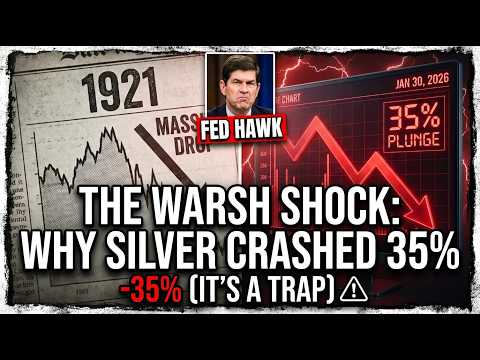
Gold touched $5,600 per ounce on January 29, 2026—its highest price in history. Silver peaked above $121. Three days later, gold had lost 21% and silver had cratered 40%, erasing roughly $15 trillion in market value in one of the most violent precious metals selloffs since 1980.

The trigger: President Trump's nomination of Kevin Warsh as Federal Reserve Chair. Warsh, a known inflation hawk, signaled the end of the 'debasement trade'—the bet that loose monetary policy would continue eroding the dollar's value. As the dollar surged, margin requirements spiked, and leveraged traders faced forced liquidation. The cascade exposed just how much speculative froth had built up during gold and silver's record-breaking 2025 rally.

Key Indicators

40%
Silver Peak-to-Trough Loss
Silver fell from $121.62 to roughly $72 per ounce in less than four trading days
31.4%
Silver Single-Day Drop
January 30 marked silver's worst trading day since the Hunt Brothers collapse in 1980
21%
Gold Peak-to-Trough Loss
Gold dropped from nearly $5,600 to below $4,400, its steepest decline since 1983
15%
New Silver Margin Requirement
Chicago Mercantile Exchange raised margins from 11%, forcing leveraged traders to post more collateral or liquidate

Interactive

Exploring all sides of a story is often best achieved with Play.

Ever wondered what historical figures would say about today's headlines?

Sign up to generate historical perspectives on this story.

Sign Up

Debate Arena

Two rounds, two personas, one winner. You set the crossfire.

People Involved

Kevin Warsh
Kevin Warsh
Federal Reserve Chair Nominee (Awaiting Senate confirmation; faces opposition from Senator Thom Tillis)
Jerome Powell
Jerome Powell
Current Federal Reserve Chair (Term as Chair expires May 15, 2026; has not said whether he will remain as Governor)

Organizations Involved

CME Group
CME Group
Financial Exchange
Status: Raised margin requirements during crash, accelerating forced liquidations

Operates the Chicago Mercantile Exchange and COMEX, the primary venues for gold and silver futures trading.

Board of Governors of the Federal Reserve System
Central bank
Status: Leadership transition underway; policy direction expected to shift hawkish

The United States central bank, responsible for monetary policy, interest rates, and financial stability.

Timeline

  1. Selloff Extends as Margin Hikes Take Effect

    Market Crash

    Gold falls to $4,777 per ounce, down 1.8% on the day. Silver drops an additional 12% before recovering. London spot gold briefly touches $4,404—down 21% from Thursday's peak.

  2. CME Raises Margin Requirements

    Regulatory

    CME announces margin hikes effective February 2: gold margins rise to 8% from 6%, silver to 15% from 11%. The move forces leveraged traders to post more collateral or liquidate.

  3. Trump Nominates Warsh as Fed Chair

    Political

    President Trump announces Kevin Warsh as his nominee to replace Jerome Powell. Markets interpret the hawkish pick as ending the 'debasement trade' thesis.

  4. Silver Crashes 31.4%—Worst Day Since 1980

    Market Crash

    Silver plunges from $115 to settle at $78.53, its largest single-day decline since the Hunt Brothers collapse. Gold drops 9.8%, its worst day since 1983. Dollar surges.

  5. Gold and Silver Hit Record Peaks

    Market Milestone

    Gold touches $5,594.82 per ounce. Silver reaches all-time high of $121.62. Both metals have gained roughly 70% in January alone. Analysts warn of 'bubble-like characteristics.'

  6. Gold Breaks $5,100, Silver Hits All-Time Highs

    Market Milestone

    Gold surges past $5,100 per ounce. Silver breaks above $100 for the first time ever, driven by industrial demand, speculative buying, and dollar weakness.

  7. CME Shifts to Percentage-Based Margins

    Regulatory

    CME Group changes margin methodology for precious metals from fixed dollar amounts to percentages of contract value, making margins automatically rise with prices.

  8. Gold Breaks $4,000 for First Time

    Market Milestone

    Gold surpasses $4,000 per ounce, capping a 55% annual gain driven by central bank buying, geopolitical tensions, and de-dollarization fears.

Scenarios

1

Dead Cat Bounce: Metals Rally 20%, Then Resume Decline

Discussed by: Bank of America analysts, who flagged silver's 'bubble-like dynamics' before the crash

After forced liquidations exhaust themselves, gold and silver stage a relief rally as bargain hunters enter. But with Warsh's hawkish Fed on the horizon and the dollar strengthening, the structural case for precious metals weakens. The rally fades, and metals settle 30-40% below their January highs. The 'debasement trade' becomes a cautionary tale.

2

V-Shaped Recovery: Metals Reclaim Record Highs by Mid-2026

Discussed by: UBS (raised gold target to $6,200), Goldman Sachs ($5,400 target), and bullion analysts who view the crash as a 'classic air-pocket'

Central bank gold buying continues at 1,000+ tonnes annually. Inflation proves stickier than Warsh can control. Geopolitical tensions escalate. The crash is revealed as a leveraged-position flush, not a fundamental shift. Gold and silver resume their uptrend, with gold targeting $6,000+ and silver potentially reaching Citi's $150 target.

3

Warsh Confirmation Blocked, Market Whiplash

Discussed by: Senate watchers noting Thom Tillis's opposition and thin Republican majority

Senator Tillis refuses to advance Warsh through the Banking Committee until the Justice Department investigation is resolved. Confirmation stalls or fails entirely. Markets reprice as the hawkish Fed pivot evaporates. Gold and silver surge on the reversal, though with less conviction than before the crash.

4

Contagion: Mining Sector Bankruptcies and ETF Unwind

Discussed by: Mining sector analysts noting junior miners lost up to a third of market cap in one session

The crash triggers a wave of margin calls at mining companies that hedged production at higher prices. Leveraged silver ETFs face redemption pressure. Some junior miners with high-cost operations cannot service debt at sub-$80 silver. The precious metals complex enters a prolonged bear market reminiscent of 2013-2015.

Historical Context

Hunt Brothers Silver Collapse (1980)

January-March 1980

What Happened

Nelson and William Herbert Hunt attempted to corner the global silver market, driving prices from under $6 to nearly $50 per ounce. They accumulated an estimated one-third of the world's non-government silver supply, borrowing heavily to finance purchases.

Outcome

Short Term

When COMEX enacted 'Silver Rule 7'—banning new margin purchases and capping positions at 3 million ounces—the Hunts couldn't meet margin calls. Silver crashed from $50 to $10.80 in days. 'Silver Thursday' (March 27, 1980) saw $100 million in missed margin calls.

Long Term

The Hunts declared bankruptcy. They were later ordered to pay $130 million in damages and banned from commodity trading. Silver didn't return to $50 until 2011—and briefly.

Why It's Relevant Today

The 2026 crash echoes 1980's playbook: a parabolic rally driven by leveraged speculation, followed by exchange margin hikes that triggered forced liquidations. Then as now, regulators used margin requirements to 'break' a crowded trade.

2011 Silver Crash

April-May 2011

What Happened

Silver rallied 175% in one year, hitting $49.80—its highest since the Hunt Brothers era—driven by fears of sovereign debt crises in Europe and the US, plus quantitative easing. CME raised margins five times in eight days.

Outcome

Short Term

Silver plunged 25% in two days, eventually falling to $26 by September 2011. The crash erased months of gains in hours.

Long Term

Silver entered a multi-year bear market, not sustainably breaking $30 again until 2024. The episode reinforced that margin hikes can rapidly deflate precious metals bubbles.

Why It's Relevant Today

The 2011 pattern—parabolic rally, margin hikes, violent crash, prolonged bear market—offers a potential roadmap for 2026. However, structural factors (central bank buying, de-dollarization) differ significantly.

Gold Crash of 2013

April 2013

What Happened

Gold fell from $1,600 to below $1,400 in two trading days after the Federal Reserve signaled it would begin tapering quantitative easing. The 'taper tantrum' crushed assets that had benefited from loose monetary policy.

Outcome

Short Term

Gold lost 28% in 2013, its worst annual performance in over three decades. Mining stocks were devastated.

Long Term

Gold bottomed around $1,050 in late 2015 and didn't reclaim $1,600 until 2020. The episode demonstrated how Fed policy shifts can overwhelm precious metals fundamentals.

Why It's Relevant Today

The Warsh nomination represents a similar policy inflection point. If markets believe the Fed will pursue tighter policy, gold's 'insurance' premium evaporates—just as it did in 2013.

10 Sources: