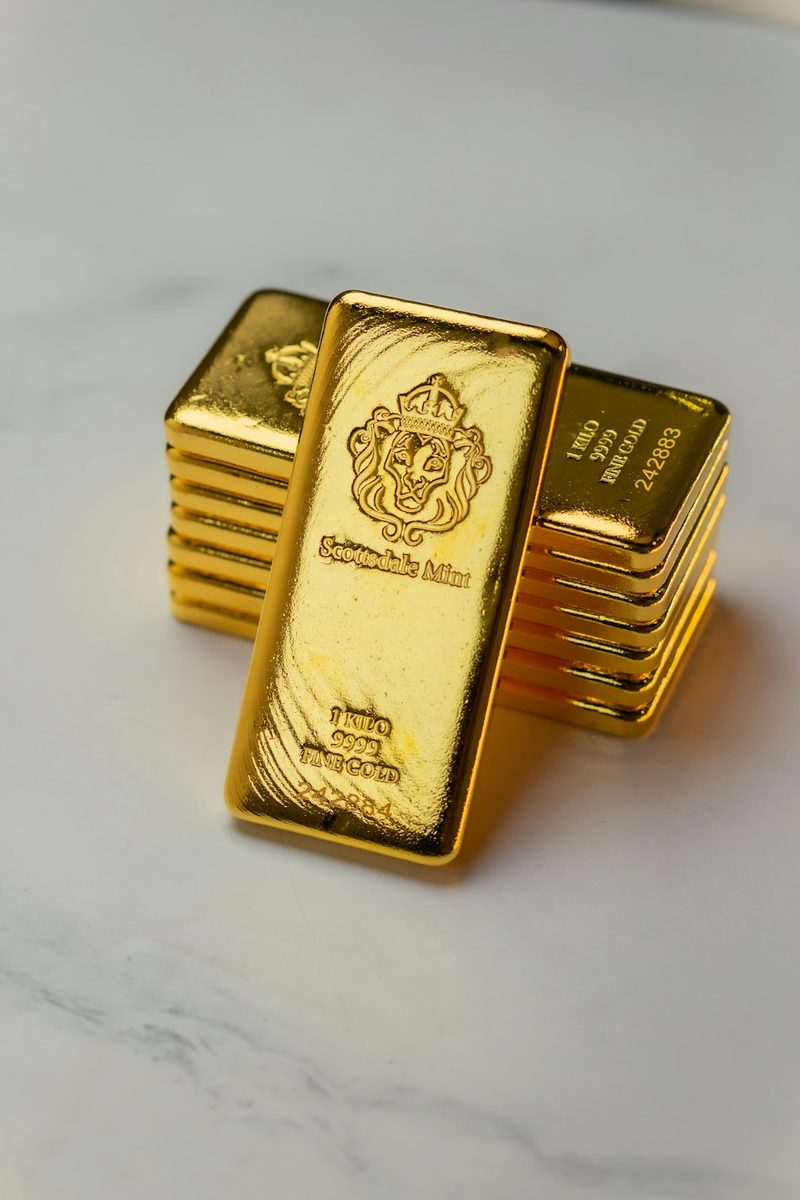
Gold pulled back sharply to $4,902.85 per ounce on January 31, 2026, after profit-taking triggered a 9% single-day decline on January 30 from the record $5,594.82 high reached January 29. Despite the correction—which saw prices slide more than 7% to below $4,980—gold remains on track for a monthly gain exceeding 15%, its strongest performance since the 1980s.
The U.S. dollar fell sharply below 97.0 to reach 95.5, a four-year low. The decline followed a rare "rate check" by the New York Federal Reserve with currency traders that accelerated selling pressure. The dollar's share of global reserves fell to 58.2%, a new low since 1995, with central banks net selling $48 billion in dollar reserves during January alone.
The Federal Reserve held rates steady at 3.50%-3.75% on January 28, with Chair Jerome Powell declaring monetary policy "loosely neutral" and forcefully defending central bank independence amid the ongoing DOJ criminal investigation. Goldman Sachs maintained its $5,400 per ounce target for December 2026 despite the pullback, citing structural demand from central banks purchasing 60 tonnes monthly and Western ETF inflows of around 500 tonnes since early 2025. On January 21, Trump and NATO reached a framework agreement on Arctic security that successfully suspended threatened February 1 tariffs on eight European nations, though geopolitical uncertainty remains elevated.
Questions about this story
Free account needed to ask — your question is kept and asked for you right after sign-up. Answers are public.
No questions yet — be the first to ask.
Key Indicators
$5,594.82
All-time intraday high
Record reached January 29, 2026, up from $2,050 in early 2024
15%+
January 2026 gain
On track for strongest monthly performance since 1980s despite late-month pullback
130%+
Total rally from 2024 start
Price increase from ~$2,050 in early 2024 to over $5,500 peak in January 2026
$5,400
Goldman Sachs Dec 2026 target
Raised from $4,900 on January 21, citing structural demand shift and fiscal sustainability hedging
60 tonnes/month
Projected 2026 central bank purchases
Goldman Sachs estimate for average monthly purchases by emerging market central banks
500 tonnes
Western ETF inflows since Jan 2025
Outpacing predictions based on rate cuts alone, reflecting macro policy risk hedging
95.5
Dollar Index low
U.S. Dollar Index fell below 97.0 to reach 95.5, lowest level since February 2022
58.2%
Dollar share of global reserves
Lowest percentage since 1995, with central banks net selling $48B in January 2026
Images from Openverse under Creative Commons licenses.
Videos from YouTube.
Voices
Curated perspectives — historical figures and your fellow readers.
Dorothy Parker
(1893-1967) ·Jazz Age · wit
Fictional AI pastiche — not real quote.
"Gold at four thousand dollars an ounce—lovely to know that even in our brave new world of digital currencies and algorithmic trading, mankind still requires a shiny rock to clutch when the politicians start bellowing about tariffs. One almost admires the consistency: we've spent six thousand years of civilization learning absolutely nothing about trust."
100% found this insightful
Ever wondered what historical figures would say about today's headlines?
Sign up to generate historical perspectives on this story.
39 events
Latest: January 31st, 2026 · 8 months ago
Showing 8 of 39
JK to step
Tap a bar to jump to that date
Jump to
January 2026
Gold Trades at $4,902.85 After Pullback
LatestMarket
Gold spot price at $4,902.85/oz as correction continues from January 29 record high. Despite pullback, gold on track for 15%+ monthly gain, strongest since 1980s.
Dollar Breaks Below 97.0 to Four-Year Low
Market
U.S. Dollar Index falls to 95.5, lowest level since February 2022, after New York Fed conducted rare 'rate check' with currency traders. Dollar's share of global reserves hits 58.2%, lowest since 1995.
Gold Pulls Back 4.15% After Record High
Market
Gold falls to $5,214.35/oz after reaching $5,594.82 the previous day, as some profit-taking emerges following strongest monthly rally since 1980s.
Gold Plunges 9% in Single-Day Correction
Market
Gold fell 9.11% to $4,886.71/oz on profit-taking after reaching $5,594.82 record the previous day. Slide extended to over 7% decline as prices dropped below $4,980.
Gold Touches Intraday Record of $5,594.82
Market
Gold reaches fresh all-time high of $5,594.82/oz intraday, just three days after breaking $5,000 for the first time. Spot gold gains over $1,000 in January alone.
Powell Defends Fed Independence at Press Conference
Political
At post-FOMC press conference, Powell delivers forceful defense of central bank independence, calling it "a cornerstone of modern democracies and a safeguard against the politicization of monetary policy."
Fed Holds Rates Steady, Two Officials Dissent
Policy
FOMC votes to maintain federal funds rate at 3.50%-3.75%; Governors Stephen Miran and Christopher Waller dissent, preferring quarter-point cut. Powell says economy on "firm footing" and rate is "loosely neutral."
Dollar Hits Four-Year Low
Market
U.S. dollar sinks to lowest level since February 2022 after Trump says currency is "doing great" and should "seek its own level." Bloomberg Dollar Spot Index posts steepest drop since April 2025.
NY Fed 'Rate Check' Triggers Dollar Freefall
Market
New York Federal Reserve conducted rare 'rate check' with currency traders on dollar/yen exchange rate, triggering accelerated dollar selling. Dollar fell 2.26% over five days following the check.
Goldman Sachs Raises Gold Target to $5,400
Market
Goldman Sachs increases December 2026 gold price forecast to $5,400/oz from $4,900, citing "stickier" private-sector hedging against fiscal sustainability risks and central bank buying averaging 60 tonnes/month.
Trump Suspends European Tariffs After NATO Framework
Geopolitical
Trump announces "framework of a future deal" with NATO Secretary General Mark Rutte on Greenland and Arctic security, suspending threatened February 1 tariffs on eight European countries. Framework focuses on preventing Russian and Chinese foothold in Greenland.
Gold Hits New All-Time High of $4,690.02
Market
Gold surges 1.68% to new record of $4,690.02/oz as Trump tariff threats on Europe drive safe-haven demand.
Trump Announces 10% Tariffs on Eight European Countries
Geopolitical
Trump imposes 10% tariff on Denmark, Norway, Sweden, France, Germany, UK, Netherlands, and Finland starting February 1, rising to 25% by June 1, until deal reached on Greenland purchase. European leaders issue joint statement warning tariffs 'undermine transatlantic relations.'
EU Considers €93 Billion in Retaliatory Tariffs
Geopolitical
European Union discusses imposing tariffs on €93 billion ($108 billion) of U.S. goods if Trump follows through on European tariff threats. European stocks tumble 1.2% with automakers and luxury sectors hit hardest.
Gold Opens at $4,596
Market
Gold increased moderately by $9 to reach $4,596.01/oz on Sunday, setting stage for Monday's record-breaking rally.
Gold Pulls Back to $4,595 from Record High
Market
Gold fell 0.44% to $4,595.42/oz as safe-haven demand cooled and Fed rate cut expectations faded.
Gold Opens at Record $4,635.70
Market
Gold futures opened at all-time high of $4,635.70/oz before modest retreat.
Iran Protests Ease After Communications Blackout
Geopolitical
Protest activity drops to 7 protests across 6 provinces on January 13, down from 156 protests across 27 provinces on January 8, following brutal government crackdown and unprecedented communications shutdown isolating country from outside world.
Gold Reaches All-Time High of $4,647.60
Market
Gold extends record run, up 6% YTD as rate cut bets and haven demand converge.
Trump De-escalates Iran Rhetoric
Geopolitical
Trump claimed he was told the 'killing has stopped' in Iran and executions of protesters won't occur, though activists report 2,500+ deaths over 17 days.
UK Closes Tehran Embassy
Geopolitical
British government temporarily closed its embassy in Tehran and withdrew all staff due to ongoing Iran unrest.
International Central Banks Defend Powell
Political
Central bank governors from 11 institutions including ECB, Bank of England, and Bank of Canada issued statement of 'full solidarity' with Federal Reserve and Powell.
Iran Death Toll Reaches 2,500+
Geopolitical
Activists report over 2,500 people killed in Iran protests over 17-day period; Amnesty International cites 'mass unlawful killings on unprecedented scale.'
Gold Surges Past $4,600 on Fed Crisis
Market
Gold jumps 2% to record $4,600/oz as markets process threats to Fed independence.
Trump Announces Iran Tariffs
Geopolitical
25% tariff threatened on any country doing business with Iran; China, India, UAE affected.
Powell Publicly Reveals Investigation
Political
Fed Chair discloses DOJ probe, calls it political intimidation over monetary policy.
DOJ Serves Fed with Subpoenas
Political
Grand jury subpoenas delivered to Federal Reserve in Powell investigation.
December 2025
Iran Protests Erupt
Geopolitical
Protests begin in Tehran's bazaars over collapsing rial, spread to 180+ cities.
Gold Hits $4,510, Best Year Since 1979
Market
Gold sets Christmas Eve record; 2025 gains reach 64%, the best performance in 46 years.
November 2025
DOJ Investigation of Powell Begins
Political
Department of Justice opens criminal investigation into Fed Chair Jerome Powell.
October 2025
BRICS Launches 'Unit' Settlement System
Policy
BRICS bloc pilots gold-collateralized wholesale trade settlement instrument.
Gold Surpasses $4,000/oz
Market
Gold breaks the $4,000 barrier for the first time as geopolitical tensions escalate.
September 2025
UN Re-imposes Iran Sanctions
Geopolitical
United Nations restores sanctions over Iran's nuclear program, isolating its economy.
If the Fed delivers 2-3 rate cuts as expected, Powell remains under investigation, and Iran instability persists, gold continues its upward trajectory. J.P. Morgan forecasts $5,055/oz by Q4 2026; HSBC sees momentum carrying prices to $5,000 in H1. Central bank buying of 585 tonnes per quarter sustains structural demand. ETF inflows continue as retail investors chase performance.
2
Rally Stalls Below $5,000 as Fed Holds Steady
Possible
Discussed by: State Street Global Advisors, Deutsche Bank
If inflation proves stickier than expected or the DOJ investigation resolves without major fallout, the Fed maintains rates longer than markets anticipate. Dollar strength returns, reducing gold's appeal. After a 64% gain in 2025, profit-taking and technical overbought signals trigger consolidation in the $4,000-$4,500 range. Historical pattern: gold averaged 8% annual gains over 30 years.
3
Gold Spikes to $6,000 on Geopolitical Escalation
Unlikely
Discussed by: Yardeni Research, Saxo Bank
Iran's government falls or the U.S. intervenes militarily. The Trump tariff threat triggers breakdown of the U.S.-China trade truce. Oil spikes past $100/barrel. Powell is indicted or removed, markets question dollar-denominated asset safety. In this scenario, gold becomes the primary safe haven for institutional capital fleeing uncertainty. Yardeni Research has set a $6,000 target.
The Supreme Court rules on Fed independence, blocking executive interference. Powell investigation collapses or concludes without charges. Iran protests subside or U.S. steps back from tariff threat. With safe-haven demand ebbing and no rate cuts materializing, gold experiences a correction similar to post-1980, when Volcker's inflation-fighting ended the rally. Prices could retreat 20-30% from highs.
5
Dollar Crisis Drives Gold to $7,000 by Year-End
Possible
Discussed by: Market analysts, Trading Key
If the dollar's decline accelerates amid continued fiscal concerns and Fed independence threats, gold could see a full-scale currency crisis premium. Combined with central bank diversification accelerating beyond Goldman's 60-tonne monthly estimate and Western investors treating gold as a fiscal sustainability hedge rather than just an inflation hedge, prices could reach $7,000 by December 2026. The shift from tactical to structural positioning would mark a fundamental change in gold's role in portfolios.
Historical Context
3 moments from history that rhyme with this story — and how they unfolded.
1 of 3
January 1979 - January 1980
Gold's 1979-1980 Rally
Gold exploded from $226 to $850 per ounce in under a year—a 275% gain. The drivers: double-digit inflation peaking at 13.5%, the Iranian Revolution disrupting oil supplies, and Soviet intervention in Afghanistan. Investors fled paper currencies for the one asset governments couldn't print.
Then
Gold peaked at $850 in January 1980, then crashed as Paul Volcker's Fed raised rates to 19-20% to crush inflation.
Now
Gold languished between $300-500 for most of the 1980s. It took until April 2025—45 years—to exceed the 1980 peak in inflation-adjusted terms.
Why this matters now
Today's rally shares the Iranian connection and safe-haven psychology, but differs fundamentally: central banks are now buying gold rather than selling, and the threat to Fed independence is political rather than inflationary. The 1980 crash required a Volcker-style policy response; no such intervention appears imminent.
2 of 3
February 1951
Treasury-Fed Accord (1951)
President Truman pressured the Fed to keep interest rates low to manage post-war debt. After Truman falsely claimed the Fed had pledged support for his policy, the conflict came to a head. Treasury Secretary John Snyder and Fed Chair Thomas McCabe negotiated an accord that formally established the Fed's operational independence.
Then
The Fed gained authority to set interest rates based on economic conditions rather than Treasury financing needs.
Now
The accord became the foundation of modern central bank independence worldwide, a principle now embedded in economic consensus.
Why this matters now
The DOJ investigation into Powell represents the most significant challenge to Fed independence since 1951. Unlike Truman's pressure, which was public and eventually resolved through negotiation, the criminal probe introduces a new mechanism of potential executive control. Markets are treating this as a structural shift.
3 of 3
1971-1972
Nixon Pressure on Arthur Burns (1971-1972)
Richard Nixon, fearing a recession would cost him the 1972 election, pressured Fed Chair Arthur Burns to keep rates low. Burns accommodated. Nixon won reelection in a landslide. Inflation subsequently spiraled, contributing to the stagflation crisis that dominated the rest of the decade.
Then
Nixon secured his political goal; Burns maintained his position but lost credibility.
Now
The episode became a textbook case for why central bank independence matters. The inflation Burns enabled required Volcker's painful 1979-1982 intervention to resolve.
Why this matters now
The Trump-Powell dynamic echoes Nixon-Burns, but with a crucial difference: Burns quietly accommodated; Powell is publicly resisting. The criminal investigation escalates beyond rhetorical pressure to potential removal of the Fed Chair—a step Nixon never took.