


Pull to refresh
Logo
Daily Brief
Following
Why Ranks Sign Up
FDA approves Enhertu for early-stage HER2-positive breast cancer

FDA approves Enhertu for early-stage HER2-positive breast cancer

New Capabilities

Antibody-drug conjugate moves into curative-intent treatment for Stage II and III patients

6 days ago: FDA approves two new early-stage indications

Overview

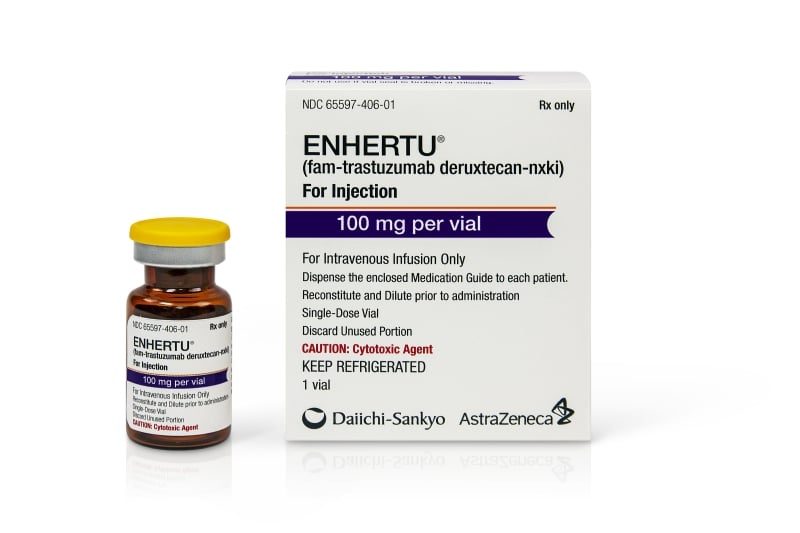
The U.S. Food and Drug Administration (FDA) cleared AstraZeneca and Daiichi Sankyo's Enhertu for two new uses in early-stage HER2-positive breast cancer in May 2026. The drug, already a standard for advanced disease, now enters the window where the goal is cure, not control.

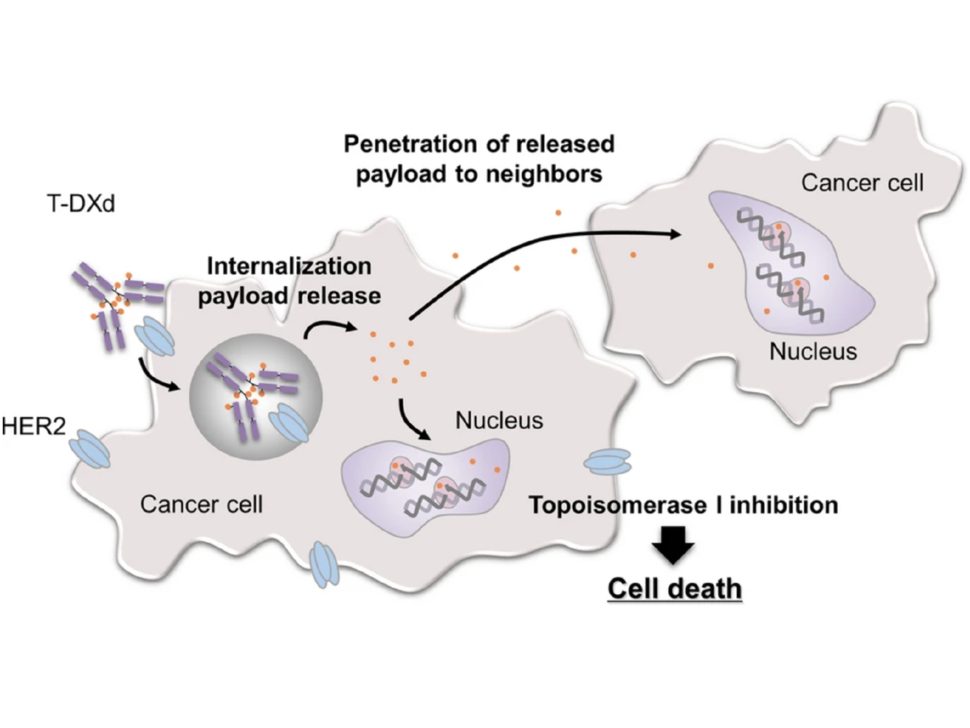
About one in five breast cancers is HER2-positive, meaning the tumor makes extra copies of a growth-driving protein called human epidermal growth factor receptor 2. The expansion gives doctors a new option before surgery for Stage II and III patients, and a new option after surgery for those whose tumors survived initial treatment.

Why it matters

Roughly 50,000 American women are diagnosed with HER2-positive breast cancer each year. This approval changes what their first treatment will be.

Key Indicators

67.3%
Pathologic complete response rate
Share of patients with no detectable invasive cancer at surgery after Enhertu-led pre-surgery treatment, versus 56.3% on the prior chemotherapy regimen.
53%
Reduction in recurrence or death risk
DESTINY-Breast05 showed adjuvant Enhertu cut the risk of invasive disease coming back or death by 53% versus Kadcyla, the prior post-surgery standard.
92.4%
Three-year invasive disease-free survival
Share of post-surgery Enhertu patients with no cancer recurrence at three years, versus 83.7% on Kadcyla.
12%
Interstitial lung disease rate
Rate of lung inflammation, sometimes fatal, in patients on Enhertu combined with pertuzumab. The drug carries a boxed warning.
2,562
Patients across both trials
DESTINY-Breast11 enrolled 927 and DESTINY-Breast05 enrolled 1,635. The largest dataset for an antibody-drug conjugate in early breast cancer.

Voices

Curated perspectives — historical figures and your fellow readers.

Ever wondered what historical figures would say about today's headlines?

Sign up to generate historical perspectives on this story.

Play

Exploring all sides of a story is often best achieved with Play.

Log in to play. Track your picks, climb the leaderboards. Log in Sign Up
Predict 4 ways this could play out. Contrarian picks score more — points lock when the scenario resolves. Log in to play
Higher or Lower Two numbers from this story. Guess which is bigger. 5 rounds to set a streak. Log in to play
Timeline Five events from this story — drag them oldest to newest. Log in to play
Connections Sixteen names from the news. Find the four hidden groups of four. Log in to play

People Involved

Organizations Involved

Timeline

March 2019 May 2026

5 events Latest: 6 days ago
Tap a bar to jump to that date
  1. FDA approves two new early-stage indications

    Latest Regulatory

    Enhertu is cleared as pre-surgery therapy for Stage II/III HER2-positive breast cancer and as post-surgery therapy for patients with residual disease after prior treatment.

  2. DESTINY-Breast11 readout shows neoadjuvant benefit

    Clinical Trial

    Pre-surgery Enhertu followed by standard combination produced a 67.3% pathologic complete response rate versus 56.3% for chemotherapy.

  3. Approval expands to HER2-low metastatic breast cancer

    Regulatory

    DESTINY-Breast04 results showed Enhertu worked even in patients with low HER2 expression, dramatically expanding the eligible population in metastatic disease.

  4. FDA grants accelerated approval for late-stage breast cancer

    Regulatory

    Enhertu is approved for HER2-positive metastatic breast cancer patients who have had two or more prior anti-HER2 regimens, based on a 60.3% response rate in DESTINY-Breast01.

  5. AstraZeneca and Daiichi Sankyo sign $6.9B Enhertu deal

    Business

    AstraZeneca pays $1.35 billion upfront for global co-development and co-commercialization rights to trastuzumab deruxtecan, then known as DS-8201.

Historical Context

2 moments from history that rhyme with this story — and how they unfolded.

November 2006

Herceptin's adjuvant breakthrough (2006)

The FDA approved Herceptin (trastuzumab) for HER2-positive early breast cancer after data from the HERA, NSABP B-31, and NCCTG N9831 trials showed it cut recurrence by roughly half. Before that, HER2-positive disease was a death sentence for many women diagnosed in their forties and fifties.

Then

Adjuvant Herceptin became standard of care within a year. Genentech's revenue from the drug roughly tripled.

Now

Five-year survival for HER2-positive early breast cancer rose from about 75% to over 90%. Herceptin built the template for targeted cancer therapy.

Why this matters now

Enhertu is following the same path Herceptin took two decades ago: prove benefit in metastatic disease, then move into the curative setting where impact is biggest. The 2006 precedent is what oncologists invoke when they project Enhertu's long-term effect on survival statistics.

May 2019

Kadcyla's residual disease approval (2019)

The FDA approved Kadcyla (trastuzumab emtansine, T-DM1), the first-generation HER2 antibody-drug conjugate, for post-surgery patients with leftover invasive cancer after initial treatment. The KATHERINE trial showed Kadcyla cut recurrence risk by 50% versus continuing Herceptin alone.

Then

Kadcyla became the standard adjuvant therapy for HER2-positive patients with residual disease. Roche's annual Kadcyla revenue passed $2 billion within three years.

Now

The approval validated antibody-drug conjugates as curative-intent therapy and set the comparator that Enhertu had to beat in DESTINY-Breast05.

Why this matters now

Kadcyla is the drug Enhertu directly displaces in the post-surgery setting. The 53% additional risk reduction over Kadcyla in DESTINY-Breast05 is what gave the FDA confidence to approve a more potent, more toxic successor.

Sources

(5)