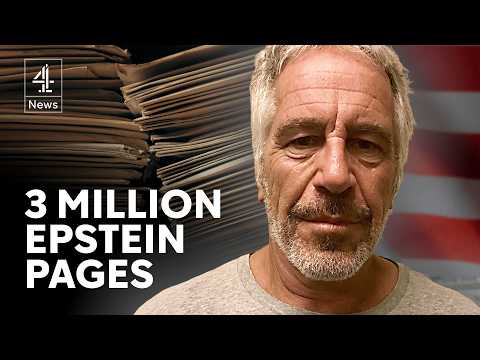
Jeffrey Epstein is dead, but his paper trail has led to immediate legal battles. On January 30, 2026, the Justice Department released more than 3 million pages, 2,000 videos, and 180,000 images.
Officials claimed full compliance with the Epstein Files Transparency Act, though they released only about half the 6 million pages they reviewed. Within hours, attorneys discovered serious failures: 43 victims' full names exposed, including two dozen minors, alongside nearly 40 unredacted nude photos. A Wall Street Journal review found some victim names appeared over 100 times.
Attorney Brad Edwards, representing about 300 survivors, called it "literally thousands of mistakes" and potentially "the single most egregious violation of victim privacy in one day in United States history." On February 3, after Edwards and Henderson threatened legal intervention, the Justice Department reached a deal with victim attorneys to protect nearly 100 exposed women. Judge Richard M. Berman canceled a hearing.
On February 11, Attorney General Pam Bondi testified before the House Judiciary Committee, facing intense bipartisan criticism over redaction failures, victim privacy violations, selective redactions of powerful figures, and withholding ~2.5 million pages. She offered vague references to 'ongoing investigations' but faced sharp questions from Reps. Jamie Raskin, Thomas Massie, and Ro Khanna, who are threatening impeachment or contempt proceedings.
Questions about this story
Free account needed to ask — your question is kept and asked for you right after sign-up. Answers are public.
No questions yet — be the first to ask.
Key Indicators
~100
Victims in privacy deal
DOJ reached agreement February 3 with victim attorneys to protect nearly 100 women whose identities were exposed.
43+
Victims fully exposed
Wall Street Journal found at least 43 full victim names unredacted, including 24+ who were minors when abused.
~40
Nude photos unredacted
New York Times journalists found nearly 40 unredacted nude images of young women or teenagers.
Zero
New prosecutions
Deputy AG Blanche announced February 2 that materials will not lead to additional prosecutions.
Curated perspectives — historical figures and your fellow readers.
Dorothy Parker
(1893-1967) ·Jazz Age · wit
Fictional AI pastiche — not real quote.
"They've given us three million pages that somehow manage to expose everyone except the people worth exposing—rather like publishing a phone book and calling it an autobiography. Half compliance, full immunity, and the victims' names spelled out in perfect typeface while the guilty remain as anonymous as a gentleman's club roster: how terribly modern, how terribly familiar."
0% found this insightful
Ever wondered what historical figures would say about today's headlines?
Sign up to generate historical perspectives on this story.
28 events
Latest: February 3rd, 2026 · 8 months ago
Showing 8 of 28
JK to step
Tap a bar to jump to that date
Jump to
February 2026
DOJ reaches deal with victim attorneys to protect exposed identities
LatestLegal
After attorneys Brad Edwards and Brittany Henderson threaten emergency judicial intervention, Justice Department reaches agreement to protect nearly 100 women whose identities were exposed. Judge Richard M. Berman cancels scheduled hearing after being notified of 'extensive and constructive discussions' resulting in improved redaction protocols.
Rep. Ansari calls for Bondi's impeachment over nude photo release
Political
Representative Yassamin Ansari calls for Attorney General Pam Bondi's impeachment after DOJ released nearly 40 unredacted nude photos of young women or teenagers, calling it 'an indefensible and horrifying disregard for the victims.'
Deputy AG announces no new Epstein prosecutions will occur
Investigation
Deputy Attorney General Todd Blanche announces that the released Epstein files will not lead to additional prosecutions, stating 'There was a lot of correspondence... [but the materials do not] allow us necessarily to prosecute somebody.'
Khanna and Massie threaten impeachment or contempt over withheld files
Political
Bill sponsors announce they are prepared to move on impeachment or inherent contempt against Attorney General Bondi, stating they are 'building a bipartisan coalition' to fine her daily until all 6 million identified documents are released.
January 2026
Rep. Raskin requests review of unredacted Epstein files ahead of Bondi hearing
Political
Ranking Member Jamie Raskin requests review of unredacted Epstein files in DOJ's possession ahead of Attorney General Bondi's scheduled February 11 appearance before House Judiciary Committee.
DOJ releases 3+ million pages, declares compliance complete
Disclosure
Deputy Attorney General Todd Blanche announces release of 3.5 million pages, 2,000 videos, and 180,000 images—stating DOJ has met all obligations under the Act and no further releases will occur.
Survivors condemn DOJ for exposing victim names while shielding abusers
Controversy
Group of 20 survivors and their attorneys report hundreds of victim names left unredacted in latest release, contradicting DOJ promises. Attorney Brad Edwards urges DOJ to retract files and fix redactions.
Judge Engelmayer denies special master request from lawmakers
Legal
Judge Paul Engelmayer rules he lacks authority to appoint special master or enforce the Epstein Files Transparency Act in closed criminal case, directing Khanna and Massie to use congressional tools or file civil lawsuit instead.
Rep. Summer Lee's contempt amendment against Bondi fails along party lines
Political
Democratic Representative Summer Lee introduces amendment to hold Attorney General Pam Bondi in civil contempt for non-compliance with Oversight Committee subpoena issued August 5, 2025. Amendment fails 19–24.
DOJ urges judge to reject lawmakers' special master request
Legal
Justice Department asks Judge Engelmayer to deny Khanna and Massie's intervention bid, arguing they lack standing in Maxwell's closed criminal case and cannot use it to police DOJ compliance.
Epstein survivors ask DOJ inspector general to audit file releases
Investigation
Nineteen survivors send letter to DOJ Office of Inspector General criticizing selective redactions and requesting oversight of all future disclosures to ensure compliance with law and survivor protections.
Lawmakers request special master to oversee DOJ compliance
Legal
Representatives Khanna and Massie send letter to Judge Paul Engelmayer requesting appointment of independent special master, stating 'the DOJ cannot be trusted' and claiming criminal violations have occurred.
DOJ admits less than 1% of files released, 2 million still under review
Disclosure
Justice Department files court letter stating it has released 12,285 documents (125,575 pages) with more than 2 million documents in various phases of review, deploying 500+ reviewers.
December 2025
DOJ announces discovery of over 1 million additional documents
Disclosure
After missing December 19 deadline, Justice Department announces SDNY and FBI uncovered more than 1 million additional potentially responsive documents, warning review will take 'a few more weeks.'
Khanna and Massie threaten inherent contempt against Bondi
Political
Bill sponsors announce they are drafting inherent contempt resolution that would fine Attorney General Bondi $5,000 per day personally after 30-day grace period for non-compliance with Act.
DOJ removes then restores Trump photo from Epstein files website
Controversy
At least 16 files including photo of Trump with Epstein and Maxwell briefly disappear from DOJ website, triggering backlash. DOJ says removal was for victim review, restores photo after determining no victims depicted.
Legal deadline for Epstein files to go online
Deadline
Under the Act, DOJ must post all unclassified Epstein and Maxwell records in a searchable, downloadable format by this date, barring narrow exemptions.
New York judge greenlights Maxwell grand jury document release
Legal
Judge Paul Engelmayer grants DOJ’s request to release “voluminous” grand jury transcripts and investigative files from the Maxwell case, subject to victim-protective redactions.
Florida judge orders release of old Epstein grand jury transcripts
Legal
Judge Rodney Smith rules the new law overrides Rule 6(e) and authorizes unsealing of 2006–2007 grand jury materials from the abandoned Florida case.
November 2025
Trump signs Epstein Files Transparency Act
Legislation
President Trump quietly signs H.R. 4405, giving Attorney General Pam Bondi 30 days to release unclassified records on Epstein and Maxwell.
Congress passes Epstein transparency law in landslide
Legislation
The House approves the bill 427–1; the Senate clears it by unanimous consent hours later, sending it to the president.
September 2025
Massie’s discharge petition forces action on bill
Legislation
Republican Thomas Massie launches a discharge petition, quickly joined by Democrats and a few hard-right Republicans, to circumvent House leadership.
July 2025
Epstein Files Transparency Act introduced in House
Legislation
Representative Ro Khanna files H.R. 4405, requiring DOJ to release all unclassified Epstein-related records in a searchable format.
December 2021
Ghislaine Maxwell convicted of trafficking underage girls
Legal
A federal jury in New York convicts Maxwell on sex-trafficking charges, generating a vast trove of trial and grand jury records.
August 2019
Epstein dies in jail, ruled a suicide
Incident
Epstein is found dead in his Manhattan jail cell while awaiting trial, fueling widespread suspicion and conspiracy theories about a cover-up.
July 2019
New York prosecutors charge Epstein with sex trafficking
Investigation
SDNY indicts Epstein for sex trafficking dozens of underage girls in New York and Florida, reopening scrutiny of his earlier plea deal.
June 2008
Epstein pleads to minor state charges, serves lenient sentence
Legal
Epstein pleads guilty to Florida prostitution charges, receives 18 months but serves about 13 months with generous work release, outraging victims.
September 2007
Epstein cuts secret non-prosecution deal in Florida
Legal
Federal prosecutors sign a non-prosecution agreement letting Epstein avoid a sweeping federal indictment in exchange for a state plea and immunity for alleged co-conspirators.
Scenarios
1
Epstein Files Drop Names, Trigger New Investigations and Resignations
Possible
Discussed by: Speculated by legal analysts and anti-trafficking advocates in major national outlets and TV commentary
In this scenario, unsealed grand jury transcripts and investigative files expose previously unknown conduct by politically exposed people—lawmakers, corporate leaders, or foreign dignitaries—who appear to have facilitated, funded, or joined in Epstein’s abuse. State and federal prosecutors re-open dormant cases, ethics probes launch on Capitol Hill, and at least a few high-profile figures resign or are indicted. This outcome likely requires the records to include credible, corroborated accounts that go beyond what civil lawsuits and earlier document dumps have already revealed.
2
Document Dump Mostly Confirms Old Stories, Fuels More Distrust than New Cases
Likely
Discussed by: Justice Department officials, some judges, and cautious reporters covering the Florida and New York rulings
Here, the grand jury records and case files largely rehash what’s already public: the botched Florida plea deal, the scope of Epstein’s abuse, and Maxwell’s role. Redactions to protect victims and ongoing investigations strip out many details, and crucial “client list” fantasies go mostly unmet. The release still embarrasses institutions, revealing bureaucratic cowardice and internal debates, but produces few fresh prosecutions. Public distrust deepens as conspiracy theorists point to blacked-out pages as proof of another cover-up, even while investigators insist there’s little new to act on.
3
Courts and DOJ Narrow the Law, Keeping Much of the Record Dark
Possible
Discussed by: Some privacy advocates, former prosecutors, and civil-liberties scholars worried about due-process and safety risks
In this outcome, DOJ leans heavily on exceptions for ongoing investigations and victim privacy, and judges prove receptive. Large swaths of material stay sealed or heavily redacted, including discussions of uncharged third parties. Lawsuits by media and advocacy groups challenge the redactions, but appellate courts give wide deference to prosecutorial and safety concerns. The political backlash is sharp—especially against Bondi and Trump—but the legal structure of grand jury secrecy emerges mostly intact, and the Act becomes more symbolic than transformative.
4
Judge Appoints Special Master, Forces Faster Release Under Court Supervision
Possible
Discussed by: Representatives Khanna and Massie in their January 8 letter to Judge Engelmayer; some transparency advocates
Judge Engelmayer grants the lawmakers' intervention request and appoints an independent special master to oversee DOJ's compliance with the Epstein Files Transparency Act. The special master sets firm deadlines, audits redactions for consistency, and reports publicly on progress. This outcome would require the judge to find the lawmakers have standing despite DOJ objections and would represent rare judicial supervision of executive-branch document production under a congressional mandate. It could accelerate releases but also trigger appeals that further delay disclosure.
5
Inherent Contempt Proceedings Against Bondi Create Constitutional Crisis
Possible
Discussed by: Representatives Khanna and Massie publicly; constitutional law scholars in media commentary
House votes to hold Attorney General Bondi in inherent contempt, directing the Sergeant-at-Arms to impose daily fines. The Trump administration refuses to comply, arguing congressional inherent contempt is unconstitutional or inapplicable to cabinet officials performing executive functions. The standoff escalates into a separation-of-powers battle, potentially reaching the Supreme Court while document releases remain stalled. This scenario most likely occurs if DOJ continues missing self-imposed deadlines without meaningful progress and Khanna-Massie secure majority support for their resolution.
6
Survivors Sue DOJ Over Victim Name Exposure, Force Retraction
Possible
Discussed by: Survivors' attorneys including Brad Edwards following January 30 release; privacy law experts in media commentary
Hundreds of Epstein survivors whose names were left unredacted file a class-action lawsuit against the Justice Department for violating their privacy rights and the Act's victim-protection provisions. A federal judge orders DOJ to temporarily retract the files, conduct proper redactions, and re-release them—potentially delaying public access for months while creating a legal precedent for balancing transparency with victim safety in abuse disclosure laws.
Historical Context
3 moments from history that rhyme with this story — and how they unfolded.
1 of 3
1992–present
President John F. Kennedy Assassination Records Collection Act
In 1992, Congress passed a law forcing federal agencies to gather and release records related to President Kennedy’s assassination. Agencies dumped hundreds of thousands of pages into the National Archives, but presidents repeatedly delayed full disclosure, citing national security. Even today, some files remain partially redacted despite clear statutory deadlines.
Then
The law fed public fascination and conspiracy theories while revealing dysfunction and inter-agency turf wars more than smoking guns.
Now
It created a template for Congress mandating disclosure in a single, controversial case, and showed how executive-branch resistance can blunt even strong transparency statutes.
Why this matters now
The Epstein Files Transparency Act is explicitly modeled on the JFK records law, and the decades-long fight over assassination files is a warning that legal mandates don’t automatically end secrecy battles.
2 of 3
1965–2012
Boy Scouts of America “Perversion Files” Unsealed
For decades, the Boy Scouts maintained secret internal files on suspected child abusers, barring them from volunteering but rarely warning families or police. After a landmark Oregon Supreme Court ruling in 2012, more than 20,000 pages of these “perversion files” were released, detailing alleged abuse by over 1,200 scout leaders and a long pattern of institutional cover-up.
Then
The disclosures triggered public outrage, a wave of lawsuits, and major settlements for survivors.
Now
They helped spur broader scrutiny of institutional abuse and contributed to the Scouts’ later bankruptcy and multibillion-dollar settlement.
Why this matters now
The Scouts case shows how opening secret abuse files can both validate survivors’ stories and devastate trusted institutions—exactly the tradeoff now confronting the Justice Department and political elites in the Epstein saga.
3 of 3
2002–2003
Catholic Church Abuse Files and the Boston Spotlight Revelations
After investigative reporting by the Boston Globe’s Spotlight team, courts ordered the release of internal Catholic Church documents showing bishops had quietly reassigned known abusers and concealed complaints. The files, combined with civil settlements, exposed how secrecy agreements and institutional deference kept serial abusers in ministry for decades.
Then
The Boston Archdiocese paid tens of millions in settlements and its cardinal resigned amid global outrage.
Now
The disclosures helped drive broader legal reforms, including changes to statutes of limitations and expectations for document transparency in abuse cases worldwide.
Why this matters now
The church files illustrate how forced transparency around institutional failures in child abuse cases can reshape public expectations and law—not just about abusers, but about prosecutors, bishops, and officials who looked away, much like those now scrutinized in the Epstein records.