From special counsel to subpoena: the Jack Smith–Trump showdown moves to Congress
Rule Changes
How Trump's collapsed federal prosecutions and GOP 'weaponization' claims converged into a high‑stakes battle over the Justice Department's independence
How Trump's collapsed federal prosecutions and GOP 'weaponization' claims converged into a high‑stakes battle over the Justice Department's independence
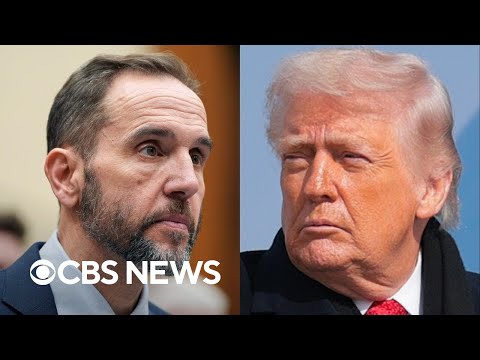
In November 2022, Attorney General Merrick Garland appointed veteran prosecutor Jack Smith as special counsel to oversee two high‑risk investigations into Donald Trump: his efforts to overturn the 2020 election and his handling of classified documents at Mar‑a‑Lago. Both probes produced federal indictments in 2023, placing a former president on track to face criminal trials over alleged election subversion and mishandling of national‑security secrets.
Over the next two years, a Supreme Court ruling expanding presidential immunity, a Trump‑appointed judge's decision invalidating Smith's appointment in the documents case, and Trump's 2024 election victory combined to unravel the prosecutions. Smith submitted a final report and resigned in January 2025, while the new Trump administration purged officials who had worked on his team.
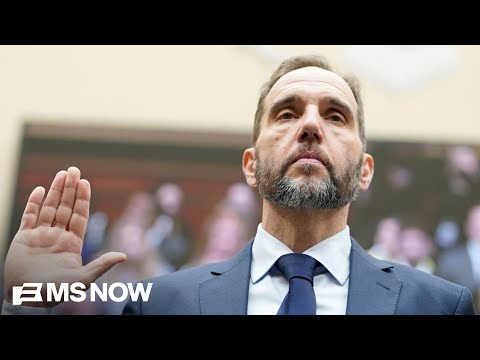
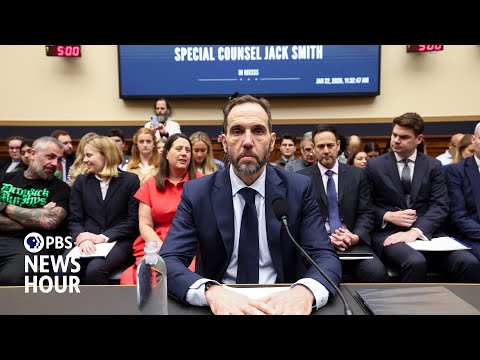
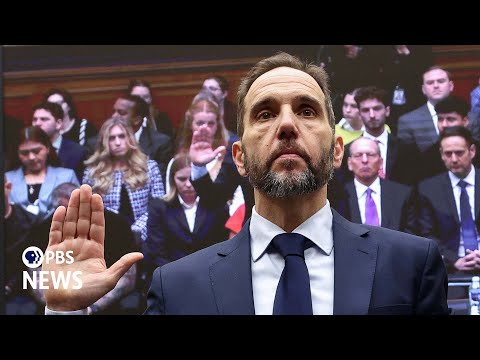
House Republicans launched a formal investigation into Smith's conduct, compelling him to testify in a closed‑door December 2025 deposition and a contentious public hearing on January 22, 2026. He defended his charging decisions as evidence‑based and denied political influence. Judge Aileen Cannon has set February 24, 2026 as the deadline for her order blocking release of Smith's classified‑documents report to expire, while the Trump Justice Department now argues the report belongs in the 'dustbin of history.'
Questions about this story
Free account needed to ask — your question is kept and asked for you right after sign-up. Answers are public.
No questions yet — be the first to ask.
Key Indicators
2
Federal criminal cases Jack Smith brought against Trump
Election‑interference indictment in Washington, D.C., and classified‑documents indictment in Florida—both later dismissed following Trump’s 2024 victory and key court rulings.
10
Republican lawmakers whose phone metadata was subpoenaed
Part of the FBI’s ‘Arctic Frost’ 2020 election investigation led by Smith’s team, fueling GOP claims of surveillance and ‘weaponization’ of DOJ.
12+
DOJ officials fired after working on Smith’s investigations
More than a dozen current and former officials removed in January 2025 by the new acting attorney general, who cited a lack of trust in their willingness to execute Trump’s agenda.
17,019
Pages in House ‘weaponization of government’ final report
Sprawling 2024 report from a now‑defunct House subcommittee chaired by Jim Jordan, laying intellectual groundwork for continuing GOP oversight of DOJ and FBI.
Curated perspectives — historical figures and your fellow readers.
Oscar Wilde
(1854-1900) ·Victorian · wit
Fictional AI pastiche — not real quote.
"How delicious that a nation which prides itself on separating powers should produce such a perfect farce: a prosecutor who cannot prosecute, a president who cannot be judged, and a report destined for history's dustbin before history has even finished reading the indictment. One might almost admire the efficiency with which America has arranged for justice and politics to take turns wearing each other's costume."
0% found this insightful
Ever wondered what historical figures would say about today's headlines?
Sign up to generate historical perspectives on this story.
18 events
Latest: January 24th, 2026 · 8 months ago
Showing 8 of 18
JK to step
Tap a bar to jump to that date
Jump to
January 2026
Trump DOJ argues Smith's classified‑documents report should remain sealed permanently
LatestLegal Action
The Justice Department under Trump files a court brief arguing that Smith's report on the classified‑documents investigation 'belongs in the dustbin of history' and should not be released, reversing the Biden DOJ's position and aligning with Trump's private lawyers' arguments to Judge Cannon.
Jack Smith testifies publicly before House Judiciary Committee
Congressional Action
In his first public congressional testimony, Smith tells the GOP‑led committee that Trump 'broke the law' and that prosecutors developed 'proof beyond a reasonable doubt' of criminal activity. He defends the Arctic Frost phone‑metadata subpoenas and reiterates that his charging decisions were independent of political pressure. Republicans attack his investigative tactics while Democrats praise his integrity.
December 2025
House Republicans release transcript and video of Smith's closed‑door testimony
Congressional Action
The Judiciary Committee publishes a 255‑page partially redacted transcript and more than eight hours of video from Smith's December 17 deposition, making his detailed defense of the Trump prosecutions public for the first time.
Judge Cannon sets February 24, 2026 deadline for classified‑documents report block to expire
Court Ruling
Judge Aileen Cannon lifts restrictions on release of Smith's classified‑documents report findings but sets a 60‑day window for Trump to challenge the order. Her injunction barring DOJ from sharing the report with congressional leaders will automatically expire on February 24, 2026 unless extended.
Jack Smith testifies in closed‑door deposition before House Judiciary Committee
Congressional Action
Smith appears for scheduled deposition, telling lawmakers 'the decision to bring charges against President Trump was mine' and that prosecutors had 'proof beyond reasonable doubt in both cases.' He denies any political influence from Biden or Garland and states Trump 'caused' and 'exploited' January 6 violence.
House Republicans subpoena Jack Smith for closed‑door deposition
Congressional Action
The GOP‑led House Judiciary Committee, chaired by Jim Jordan, issues a subpoena ordering former special counsel Jack Smith to appear for a private deposition on December 17 and to provide documents related to his prosecutions of President Trump and the Arctic Frost investigation. Smith’s counsel notes he previously offered to testify publicly but says he will comply with the subpoena.
Trump seeks to keep Smith’s classified‑documents report sealed
Legal Action
Trump’s private lawyers ask Judge Cannon to maintain an order blocking release of Smith’s final report on the classified‑documents case, arguing public disclosure would prolong 'unlawful' scrutiny and prejudice any future proceedings. Media organizations and civil‑liberties groups argue for unsealing the report.
January 2025
Trump DOJ fires officials tied to Smith investigations
Executive Action
Acting Attorney General James McHenry fires more than a dozen officials who worked on Smith’s team, citing lack of trust in their ability to implement President Trump’s agenda and explicitly invoking Trump’s claims about prior 'weaponization' against him.
Smith submits final report; resigns from DOJ days later
Investigation
DOJ informs Judge Cannon that Smith completed his work and submitted a confidential report on January 7, then 'separated' from DOJ on January 10. Garland later releases the election‑interference volume while withholding the classified‑documents volume from the public.
December 2024
House Weaponization Subcommittee issues final report
Congressional Action
Jordan’s select subcommittee releases a 17,019‑page report alleging widespread abuses by federal agencies, including DOJ and FBI, and recommending structural changes. Though predating Trump’s return to office, its narrative of 'weaponization' sets the stage for later GOP scrutiny of Smith’s work.
November 2024
Smith moves to drop both federal Trump cases after election win
Legal Action
Shortly after Trump wins the November 2024 election, Smith files motions to dismiss the election‑interference and classified‑documents indictments, citing DOJ policy against prosecuting a sitting president. Courts subsequently grant the dismissals, formally ending the federal cases against Trump.
July 2024
Judge Cannon dismisses classified‑documents case, finds Smith unlawfully appointed
Court Ruling
U.S. District Judge Aileen Cannon throws out the Mar‑a‑Lago classified‑documents case, ruling that Jack Smith’s appointment violated the Constitution and that DOJ improperly funded his office, dealing a major blow to the special counsel and inviting appeals.
Supreme Court expands presidential immunity in Trump v. United States
Court Ruling
The Supreme Court rules 6–3 that former presidents have absolute immunity from prosecution for core official acts and presumptive immunity for other official acts, while denying immunity for unofficial conduct. The decision forces lower courts to re‑evaluate portions of Smith’s election‑interference indictment and effectively rules out a trial before the 2024 election.
August 2023
Election‑interference indictment filed in Washington, D.C.
Legal Action
A grand jury in Washington, D.C., returns a four‑count indictment alleging Trump conspired to overturn the 2020 election through schemes to pressure officials and obstruct certification of results; Smith announces the charges in a brief public statement.
June 2023
Classified‑documents indictment unsealed against Trump
Legal Action
Smith’s office unseals a 37‑count indictment in the Southern District of Florida accusing Trump of unlawfully retaining national‑defense information at Mar‑a‑Lago and obstructing government efforts to retrieve it, along with charges against aides Walt Nauta and Carlos De Oliveira.
May 2023
Special counsel team subpoenas phone metadata for 10 GOP lawmakers
Investigation
As part of the FBI’s ‘Arctic Frost’ 2020 election probe, Smith’s office obtains Verizon records containing call and text logs and related metadata for at least ten Republican lawmakers, including Sens. Lindsey Graham and Josh Hawley. The move remains secret under a nondisclosure order until documents emerge in 2025, fueling Republican outrage.
January 2023
House creates ‘Weaponization of Government’ subcommittee
Congressional Action
The House approves H.Res. 12, establishing the Select Subcommittee on the Weaponization of the Federal Government under the Judiciary Committee, chaired by Jim Jordan, with broad authority to subpoena DOJ, FBI, and other agencies.
November 2022
Garland appoints Jack Smith as special counsel over Trump probes
Investigation
Attorney General Merrick Garland names Jack Smith special counsel to oversee DOJ investigations into Trump’s retention of classified documents and efforts to overturn the 2020 election, aiming to provide additional independence as both Trump and Biden eye 2024 campaigns.
Scenarios
1
Closed‑door testimony strengthens GOP ‘weaponization’ narrative and leads to referrals
Likely
Discussed by: Conservative commentators, some House Republicans, outlets such as the Washington Examiner and New York Post
In this scenario, Republicans use Smith’s deposition and produced documents to argue that his office overreached, especially in the Arctic Frost phone‑metadata subpoenas targeting GOP lawmakers. Selectively released excerpts and staff questioning highlight internal deliberations and investigative tactics, which Jordan’s committee portrays as evidence of systemic bias and abuse. The committee could issue a report recommending criminal referrals, bar complaints, or other sanctions against Smith and former DOJ officials, reinforcing Trump’s broader narrative that he was persecuted by a politicized Justice Department.
2
Smith’s account backfires on Republicans, underscoring strength of evidence against Trump
Possible
Discussed by: Legal analysts and some mainstream outlets noting GOP risk in giving Smith a platform
Here, Smith uses the deposition to methodically explain the evidentiary basis for his charging decisions and the legal constraints that forced him to drop the cases after Trump’s election. Detailed answers—some of which may leak or be summarized publicly—underscore that career prosecutors believed they had a strong trial record on both election interference and classified documents. That could undercut claims of baseless prosecutions and fuel demands to release Smith’s full report, even as Republicans continue to allege bias.
3
Courts order broader release of Smith’s report, triggering renewed political and legal fallout
Uncertain
Discussed by: First Amendment advocates, legal commentators following Cannon’s docket and appeals
Media organizations and civil‑liberties groups are pressing for unsealing Smith’s full report, while Trump and DOJ currently oppose or seek delays. If higher courts narrow or overturn Judge Cannon’s sealing orders, more of Smith’s factual findings—especially on classified documents—could become public. That would likely reignite debate about Trump’s conduct, potentially embarrass current DOJ leadership over their handling of the report, and give both parties new material for political messaging. It could also sharpen questions about whether future administrations might revive charges against non‑presidential actors implicated in the report.
4
Congress moves toward structural reforms of special‑counsel rules and presidential immunity
Unlikely
Discussed by: Some constitutional scholars, good‑governance groups, and a minority of lawmakers in both parties
Drawing on the Smith saga and the Supreme Court’s Trump v. United States ruling, a reform‑oriented coalition could push for legislation clarifying special‑counsel appointment authority, funding mechanisms, and reporting obligations, alongside statutory limits on presidential immunity. Analogous to post‑Watergate and post‑Starr reforms, these efforts might seek to prevent both perceived weaponization and impunity. Given polarized politics and Republican control of key institutions, sweeping reforms are unlikely in the short term but remain a plausible medium‑ to long‑term outcome if future scandals expose similar tensions.
Historical Context
3 moments from history that rhyme with this story — and how they unfolded.
1 of 3
1973–1974
Watergate Special Prosecutor and the ‘Saturday Night Massacre’
During the Watergate scandal, Attorney General Elliot Richardson appointed Archibald Cox as special prosecutor to investigate the Nixon White House. When Cox subpoenaed Oval Office tapes, President Nixon ordered Richardson to fire him; Richardson and his deputy refused and resigned, leaving Solicitor General Robert Bork to dismiss Cox in what became known as the 'Saturday Night Massacre.' The public backlash and subsequent investigations helped force Nixon to release tapes and eventually resign.
Then
Nixon’s attempt to shut down the investigation triggered a political firestorm, congressional calls for impeachment, and the appointment of a new special prosecutor, Leon Jaworski.
Now
Watergate led to reforms in campaign finance, congressional oversight, and norms around DOJ independence, shaping later debates about special prosecutors and presidential accountability.
Why this matters now
Like the Smith–Trump saga, Watergate involved a president clashing with an ostensibly independent prosecutor over access to evidence, and raised questions about using DOJ as a shield or weapon. The political backlash to Nixon’s firing of Cox is a cautionary precedent for efforts to punish or delegitimize prosecutors investigating a president.
2 of 3
1994–1999
Ken Starr’s Independent Counsel Investigation and Clinton’s Impeachment
Independent Counsel Ken Starr was appointed in 1994 to investigate the Clintons’ Whitewater land deal, but his mandate later expanded to include alleged abuses and ultimately President Bill Clinton’s affair with Monica Lewinsky. In 1998 Starr sent a lengthy report to Congress outlining potential impeachment grounds; Clinton was impeached by the House but acquitted by the Senate. Public opinion turned against the perceived overreach and partisan tone of Starr’s probe, and the independent counsel statute was allowed to lapse.
Then
Clinton survived in office but suffered political damage; Starr became a polarizing figure, attacked by Democrats for excess and defended by many Republicans as upholding the rule of law.
Now
The controversy over Starr’s perceived politicization helped end the formal independent‑counsel regime, leading to today’s more constrained special‑counsel regulations within DOJ—rules under which Jack Smith operated.
Why this matters now
Starr’s investigation offers a precedent for how a high‑profile prosecutor’s work can become the focus of partisan warfare and subsequent congressional scrutiny, much as Smith now faces subpoenas and reputational battles after investigating a sitting and future president.
3 of 3
1975–1976
The Church Committee’s Investigation of Intelligence Abuses
In the mid‑1970s, the Senate’s Church Committee investigated abuses by the CIA, FBI, NSA, and IRS, uncovering domestic spying programs, COINTELPRO, and other illegal activities directed at U.S. citizens and political groups. Its final multi‑volume report documented extensive misconduct and led to creation of permanent intelligence‑oversight committees and new legal constraints, such as the Foreign Intelligence Surveillance Act.
Then
The committee’s revelations shocked the public, damaged trust in intelligence agencies, and spurred immediate legislative and structural reforms to rein in secret surveillance.
Now
The Church Committee became a model for large‑scale congressional investigations into government abuses, showing that robust oversight can produce enduring institutional change but also deep political controversy.
Why this matters now
Today’s House investigations into alleged DOJ and FBI 'weaponization' explicitly invoke the Church Committee as a precedent. The Jack Smith subpoena sits within this lineage of Congress probing law‑enforcement activities, though in this case critics argue the goal is to shield a president and punish investigators rather than expose abuses against ordinary citizens.