
Pull to refresh
Logo
EU moves to revive 2008 association agreement with Syria

EU moves to revive 2008 association agreement with Syria

Rule Changes

Foreign ministers back signing a deal initialled under Assad, with human rights and territorial conditions attached

Overview

Updated 59 minutes ago

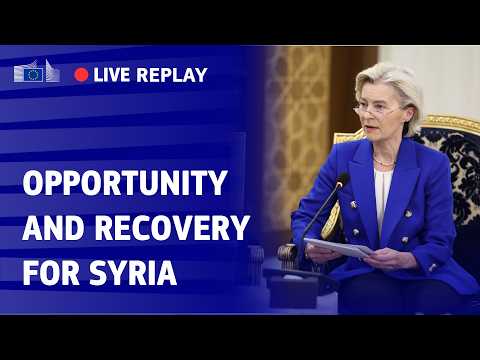
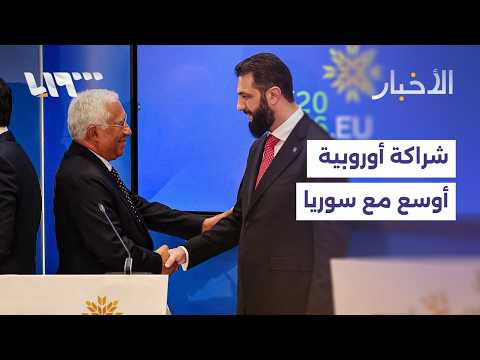
European Union foreign ministers agreed on Nov. 16 to revive a trade and political agreement with Syria that has sat unsigned since 2008. The move would give European companies a legal framework to trade and invest in a country rebuilding after 14 years of civil war.

Brussels wants the deal signed quickly, using the existing 2008 text while negotiating an updated version. It is attaching conditions: human rights benchmarks, and Syrian withdrawal of recognition for Russian-occupied Ukrainian and Georgian territory.

Why it matters

A signed deal would open Syria to European trade and investment under fixed rules, and give Brussels leverage over Damascus.

Questions about this story

Free account needed to ask — your question is kept and asked for you right after sign-up. Answers are public.

No questions yet — be the first to ask.

Key Indicators

€620M
EU funding package for Syria
Announced in January 2026 for humanitarian aid, early recovery and bilateral cooperation across 2026 and 2027.
6.8M
Syrians who fled abroad
About one-third of the pre-war population left the country during the civil war.
1M+
Syrian refugees returned since Assad's fall
More than one million have come home since December 2024, with millions more weighing the decision.

Voices

Curated perspectives — historical figures and your fellow readers.

Sign up to generate historical perspectives on this story.

People Involved

Organizations Involved

Timeline

December 2008 November 2026

8 events Latest: Yesterday
Tap a bar to jump to that date
  1. Ministers agree to move ahead with the association agreement

    Latest Decision

    EU foreign ministers in Brussels support reviving the 2008 text and launch talks on an updated one, with human rights and territorial conditions.

  2. First EU-Syria high-level political dialogue

    Diplomacy

    The Council reviews bilateral relations after the first high-level political dialogue between Brussels and Damascus.

  3. EU announces €620 million package

    Funding

    The two-year package covers humanitarian aid, early recovery and bilateral cooperation for 2026 and 2027.

  4. EU lifts economic sanctions on Syria

    Sanctions

    Brussels removes sanctions on key economic sectors but keeps measures on Assad and his associates, and those imposed on security grounds.

  5. Assad's 53-year rule ends

    Regime change

    An 11-day offensive ends the Assad family's rule and halts a civil war that displaced 6.8 million people.

  6. EU partially suspends the 1977 cooperation agreement

    Sanctions

    Brussels targets trade provisions covering oil, precious metals and diamonds in response to the Assad government's repression.

  7. EU and Syria initial an association agreement

    Treaty

    Negotiators finish the text under President Bashar al-Assad. Neither side signs it, amid EU concerns over the government's human rights record.

Scenarios

1

EU signs the 2008 text within a year

Possible Resolves by Q2 2027

Discussed by: The European External Action Service discussion paper, which called signing the existing text a "rapid deliverable"

Diplomats work through the legal and technical details, the Council adopts a decision authorising signature, and the 2008 agreement takes effect, possibly provisionally. Trade preferences and a political dialogue framework would follow, with the human rights and territorial conditions written into the accompanying documents.

2

Brussels seeks a fresh mandate to rewrite the deal

Likely Resolves by End of 2027

Discussed by: The EEAS paper, which proposed asking EU capitals for a mandate to negotiate a revision

Rather than sign a two-decade-old text, the Council adopts a negotiating mandate for an updated agreement and formal talks with Damascus open. That would likely take longer and let member states add conditions on investment, security cooperation and Russia's military presence.

3

Conditions stall the deal before signature

Possible Resolves by Q2 2027

Discussed by: EU diplomats quoted by Rapporteur, who raised concerns about the process and the bloc's leverage over the transitional authorities

Member states withhold agreement over human rights benchmarks or Damascus's refusal to withdraw recognition of Russian-occupied Ukrainian and Georgian territory. The association agreement drops off the Council's agenda, leaving the restored 1977 cooperation agreement and the €620 million funding package as the only framework.

Historical Context

2 moments from history that rhyme with this story — and how they unfolded.

1977-2011

EU-Syria Cooperation Agreement and its suspension (1977-2011)

The European Economic Community and Syria signed a cooperation agreement in 1977 that governed trade and political contacts for decades. In 2011, after the Assad government's crackdown, the EU partially suspended it, freezing provisions that removed quotas on Syrian oil, gold, precious metals and diamonds.

Then

Syrian exporters lost preferential access to European markets while the rest of the agreement stayed in place.

Now

The 1977 deal remained the legal basis for EU-Syria relations until May 2026, when the Council restored its full application.

Why this matters now

An association agreement would replace this thinner, older framework with a fuller trade and political structure, similar to deals the EU has with Jordan, Egypt and Israel.

December 2008

The initialled EU-Syria Association Agreement (2008)

Negotiators finished an association agreement on Dec. 14, 2008, offering free trade, political dialogue and closer cooperation. The EU held back from signing because of the Assad government's human rights record.

Then

The text sat unsigned as relations deteriorated through the Arab Spring and the civil war.

Now

It became the template Brussels now proposes to sign, rather than restarting negotiations from scratch.

Why this matters now

Ministers have chosen the rapid path: sign the old text while negotiating a revision, which is why the 2008 document is back on the table 18 years later.

Sources

(9)