
Pull to refresh
Logo
EU adopts largest-ever sanctions package against Russia's arms industry

EU adopts largest-ever sanctions package against Russia's arms industry

Rule Changes

Nearly 1,600 companies and executives added in the bloc's biggest sanctions expansion since 2022

Today: EU adopts largest-ever sanctions package

Overview

Updated 2 hours ago

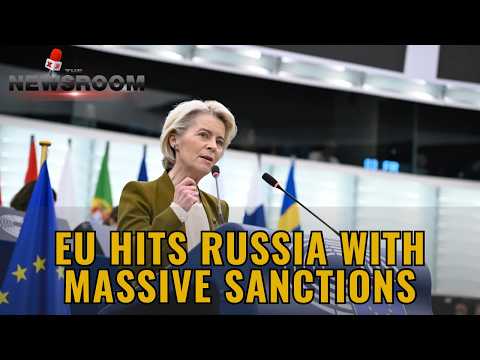
The European Union added nearly 1,600 Russian companies and executives to its sanctions list on Monday, the largest single expansion since the full-scale invasion of Ukraine began. The targets supply components for the missiles, drones, and aircraft Russia uses in the war.

Those listed face asset freezes in the EU and travel bans, and EU businesses are barred from dealing with them. The package aims to make Russia's weapons production slower and more expensive, extending pressure that has already cost Moscow an estimated €1.3 trillion.

Why it matters

The package targets the supply chain for the ballistic missiles Russia fires at Ukrainian cities, aiming to slow production and raise its cost.

Questions about this story

Free account needed to ask — your question is kept and asked for you right after sign-up. Answers are public.

No questions yet — be the first to ask.

Key Indicators

1,569
New sanctions listings
826 companies and 743 executives added in a single package.
4,600
Total listings under EU Russia sanctions
Total under the regime supporting Ukraine's territorial integrity.
€20B
Annual turnover of targeted companies
The listed companies generate at least €20 billion in annual revenue.
250,000
Workers employed by targeted firms
Military-industrial companies employ more than 250,000 people in weapons production.
€1.3T
Estimated cost of sanctions to Russia
Western sanctions have cost the Russian economy an estimated €1.3 trillion since 2022.

Voices

Curated perspectives — historical figures and your fellow readers.

Ever wondered what historical figures would say about today's headlines?

Sign up to generate historical perspectives on this story.

People Involved

Organizations Involved

Timeline

2014 October 2026

4 events Latest: Today
Tap a bar to jump to that date
  1. EU adopts largest-ever sanctions package

    Today Sanctions

    Council adds 1,569 listings targeting Russia's military-industrial complex, including 826 companies and 743 executives.

  2. European Council calls for more pressure on Russia

    Statement

    EU leaders condemn Russia's escalation and call for further sanctions.

  3. Russia launches full-scale invasion of Ukraine

    Conflict

    Russia's invasion triggers successive EU sanctions packages targeting the economy and military.

  4. EU imposes first sanctions on Russia

    Sanctions

    After Russia annexed Crimea, the EU established the sanctions framework (Decision 2014/145/CFSP) still used today.

Scenarios

1

Russia's weapons production slows measurably

Possible Resolves by End of 2027

Discussed by: EU officials and defense analysts

If the sanctions bite, Russia's ability to source Western components for missiles and drones declines, forcing slower production or reliance on lower-quality substitutes. EU officials argue the listings make it harder and costlier for Russia to run its war machine.

2

Third-country circumvention blunts the package

Possible Resolves by End of 2027

Discussed by: Kyiv Independent, sanctions researchers

A senior EU official told the Kyiv Independent that the impact on third countries should not be underestimated, noting Southeast Asian nations are unwilling to risk EU relations by dealing with sanctioned firms. But if components continue flowing through intermediaries, the package's effect weakens.

3

EU adopts another major sanctions package

Likely Resolves by End of 2027

Discussed by: POLITICO, Euronews

The European Council has said the EU will continue to increase pressure on Russia. If the war continues, another package adding hundreds of listings is likely within the next year.

Historical Context

3 moments from history that rhyme with this story — and how they unfolded.

1949-1994

COCOM export controls (1949-1994)

The Coordinating Committee for Multilateral Export Controls, a Western alliance including the US and its European allies, restricted exports of strategic technology to the Soviet bloc. The goal was to deny Moscow the advanced components needed for military systems.

Then

The controls slowed Soviet access to Western technology but were never airtight, with smuggling and espionage filling gaps.

Now

The regime ended in 1994 after the Cold War, but the approach of denying military technology through export controls remains a template.

Why this matters now

Today's EU sanctions apply the same logic: deny Russia the Western components its weapons need, and make production slower and costlier.

2010-2015

EU sanctions on Iran (2010-2015)

The EU and UN imposed successive rounds of sanctions on Iran targeting its nuclear and missile programs, including asset freezes, trade bans, and restrictions on the energy sector. The measures cut Iran's oil revenue sharply.

Then

The sanctions helped bring Iran to the negotiating table, leading to the 2015 nuclear deal (JCPOA) in which Iran limited its enrichment program in exchange for relief.

Now

The deal later unraveled after the US withdrew in 2018, showing both the leverage sanctions can create and their limits.

Why this matters now

The EU's current approach to Russia mirrors the Iran playbook: use economic pressure on military programs to raise the cost of the conflict.

March 2014

EU sanctions on Russia after Crimea (2014)

After Russia annexed Crimea, the EU imposed its first sanctions on Russia, including asset freezes and travel bans on officials, and established the legal framework (Decision 2014/145/CFSP) still used today.

Then

The sanctions signaled Western opposition but did not deter the annexation or the later full-scale invasion.

Now

The framework became the basis for the far broader sanctions imposed after 2022, now covering nearly 4,600 listings.

Why this matters now

Monday's package extends a framework built in 2014, expanding it to target the military-industrial complex directly.

Sources

(10)