




Pull to refresh
Logo
EU moves to force TikTok to redesign its For You feed

EU moves to force TikTok to redesign its For You feed

Rule Changes

Preliminary findings say the recommender pushes users into 'rabbit holes' of mental-health and body-image videos

Overview

Updated 1 hour ago

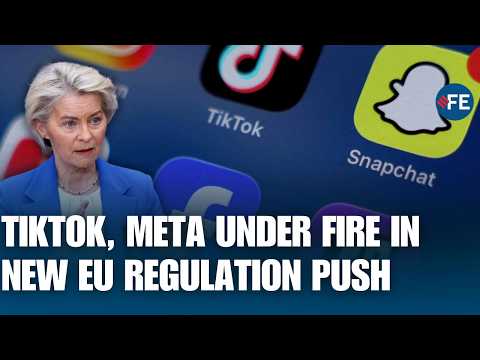
On November 6, 2026, the European Commission told TikTok that its For You feed may violate the Digital Services Act. The preliminary findings say the recommender drives users down 'rabbit holes' of videos about sadness, isolation and body image, and that TikTok's tools for breaking those loops do not work.

The case is about design, not content. Regulators deliberately focused on videos that are legal and allowed under TikTok's own rules, arguing that one clip is harmless but hundreds in a row are not. TikTok has 189 million users in the European Union and could face a fine of up to 6% of its global annual revenue.

Why it matters

If the Commission gets its way, the world's most-copied recommendation algorithm has to be rebuilt around what users say they want, not what keeps them watching.

Questions about this story

Free account needed to ask — your question is kept and asked for you right after sign-up. Answers are public.

No questions yet — be the first to ask.

Key Indicators

189 million
TikTok users in the EU
The audience covered by the Commission's enforcement action.
6%
Maximum fine
Share of global annual turnover the Commission can levy for a confirmed breach.
20,000
Videos analysed
Clips reviewed with psychologists, psychiatrists and system-design experts.
3
Preliminary findings against TikTok in 2026
February, July and November, all under the same Digital Services Act probe.

Voices

Curated perspectives — historical figures and your fellow readers.

Sign up to generate historical perspectives on this story.

People Involved

Organizations Involved

Timeline

February 2024 November 2026

6 events Latest: Today
Tap a bar to jump to that date
  1. Commission proposes KIDS Act

    Policy

    Draft law would bar platforms from relying only on engagement signals for children.

  2. US senators press TikTok over teenager's death

    Statement

    Lawmakers demand answers in the case of Chase Nasca, 16, who died in 2022.

Scenarios

1

TikTok agrees to binding changes to its recommender

Possible Resolves by Q2 2027

Discussed by: European Commission officials, who say the goal is a design fix rather than a ban

TikTok offers formal commitments to reweight its feed toward explicit user choices, make 'not interested' controls stick, and test the algorithm regularly. The Commission accepts them in a decision and closes the rabbit-hole proceedings without a fine. This is the outcome the Commission's language points to: it has stressed the case is about design, not removing videos.

2

Commission issues a non-compliance decision and fines TikTok

Possible Resolves by End of 2027

Discussed by: Reuters and Bloomberg Law, which both note the 6% turnover ceiling

TikTok's response does not satisfy the Commission, the evidence is confirmed, and the Commission adopts a non-compliance decision with a fine of up to 6% of global annual revenue. ByteDance does not publish global revenue, so the actual figure would only become clear when the decision is published.

3

TikTok rebuilds the feed around explicit preferences in Europe

Possible Resolves by End of 2027

Discussed by: Commission officials, who say recommendations should follow what users say they want

TikTok rolls out a European version of the For You feed that weights stated preferences over watch time and likes. The Commission has named this as the fix it wants, and the proposed KIDS Act would make the same principle law for children across platforms. A rollout would not end the case but would remove its central complaint.

4

Case stalls as TikTok contests the evidence

Unlikely Resolves by End of 2027

Discussed by: TikTok, which says the findings distort its architecture

TikTok exercises its right to review and challenge the Commission's evidence, the file drags, and the rabbit-hole proceedings close without a decision. The Commission has already issued two other sets of findings against TikTok in 2026, so a stall on this one would not end EU scrutiny of the company.

Historical Context

3 moments from history that rhyme with this story — and how they unfolded.

March 2004

EU Microsoft antitrust ruling (2004)

The European Commission found Microsoft had abused its dominance by bundling Windows Media Player into its operating system. It ordered the company to sell a version of Windows without the media player and fined it €497 million.

Then

Microsoft appealed and lost; it shipped the stripped-down version, which almost nobody bought.

Now

The case established that the Commission will order changes to a product's design, not just levy fines.

Why this matters now

The TikTok case asks for the same kind of remedy: change how the product works, not what it costs.

July 2018

Google Android decision (2018)

The Commission fined Google €4.34 billion for tying its search and browser apps to Android. The remedy required the company to offer users a choice screen when setting up a phone.

Then

Google began charging device makers for app licences and introduced choice screens in Europe.

Now

Choice screens became the Commission's standard tool for correcting a design that steers users by default.

Why this matters now

The Commission now wants TikTok's feed to follow explicit user choices rather than implicit signals like watch time, the same logic applied to a different default.

September 2021

UK Age Appropriate Design Code (2021)

The UK's information regulator began enforcing 15 design standards for services likely to be used by children, including default high-privacy settings and limits on nudges that extend use.

Then

Platforms changed default settings for younger users and restricted some recommendation features.

Now

It became a template for design-based regulation, cited in later EU and US proposals.

Why this matters now

It shows that rules aimed at how a product is built, rather than what it hosts, can change defaults across an industry.

Sources

(8)