
Pull to refresh
Logo
EU governments approve Indonesia trade pact ahead of 2027 tariff deadline

EU governments approve Indonesia trade pact ahead of 2027 tariff deadline

Rule Changes

The Council cleared signature and provisional application of a free trade and investment agreement. European Parliament consent and Jakarta's own procedures are still outstanding.

Overview

Updated 39 minutes ago

On 1 January 2027, Indonesia drops out of the European Union's tariff scheme for developing countries. Its exporters would then pay standard EU duties on palm oil, coffee, textiles and clothing. Six weeks before that date, EU governments authorised a replacement deal that removes most of those duties.

The Council of the European Union authorised signature and provisional application of the Comprehensive Economic Partnership Agreement (CEPA) and a companion investment protection agreement on 18 November. Duties on more than 90% of traded products fall once it applies, with Indonesia's 50% tariff on EU cars phased out over five years. Neither text is in force yet: both sides must first notify each other that their procedures are complete.

Why it matters

If the paperwork slips past January, Indonesian exporters lose preferential EU access and European carmakers keep paying a 50% duty.

Questions about this story

Free account needed to ask — your question is kept and asked for you right after sign-up. Answers are public.

No questions yet — be the first to ask.

Key Indicators

98.5%
Tariff lines liberalised at full implementation
Share of tariff lines that become duty-free once the CEPA is fully applied, per the Council.
96%
Indonesian tariffs removed within five years
Most Indonesian duties disappear in the first phase of the deal.
50%
Indonesia's current tariff on EU car imports
Scheduled to reach zero within five years of the deal applying.
€600M
Estimated annual customs duty savings
Figure cited by the Council and by Irish minister Helen McEntee for businesses on both sides.
221
EU geographical indications protected
EU food and drink names shielded against imitation in Indonesia.
€1B
Annual EU agri-food exports to Indonesia
Duties on most of these products are removed; rice, sugar and ethanol are excluded.
284M
Indonesia's population
Fourth most populous country and Southeast Asia's largest economy.

Voices

Curated perspectives — historical figures and your fellow readers.

Sign up to generate historical perspectives on this story.

People Involved

Organizations Involved

Timeline

2016 November 2026

3 events Latest: Yesterday
  1. EU governments authorise signature

    Latest Decision

    The Council approves signing and provisional application of the CEPA and the investment protection agreement.

  2. Talks conclude in Bali

    Negotiation

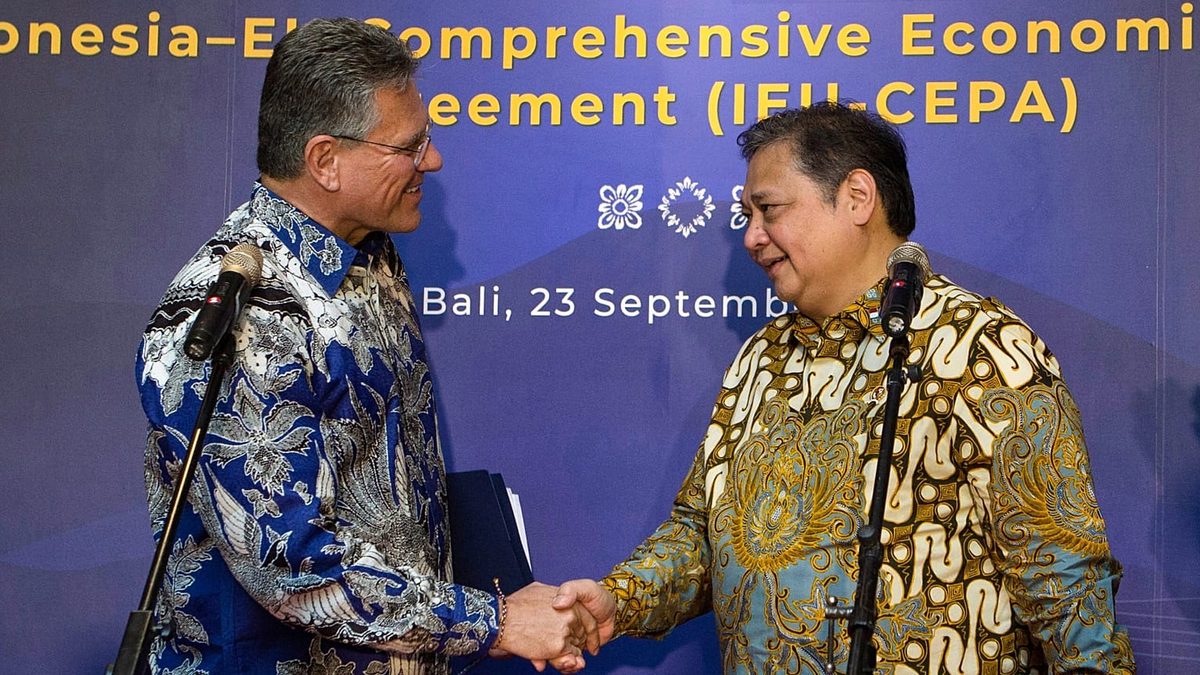
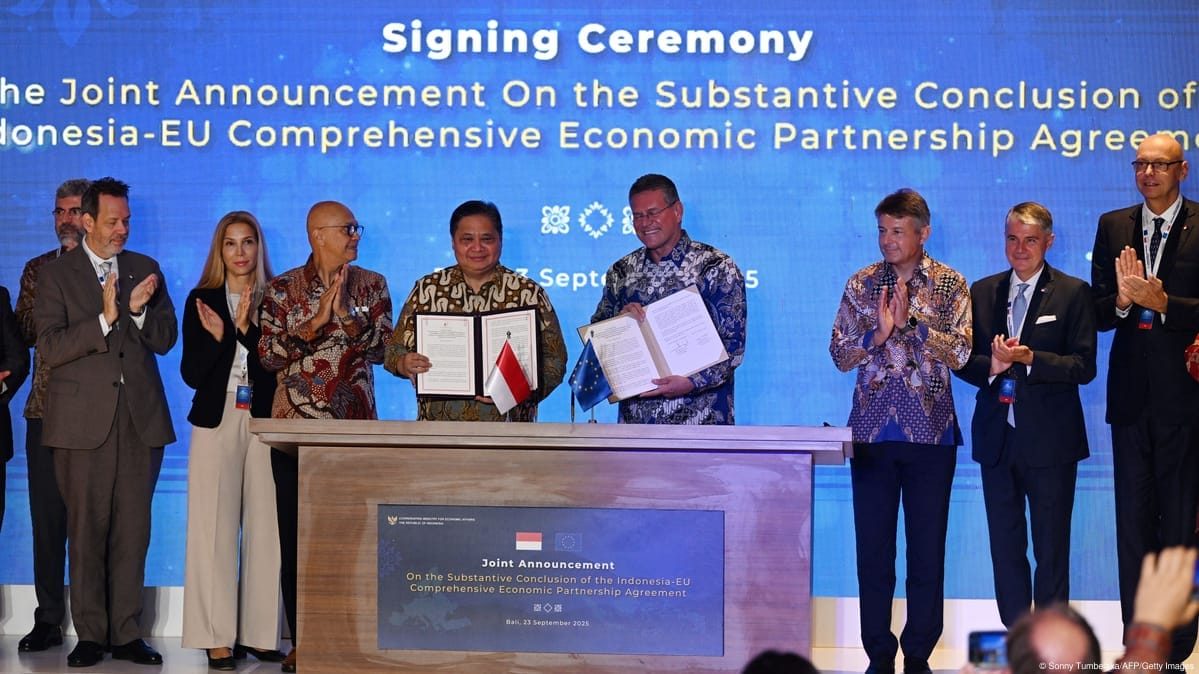
    Substantive conclusion announced at Nusa Dua after nine years; both sides cite US tariffs as a motive.

  3. EU and Indonesia open trade talks

    Negotiation

    Formal negotiations begin. They run for nine years before concluding.

Scenarios

1

Provisional application starts before Indonesia's 2027 tariff cliff

Possible Resolves by End of 2026

Discussed by: Both governments, in statements carried by Reuters and the Council of the European Union

Both sides have said they want the deal applying from 1 January 2027, when Indonesia's preferential access ends. Provisional application needs only that each side finish its own procedures and notify the other. It does not need a European Parliament vote. Six weeks is tight but not impossible.

2

European Parliament withholds consent for the Indonesia deal

Unlikely Resolves by End of 2027

Discussed by: The Council's own statement, which flags Parliament consent as a required step, and the precedent of the 2012 ACTA rejection

The Parliament cannot amend a trade agreement, only approve or reject it. It rejected the Anti-Counterfeiting Trade Agreement in 2012 after that text had already been signed. A rejection here would block conclusion and leave the deal's long-term status open, even if provisional application had already begun.

3

Palm oil and biodiesel friction delays Jakarta's ratification

Possible Resolves by End of 2027

Discussed by: Reuters reporting on Indonesian export expectations and the EU's palm oil and biodiesel measures

Jakarta's own approval process is the less visible risk. EU rules phasing palm oil out of transport fuel by 2030, and anti-subsidy duties on Indonesian biodiesel, strained relations during the talks. Indonesia's palm oil exporters are among the deal's most vocal beneficiaries. A slow or conditional ratification would leave the agreement half-applied.

Historical Context

3 moments from history that rhyme with this story — and how they unfolded.

July 2012

European Parliament rejects ACTA (2012)

The EU and 22 member states signed the Anti-Counterfeiting Trade Agreement in January 2012. Critics said its enforcement provisions would press internet companies into policing their users. In July, the Parliament voted it down by a wide margin.

Then

The treaty never entered into force and the Commission withdrew it.

Now

It established that the Parliament will use its veto on trade-related treaties when public opposition is loud.

Why this matters now

The Indonesia agreements need the same consent, which is why the Commission is routing them through provisional application first.

October 2016 - September 2017

CETA applies provisionally (2016-2017)

The EU and Canada signed the Comprehensive Economic and Trade Agreement in October 2016, after Belgium's Wallonia region briefly blocked it. It began applying provisionally in September 2017, before most national parliaments had voted.

Then

Tariff cuts took effect without waiting for full ratification.

Now

Provisional application became the EU's standard route for deals that mix EU and national competences.

Why this matters now

The Indonesia package uses the same mechanism, which is why a 2027 start is possible before all 27 national parliaments ratify.

June 2019 - August 2020

EU-Vietnam trade deal (2019-2020)

The EU signed a free trade agreement with Vietnam in June 2019, its second with a Southeast Asian country after Singapore. It entered into force in August 2020, with duties phased out over a decade.

Then

Vietnam gained duty-free access for most goods within about a year of signature.

Now

It became the template for the EU's country-by-country approach in ASEAN rather than a region-wide deal.

Why this matters now

Indonesia is the largest ASEAN economy to take this route, and the Vietnam timetable shows how quickly Brussels can move from signature to application.

Sources

(4)