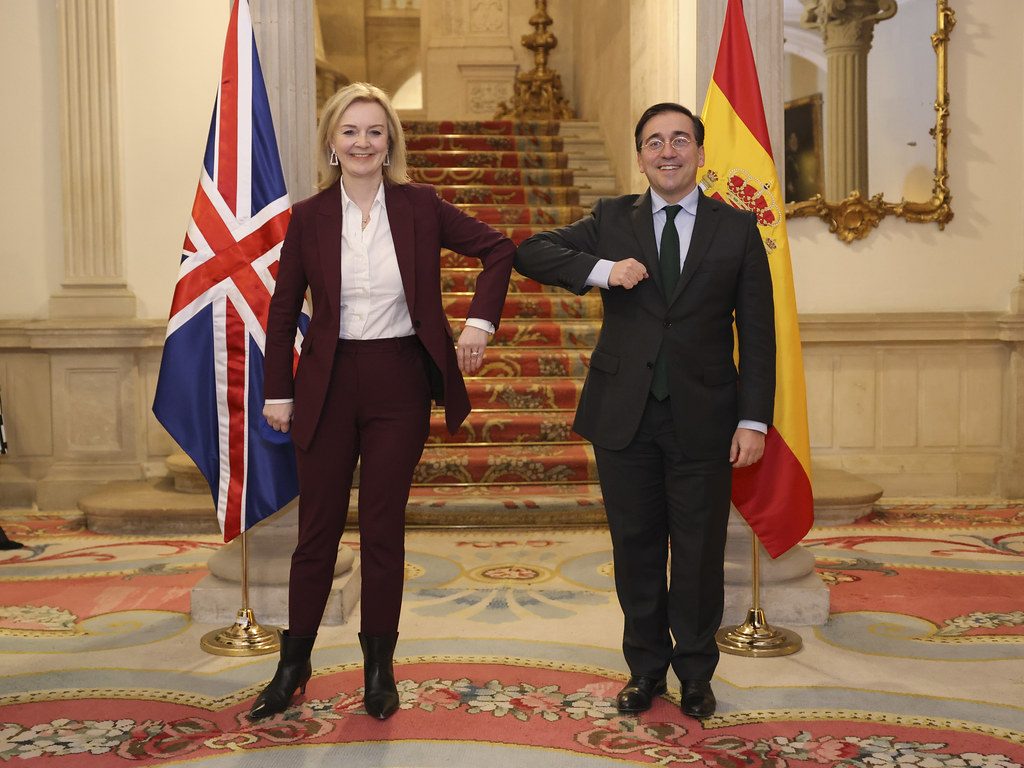
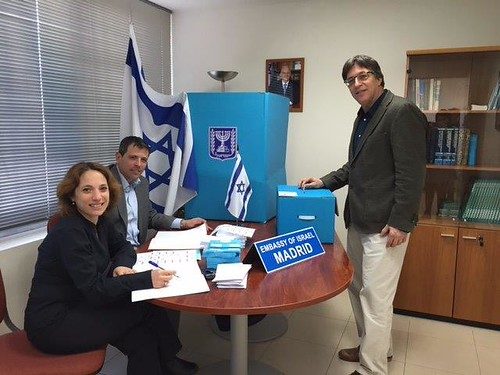
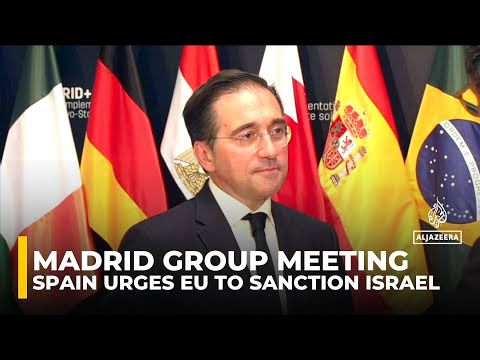
Spain has maintained an ambassador in Israel for over four decades. On March 11, 2026, it formally downgraded the Tel Aviv embassy to a chargé d'affaires—a lower-ranking diplomat signaling deep structural disagreement. The decree, signed by King Felipe VI and Foreign Minister José Manuel Albares, made Spain the first major EU member to permanently withdraw its ambassador.
The 29-month escalation that started in late 2023 with Bolivia and South Africa has spread across Latin America, the Middle East, and now the EU. Spain carries weight its predecessors don't—it's a top-15 economy, a NATO member, and has pulled other European states into coordinated action, as with Ireland and Norway recognizing Palestine in May 2024. Will others follow, or will Spain remain alone in this move?
Questions about this story
Free account needed to ask — your question is kept and asked for you right after sign-up. Answers are public.
No questions yet — be the first to ask.
Key Indicators
1st
Major EU member to permanently withdraw ambassador from Israel
Spain is the first EU economy of significant size to take this step; smaller states have recalled ambassadors but not formalized permanent downgrades.
~$2.7B
Annual Spain-Israel bilateral trade
Spain exported $1.79 billion and imported $940 million from Israel in 2024, making economic ties substantial but not irreplaceable for either side.
11+
Countries that recalled or severed ties with Israel since October 2023
Includes Bolivia, Colombia, South Africa, Turkey, Chile, Honduras, Jordan, Bahrain, and others — but most were smaller economies with limited leverage.
€1.2B
Spanish defense contracts with Israel cancelled
Spain terminated deals for SILAM rocket launchers, Spike anti-tank missiles, and Eurofighter navigation pods, absorbing costs to its own military readiness.
15 events
Latest: March 11th, 2026 · 7 months ago
Showing 8 of 15
JK to step
Tap a bar to jump to that date
Jump to
March 2026
Spain permanently withdraws ambassador from Israel
LatestDiplomatic
Spain's Council of Ministers formally terminated the ambassadorial position. The decree, signed by King Felipe VI, downgrades the Tel Aviv embassy to a chargé d'affaires indefinitely. Spain became the first major EU member to take this step.
Spain refuses US use of military bases for Iran strikes
Diplomatic
Defense Minister Margarita Robles stated that Spain had provided 'no assistance of any kind, absolutely none' from the Rota and Morón bases. Trump threatened trade retaliation.
February 2026
US-Israeli strikes on Iran begin; Spain condemns operations
Military
The United States and Israel launched joint strikes on Iran's nuclear and ballistic missile infrastructure. Spain condemned the operations as 'unjustified' and a violation of international law.
October 2025
Spanish Congress ratifies permanent arms embargo on Israel
Legislative
Spain's Congress of Deputies ratified the arms embargo by a vote of 178 to 169, making it law. Cancelled defense contracts with Israeli firms totaled approximately 1.2 billion euros.
September 2025
European Commission proposes suspending trade concessions with Israel
Institutional
The Commission proposed suspending trade benefits under the EU-Israel Association Agreement and sanctioning far-right Israeli ministers Itamar Ben Gvir and Bezalel Smotrich. A blocking minority prevented adoption.
Spain recalls ambassador after Israel accuses Madrid of antisemitism
Diplomatic
Hours after Israeli Foreign Minister Sa'ar called Sánchez 'an anti-Semite and a liar' and imposed travel bans on two Spanish ministers, Spain recalled Ambassador Salomón Pérez from Tel Aviv.
Spain announces total arms embargo and nine measures against Israel
Rule Change
Sánchez unveiled a package of nine measures: a total arms embargo, bans on Israel-bound weapons shipments through Spanish ports and airspace, settlement product import bans, and entry restrictions on individuals linked to war crimes.
July 2025
Slovenia imposes complete arms embargo on Israel
Rule Change
Slovenia became the first EU country to impose a complete arms embargo, banning all import, export, and transit of weapons to and from Israel.
May 2025
Israeli soldiers fire on European diplomatic delegation in Jenin
Incident
Israeli forces fired warning shots at a convoy of diplomats from over 20 countries visiting the Jenin refugee camp. France, Italy, Spain, and Ireland summoned Israeli ambassadors in response.
Netherlands launches formal review of EU-Israel Association Agreement
Institutional
The Netherlands initiated a formal review of Article 2 (human rights clause) of the EU-Israel Association Agreement, gaining backing from 17 member states including France and Belgium.
November 2024
International Criminal Court issues arrest warrant for Netanyahu
Legal
The International Criminal Court (ICC) issued arrest warrants for Israeli Prime Minister Benjamin Netanyahu and former Defense Minister Yoav Gallant on charges of war crimes and crimes against humanity.
June 2024
Slovenia follows with Palestine recognition
Diplomatic
Slovenia's parliament voted overwhelmingly to recognize Palestine, becoming the fourth EU state to do so during the conflict — demonstrating the domino effect from Spain's initiative.
May 2024
Spain, Ireland, and Norway recognize Palestine
Diplomatic
Three countries jointly recognized Palestinian statehood in a coordinated announcement led by Sánchez. Israel immediately recalled its ambassadors from all three capitals.
November 2023
South Africa recalls all diplomats from Israel
Diplomatic
South Africa recalled its entire diplomatic mission from Tel Aviv. Seven weeks later, it filed a genocide case against Israel at the International Court of Justice.
October 2023
Bolivia severs diplomatic ties with Israel
Diplomatic
Bolivia became the first country to fully sever diplomatic relations with Israel over its military operations in Gaza, citing 'aggressive and disproportionate' force.
Scenarios
1
Ireland and others follow Spain, creating a European diplomatic cascade
Possible
Discussed by: European Council on Foreign Relations analysts, Al Jazeera, Middle East Eye
Ireland, Belgium, and Slovenia — the EU members most critical of Israel — follow Spain's lead and permanently withdraw their own ambassadors within the next six months. Norway, though not an EU member, joins as it did with Palestine recognition. This creates a critical mass of European states with downgraded Israeli ties, increasing pressure on the European Commission to revisit the blocked Association Agreement suspension. The key trigger would be another high-profile incident — such as a repeat of the Jenin diplomatic convoy shooting — that forces governments to act or face domestic political consequences.
2
Spain's action remains isolated as EU focus shifts to Iran crisis
Possible
Discussed by: Carnegie Endowment for International Peace, Centre for European Reform
The Iran conflict overtakes Gaza as the dominant foreign policy concern in Europe, splitting EU members along different fault lines and reducing the political urgency of the Israel-Palestine question. Germany, Italy, and France focus on the NATO implications of the Iran strikes, effectively parking the Association Agreement debate. Spain's ambassador withdrawal stands as a symbolic gesture without imitators, similar to how Denmark's 1986 unilateral trade ban on apartheid South Africa initially stood alone for months before others followed.
3
EU unanimously suspends the Association Agreement with Israel
Unlikely
Discussed by: European Citizens' Initiative organizers, former EU foreign policy chief Josep Borrell
A major escalation — such as Israeli interference with EU diplomatic operations or a dramatic deterioration of humanitarian conditions — shifts the positions of Germany and Italy, the two largest blockers. The European Citizens' Initiative on suspending the agreement, which gathered 457,000 signatures in its first month, forces a formal Commission review. The blocking minority cracks, and the EU suspends trade concessions unanimously. This would be the most consequential outcome but requires political conditions that currently do not exist in Berlin or Rome.
4
Spain and Israel quietly normalize after a change in political conditions
Likely
Discussed by: Times of Israel analysts, Turkish diplomatic precedent observers
The Turkey-Israel pattern repeats: a rupture lasting four to six years is eventually reversed when political or economic conditions shift. A change in Spanish government — if the center-right Partido Popular wins the next election — or a change in Israeli leadership provides the diplomatic off-ramp. An ambassador returns to Tel Aviv under a face-saving arrangement, possibly tied to a broader Middle East settlement. The precedent: Turkey severed all ties with Israel in 2010, 2018, and 2024, normalizing each time within a few years.
Historical Context
3 moments from history that rhyme with this story — and how they unfolded.
1 of 3
May 1986
Denmark's unilateral trade ban on apartheid South Africa (1986)
Denmark became the first European country to ban nearly all trade with South Africa over apartheid, passing legislation over the objections of its own governing coalition, which complained Denmark was acting alone ahead of its European Community partners. The bill was adopted by parliament on May 6, 1986.
Then
Denmark was criticized for moving unilaterally. South Africa's mining sector lost an estimated 17% of expected coal exports. But the UK under Thatcher and the US under Reagan resisted comprehensive sanctions, limiting the immediate economic bite.
Now
Denmark's action helped establish the template for the broader European Community sanctions package adopted in September 1986. The Nordic countries' 'first mover' model — small and mid-sized states acting ahead of consensus — proved that unilateral action could shift the larger coalition's position over time.
Why this matters now
Spain is playing the Denmark role: a mid-sized European country acting unilaterally ahead of EU consensus, facing criticism for going it alone, but potentially establishing a precedent that Ireland, Belgium, and others follow — just as Denmark paved the way for the broader EC sanctions of late 1986.
2 of 3
May 2010 - August 2022
Turkey-Israel diplomatic crises (2010-2022)
Turkey and Israel went through three cycles of diplomatic rupture and normalization. The 2010 Mavi Marmara crisis — in which Israeli commandos killed nine Turkish citizens on a Gaza-bound flotilla — led to a six-year break, resolved in 2016 with a $20 million Israeli compensation payment. The 2018 break, triggered by Israel killing 60 Palestinians at the Gaza border, lasted four years and was resolved when Turkey's inflation crisis made normalization economically attractive.
Then
Each break reduced bilateral trade and security cooperation. Turkey imposed a complete trade embargo in 2024 valued at $6.8 billion annually, though goods were rerouted through Greece and other intermediaries.
Now
The pattern demonstrated that diplomatic ruptures with Israel are typically cyclical, driven by specific incidents and resolved when strategic or economic incentives shift — not when the underlying human rights dispute is settled.
Why this matters now
The Turkey precedent suggests Spain's downgrade may last several years but is unlikely to be permanent. The key difference: Spain is an EU member, meaning its actions carry institutional weight and may be harder to reverse unilaterally if other EU states follow suit, creating collective momentum that Turkey's solo actions never generated.
3 of 3
May-June 2024
Spain-led Palestine recognition domino (2024)
On May 28, 2024, Spain, Ireland, and Norway jointly recognized Palestinian statehood in a coordinated announcement orchestrated by Sánchez. Within a week, Slovenia followed. The action brought the number of states recognizing Palestine to 146. Israel recalled its ambassadors from all three countries, none of whom have returned.
Then
Israel's ambassador recalls were largely symbolic, as both sides already had strained relations. The recognition did not change conditions on the ground but strengthened the international legal framework for Palestinian statehood.
Now
The episode proved that Spain could lead a European coalition on Israel-Palestine policy outside formal EU decision-making, bypassing the unanimity requirement that blocks EU-wide action. It established the coalition — Spain, Ireland, Norway, Slovenia — now most likely to follow Spain on the ambassador withdrawal.
Why this matters now
This is the direct precedent for the current moment. Spain proved it could trigger a European domino effect in May 2024. The question is whether a permanent ambassador withdrawal — a more severe step than recognition — produces the same cascade or whether the higher stakes deter followers.