
Pull to refresh
Logo
Daily Brief
Following
Why
EU commits to financing Ukraine's war

EU commits to financing Ukraine's war

Money Moves
By Newzino Staff |

Europe takes the lead on military and budget support as U.S. aid shrinks

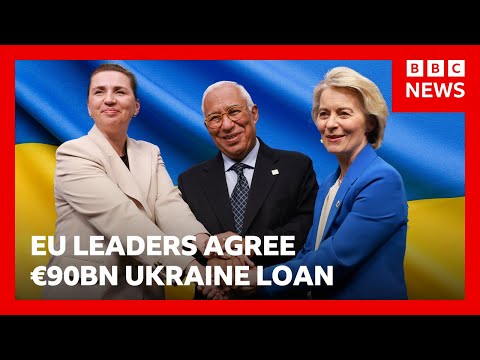
February 5th, 2026: EU approves €90 billion loan package for Ukraine

Overview

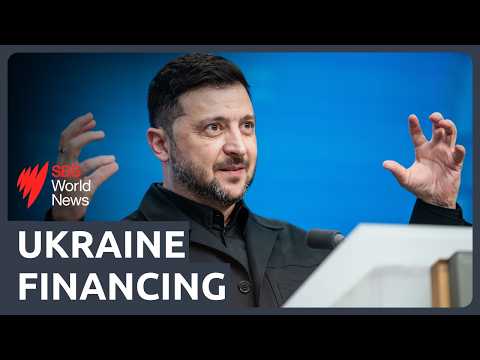
The European Union approved a €90 billion loan package for Ukraine on February 4, 2026—the largest single financial commitment in the bloc's history to a non-member state. Two-thirds of the money, €60 billion, will purchase weapons and ammunition; the remaining €30 billion covers government operations. Ukraine will only repay the loan if Russia agrees to war reparations, meaning the EU expects to carry this debt indefinitely.

The loan marks a structural shift in how Europe finances security. For the first time, the EU is issuing common debt specifically for military purposes, with 24 of 27 member states participating through an 'enhanced cooperation' mechanism that excludes Hungary, Czechia, and Slovakia. Brussels also imposed a 'buy European' preference on weapons purchases, restricting Kyiv from spending these funds on American equipment except as a last resort—a move that exposes deepening transatlantic divisions over both Ukraine policy and defense industrial strategy.

Key Indicators

€90B
Total EU loan 2026-2027
Split between €60B for military equipment and €30B for budget support
24/27
Participating EU states
Hungary, Czechia, and Slovakia opted out via enhanced cooperation procedure
€135.7B
Ukraine's total funding need
International Monetary Fund estimate for 2026-2027
77x
Drop in U.S. aid
American assistance to Ukraine fell by a factor of 77 from 2024 to 2025

Interactive

Exploring all sides of a story is often best achieved with Play.

George Orwell

George Orwell

(1903-1950) · Modernist · satire

Fictional AI pastiche — not real quote.

"The loan that will never be repaid is simply a subsidy by another name, but in our age the renaming of things has become more important than the things themselves. One notices that the weapons must be purchased from European factories—proving once again that when governments speak of defending freedom, one should always check which industrialists are filling their order books."

Dorothy Parker

Dorothy Parker

(1893-1967) · Jazz Age · wit

Fictional AI pastiche — not real quote.

"Ninety billion euros to keep the guns loaded and the lights on—how thoughtful of them to finally put a price tag on principle. One does wonder if they'd have been quite so generous had the debtor been less photogenic, or the cause less fashionable at dinner parties."

Ever wondered what historical figures would say about today's headlines?

Sign up to generate historical perspectives on this story.

Sign Up

Debate Arena

Two rounds, two personas, one winner. You set the crossfire.

People Involved

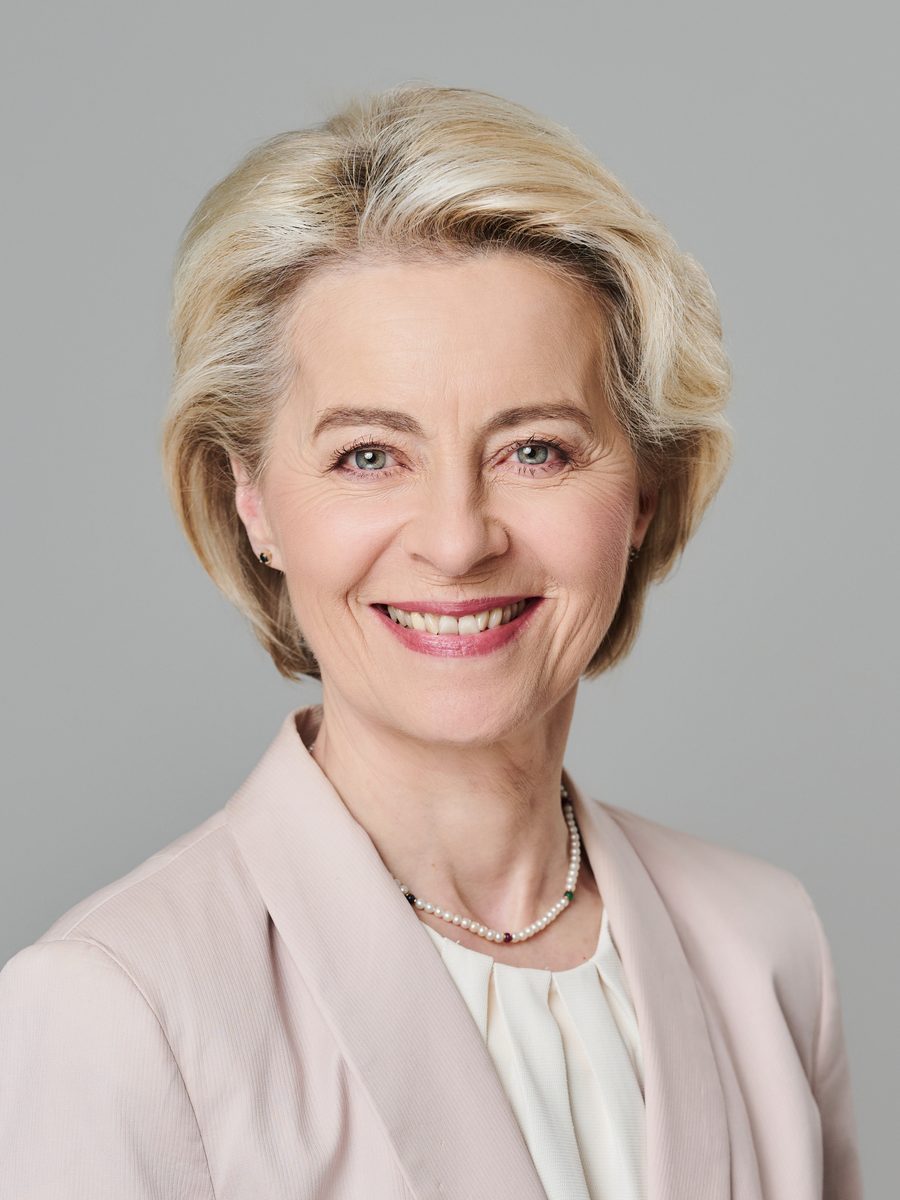
Ursula von der Leyen
President of the European Commission (Leading EU response to Ukraine war)
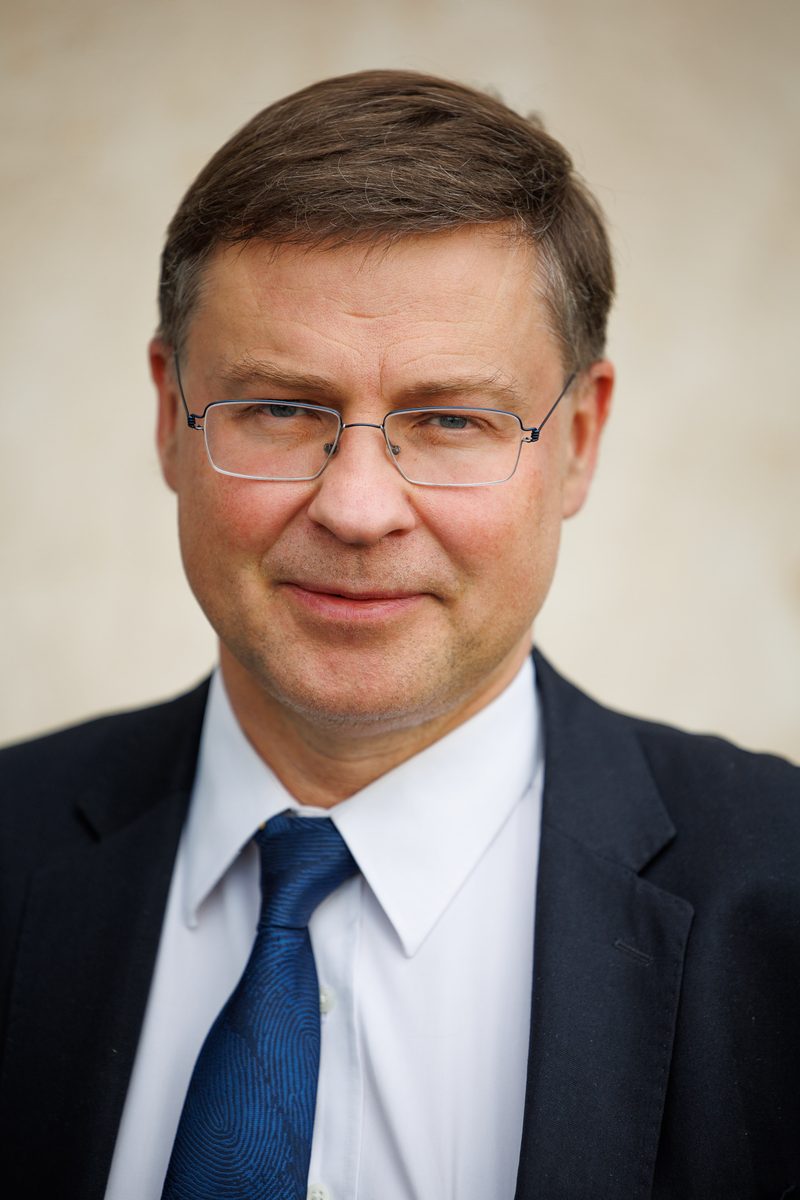
Valdis Dombrovskis
Valdis Dombrovskis
European Commissioner for Economy (Managing EU economic policy and Ukraine financing)
Marta Kos
Marta Kos
European Commissioner for Enlargement (Overseeing Ukraine's EU accession process)
Bart De Wever
Bart De Wever
Prime Minister of Belgium (Secured guarantees on frozen Russian assets liability)

Organizations Involved

European Commission
European Commission
EU Executive Body
Status: Proposing and implementing Ukraine support packages

The EU's executive branch, responsible for proposing legislation and managing day-to-day implementation of EU policies.

Council of the European Union
EU Legislative Body
Status: Approved legal framework for €90 billion loan

The institution representing EU member state governments, where ministers from each country meet to adopt laws and coordinate policies.

International Monetary Fund
International Financial Institution
Status: Providing baseline financing and needs assessments

The global lender of last resort, which provides loans to countries facing balance-of-payments problems and establishes economic policy frameworks.

Timeline

  1. EU approves €90 billion loan package for Ukraine

    Financial

    Final approval clears the way for disbursements to begin in April 2026, pending European Parliament consent expected in late February or early March.

  2. Council agrees legal framework for loan via enhanced cooperation

    Legal

    24 EU member states approve the legal basis for the €90 billion loan, using enhanced cooperation procedure for the first time in foreign policy to exclude three holdout countries.

  3. Commission formally proposes €90 billion loan package

    Financial

    von der Leyen, Dombrovskis, and Kos unveil the loan structure: €60 billion for military equipment, €30 billion for budget support, with 'buy European' procurement rules.

  4. European Council agrees €90 billion loan at all-night summit

    Political

    After 16 hours of negotiations, EU leaders approve €90 billion in market-based borrowing for Ukraine, abandoning frozen Russian assets approach. Hungary, Czechia, and Slovakia opt out.

  5. Belgium rejects plan to use frozen Russian assets

    Negotiation

    Prime Minister De Wever blocks proposal to use immobilized Russian assets as loan collateral, citing legal liability risks to Belgium where €185 billion of the assets are held.

  6. IMF agrees new $8.1 billion program for Ukraine

    Financial

    Staff-level agreement reached on a 48-month Extended Fund Facility, providing anchor financing and establishing reform conditions.

  7. G7 agrees $50 billion loan backed by frozen Russian assets

    Financial

    At the Italy summit, G7 leaders announce a $50 billion loan to Ukraine serviced by profits from immobilized Russian sovereign assets, with the U.S. contributing $20 billion.

  8. Ukraine Facility enters into force

    Financial

    The EU's €50 billion support instrument for 2024-2027 becomes operational, providing stable multi-year financing through loans and grants.

  9. EU adopts €18 billion MFA+ instrument for 2023

    Financial

    European Parliament and Council approve €18 billion in concessional loans with a 10-year grace period to cover Ukraine's 2023 financing needs.

  10. Commission proposes €9 billion macro-financial assistance package

    Financial

    Brussels announces plans for up to €9 billion in exceptional macro-financial assistance for Ukraine through 2022.

  11. EU disburses first emergency macro-financial assistance

    Financial

    The European Commission provides the first tranche of €1.2 billion in emergency loans approved in February, beginning a series of disbursements throughout 2022.

  12. Russia launches full-scale invasion of Ukraine

    Military

    Russian forces invade Ukraine from multiple directions, triggering the largest war in Europe since 1945 and prompting unprecedented Western financial mobilization.

Scenarios

1

EU Becomes Ukraine's Primary Financial Backstop

Discussed by: European Council on Foreign Relations, Carnegie Endowment, German Marshall Fund

The €90 billion loan establishes a template that Europe replicates in future years. As U.S. support remains minimal under the second Trump administration, the EU institutionalizes rolling support packages, accepting indefinite debt obligations. Ukraine's defense industry grows increasingly integrated with European supply chains through the 'buy European' preference. The EU effectively becomes the guarantor of Ukraine's solvency and military capacity.

2

Frozen Russian Assets Eventually Used for Repayment

Discussed by: Centre for European Reform, Belgian legal analysts, Euroclear observers

Belgium's legal concerns are resolved through new EU guarantees or international agreements, allowing the €210 billion in frozen Russian assets to service the loan. This removes the burden from EU budgets but sets a precedent for seizing sovereign assets that some analysts warn could affect the euro's reserve currency status. Russia escalates retaliatory measures against European interests.

3

Opt-Out States Rejoin Under Political Pressure

Discussed by: European political analysts, Visegrad Group watchers

Hungary, Czechia, and Slovakia face domestic or EU pressure to participate in future Ukraine support rounds. Changes in government in any of the three countries could shift their positions. The enhanced cooperation precedent makes future opt-outs politically costly as the EU normalizes collective security financing.

4

Disbursement Delays Amid Anti-Corruption Concerns

Discussed by: IMF staff, European Commission enlargement officials, transparency organizations

Strong conditionality mechanisms in the loan trigger suspension of payments if Ukraine regresses on anti-corruption reforms. Political changes in Kyiv or wartime pressures lead to rule-of-law backsliding that Brussels cannot ignore. Aid flows become erratic, creating budget crises that undermine military operations.

Historical Context

Marshall Plan (1948-1951)

April 1948 - December 1951

What Happened

The United States provided $13.3 billion (roughly $170 billion in 2024 dollars) to rebuild 16 Western European economies devastated by World War II. The program represented 2-5% of U.S. GDP and was administered by an independent agency with strict efficiency requirements. Aid was conditional on economic cooperation between recipient countries.

Outcome

Short Term

Western European industrial production increased 35% above pre-war levels by 1951. The program helped contain communist political movements in France and Italy.

Long Term

The cooperative structures created to distribute Marshall aid evolved into the European Coal and Steel Community and eventually the European Union. The program established the template for conditional Western development assistance.

Why It's Relevant Today

EU support for Ukraine has already exceeded the Marshall Plan in real terms relative to recipient GDP. Like the Marshall Plan, EU aid is tied to institutional reforms and may ultimately lead to Ukraine's integration into European structures.

Greek Debt Crisis Bailouts (2010-2015)

May 2010 - August 2015

What Happened

Greece received €288.7 billion in rescue loans from the EU, European Central Bank, and IMF after its debt became unsustainable. The first bailout in 2010 provided €110 billion; a second in 2012 added €130 billion; a third in 2015 contributed €86 billion more. Germany alone provided €22 billion. In 2011, private creditors accepted a 50% haircut on Greek bonds.

Outcome

Short Term

Greece avoided default and exit from the eurozone but underwent severe austerity that shrank its economy by 25% and pushed unemployment above 27%.

Long Term

The crisis prompted creation of permanent EU bailout mechanisms and stronger fiscal surveillance. Greece remains under enhanced monitoring and carries debt equal to 160% of GDP.

Why It's Relevant Today

The Greek bailouts established precedents for large-scale EU lending to distressed states and the political difficulties of burden-sharing among member states. Unlike Greece, Ukraine's loan is explicitly linked to Russian reparations rather than repayment from the borrower.

Bosnia and Herzegovina Reconstruction (1996-2002)

1996 - 2002

What Happened

Following the Dayton Agreement that ended the Bosnian War, the World Bank, EU, and international donors mobilized $5.1 billion to rebuild the country. The EU contributed 20-25% of total funds. The World Bank alone committed over $1 billion across 45 projects covering nearly every sector of the war-damaged economy.

Outcome

Short Term

Foreign aid drove significant economic growth and enabled reconstruction of critical infrastructure destroyed during the 1992-1995 war.

Long Term

Bosnia remained dependent on international support and its path to EU membership stalled. The country still lacks full institutional capacity three decades later.

Why It's Relevant Today

Bosnia demonstrates both the possibilities and limits of post-conflict reconstruction aid. Unlike Bosnia, Ukraine is receiving support during active conflict and faces the challenge of rebuilding while fighting.

12 Sources: