Pull to refresh
Logo
Daily Brief
Following
Why
Central Europe's energy ties to Russia become a weapon in the Ukraine war

Central Europe's energy ties to Russia become a weapon in the Ukraine war

Force in Play
By Newzino Staff |

Slovakia and Hungary threaten to cut electricity to Ukraine over damaged Russian oil pipeline

Today: Slovakia and Hungary issue electricity cutoff ultimatums

Overview

For decades, Russian oil flowed west through the Druzhba pipeline and European electricity flowed east into Ukraine's war-battered grid. That exchange is now collapsing. After a Russian drone strike knocked out the pipeline's main Ukrainian pumping station on January 27, Slovakia and Hungary—the last European Union members still importing Russian crude through the line—have escalated from halting diesel exports to threatening Ukraine's electricity supply.

Slovak Prime Minister Robert Fico issued an ultimatum on February 21: restore oil transit by Monday or Slovakia cuts emergency electricity to Ukraine. Hungary's Viktor Orban followed with a matching threat. Together, the two countries supply roughly half of Ukraine's electricity imports at a time when Russian attacks have left the country with a peak power deficit of 6.3 gigawatts—enough to black out over 11 million households. The European Commission has called an emergency meeting for February 25, but the clock is already ticking.

Key Indicators

~50%
Ukraine's electricity imports from Slovakia and Hungary
Share of Ukraine's total electricity imports supplied by the two countries in February 2026.
6.3 GW
Ukraine's electricity deficit
Shortfall between available generation capacity and peak demand in early 2026, the worst since the full-scale invasion began.
86%
Hungary's dependence on Russian crude
Share of Hungary's crude oil imports coming from Russia, up from 61% in 2021.
25 days
Pipeline offline
Number of days since the Druzhba pipeline's Brody pumping station was damaged, with no Russian oil reaching Hungary or Slovakia in February.

Interactive

Exploring all sides of a story is often best achieved with Play.

Ever wondered what historical figures would say about today's headlines?

Sign up to generate historical perspectives on this story.

Sign Up

Debate Arena

Two rounds, two personas, one winner. You set the crossfire.

People Involved

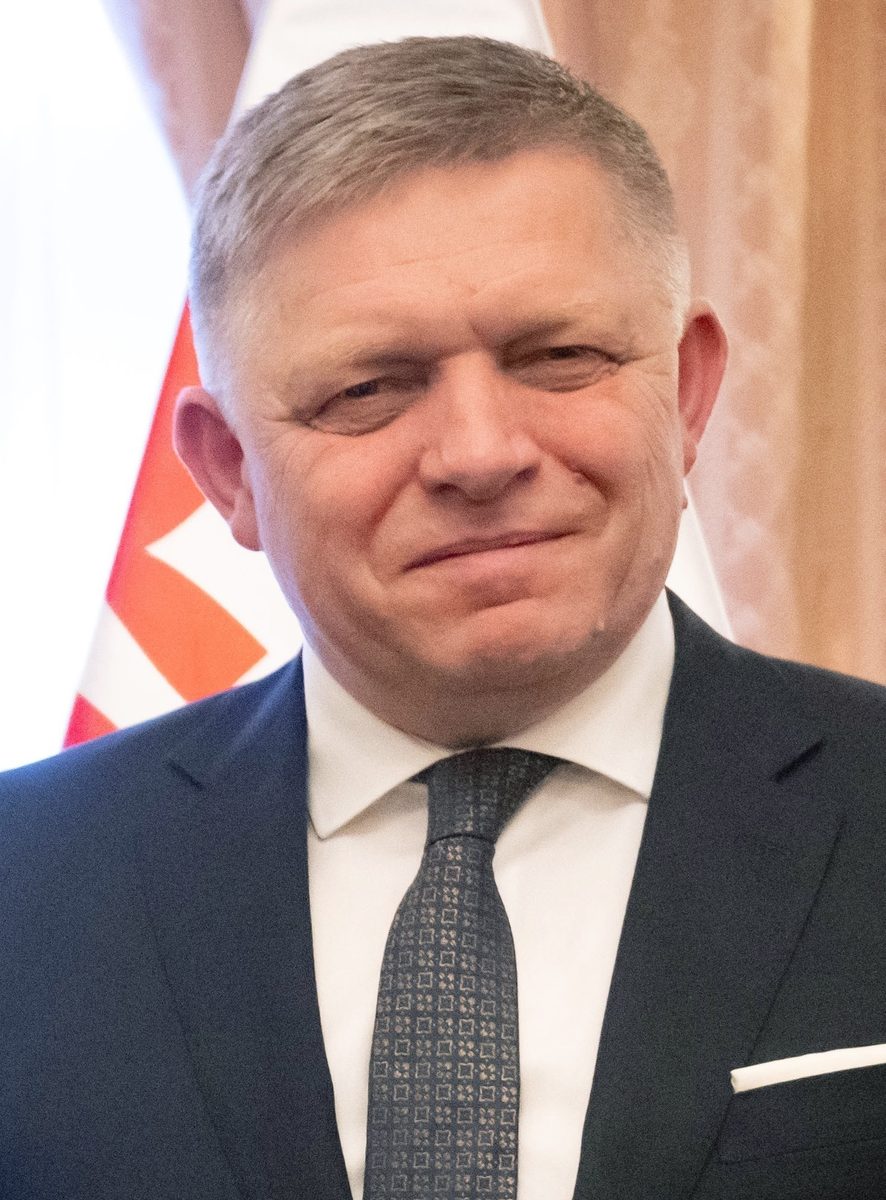
Robert Fico
Robert Fico
Prime Minister of Slovakia (Issued ultimatum to cut electricity to Ukraine by February 23)
Viktor Orbán
Viktor Orbán
Prime Minister of Hungary (Threatening to follow Slovakia in cutting electricity to Ukraine)
Volodymyr Zelenskyy
Volodymyr Zelenskyy
President of Ukraine (Facing energy ultimatums from two EU neighbors while managing wartime electricity crisis)
Péter Szijjártó
Péter Szijjártó
Foreign Minister of Hungary (Leading Hungary's diplomatic offensive over pipeline dispute)

Organizations Involved

European Commission
European Commission
EU Executive Body
Status: Mediating the energy dispute; convened emergency meeting

The EU's executive branch, responsible for energy security coordination and enforcement of sanctions on Russian energy imports.

UK
Ukrtransnafta
State-owned oil transport company
Status: Operating the damaged Brody pumping station; working on repairs

Ukraine's state oil pipeline operator that manages the Ukrainian section of the Druzhba pipeline, including the destroyed Brody pumping station.

Timeline

  1. Slovakia and Hungary issue electricity cutoff ultimatums

    Escalation

    Fico threatened to halt all emergency electricity exports to Ukraine by Monday, February 23, unless Druzhba oil flows resume. Orban followed with a matching threat. Together the two countries supply roughly half of Ukraine's electricity imports during its worst power deficit since 2022.

  2. Ukraine offers Odesa-Brody pipeline as alternative

    Diplomatic

    Ukraine proposed using its Odesa-Brody pipeline to deliver oil to Hungary and Slovakia by sea and overland while Druzhba repairs continue, offering a potential off-ramp from the standoff.

  3. Hungary blocks 90 billion euro EU military loan for Ukraine

    Diplomatic

    Hungary vetoed the EU's planned 90 billion euro military loan to Ukraine, conditioning its approval on the restoration of Druzhba pipeline flows.

  4. European Commission convenes emergency energy meeting

    Diplomatic

    The Commission called an extraordinary Oil Coordination Group meeting for February 25, noting that Hungary and Slovakia hold sufficient oil reserves but expressing concern about Ukraine's energy situation.

  5. Hungary and Slovakia halt diesel exports to Ukraine

    Retaliation

    Both countries suspended diesel fuel deliveries to Ukraine, accusing Kyiv of deliberately delaying pipeline repairs. Ukraine denied the accusation, pointing to the scale of the Russian attack damage.

  6. Hungary and Slovakia confirm zero oil deliveries in February

    Energy

    Both countries confirmed that no Russian oil had reached them through the Druzhba pipeline since the January 27 attack, declaring an energy emergency.

  7. Russian drone destroys Druzhba pumping station in Brody

    Military

    A Russian drone struck the Brody linear production and dispatch station, the main pumping hub on the Ukrainian section of the Druzhba pipeline. The attack ignited a fire in a 75,000-cubic-meter oil tank that burned for ten days, halting all oil transit to Hungary and Slovakia.

  8. EU finalizes Russian fossil fuel phase-out law

    Legislation

    The European Council gave final approval to legislation banning imports of Russian pipeline gas and liquefied natural gas by late 2027, with an oil ban to follow. Hungary and Slovakia filed legal challenges.

  9. Slovakia begins importing gas via TurkStream alternative

    Energy

    Slovakia started receiving Russian gas through the TurkStream pipeline via Turkey and Hungary, partially replacing volumes lost when the Ukrainian transit route closed.

  10. Russian gas transit through Ukraine ends

    Energy

    Ukraine's five-year gas transit contract with Russia's Gazprom expired and was not renewed, cutting off pipeline gas to Slovakia, Austria, and other downstream countries. Fico claimed the loss would cost Slovakia 500 million euros annually.

  11. Ukraine sanctions Lukoil, first pipeline friction

    Policy

    Ukraine tightened sanctions against Russia's largest private oil company, Lukoil, banning transit of its crude through the Druzhba pipeline. Hungary and Slovakia protested, though the European Commission said overall transit volumes were not affected.

Scenarios

1

Electricity cutoff triggers EU intervention, temporary deal reached

Discussed by: European Commission officials, EU energy analysts

Slovakia and Hungary follow through on the threat, cutting electricity to Ukraine on February 23. The disruption forces the European Commission to broker a short-term deal at the February 25 emergency meeting—possibly accepting Ukraine's Odesa-Brody alternative route or arranging temporary oil deliveries from non-Russian sources. The cutoff lasts days rather than weeks, but exposes how dependent Ukraine remains on hostile neighbors for basic electricity during wartime.

2

Ultimatum expires without action, dispute drags on through EU channels

Discussed by: EU diplomats, Central European energy analysts

Fico's Monday deadline passes without a full cutoff, as the European Commission and other EU members pressure Slovakia and Hungary to keep electricity flowing. The dispute shifts to the February 25 Oil Coordination Group meeting and ongoing EU-level negotiations. Diesel exports remain suspended, but the most consequential threat—electricity—is walked back or implemented only partially, buying time for pipeline repair negotiations.

3

Druzhba pipeline repaired, oil flows resume, tensions ease temporarily

Discussed by: Ukrainian energy officials, pipeline engineers

Ukraine completes emergency repairs to the Brody pumping station within weeks, restoring partial oil flows to Hungary and Slovakia. Diesel and electricity exports resume. However, the underlying tensions remain: Hungary and Slovakia are fighting the EU's 2027 Russian fossil fuel ban in court, and the pipeline remains a military target. Any future strike could restart the cycle.

4

Energy standoff deepens EU rift over Ukraine support

Discussed by: Centre for Eastern Studies (OSW), European Council on Foreign Relations analysts

Hungary's veto of the 90 billion euro military loan and coordinated energy pressure from Budapest and Bratislava become a template for blocking EU-wide Ukraine support. The dispute intersects with legal challenges to the Russian fossil fuel phase-out, creating a bloc of EU members whose energy dependence on Russia gives them leverage to slow collective action. Other EU members respond by accelerating bilateral energy connections to bypass Hungary and Slovakia.

Historical Context

Russia-Ukraine gas disputes (2006 and 2009)

January 2006 - January 2009

What Happened

Russia cut off gas supplies through Ukraine twice—briefly in January 2006, then for 13 days in January 2009. The 2009 cutoff left over a dozen European countries scrambling for heat in midwinter, with Bulgaria, Slovakia, and the Balkans completely cut off. The disputes were nominally over pricing and transit fees between Moscow and Kyiv.

Outcome

Short Term

Both crises ended with negotiated deals restoring supply, but exposed Europe's dangerous dependence on a single transit route controlled by two adversaries.

Long Term

The 2009 crisis drove the EU to build the Southern Gas Corridor and invest in liquefied natural gas terminals, beginning a slow diversification away from Russian pipeline gas that accelerated after the 2022 invasion.

Why It's Relevant Today

The current dispute inverts the pattern: instead of Russia cutting supply to pressure Ukraine, EU member states are threatening to cut electricity to Ukraine to protect their Russian oil supply. The dependency that Europe spent 15 years trying to reduce is now being wielded by the dependent states themselves.

Lukoil transit ban dispute (2024)

June-August 2024

What Happened

Ukraine sanctioned Russia's largest private oil company, Lukoil, banning its crude from the Druzhba pipeline. Hungary and Slovakia accused Kyiv of endangering their energy security and threatened retaliatory measures. The European Commission found that overall transit volumes were not affected, since other Russian oil companies could ship through the same pipeline.

Outcome

Short Term

The crisis de-escalated after the EU determined that alternative Russian shippers could fill Lukoil's contracted volumes, though Hungary and Slovakia remained vocal critics.

Long Term

The episode established the political template now being replayed: Budapest and Bratislava treating any disruption to their Russian energy supply—regardless of cause—as grounds for pressure on Kyiv.

Why It's Relevant Today

The 2024 Lukoil dispute was a dress rehearsal for the current escalation. The same actors, the same pipeline, the same accusations—but now with a physically destroyed pumping station making the supply disruption real rather than contractual, and with electricity rather than just diesel as the retaliatory tool.

Ukraine-Russia gas transit contract expiration (2025)

January 2025

What Happened

Ukraine's five-year contract to transit Russian gas to Europe expired on January 1, 2025, and Kyiv declined to renew it. Slovakia lost its primary gas supply route overnight. Fico threatened retaliatory measures and accused Zelensky of acting against Slovak interests.

Outcome

Short Term

Slovakia began importing Russian gas through the longer TurkStream route via Turkey and Hungary, at higher cost. Fico claimed the switch would cost Slovakia 500 million euros per year.

Long Term

The gas transit end eliminated one of Ukraine's last remaining economic ties to Russia's energy system and removed a source of transit fee revenue for Kyiv, while further straining Slovak-Ukrainian relations.

Why It's Relevant Today

The gas transit expiration set the stage for the current oil pipeline dispute by destroying the last cooperative framework between Kyiv and the Russia-aligned EU members. Fico explicitly cited the gas transit loss when justifying the electricity ultimatum.

15 Sources: