
Pull to refresh
Logo
Daily Brief
Following
Why
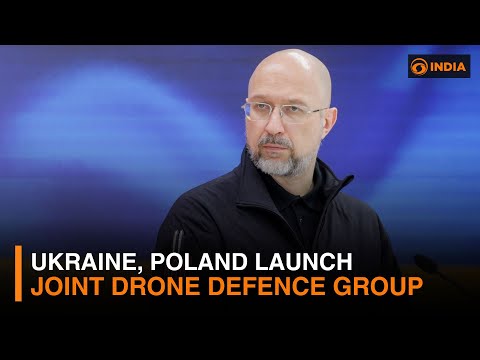
Poland and Ukraine forge defense industry partnership

Poland and Ukraine forge defense industry partnership

New Capabilities
By Newzino Staff |

From Wartime Aid to Joint Weapons Production

February 6th, 2026: Joint Weapons Production Agreement Signed

Overview

Poland has delivered over 300 tanks, 14 fighter jets, and more than €4.5 billion in military equipment to Ukraine since Russia's full-scale invasion in February 2022. On February 5-6, 2026, Polish Prime Minister Donald Tusk and Ukrainian President Volodymyr Zelenskyy signed a letter of intent in Kyiv to establish joint production lines for weapons, ammunition, and drones on both sides of the border. The agreement, backed by EU SAFE programme funding and Polish government credits, represents a shift from emergency wartime aid to institutionalized defense industrial integration.

The partnership addresses Ukraine's goal to manufacture 50% of its battlefield weapons domestically by 2026, while Poland is investing €565 million to expand its 155mm artillery shell capacity to 150,000 rounds annually by 2028. Joint production will focus on digital infrastructure, robotics, and unmanned systems—leveraging Ukraine's combat-tested weapons expertise and Poland's manufacturing capacity inside NATO territory. The agreement also covers continued Polish participation in the PURL air defense initiative and Ukraine's full participation in the EU's SAFE instrument, which provides €150 billion in defense loans across Europe.

Key Indicators

318
Tanks Donated by Poland
T-72, PT-91, and Leopard 2 tanks transferred between 2022 and 2024, making Poland the largest tank donor to Ukraine.
€4.5B
Total Military Support
Value of Polish military assistance including equipment, training, repairs, and logistics since February 2022.
48
Aid Packages Delivered
Poland is preparing its 48th military aid package, worth €200 million, focused on armored vehicles.
60,000
Ukrainian Soldiers Trained
Personnel trained in Poland by mid-2024, four times the original target of 15,000.

Interactive

Exploring all sides of a story is often best achieved with Play.

H. L. Mencken

H. L. Mencken

(1880-1956) · Progressive Era · satire

Fictional AI pastiche — not real quote.

"The spectacle of two nations transforming warfare into a joint-stock enterprise, with all the earnest solemnity of merchants opening a sausage factory, would be merely comic were it not for the billions in borrowed treasure being shoveled into the furnace. One observes that the business of democracy, when stripped of its evangelical pretenses, remains what it has always been: the efficient organization of death, now with improved robotics and quarterly production targets."

Ever wondered what historical figures would say about today's headlines?

Sign up to generate historical perspectives on this story.

Sign Up

Debate Arena

Two rounds, two personas, one winner. You set the crossfire.

People Involved

Donald Tusk
Donald Tusk
Prime Minister of Poland (Leading Poland's Ukraine support and defense industrial expansion)
Volodymyr Zelenskyy
Volodymyr Zelenskyy
President of Ukraine (Pursuing domestic weapons production and European defense partnerships)

Organizations Involved

PO
Polish Armaments Group (Polska Grupa Zbrojeniowa)
State-Owned Defense Conglomerate
Status: Expanding ammunition production capacity with €565 million investment

Poland's largest defense holding company, consolidating dozens of state-owned arms manufacturers.

Ukrainian Defense Industry (Ukroboronprom)
State-Owned Defense Conglomerate
Status: Leading Ukraine's domestic production expansion and foreign partnerships

Ukraine's primary state defense company, now entering joint ventures with European partners.

Timeline

  1. Joint Weapons Production Agreement Signed

    Agreement

    Tusk and Zelenskyy sign a letter of intent for joint production of weapons, ammunition, and drones in both countries. Poland announces its 48th military aid package worth €200 million.

  2. Joint Working Groups Established

    Institutional

    Poland and Ukraine create three working groups for air and anti-drone warfare, strategic communications, and civil protection.

  3. Poland Offers Remaining MiG-29s for Drones

    Negotiation

    Poland proposes transferring its last 6-8 MiG-29 fighters to Ukraine in exchange for access to Ukrainian drone and missile technology.

  4. Ukraine Sets 50% Domestic Production Target

    Policy

    Zelenskyy announces Ukraine aims to produce at least 50% of its battlefield weapons domestically, with 75% of procurement budget already going to Ukrainian manufacturers.

  5. Poland Approves €565 Million for Ammunition

    Industrial

    Polish parliament approves major investment to expand domestic 155mm artillery shell production to 150,000 rounds annually by 2028.

  6. Poland-Ukraine Security Agreement Signed

    Agreement

    Zelenskyy and Tusk sign a 10-year security pact in Warsaw covering military aid, defense industry cooperation, air defense coordination, and formation of a Ukrainian Legion in Poland.

  7. Tusk's First Kyiv Visit as PM

    Diplomatic

    Tusk travels to Kyiv and meets Zelenskyy, reaffirming Poland's commitment to Ukraine's victory and announcing work on a bilateral security agreement.

  8. Tusk Returns as Prime Minister

    Political

    Donald Tusk is sworn in as Prime Minister, pledging to demand full Western mobilization to support Ukraine.

  9. Poland-Ukraine Tensions Peak Over Grain

    Diplomatic

    Polish Prime Minister Morawiecki says Poland will stop transferring weapons to Ukraine amid the grain dispute. President Duda later clarifies only modern weapons will be retained.

  10. Poland Bans Ukrainian Grain Imports

    Trade Dispute

    Poland, Hungary, Slovakia, and Bulgaria ban Ukrainian grain imports after domestic farmers protest price drops. Ukraine files a complaint with the World Trade Organization.

  11. Poland Transfers First MiG-29 Jets

    Military Aid

    Poland becomes the first country to commit combat aircraft to Ukraine, eventually delivering 14 MiG-29 fighters.

  12. Russia Launches Full-Scale Invasion

    Conflict

    Russian forces invade Ukraine from multiple directions. Poland immediately activates the Rzeszów logistics hub for Western military aid.

  13. Poland Announces Weapons Aid to Ukraine

    Military Aid

    Poland becomes one of the first NATO countries to pledge weapons and ammunition to Ukraine ahead of the expected Russian invasion.

Scenarios

1

Production Lines Operational by 2027

Discussed by: Defense analysts at Carnegie Endowment and the Jamestown Foundation tracking European-Ukraine industrial integration

Joint drone and ammunition facilities open in both countries within 18 months, following the Rheinmetall-Ukraine model. EU funding through the European Defence Fund covers initial capital costs. Poland gains access to Ukraine's combat-tested drone designs; Ukraine gains production capacity inside NATO territory, immune to Russian strikes. This accelerates Poland's goal of 150,000 artillery shells annually and reduces Ukraine's dependence on foreign ammunition supplies.

2

Expansion Into Broader European Defense Network

Discussed by: European Council on Foreign Relations and NATO planners analyzing eastern flank defense industrial capacity

The Poland-Ukraine agreement becomes a template for similar deals with the Czech Republic, the Baltic states, and Nordic countries. Denmark's Build-with-Ukraine initiative and Greece's naval drone partnership merge into a loose consortium of NATO-adjacent production sharing. Ukraine effectively becomes integrated into the European defense industrial base before formal EU membership, creating facts on the ground that accelerate accession talks.

3

Political Shifts Freeze the Partnership

Discussed by: German Marshall Fund analysts tracking internal Polish politics and the 2025 presidential election's impact on foreign policy

Unresolved tensions over historical grievances—particularly the Volhynian Massacre commemoration issue—or a resurgence of agricultural trade disputes derail implementation. A future Polish government less committed to Ukraine support deprioritizes the joint production agreements. The letter of intent never translates into operational facilities, and both countries pursue separate industrial strategies.

4

Ceasefire Changes the Calculus

Discussed by: RAND Corporation and CSIS analysts modeling post-conflict scenarios for Ukraine's defense industry

A negotiated end to active combat reduces urgency for wartime production expansion. European funding priorities shift toward reconstruction over armaments. However, Poland's own security concerns about Russia mean its ammunition investments continue regardless. The partnership pivots from wartime supply to long-term deterrence production, potentially including weapons for export to other European buyers.

Historical Context

European Defense Industry Consolidation (1998-2000)

1998-2000

What Happened

After the Cold War, declining defense budgets threatened European arms manufacturers. In 1999, British Aerospace and GEC merged into BAE Systems. In 2000, France, Germany, and Spain created the European Aeronautic Defence and Space Company (EADS), the first major transnational European defense firm. Governments that had kept defense industries state-owned—France, Italy, Spain—began privatization to enable cross-border consolidation.

Outcome

Short Term

EADS consolidated Europe's aircraft and missile production. BAE Systems became globally competitive with American defense giants.

Long Term

These mergers created the template for European defense integration, though national interests continued to fragment procurement. The lesson: industrial integration requires sustained political will across election cycles.

Why It's Relevant Today

Poland and Ukraine are attempting something similar but under wartime pressure rather than peacetime market forces. The 1990s consolidation shows that transnational defense production is achievable but requires years of implementation and aligned government policies.

Lend-Lease and Allied Industrial Integration (1941-1945)

March 1941 - September 1945

What Happened

The United States provided $50 billion (approximately $700 billion in 2026 dollars) in military equipment, food, and raw materials to Allied nations, primarily Britain and the Soviet Union. Beyond finished weapons, the program included technology transfer, such as microwave radar shared with Britain, and the mass production of Liberty ships using standardized designs.

Outcome

Short Term

Allied nations received essential equipment they could not produce domestically at required scale. Britain's war effort would have collapsed without American industrial support.

Long Term

Established the precedent that democratic allies can integrate defense production across borders during existential conflicts. Post-war, this industrial relationship became the foundation for NATO burden-sharing.

Why It's Relevant Today

Poland's role as logistics hub and now production partner echoes the World War II model of allied industrial integration. The Poland-Ukraine agreement attempts to institutionalize this relationship rather than treating it as emergency wartime improvisation.

Poland's 1993 Military Cooperation Agreement with Ukraine

February 1993

What Happened

Poland's Ministry of Defense signed its first military cooperation agreement with Ukraine, less than two years after Ukraine's independence. The agreement covered training exchanges, information sharing, and coordination on post-Soviet security challenges. Both countries were transitioning from Warsaw Pact structures and sought to establish independent defense relationships.

Outcome

Short Term

Created institutional channels for military-to-military contact that persisted through subsequent decades.

Long Term

Built the foundation of trust and interoperability that enabled rapid coordination when Russia invaded in 2022. Poland's logistics hub at Rzeszów and training programs expanded existing relationships rather than building from scratch.

Why It's Relevant Today

The February 2026 joint production agreement represents the culmination of 33 years of gradually deepening military ties. The 1993 framework established the institutional habits that made wartime cooperation possible.

17 Sources: