Eleven Western governments have now banned or sanctioned Israeli National Security Minister Itamar Ben-Gvir. France acted on May 23; Poland had imposed a five-year ban two days earlier, citing Ben-Gvir as a threat to public order.
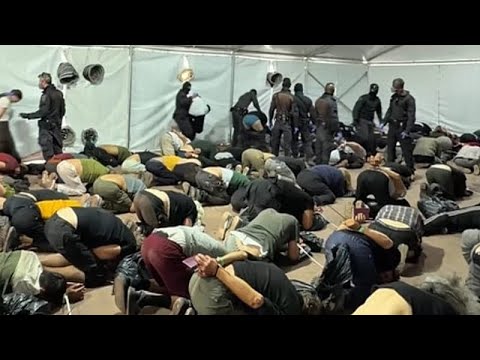
The case is no longer just diplomatic. Rome prosecutors opened a criminal investigation into kidnapping, torture, and sexual assault after deported activists reported at least 15 sexual assaults in Israeli custody. The EU's foreign policy chief, Kaja Kallas, agreed to have Brussels produce sanctions options by June 15.
Why it matters
Bloc-wide EU sanctions would isolate a sitting Israeli minister from his country's largest trading partner, a step last taken against apartheid South Africa.
14 events
Latest: Yesterday
Showing 8 of 14
JK to step
Tap a bar to jump to that date
Jump to
May 2026
France bans Ben-Gvir, calls for EU sanctions
LatestTravel ban
FM Barrot announces the entry ban and joins Italy in pressing the EU for bloc-wide measures.
EU foreign policy chief accepts mandate to draft sanctions options by June 15
Sanctions
High Representative Kaja Kallas agreed to task the External Action Service with producing one or more sanctions proposals against Ben-Gvir, responding to a formal request from Italy backed by France, Spain and Ireland.
Flotilla survivors allege sexual assault; Rome opens criminal probe
Legal
Deported activists documented at least 15 sexual assaults, including rape, and 35 fractured ribs among detainees. Italian prosecutors in Rome confirmed they are investigating kidnapping, torture and sexual assault and will hear testimony from activists who returned to Italy.
Global outcry; US ambassador rebukes Ben-Gvir
Statement
Italy, Spain summon Israeli ambassadors. US Ambassador Huckabee calls the video "despicable."
Israel begins mass deportations
Deportation
Hundreds of activists are flown out, with several reporting beatings and abuse in Israeli custody.
Poland imposes five-year entry ban on Ben-Gvir
Travel ban
Foreign Minister Radosław Sikorski and Interior Minister Marcin Kierwiński confirmed the ban, with Sikorski calling Ben-Gvir a chauvinist who poses a clear risk to public order.
Ben-Gvir posts taunting video from Ashdod
Statement
He waves an Israeli flag at kneeling, bound activists and tells guards to ignore their screams.
Israeli navy intercepts Global Sumud Flotilla
Military
All 50 boats are stopped in international waters off Cyprus; 428 activists are taken to Ashdod.
Smotrich confirms ICC prosecutor sought his arrest warrant
Legal
Smotrich announced the ICC prosecutor's office had requested a warrant for his arrest and called it "a declaration of war." Haaretz reported Ben-Gvir was included; the ICC denied warrants had been issued but did not deny the underlying request.
EU drops Ben-Gvir from settler-sanctions list
Sanctions
Bloc removes both ministers from list to win 26-of-27 support; Hungary still resists wider measures.
September 2025
France recognizes Palestinian state at UN
Diplomatic
Macron formalizes recognition at the General Assembly, hardening Paris's posture toward Netanyahu's coalition.
Schengen-wide ban announced
Travel ban
Netherlands says both ministers are barred from all 29 Schengen states effective today.
July 2025
Netherlands bars both ministers
Travel ban
Dutch foreign minister Caspar Veldkamp tells parliament Ben-Gvir and Smotrich will be denied entry.
June 2025
UK and four allies sanction Ben-Gvir and Smotrich
Sanctions
Britain, Canada, Australia, New Zealand and Norway freeze the ministers' assets and bar entry, citing incitement of settler violence.
Historical Context
3 moments from history that rhyme with this story — and how they unfolded.
1 of 3
February-September 2000
EU diplomatic sanctions on Austria over Haider (2000)
Austria's center-right People's Party formed a coalition with Jörg Haider's far-right Freedom Party in February 2000. The 14 other EU member states responded by freezing bilateral political contacts with Vienna for seven months and downgrading ambassadorial relations.
Then
Austria's government stayed in office despite the diplomatic freeze. The EU lifted measures in September 2000 after a 'wise men' report found no human rights deterioration.
Now
The episode set a precedent for collective EU action against governments that include extremists, but also exposed the limits of consensus pressure when a target government refuses to break apart.
Why this matters now
France and Italy now want a similar bloc-wide response against Ben-Gvir personally rather than the whole Netanyahu coalition. The Austria case shows EU pressure can be coordinated, but stopping short of the full government leaves coalition behavior largely intact.
2 of 3
1986-1990
Comprehensive Anti-Apartheid Act and the ratchet to bloc-wide isolation (1986)
After years of single-country sanctions, the US Congress passed the Comprehensive Anti-Apartheid Act in October 1986, overriding President Reagan's veto. By 1989, the US, UK and 23 other countries had imposed trade sanctions on South Africa.
Then
South Africa lost access to international capital markets and trade financing. Foreign direct investment dried up.
Now
In 1990, President F.W. de Klerk released Nelson Mandela and began dismantling apartheid, citing the economic unsustainability of sanctions in his decision.
Why this matters now
The current pattern of individual states acting first, then pressure building for bloc-wide measures, follows the South African template. The pace is faster: apartheid sanctions took decades to reach a coordinated multinational level. Ben-Gvir's isolation has built in eleven months.
3 of 3
October 1998-March 2000
UK arrest of Augusto Pinochet (1998)
British police arrested former Chilean dictator Augusto Pinochet at a London clinic on a Spanish extradition warrant. He was held under house arrest for 16 months while UK courts ruled he did not have immunity for torture charges.
Then
Pinochet was released on medical grounds in March 2000 and returned to Chile. The Spanish warrant was never executed.
Now
The case established that sitting and former senior officials could face arrest abroad for international crimes, hardening the legal basis for travel bans and warrants against serving ministers.
Why this matters now
The Pinochet ruling underpins the legal logic behind today's national bans on Ben-Gvir and the ICC's reported deliberations. It is also the reason Israeli ministers now check travel itineraries against an expanding list of unfriendly jurisdictions.