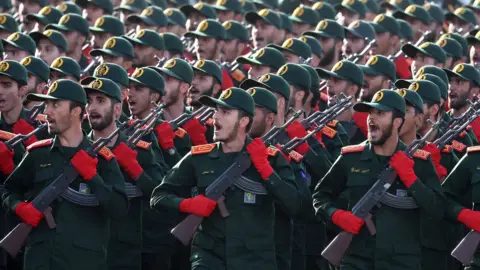
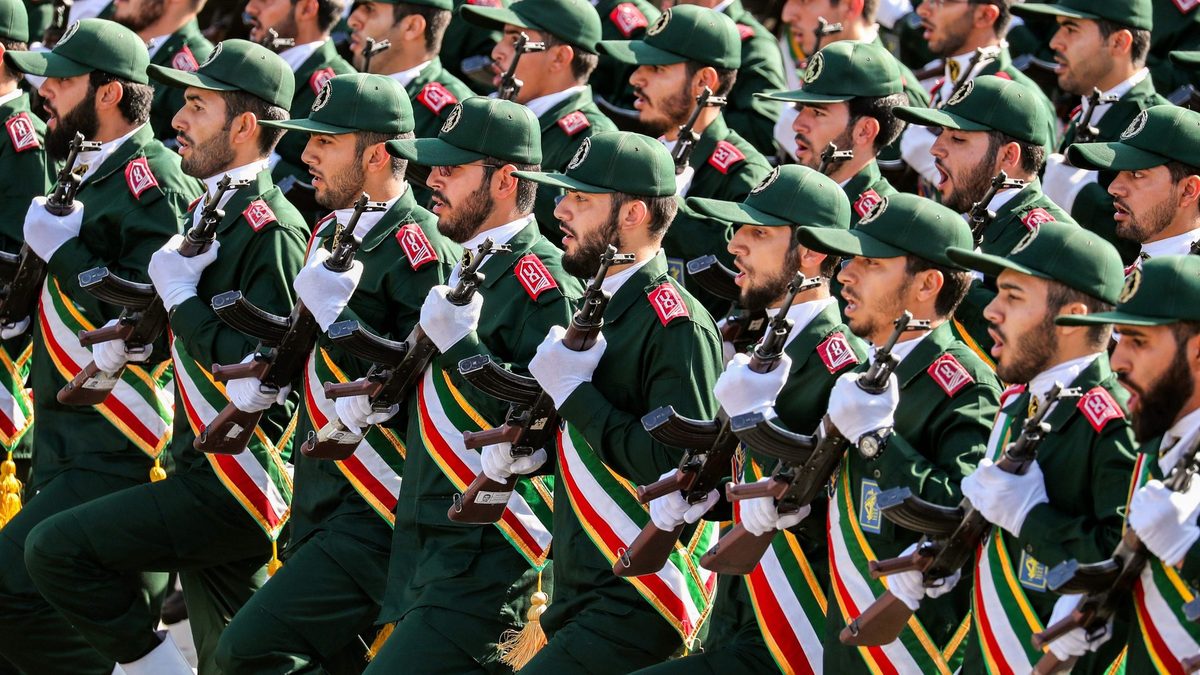
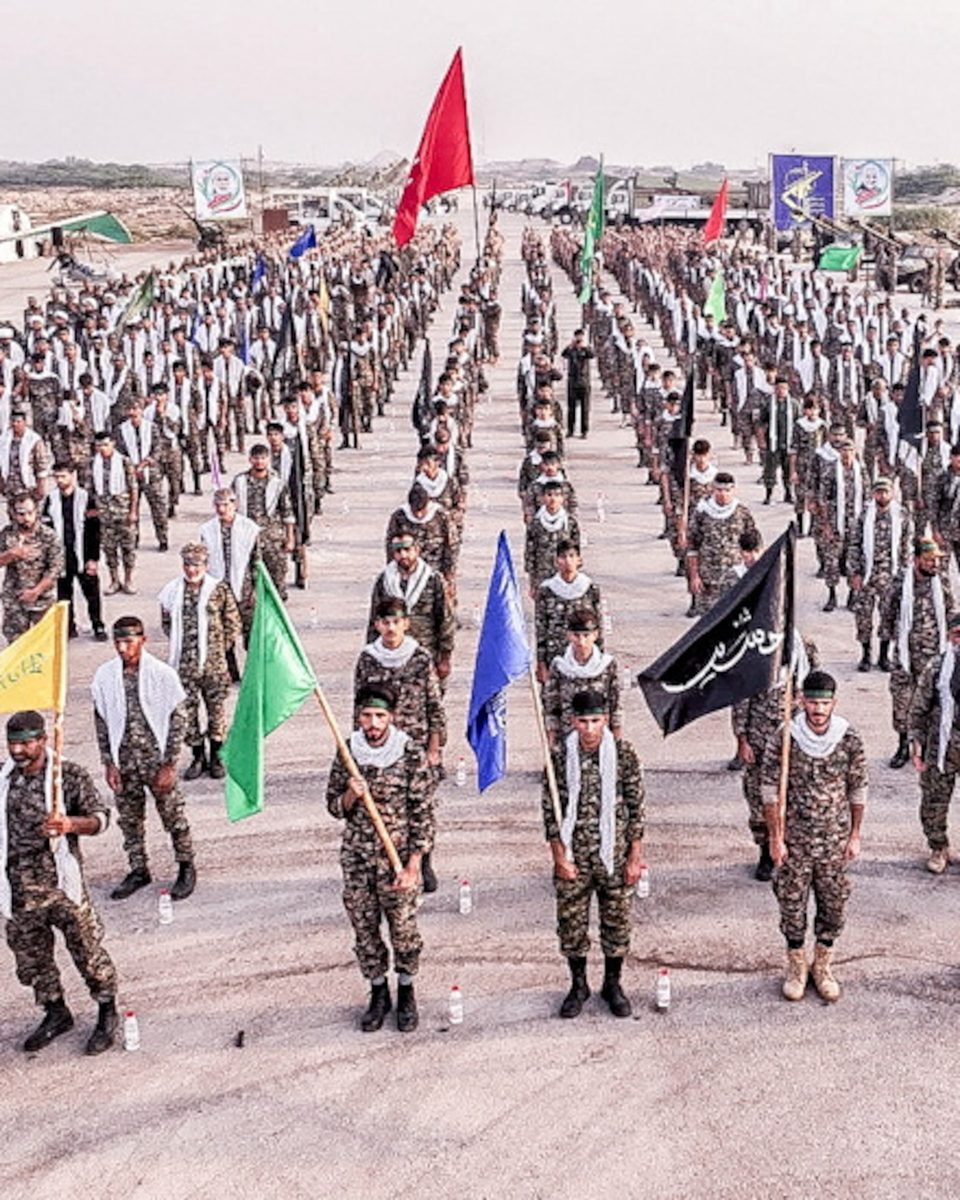
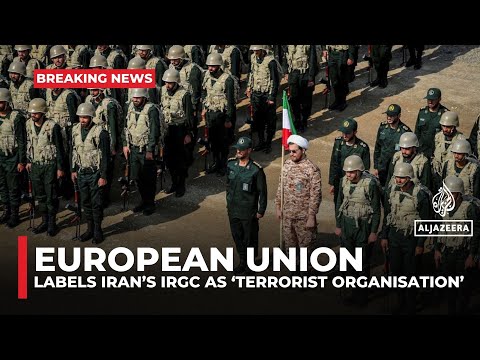
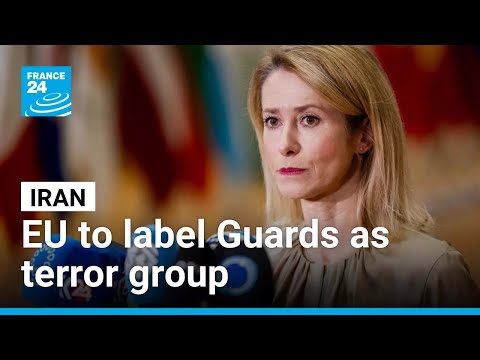
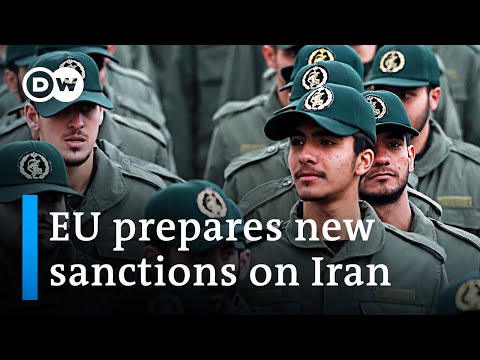
For over two decades, the European Union resisted designating Iran's Islamic Revolutionary Guard Corps (IRGC) as a terrorist organization, wary of severing diplomatic ties with Tehran. On January 29, 2026, that resistance collapsed. All 27 EU foreign ministers voted unanimously to place the IRGC on the same legal footing as al-Qaeda, Hamas, and Islamic State—a designation that triggers automatic asset freezes and travel bans across the bloc. Within hours, the United Kingdom signaled it would follow suit with separate legislation targeting hostile state agencies.
France, the last major holdout, reversed course after Iranian security forces killed thousands of protesters in a crackdown that began in early January. While activists confirmed at least 6,126 deaths, leaked reports from Iranian medical sources suggest the true toll may exceed 30,000—making it one of the deadliest massacres in modern Iranian history. Iran's currency fell to a record low of 1.6 million rials to the dollar as Tehran threatened 'hazardous consequences' and announced military exercises in the Strait of Hormuz.
Questions about this story
Free account needed to ask — your question is kept and asked for you right after sign-up. Answers are public.
No questions yet — be the first to ask.
Key Indicators
6,126+
Confirmed Deaths
Activist-verified protesters killed; medical sources suggest toll may exceed 30,000.
27-0
Unanimous EU Vote
All EU member states approved the designation, ending years of division.
262
Individuals Sanctioned
Total Iranians now subject to EU asset freezes and travel bans (247 + 15 new).
1.6M
Rials per Dollar
Record low for Iran's currency on the unofficial market.
24 events
Latest: January 31st, 2026 · 8 months ago
Showing 8 of 24
JK to step
Tap a bar to jump to that date
Jump to
January 2026
Iran Begins Live-Fire Drills in Strait of Hormuz
LatestMilitary
IRGC naval forces commence two-day live-fire exercises in Strait of Hormuz after issuing notice to mariners; drills potentially affect Traffic Separation Scheme where 20% of global oil passes. U.S. Central Command warns against 'unsafe and unprofessional behavior.'
UK Signals Intent to Designate IRGC Under New Legislation
Diplomacy
British Home Office confirms work underway on bill targeting hostile state agencies including IRGC, though officials indicate legislation will not be fast-tracked despite mounting pressure.
Iran Counter-Designates EU Member State Armed Forces
Legal
Iran's Supreme National Security Council Secretary Ali Larijani invokes 2019 parliamentary law to designate armed forces of EU member states as terrorist organizations in reciprocal action.
Iran's Defense Ministry and Army Condemn EU Designation
Diplomacy
Ministry of Defense calls EU move 'spiteful, hasty, and desperate'; Iranian Army condemns designation as 'shameful' and 'irresponsible.'
US Imposes Sanctions on Iran's Interior Minister
Legal
Treasury Department sanctions Eskandar Momeni for role in protest crackdown, targeting same official sanctioned by EU one day earlier; also sanctions businessman Babak Zanjani and 18 entities involved in Iranian oil money laundering.
European Commission Formally Welcomes Council Sanctions
Diplomacy
European Commission issues formal statement welcoming Council's adoption of restrictive measures against 15 individuals and 6 entities, emphasizing asset freezes, travel bans, and prohibition on making funds available to those listed.
EU Unanimously Designates IRGC as Terrorist Organization
Legal
All 27 foreign ministers vote to place Revolutionary Guard on terrorism blacklist alongside al-Qaeda, Hamas, and Islamic State.
Iran Threatens 'Hazardous Consequences' Over EU Designation
Diplomacy
Iranian Foreign Ministry condemns designation as 'illegal' and 'major strategic mistake'; General Staff warns of 'dangerous consequences' for European policymakers.
Iran Announces Military Drills in Strait of Hormuz
Military
IRGC naval forces announce live-fire exercises in Strait of Hormuz; Iran claims addition of 1,000 'strategic drones' to military stockpile.
EU Sanctions 15 Additional Iranian Officials
Legal
European Council announces asset freezes and travel bans on 15 individuals and 6 entities, including Interior Minister Eskandar Momeni and Prosecutor General Mohammad Movahedi-Azad.
France Reverses Position on IRGC
Diplomacy
Foreign Minister Barrot announces Paris will support designation, removing final major obstacle.
Death Toll Estimates Reach 30,000+
Crisis
Time magazine and The Guardian report Iranian medical sources estimate between 30,000-36,500 killed during January 8-9 crackdown; activists confirm minimum 6,126 deaths.
EU Foreign Policy Chief Calls for IRGC Designation
Diplomacy
Kaja Kallas publicly pushes for bloc to add Revolutionary Guard to terrorism list.
Khamenei Orders Deadly Crackdown
Violence
Supreme Leader reportedly directs security forces to use 'any means necessary'; thousands killed in following days.
Iranian Rial Hits Record Low
Economic
Currency falls to approximately 1.47 million rials per dollar on unofficial markets.
December 2025
Economic Protests Erupt in Tehran
Crisis
Bazaar merchants close shops as rial collapses; demonstrations spread nationwide over following days.
August 2025
European Powers Trigger UN Sanctions Snapback
Legal
France, Germany, and UK invoke mechanism to restore all UN sanctions on Iran after nuclear violations.
June 2024
Canada Designates IRGC
Legal
Canada adds IRGC to terrorist list following years of pressure, partly driven by downing of Ukrainian airliner that killed Canadian citizens.
January 2023
European Parliament Calls for IRGC Designation
Legislative
Parliament votes 598-9 urging EU to add IRGC to terrorism list; foreign ministers decline to act.
September 2022
Mahsa Amini Dies in Custody
Crisis
Death of 22-year-old woman detained by morality police triggers months of 'Woman, Life, Freedom' protests.
April 2019
US Designates IRGC as Terrorist Organization
Legal
Trump administration becomes first government to designate a foreign country's military as a terrorist organization.
May 2018
United States Withdraws from Iran Nuclear Deal
Policy
President Trump pulls US out of JCPOA and reimposes sanctions; Iran begins violating nuclear limits a year later.
July 2015
Iran Nuclear Deal (JCPOA) Concluded
Diplomacy
Iran, EU, and world powers agree on nuclear limitations in exchange for sanctions relief.
April 2011
EU Establishes Human Rights Sanctions on Iran
Policy
European Union creates dedicated sanctions regime targeting Iranian officials responsible for human rights abuses.
Scenarios
1
Diplomatic Freeze: EU-Iran Relations Collapse
Possible
Discussed by: Iranian Foreign Ministry, analysts at Al-Monitor and European Council on Foreign Relations
Iran retaliates by expelling EU diplomats, ending cooperation on hostage negotiations, and potentially targeting European interests through proxies. Europe's ability to engage Tehran on nuclear issues, regional stability, or humanitarian access effectively ends. This scenario is more likely if hardliners consolidate power in Tehran after the current crisis.
2
Managed Estrangement: Limited Contact Continues
Likely
Discussed by: EU High Representative Kallas, European diplomatic sources cited by Euronews
Despite the designation, both sides maintain minimal diplomatic channels through intermediaries or carefully defined exceptions. The EU has indicated that foreign minister contacts may continue. Iran, dependent on European markets for some trade, may calculate that total rupture would accelerate economic collapse. The designation's practical impact would be limited to asset freezes on IRGC members who already face individual sanctions.
Discussed by: NCRI, Foundation for Defense of Democracies, some US congressional voices
The designation compounds Iran's economic isolation at a moment of historic vulnerability. Combined with US sanctions, UN snapback measures, and domestic unrest, the cumulative pressure triggers a political transition—either through elite defection, military coup, or sustained popular uprising. The EU designation becomes retrospectively seen as a turning point.
4
Escalation Cycle: Regional Conflict Intensifies
Possible
Discussed by: Iranian Foreign Minister Araghchi, regional analysts at Crisis Group
Iran interprets the designation as part of coordinated Western effort to enable military action. Tehran accelerates nuclear enrichment and increases support for proxy forces. The Middle East enters a heightened conflict phase where the EU designation becomes one factor among many driving toward confrontation.
Historical Context
3 moments from history that rhyme with this story — and how they unfolded.
1 of 3
April 2019
US Designation of IRGC as Foreign Terrorist Organization (2019)
The Trump administration designated the IRGC as a foreign terrorist organization—the first time the United States applied the terrorism label to another country's military. The move came amid the 'maximum pressure' campaign following US withdrawal from the Iran nuclear deal. Iran's parliament responded by designating US Central Command as a terrorist organization.
Then
Iran's Quds Force commander Qasem Soleimani was killed by US drone strike in January 2020, an action enabled by the FTO designation's legal framework.
Now
The designation did not significantly change IRGC behavior but created legal tools for prosecuting those who provide material support to the organization.
Why this matters now
The EU designation now aligns European legal frameworks with the American approach, enabling coordinated enforcement and removing a source of transatlantic friction on Iran policy.
2 of 3
July 2013
EU Partial Designation of Hezbollah (2013)
After the 2012 bus bombing in Bulgaria killed Israeli tourists, the EU designated Hezbollah's 'military wing' as a terrorist organization while allowing its 'political wing' to operate freely. France led the push for this distinction, arguing it preserved diplomatic options in Lebanon.
Then
The partial designation had minimal practical effect since Hezbollah itself denied any distinction between wings.
Now
The compromise drew criticism for a decade as ineffective. Several EU countries—Germany, UK, Netherlands—eventually designated Hezbollah entirely on national level.
Why this matters now
The IRGC designation marks a departure from this approach: the EU designated the entire organization, not a fictional 'military wing.' France's reversal signals the end of the differentiated approach to Iran-linked groups.
3 of 3
November 1979 - January 1981
Iran Hostage Crisis and US Sanctions Precedent (1979-1981)
Iranian students seized the US Embassy in Tehran, holding 52 American diplomats hostage for 444 days. President Carter responded by freezing $12 billion in Iranian assets—the first use of IEEPA sanctions authorities. The US severed diplomatic relations in April 1980.
Then
The asset freeze proved the most effective pressure tool, giving the US leverage in eventual negotiations.
Now
The crisis established the sanctions-based approach that has defined US-Iran relations for four decades, with asset freezes becoming the primary policy instrument.
Why this matters now
The EU designation activates similar mechanisms—asset freezes, travel bans, fund prohibitions—that the US pioneered in 1979. Europe is now adopting the confrontational framework it long sought to avoid.