Anchor

EV batteries retain about 90% capacity after 150,000 km, world's largest study finds
New Capabilities500,000 tests show used electric cars far outlast early range-anxiety fears
Today: Study reaches Reddit and wider public discussionNew here? Follow stories to track developments over time. Create a free account to get updates when stories you care about change.
Overview
Updated 1 hour agoA study of more than 500,000 used electric cars finds most batteries keep about 90% of their original capacity after 150,000 km. The worst performer, the Nissan Leaf, still held 86.7%. None of the 20 models tested had lost more than 10% on average by 50,000 km.
The findings undercut a decade of fears that EV batteries would fail early. They also reveal wide gaps between individual cars of the same model, up to 13.5 percentage points at 150,000 km, which is why independent battery checks matter before buying used.
Why it matters
If battery anxiety fades, used EVs become a safer buy and resale values stabilize, removing a major barrier to mass EV adoption.
Questions about this story
Free account needed to ask — your question is kept and asked for you right after sign-up. Answers are public.
No questions yet — be the first to ask.
Key Indicators
~90%
Median battery state of health at 150,000 km
Most of the 20 models retained about 90% of original usable capacity at 150,000 km.
500,000+
Independent battery tests analyzed
Tests conducted 2022–2026 across North and South America, Europe, Australia, and Asia.
20
EV models compared
Median state of health measured at 50,000, 100,000, and 150,000 km for each model.
94%
Best median SoH at 150,000 km
Mercedes-Benz EQA led the field, with Hyundai Ioniq 5 at 93.8% and BMW i4 at 93.6%.
86.67%
Worst median SoH at 150,000 km
Nissan Leaf ZE1 degraded fastest, likely due to a smaller battery and passive cooling.
13.5%
Spread between best and worst same-model cars
At 150,000 km, individual Leaf examples varied by 13.5 percentage points in state of health.
Related Media
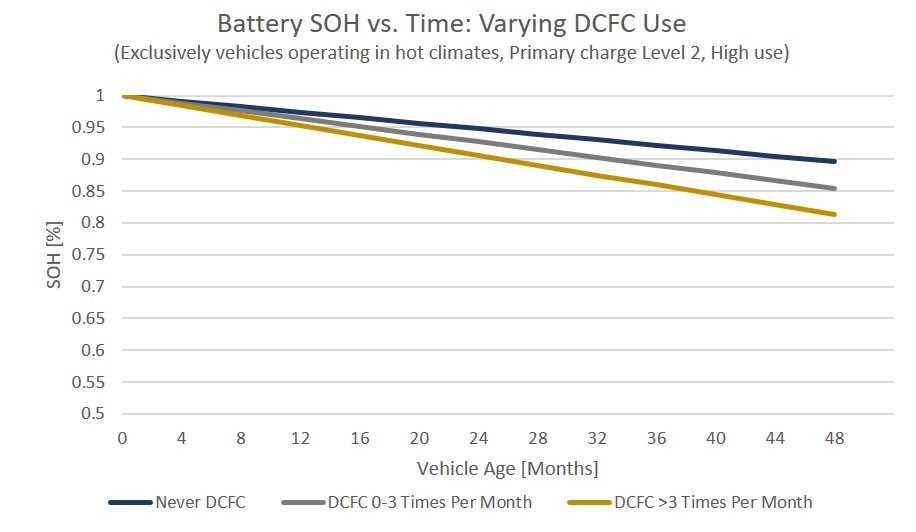
How Long do Electric Car Batteries Last? What 10,000 Cars Tell Us | Geotab
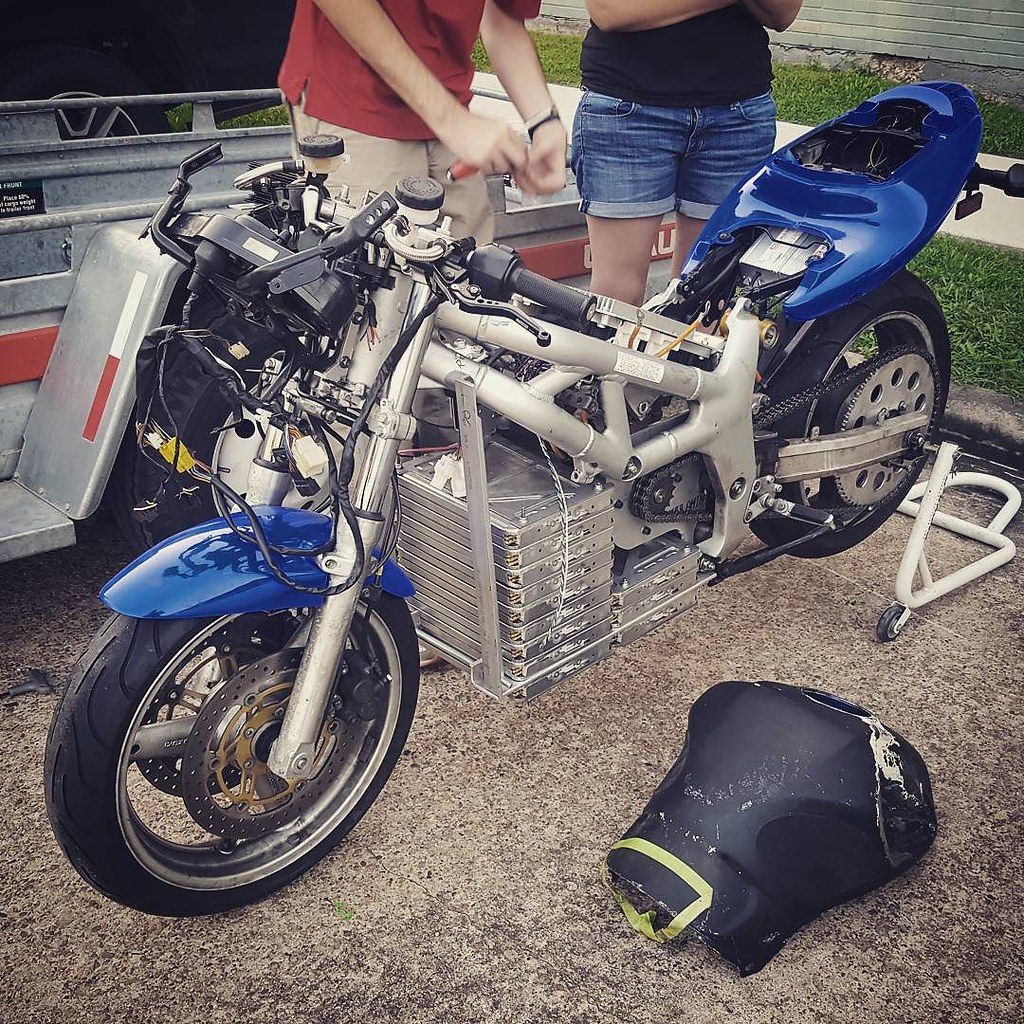
This guy was at TXRX this week for the Houston electric vehicle meetup. It's a Suzuki sv650 electric conversion powered by junkyard Nissan Leaf batteries. Checkout the size of the rear sprocket!
31.6K views
9:47
The Battery Myth is Dead: New Study Proves EVs Last Longer ...
The Electric Viking
5.5K views
6:05
Shocking NEW Study on EV Batteries - GAME OVER Gas?
Ayman

168 views
15:34
EV Battery Study Finds Lower-Than-Expected Degradation Rates
Fleet Equipment
Images from Openverse under Creative Commons licenses. Videos from YouTube.
Voices
Curated perspectives — historical figures and your fellow readers.
Play
Exploring all sides of a story is often best achieved with Play.
Most of these play right now — no account needed. Sign up to save scores, keep a streak, and unlock Debate and Predict.
Log in
Sign Up
Higher or Lower
A number from this story, against one from elsewhere in the news — guess which is bigger, then keep the chain going. 5 rounds, 3 strikes; a miss costs a strike and resets your streak.
Example
Anchor
EU tariff revenue
$52B
Big for this kind of number
Mystery
Pentagon AI contract
?
Round 1
Streak: 0
Mystery
?
Keyboard: ↓/L lower · ↑/H higher
0 pts
Best streak: 0 · Rounds: 0
0 points — sign up to put that on the leaderboard.
Now try on this story
Connections
Sixteen names from the news. Find the four hidden groups of four. Four mistakes max.
Loading today's puzzle…
0/4 groups
Mistakes
Sign up to keep a daily streak — a new puzzle lands every day.
Now try on this story
Exit debate?
Your progress in this debate will be lost.
How it works
- 1 Two AI personas square off on this story.
- 2 You predict who'll win each round — correct picks earn XP.
- 3 One crossfire question is yours to fire. Pick it carefully.
Couldn't generate a topic
Select Your Champions
Choose one persona for each side of the debate
DEBATE TOPIC
Choose personas with different perspectives for a more dynamic debate.
SIDE A (PRO)
Select debater for this side:
No debate personas available right now.
SIDE B (CON)
Select debater for this side:
No debate personas available right now.
VS
Get ready to make your prediction...
Round of
Claim
Evidence
Stakes
Crossfire Answer
Closing Statement
Claim
Evidence
Stakes
Crossfire Answer
Closing Statement
Your Crossfire Question
Generating arguments...
Who's Got This Round?
Make your prediction before the referee scores
The referee scores both sides on
Correct predictions earn +20 XP
· Press 1 or 2 to pick
Evidence
40%
Logic
30%
Detail
20%
Style
10%
Round Results
Your Pick
Not this time
(%)
Overall Score
/10
Your Pick
Not this time
(%)
Overall Score
/10
Set the Crossfire
Pick the question both personas must answer in the final round
Crafting crossfire questions...
Choosing a question earns +10 XP crossfire bonus
🏆
Total XP Earned
Cred Change
Predictions
Debate Oracle! You called every round!
Sharp Instincts! You know your debaters!
The Coin Flip Strategist! Perfectly balanced!
The Contrarian! Bold predictions!
Inverse Genius! Try betting the opposite next time!
XP Breakdown
Base completion
+20 XP
Rounds played ( rounds x 5 XP)
+ XP
Correct predictions ( correct x 20 XP)
+ XP
Crossfire bonus
+10 XP
Accuracy
%
Prediction History
Round
You picked:
✓
✗
Now try on this story
Keep debating to level up your credibility and unlock achievements
People Involved
Organizations Involved
Aviloo
Battery diagnostics company
Published the Certified EV Battery Report, the largest independent used-EV battery study
Austrian firm that measures used electric car battery health with a three-minute OBD diagnostic.
NRMA
Australian motoring organization
Partnered with Aviloo to offer battery health checks in Australia
Australian motoring body that sells independent EV battery checks using Aviloo's diagnostic.
EN
Electrifying, New AutoMotive, and BatteryIQ
EV industry and advocacy groups
Campaigning for mandatory battery health checks on used EVs in the UK
Three UK organizations calling for standardized state-of-health reports on every used EV sold by dealers.
Timeline
January 2022 September 2026
4 events
Latest: Today
Tap a bar to jump to that date
-
Study reaches Reddit and wider public discussion
Today Public AttentionThe report becomes the top post on r/energy, amplifying evidence that batteries outlast fears.
-
Aviloo publishes 500,000-test battery report
Study ReleaseCertified EV Battery Report shows most models retain about 90% capacity at 150,000 km.
-
UK groups demand mandatory battery checks
Regulatory PushElectrifying, New AutoMotive, and BatteryIQ call for state-of-health reports on every dealer-sold used EV.
-
Aviloo begins collecting battery test data
Data CollectionAustrian diagnostics firm starts accumulating independent battery health measurements across global markets.
Historical Context
2 moments from history that rhyme with this story — and how they unfolded.
2007–2015
Smartphone lithium-ion battery aging (2007–2015)
Early smartphone batteries swelled, died within a year, and sometimes caught fire. Users learned to expect their phone battery to degrade noticeably within 18 months of purchase.
Then
Replaceable batteries became a selling point, and manufacturers improved charging circuits and chemistry.
Now
Modern phone batteries last years longer, but the 'batteries wear out fast' mindset persisted across all lithium-ion products.
Why this matters now
The smartphone experience trained consumers to expect quick lithium-ion degradation. The new EV data shows automotive-grade battery engineering has moved well past that baseline.
2011–2017
First-generation Nissan Leaf battery degradation (2011–2017)
Early Nissan Leafs used air-cooled, small-capacity batteries with no active thermal management. In hot climates like Arizona, some packs lost 30% or more of their capacity within a few years, forcing Nissan to replace batteries under warranty complaints.
Then
The Leaf's reputation for degradation took root, feeding widespread consumer fear that all EV batteries would die quickly.
Now
Most automakers switched to liquid cooling and larger buffer zones, and later Leaf versions degraded far less.
Why this matters now
The 2026 Aviloo study shows modern EVs, including later Leafs, retain far more capacity than early models, directly addressing the fear those first cars created.