
Pull to refresh
Logo
Energy Department backs a Wyoming line to link the eastern and western US grids

Energy Department backs a Wyoming line to link the eastern and western US grids

Built World

A conditional $2.8 billion loan commitment for Grid United's Wyoming Intertie, a 106-mile converter project between two grids that cannot currently exchange power

Overview

Updated 4 hours ago

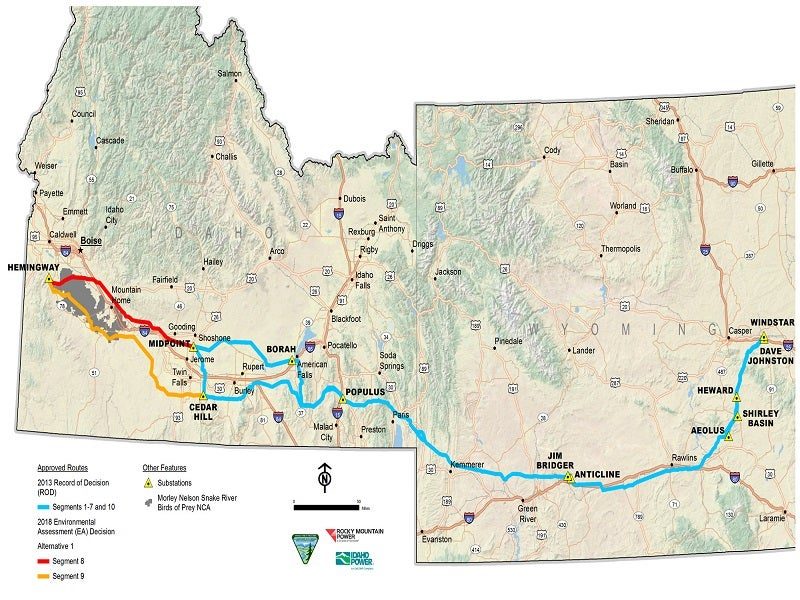
The Eastern and Western US power grids both run at 60 hertz, but not in step with each other. A conventional alternating-current line cannot carry power between them. On Nov. 17, the Energy Department offered a conditional $2.8 billion loan guarantee for a 106-mile line in southeastern Wyoming that would let electricity cross that seam.

The Wyoming Intertie would add 1,800 megawatts of transfer capacity between the Southwest Power Pool and the Western Interconnection, more than doubling what exists today. The department estimates up to $39 billion in consumer savings over 30 years. Construction is not expected before 2030, and the commitment depends on technical, legal, environmental and financial reviews.

Why it matters

If built, the line lets two US grids share power they currently cannot, easing congestion and price spikes across 17 states.

Questions about this story

Free account needed to ask — your question is kept and asked for you right after sign-up. Answers are public.

No questions yet — be the first to ask.

Key Indicators

$2.8B
Conditional federal loan commitment
Structured as a loan guarantee through the Federal Financing Bank, not yet a signed financing agreement.
1,800 MW
Transfer capacity added
Bidirectional capacity between the Southwest Power Pool and the Western Interconnection.
106 miles
Route length
Crosses Carbon, Albany and Platte counties between the Medicine Bow area and Wheatland.
97%
Route under land options
Grid United has secured options on most of the corridor, though some rights remain outstanding.
$39B
Estimated 30-year consumer savings
Department estimate across 17 states in the two grid regions; the underlying model has not been published.
17
States in the two affected regions
The Western Electricity Coordinating Council and Southwest Power Pool footprints.

Voices

Curated perspectives — historical figures and your fellow readers.

Sign up to generate historical perspectives on this story.

People Involved

Organizations Involved

Timeline

2022 November 2026

3 events Latest: Today
  1. Converters are most of the cost, DOE says

    Today Statement

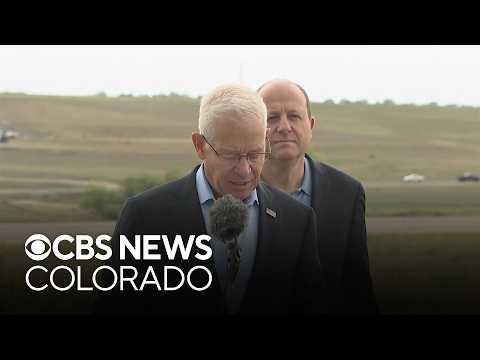
    Gregory Beard says conversion equipment exceeds half the project cost and more loans are coming.

  2. Energy Department commits $2.8 billion

    Financing

    Conditional loan guarantee for Grid United's 106-mile, 1,800-megawatt intertie.

  3. Wyoming Intertie first conceived

    Origins

    Grid United begins developing a converter link between the two grids in southeastern Wyoming.

Scenarios

1

Definitive financing signed, construction starts by 2030

Possible Resolves by End of 2030

Discussed by: Energy Department officials, who said construction could begin around 2030 with completion near 2033

Grid United clears the technical, legal, environmental and financial conditions attached to the commitment, DOE executes definitive financing documents, and crews break ground in Carbon, Albany and Platte counties. The remaining land rights and regulatory approvals fall into place first. This is the path the department described when it announced the commitment.

2

Conditional commitment lapses without a signed deal

Possible Resolves by Q2 2029

Discussed by: No named forecaster; the department itself describes the commitment as conditional on unmet requirements

The commitment is not a loan. If Grid United cannot satisfy the environmental, legal or financial conditions, or cannot close on the remaining land and regulatory approvals, the department can decline to execute definitive documents. The project would then need another backer or another structure.

3

A second interregional tie gets federal backing first

Uncertain Resolves by End of 2029

Discussed by: Energy Department officials, who said additional transmission loans are coming and that deal demand exceeds available capital

Grid United's North Plains Connector, a roughly 420-mile, 3,000-megawatt line between Montana and North Dakota, reaches a financing milestone before the Wyoming Intertie closes. Beard said the office is prioritizing projects with the largest effect on affordability and reliability, and declined to name which ones are next.

Historical Context

3 moments from history that rhyme with this story — and how they unfolded.

2021

Interconnections Seam Study (2021)

Energy Department national laboratories ran a multi-model planning study of adding high-voltage direct-current capacity between the Eastern and Western interconnections. The work tested transmission designs under eight scenarios to estimate costs and potential benefits.

Then

The study put numbers on an idea transmission planners had discussed for years, but it committed no one to build anything.

Now

It left the build decision to developers and lenders, which is the gap the Wyoming Intertie's federal financing is meant to close.

Why this matters now

The Wyoming Intertie is the kind of project that study modeled: a converter station at the seam rather than a long alternating-current line.

1970

Pacific DC Intertie (1970)

A high-voltage direct-current line linked the Pacific Northwest's federal hydropower system to Southern California, with converter stations at each end. It let two regions share power that alternating current could not move as efficiently over that distance.

Then

The line became a workhorse for West Coast power transfers and emergency support between regions.

Now

It showed that expensive converter stations can pay for themselves in bulk transfer, the same trade-off the Wyoming Intertie faces.

Why this matters now

More than half the Wyoming Intertie's cost is converter equipment, the identical bet the Pacific Intertie made five decades earlier.

February 2021

Winter Storm Uri (February 2021)

A statewide freeze knocked out generating capacity across Texas. The state's grid, largely isolated from the two national interconnections, could not import enough power to cover the shortfall, and millions of people lost electricity for days.

Then

The state's grid operator faced sustained criticism over its isolation and its emergency planning.

Now

Limited ties to neighboring grids became a live policy question rather than an academic one.

Why this matters now

The Wyoming Intertie is aimed at the same problem from the other direction: moving power into a region when its own generation cannot keep up.

Sources

(6)