

Pull to refresh
Logo
FTC orders nine companies to explain personalized prices and pay

FTC orders nine companies to explain personalized prices and pay

Rule Changes

Delta, Uber, Walmart and six others have 45 days to show whether personal data sets what each customer pays and each driver earns.

Overview

Updated 1 hour ago

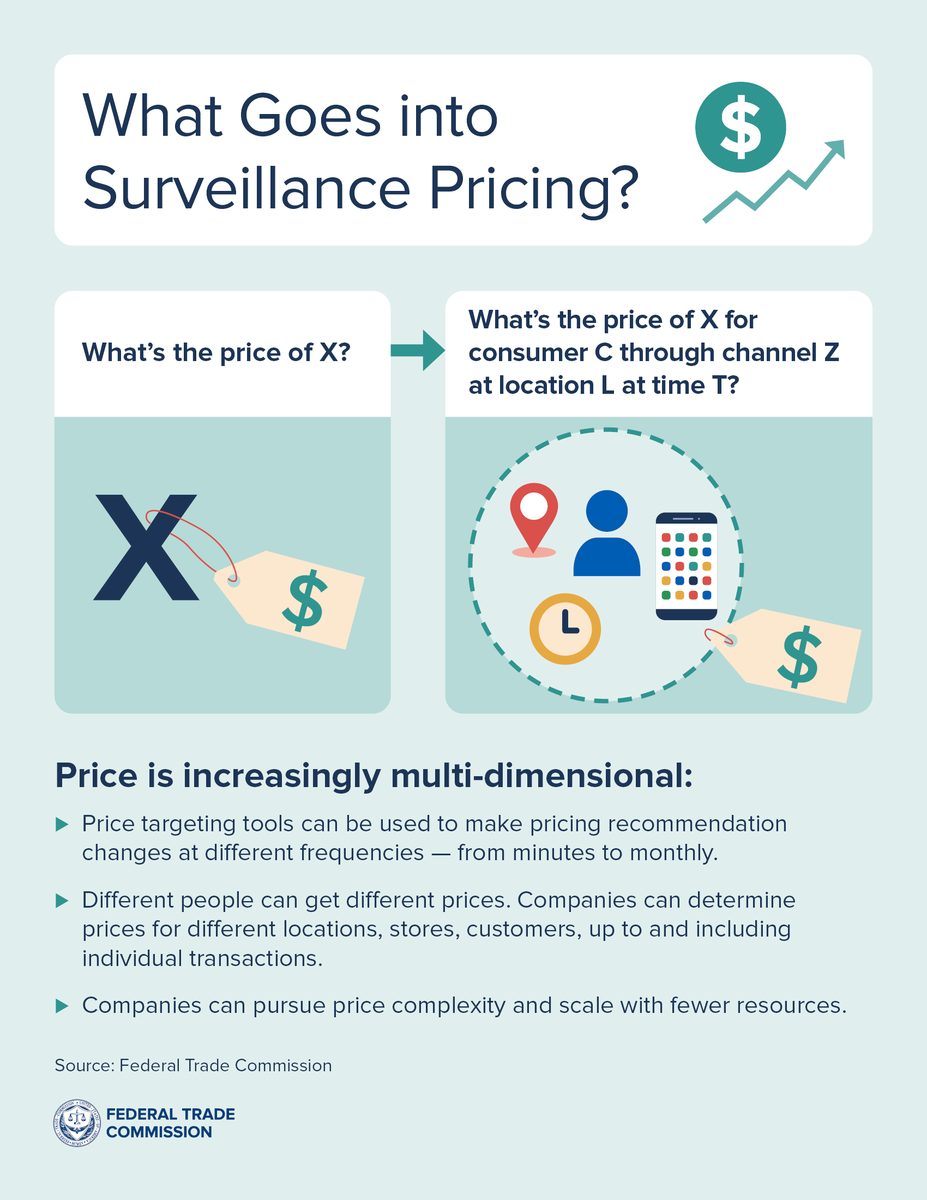
The Federal Trade Commission ordered nine companies on Oct. 29 to hand over records showing whether they use personal data to set individual prices and pay. The recipients are Delta, United, JetBlue, Lyft, Uber, DoorDash, Instacart, Target and Walmart. Each has 45 days to describe the inputs, tools and procedures behind its pricing and compensation.

The orders are a study, not a lawsuit. They rely on Section 6(b) of the FTC Act, which lets the agency compel information for wide-ranging studies that need not have a law-enforcement purpose. The FTC has no power to ban personalized pricing outright, and it cannot write rules for airlines. But the agency says undisclosed use of personal data to set a unique price may violate the FTC Act, which bars unfair or deceptive practices.

Why it matters

The price on your screen may already be yours alone, and this is the first federal demand aimed at the companies that set it.

Questions about this story

Free account needed to ask — your question is kept and asked for you right after sign-up. Answers are public.

No questions yet — be the first to ask.

Key Indicators

9
Companies ordered to produce records
Three airlines, four gig platforms and two retailers.
45
Days to respond
The clock runs from each company's receipt of its order.
2-0
Commission vote to issue the orders
Both participating commissioners approved the inquiry.
4
Gig platforms covered
Uber, Lyft, DoorDash and Instacart set pay per job rather than a fixed wage.

Voices

Curated perspectives — historical figures and your fellow readers.

Sign up to generate historical perspectives on this story.

People Involved

Organizations Involved

Timeline

July 2024 October 2026

4 events Latest: 3 days ago
Tap a bar to jump to that date
  1. FTC seeks comment on enforcement policy

    Policy

    The commission invited public comment on a proposed statement covering undisclosed use of personal data to set prices.

  2. Staff findings released before Trump takes office

    Report

    The 2024 study examined middlemen, not the companies setting prices, and the agency said it learned nothing about actual pricing decisions.

Scenarios

1

FTC publishes findings and brings no case

Possible Resolves by Q2 2027

Discussed by: Reuters, which notes the study has no law-enforcement purpose

Section 6(b) studies can end in a report rather than a lawsuit. The companies' responses will give the agency a picture of pricing and pay formulas, and the commission may fold the results into its proposed policy statement. If it stops there, the formulas stay private and the pricing practices continue.

2

FTC sues a company over undisclosed personalized pricing

Possible Resolves by End of 2027

Discussed by: FTC Chairman Andrew Ferguson, who has said companies should expect enforcement

Ferguson has said personalized pricing could violate consumer-protection law where consumers do not expect it. A case would test the theory that charging one customer more than another without disclosing it is deceptive. A gig platform or retailer is the more likely target, because the FTC cannot regulate airlines.

3

Congress passes a federal ban on surveillance pricing

Unlikely Resolves by Jan 1, 2028

Discussed by: Hundreds of public commenters who urged the FTC to ban the practice

The FTC has said it lacks authority to issue a blanket ban. Only Congress can create that power, and the August comment period produced broad demand for one. A statute would settle a question the inquiry can only document.

Historical Context

2 moments from history that rhyme with this story — and how they unfolded.

July 2024

FTC surveillance-pricing inquiry (2024)

The FTC demanded information from McKinsey, JPMorgan Chase and other firms that sold surveillance-pricing products to consumer-facing companies. The inquiry targeted the consultants and data brokers behind the tools rather than the businesses charging customers.

Then

Staff findings were released days before President Trump took office in January 2025.

Now

The agency said it learned nothing about actual pricing decisions, because the study never reached the companies that set prices.

Why this matters now

The October 2026 orders correct that gap by demanding records directly from airlines, platforms and retailers.

January 2025

Personalized-pricing study findings (2025)

The FTC released staff findings from its mid-2024 personalized-pricing study in the final days of the Biden administration. The work covered intermediaries, not the firms that price tickets, rides and deliveries.

Then

The findings did not lead to enforcement against any price-setting company.

Now

The new commission cited the study as a mistaken approach and restarted the work with orders to the companies themselves.

Why this matters now

It explains why the current inquiry is aimed at Delta, Uber, Walmart and their peers rather than at consultants.

Sources

(7)