



Pull to refresh
Logo
Gas-only cars fall below half of global new-car sales for the first time

Gas-only cars fall below half of global new-car sales for the first time

Money Moves

An oil shock from the Middle East conflict pushed buyers toward electric and hybrid vehicles

Today: Slashdot amplifies the H1 data story

Overview

Updated 1 hour ago

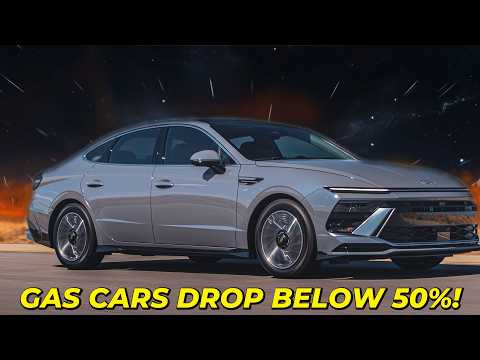
Gasoline-only cars fell to 49% of global new-vehicle sales in the first half of 2026, the first time on record they have been below half. The share was 73% as recently as 2021.

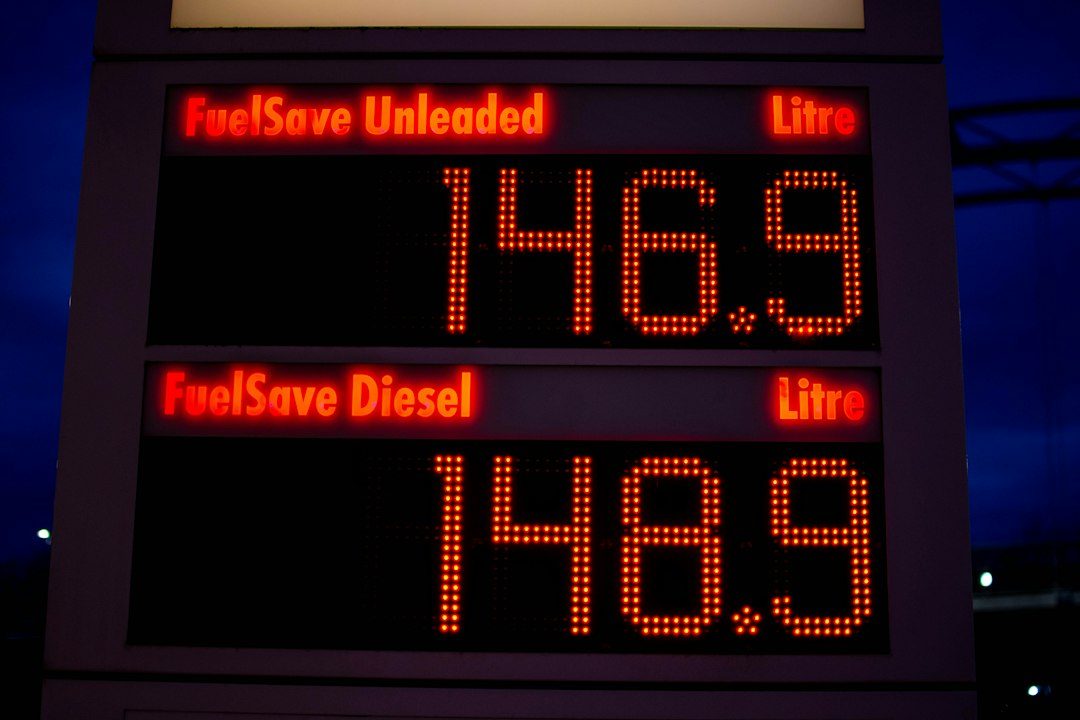
The drop came as an oil shock from the Middle East conflict pushed fuel prices to records, sending buyers toward cheaper-to-run electric and hybrid cars. Most replacements still carry a gas tank: only 17% of new cars sold were battery-electric, with hybrids, diesels and plug-in hybrids filling the rest.

Why it matters

Gas-only cars are now a minority of global new-car sales. Buyers who switch to electric rarely go back, so the shift may be permanent.

Questions about this story

Free account needed to ask — your question is kept and asked for you right after sign-up. Answers are public.

No questions yet — be the first to ask.

Key Indicators

49%
Gas-only share of global new-car sales, H1 2026
Down from 52% a year earlier and 73% in 2021, per Mobility Global data.
17%
Battery-electric share of global sales, H1 2026
BEV sales grew 12% to 6.87 million units worldwide.
18%
Hybrid share of global sales, H1 2026
Hybrids outsold battery-electrics, 7.27 million to 6.87 million units.
6.87M
Battery-electric vehicles sold in H1 2026
Sales rose 12% year over year per Mobility Global.
73%
Gas-only share of global sales in 2021
Baseline before the recent acceleration away from gasoline.

Voices

Curated perspectives — historical figures and your fellow readers.

Ever wondered what historical figures would say about today's headlines?

Sign up to generate historical perspectives on this story.

People Involved

Organizations Involved

Timeline

2021 October 2026

6 events Latest: Today
Tap a bar to jump to that date
  1. Slashdot amplifies the H1 data story

    Today Report

    Slashdot picks up Electrek's report, spreading the milestone to a wider audience.

  2. Nikkei reports gas-only share fell to 49% in H1

    Market data

    Mobility Global data shows gasoline-only vehicles below half of global sales for first time.

  3. China cuts EV tax incentives

    Policy

    Beijing rolls back EV tax breaks, trimming Chinese BEV sales 3% to 3.44 million.

  4. Middle East conflict spurs oil shock

    Geopolitical

    Strait of Hormuz crisis pushes oil above $100 and gasoline to record highs.

  5. US ends federal EV tax credit

    Policy

    Trump administration ends the federal EV tax credit, slowing North American adoption.

  6. Gas-only cars hold 73% of global sales

    Market data

    Gasoline-only vehicles dominated the global market, per Mobility Global data.

Scenarios

1

Gas-only cars stay below half of global sales for full-year 2026

Likely Resolves by Jan 31, 2027

Discussed by: Mobility Global analysts and Nikkei

The H1 figure of 49% holds for the full year if oil prices stay elevated. Mobility Global's Kawano notes few EV buyers return to gasoline, and that demand is increasingly driven by lower running costs rather than subsidies. With the market still in an oil shock, analysts expect the share to stay under 50%.

2

Oil shock eases and gas share rebounds above 50%

Unlikely Resolves by Jan 31, 2027

Discussed by: Electrek, which notes the H1 figure was taken mid-crisis

If the Strait of Hormuz disruption resolves and oil prices fall, some price-sensitive buyers could shift back toward cheaper gas vehicles. Electrek cautions that the 49% is a six-month reading captured during an oil shock, and the full year may look different. This path requires fuel prices to drop sharply in H2 2026.

3

Battery-electric outsells hybrids by end of 2026

Unlikely Resolves by Jan 31, 2027

Discussed by: Mobility Global; hybrids led BEVs in H1

BEVs grew 12% to 6.87 million units in H1 while hybrids grew 10% to 7.27 million, a gap of about 400,000. For BEVs to take the lead for the full year, battery-electric sales would need to surge in H2 while hybrids flatten or fall. Electrek data shows BEV growth concentrated in Europe, Southeast Asia and Oceania, with China and North America flat or down on subsidy cuts.

Historical Context

2 moments from history that rhyme with this story — and how they unfolded.

1900-1910

Early 1900s US: Steam and electric cars outsell petrol (pre-1910)

In the first years of the American auto market, steam and electric cars actually outsold petrol vehicles. Gasoline's status was not yet settled.

Then

The Ford Model T, cheap oil and the filling-station network made gasoline the default fuel within a decade.

Now

Gasoline has been the top powertrain for over a century, making the 2026 milestone the first time it has lost that position.

Why this matters now

This is the only prior period when gasoline was not the dominant car fuel. It frames how significant the 2026 data point is.

1973-1979

1970s oil crises (1973-1979)

The 1973 oil embargo and 1979 Iranian revolution sent fuel prices surging, exposing US dependence on imported oil and the inefficiency of American cars.

Then

Consumers shifted toward smaller, more fuel-efficient Japanese imports, and Congress passed corporate average fuel economy standards in 1975.

Now

The crises permanently pushed the global fleet toward better efficiency and established fuel economy as a policy priority.

Why this matters now

Like today's oil shock, the 1970s crises showed that fuel price spikes trigger lasting shifts in what car buyers choose. The 2026 shift is toward electric and hybrid powertrains.

Sources

(8)