


Pull to refresh
Logo
Greenhouse gas emissions break a 400-year climate link between the Indian and Pacific oceans

Greenhouse gas emissions break a 400-year climate link between the Indian and Pacific oceans

New Capabilities

Volcanoes disrupted the coupling temporarily in the 1800s. Human-caused warming is now driving a breakdown the paleoclimate record has never seen.

Today: ScienceDaily and WHOI publicize the findings

Overview

Updated 1 hour ago

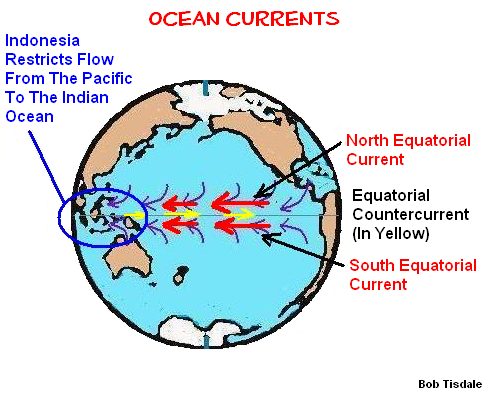
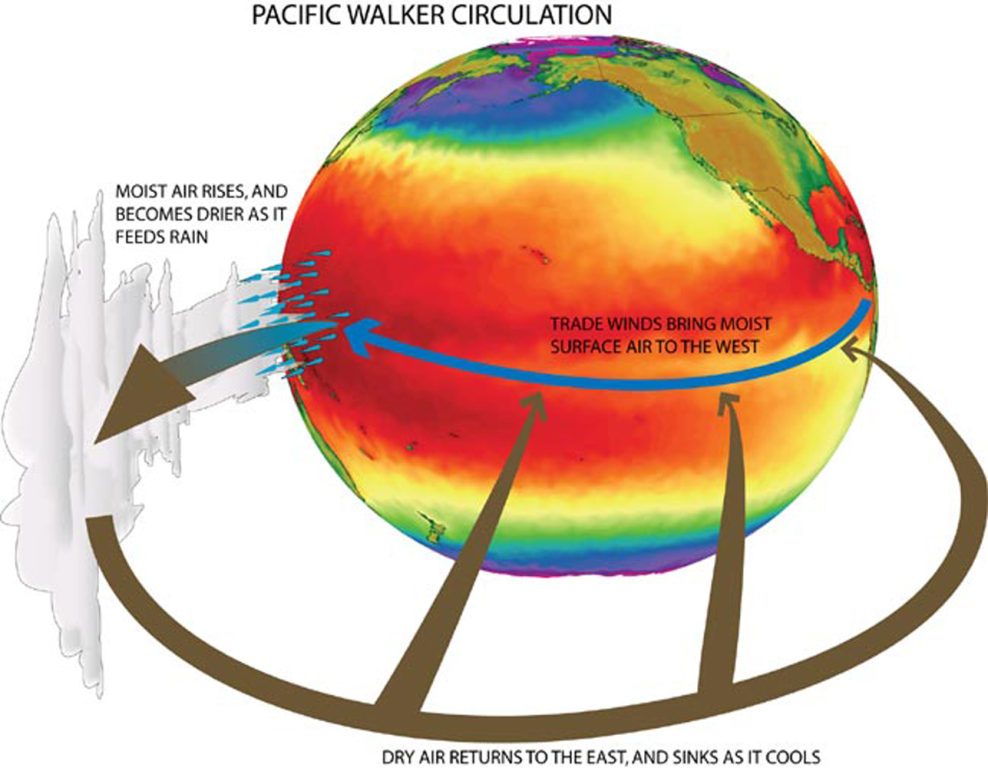
For roughly 400 years, the Pacific's trade-wind circulation and Indian Ocean surface temperatures moved in lockstep. A study published this month shows greenhouse gas emissions have now broken that link in a way that even the largest volcanic eruptions never achieved.

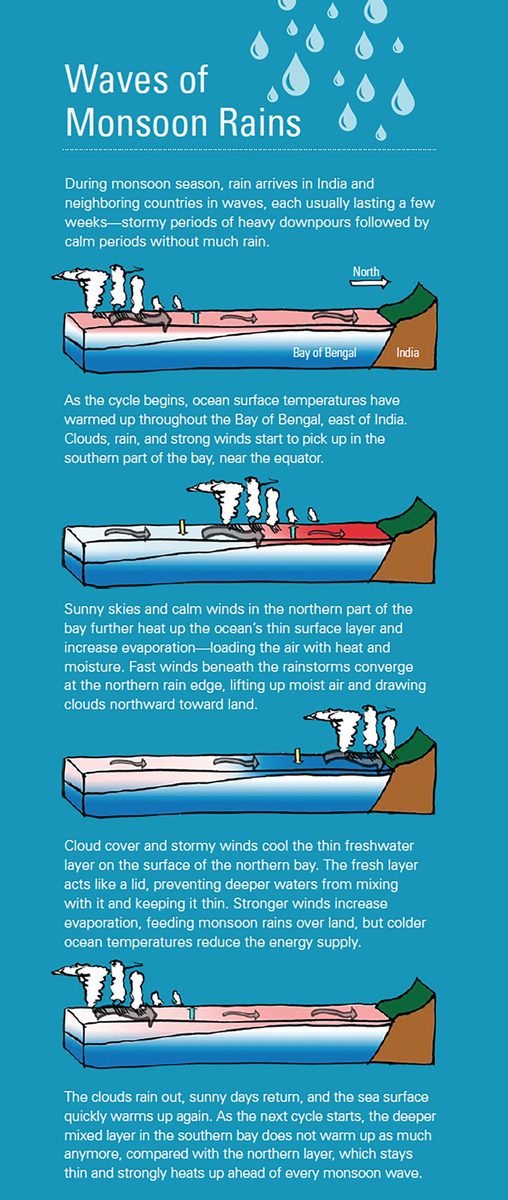
The bond between the two basins is a working mechanism, not trivia. It carries heat and moisture across the tropics, shaping monsoon rains that hundreds of millions of people depend on. Forecasters have leaned on the relationship for decades; the new study suggests that trust is now misplaced.

Why it matters

The Pacific-Indian Ocean climate link shapes monsoon rainfall that hundreds of millions of people depend on. Its breakdown undercuts the forecasts they lean on.

Questions about this story

Free account needed to ask — your question is kept and asked for you right after sign-up. Answers are public.

No questions yet — be the first to ask.

Key Indicators

~400
Years of Pacific-Indian Ocean coupling now disrupted
Paleoclimate reconstructions show the two basins moved together through the pre-industrial era.
0.1°C
Indian Ocean warming per decade since the 1950s
Tropical Indian Ocean surface temperatures have risen steadily under greenhouse gas forcing.
31
Positive PWC-IOBM correlation in recent decades (r = 0.37)
The relationship has reversed from its historical negative coupling, far outside the 95% confidence interval of the past 1,000 years.

Voices

Curated perspectives — historical figures and your fellow readers.

Ever wondered what historical figures would say about today's headlines?

Sign up to generate historical perspectives on this story.

People Involved

Organizations Involved

Timeline

January 1810 September 2026

6 events Latest: Today
Tap a bar to jump to that date
  1. ScienceDaily and WHOI publicize the findings

    Today Publicity

    Wide coverage of the study draws attention to the observed reversal in Pacific-Indian Ocean coupling and its implications for forecasting.

  2. Nature Communications publishes the Indo-Pacific coupling study

    Publication

    WHOI researchers combine paleoclimate records and model simulations to show the recent decoupling is unprecedented in 1,000 years.

  3. Pacific Walker circulation strengthens

    Trend

    The trade-wind circulation intensifies, while the Indian Ocean continues warming, straining the historical coupling.

  4. Tropical Indian Ocean begins steady warming

    Trend

    Indian Ocean surface temperatures start rising about 0.1°C per decade under greenhouse gas forcing.

  5. Mount Tambora erupts in Indonesia

    Event

    Largest eruption in 500 years, part of a cluster of four tropical eruptions between 1809 and 1835 that injected more stratospheric sulfur than Pinatubo.

  6. Volcanic cluster decouples Indian and Pacific ocean modes

    Event

    Early-19th-century eruptions weakened the Pacific Walker circulation and cooled the Indian Ocean, breaking the inter-basin link for roughly four decades.

Scenarios

1

Decoupling becomes permanent under continued warming

Likely Resolves by Jan 1, 2030

Discussed by: Study authors at Woods Hole Oceanographic Institution

Climate models project tropical Indian Ocean warming continuing through the 21st century. If it does, the Pacific-Indian Ocean correlation stays outside its historical range, and forecasters permanently lose the inter-basin signal they have used for decades. This is the study's central projection.

2

A Pacific wind slowdown partially restores the link

Possible Resolves by Jan 1, 2030

Discussed by: Climate modelers studying Pacific Walker circulation uncertainty

The Pacific Walker circulation's evolution this century is genuinely uncertain. If it weakens, both basins could realign, at least temporarily, restoring some of the coupling that forecasters rely on. The study authors note this is the main path by which the relationship could recover.

3

Decoupling spreads to the Indian Ocean dipole mode

Possible Resolves by Jan 1, 2028

Discussed by: Climate scientists studying Indian Ocean zonal variability

So far the Indian Ocean's east-west dipole pattern has shown stronger intrinsic variability than the basin-wide mode, keeping its Pacific link partially intact. Continued warming could push it out of sync too, eliminating another forecasting signal.

Historical Context

2 moments from history that rhyme with this story — and how they unfolded.

April 1815

Tambora and the 1810s Volcanic Cluster (1815)

Mount Tambora in Indonesia erupted with the most explosive force in 500 years. It was one of four tropical eruptions between 1809 and 1835 whose stratospheric sulfur injections exceeded Pinatubo's 1991 output.

Then

The eruptions weakened the Pacific Walker circulation and cooled the Indian Ocean, breaking the inter-basin coupling for roughly four decades. The link recovered as aerosols faded.

Now

It stands as the only pre-industrial period, besides today, when the coupling clearly broke, giving scientists a yardstick for natural disruption.

Why this matters now

The study's central comparison is between this volcanic disruption and recent greenhouse-gas-driven changes.

June 1991

The 1991 Mount Pinatubo Eruption

The last major tropical eruption, in the Philippines. It injected roughly 20 million tonnes of sulfur dioxide into the stratosphere, dimming sunlight and cooling global temperatures for about two years.

Then

Global temperatures dropped about 0.5°C for two years, and scientists tracked the climate response in real time for the first time.

Now

Pinatubo became the threshold against which 'large' eruptions are defined in climate studies.

Why this matters now

The study uses Pinatubo's sulfur injection as the baseline for identifying the eruptions that disrupted Indo-Pacific coupling.

Sources

(5)