Pull to refresh
Logo
Daily Brief
Following
Why Sign Up
GM pours billions into U.S. combustion-engine plants as EV momentum stalls

GM pours billions into U.S. combustion-engine plants as EV momentum stalls

Built World
By Newzino Staff |

A $150 million Saginaw casting investment is the latest in over $5 billion GM has committed to domestic ICE production since mid-2025

Today: GM invests $150M in Saginaw plant for next-gen V-8 casting

Overview

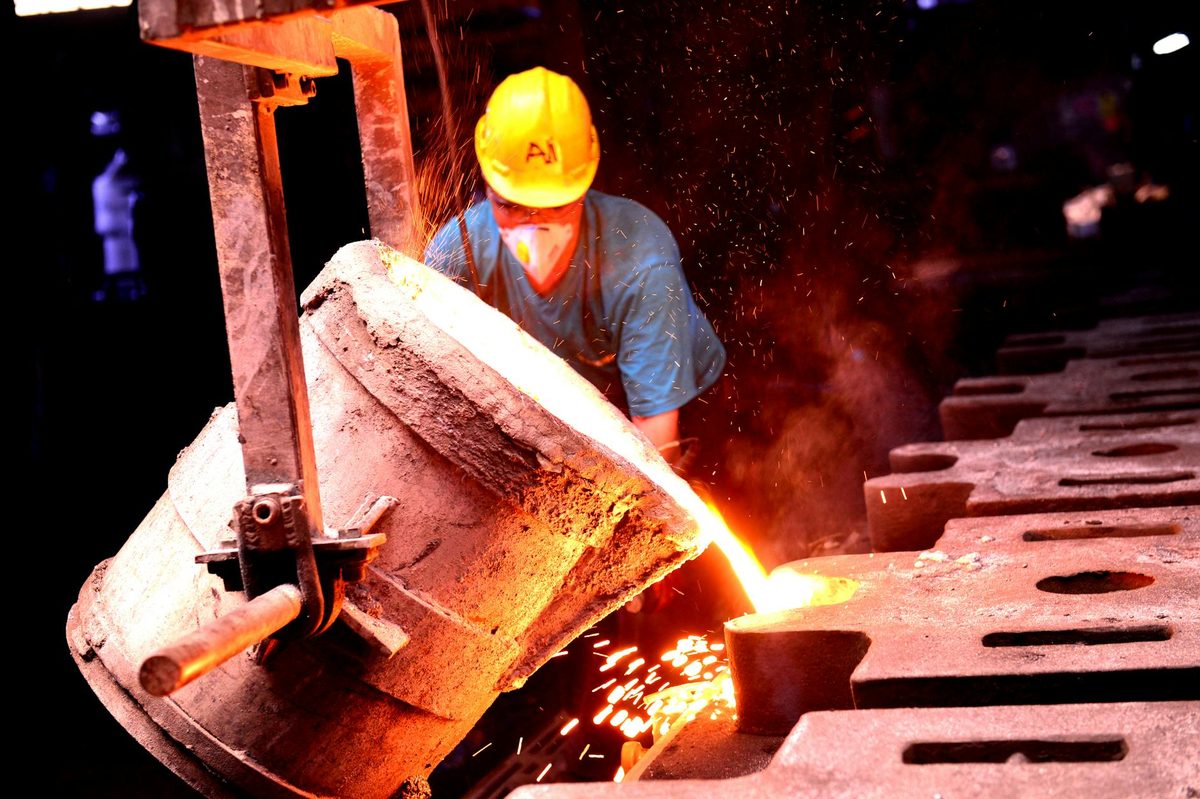
General Motors is spending more than $150 million to retool a century-old casting plant in Saginaw, Michigan, for the company's next-generation 6.7-liter V-8 engine. The plant—which has poured engine blocks since 1919 and now employs about 300 workers—will begin producing components for the sixth-generation small-block V-8 in 2027, destined for the Chevrolet Silverado HD and GMC Sierra HD pickup trucks.

Why it matters

GM's renewed bet on combustion engines signals that the U.S. auto industry's electric transition has slowed by years, not months.

Key Indicators

$5.5B+
GM U.S. manufacturing investment since mid-2025
Cumulative capital committed to domestic plants, overwhelmingly for combustion-powered vehicles
$150M
Saginaw casting plant investment
Funds new equipment and tooling for sixth-generation V-8 engine blocks and cylinder heads
535 hp
Sixth-gen small-block V-8 output
The 6.7-liter engine is the most powerful naturally aspirated V-8 GM has ever mass-produced
-43%
GM EV sales decline, Q4 2025
Year-over-year drop following expiration of the federal $7,500 EV tax credit
107 years
Saginaw plant age
One of GM's three oldest operating facilities in the United States, founded in 1919

Interactive

Exploring all sides of a story is often best achieved with Play.

Ever wondered what historical figures would say about today's headlines?

Sign up to generate historical perspectives on this story.

Sign Up

Debate Arena

Two rounds, two personas, one winner. You set the crossfire.

People Involved

Organizations Involved

Timeline

  1. GM invests $150M in Saginaw plant for next-gen V-8 casting

    Investment

    GM committed over $150 million to retool the 107-year-old Saginaw Metal Casting Operations plant for sixth-generation V-8 engine blocks and cylinder heads, with production starting in 2027.

  2. GM reveals sixth-gen V-8 in 2027 Corvette

    Product

    GM unveiled the 6.7-liter, 535-horsepower sixth-generation small-block V-8 as the engine for the 2027 Chevrolet Corvette Stingray and Grand Sport.

  3. GM adds $250M for Parma Metal Center

    Investment

    The Parma, Ohio facility received a $250 million commitment, bringing GM's 2025 U.S. manufacturing investments to nearly $5.5 billion.

  4. GM announces $4 billion in U.S. plant investments

    Investment

    GM committed $4 billion to expand domestic production capacity beyond 2 million vehicles per year, with new gas-powered vehicle lines at plants in Michigan, Kansas, and Tennessee.

  5. Barra signals willingness to boost gas vehicle output

    Strategy

    CEO Mary Barra told investors GM would "happily" increase gas-powered vehicle production if EV demand weakened further.

  6. GM commits $918M for sixth-gen V-8 engine across four U.S. plants

    Investment

    GM announced $918 million for V-8 production at Flint Engine ($579M), Bay City ($216M), Defiance, Ohio ($55M), and Rochester, New York ($68M).

Scenarios

1

GM doubles down on trucks and SUVs, combustion investment exceeds $10B by 2028

Discussed by: Automotive industry analysts at WardsAuto, CNBC, and GM Authority

If full-size truck demand remains strong and EV adoption continues to lag, GM extends its ICE investment spree to additional powertrain and assembly plants. The company's annual capital spending of $10–12 billion through 2027 increasingly tilts toward combustion platforms. GM maintains its EV rhetoric but quietly defers electric truck timelines, prioritizing the cash-generating truck and SUV business that funds everything else.

2

EV market rebounds, GM pivots investment back toward electrification

Discussed by: EV-focused analysts, Bloomberg New Energy Finance, and environmental policy groups

A new federal administration restores EV incentives, battery costs fall faster than expected, or a competitor's breakthrough EV truck captures market share. GM redirects capital back to electric platforms, and plants retooled for combustion face uncertain futures. The Saginaw and Flint investments become stranded or underutilized assets within a decade of completion.

3

Industry-wide ICE revival locks in combustion infrastructure for a generation

Discussed by: CarBuzz, DealershipGuy, and trade publications covering Ford and Stellantis parallel investments

With Ford investing $888 million in V-8 production and Stellantis committing $13 billion to U.S. manufacturing, the entire Detroit industry commits to combustion infrastructure that will need decades to pay off. The collective capital lock-in makes a rapid electric transition structurally harder—factory economics favor running the new lines at capacity, creating institutional resistance to any future policy shift toward electrification.

Historical Context

GM's Saturn shutdown and Spring Hill repurposing (2009–2012)

2009-2012

What Happened

GM killed the Saturn brand during its 2009 bankruptcy and shuttered the Spring Hill, Tennessee assembly plant that had been purpose-built for it in 1990. After a $300 million retooling, the plant reopened in 2012 to build Chevrolet Equinox crossovers—a completely different vehicle on a different platform.

Outcome

Short Term

Spring Hill lost 3,000 jobs during the shutdown period before rehiring for the new line.

Long Term

The plant remains operational today and is now slated for another retooling to build gas-powered Blazers, demonstrating how legacy plants can be repeatedly repurposed as strategies shift.

Why It's Relevant Today

Saginaw's retooling follows the same pattern: an aging plant gets new life when corporate strategy changes direction. The question is whether the new investment creates lasting stability or just delays the next pivot.

Diesel's comeback and collapse in European automaking (2000–2015)

2000-2015

What Happened

European automakers invested heavily in diesel technology as a lower-carbon alternative to gasoline, with diesel reaching 55 percent of new car sales in the European Union by 2012. Volkswagen, BMW, and Mercedes built entire product lines around diesel efficiency. Then Volkswagen's 2015 emissions-cheating scandal destroyed consumer trust overnight.

Outcome

Short Term

Volkswagen paid over $30 billion in fines and buybacks. Diesel's market share began a steep decline across Europe.

Long Term

Billions in diesel-specific manufacturing infrastructure became stranded assets as cities banned diesel vehicles and regulators tightened standards. The episode accelerated Europe's pivot to electric vehicles.

Why It's Relevant Today

GM's renewed combustion investment carries a version of the same risk: capital committed to a powertrain technology whose regulatory and market future is uncertain. If policy or consumer preferences shift again, these factory investments could face the same stranding dynamic.

Sources

(9)