
Pull to refresh
Logo
Grand Rapids approves donor-funded college access campaign

Grand Rapids approves donor-funded college access campaign

Money Moves Grand Rapids, MI local

The $70,000 College Is Possible campaign targets first-generation and underserved students

6 days ago: City Fiscal Committee approves donation and agreement

Overview

Updated 1 hour ago

Grand Rapids is running an 11-month campaign to raise college-going aspirations among first-generation and underserved students, funded by a $70,000 donation from East Grand Rapids resident Matt Richenthal. The city's Fiscal Committee approved the donation and an agreement with SeyferthPR to run the campaign on October 6.

The campaign is a test of whether awareness alone can move college-going rates in a city where many first-generation students face cost and preparation barriers. Its results could shape how Grand Rapids and other cities approach college access.

Why it matters

If the campaign works, more first-generation Grand Rapids students will apply for financial aid and pursue degrees, potentially lifting the city's college attainment rate.

Monday: what changed in Grand Rapids, MI

One short email a week with the openings, closings, permits and council votes we covered. Free. Unsubscribe in one click.

Questions about this story

Free account needed to ask — your question is kept and asked for you right after sign-up. Answers are public.

No questions yet — be the first to ask.

Key Indicators

$70,000
Donation amount
Matt Richenthal's donation to fund the College Is Possible campaign
11 months
Campaign duration
Runs from September 29, 2026 through August 31, 2027

Voices

Curated perspectives — historical figures and your fellow readers.

Ever wondered what historical figures would say about today's headlines?

Sign up to generate historical perspectives on this story.

People Involved

Organizations Involved

Timeline

November 2022 August 2027

4 events Latest: 6 days ago
Tap a bar to jump to that date
  1. Campaign scheduled to end

    Upcoming Campaign

    The College Is Possible campaign is scheduled to conclude after 11 months.

  2. City Fiscal Committee approves donation and agreement

    Latest Approval

    The committee accepts Matt Richenthal's $70,000 donation and authorizes SeyferthPR to run the campaign.

  3. College Is Possible campaign begins

    Campaign

    The 11-month campaign launches to raise college-going aspirations among first-generation and underserved students.

  4. Richenthal runs for East Grand Rapids school board

    Election

    Runs for East Grand Rapids school board, focusing on student mental health.

Scenarios

1

Campaign lifts college-going metrics

Possible Resolves by End of 2027

Discussed by: City officials and education advocates

The campaign raises awareness of financial aid and college paths, leading to measurable increases in FAFSA completions and college applications among first-generation and underserved students in Grand Rapids Public Schools.

2

Campaign ends without measurable impact

Possible Resolves by End of 2027

Discussed by: Education researchers

The campaign generates awareness but doesn't produce measurable changes in college-going behavior. Structural barriers like cost and academic preparation may outweigh the campaign's messaging.

3

Campaign expands with additional funding

Unlikely Resolves by Aug 31, 2027

Discussed by: Local philanthropy observers

The campaign's early success attracts additional donors or leads to an extension beyond August 2027, possibly expanding to other grade levels or school districts.

Historical Context

2 moments from history that rhyme with this story — and how they unfolded.

November 2005

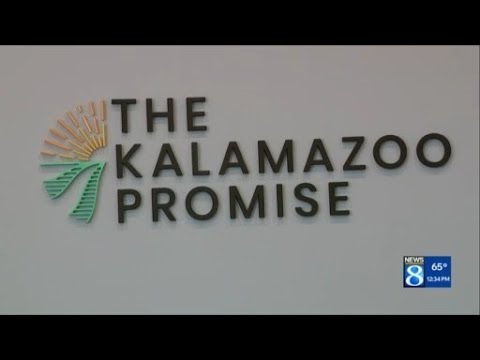
Kalamazoo Promise (2005)

In November 2005, anonymous donors announced the Kalamazoo Promise, a scholarship covering up to 100% of tuition for Kalamazoo Public Schools graduates. The program was designed to boost college-going and revitalize the city.

Then

College enrollment among Kalamazoo Public Schools graduates rose sharply in the years after the announcement.

Now

The Promise has been credited with increasing college attainment and attracting families to the district, becoming a model for place-based scholarships.

Why this matters now

Like the College Is Possible campaign, the Kalamazoo Promise is a private-funded intervention in a Michigan city aimed at increasing college access. But the Promise is a scholarship while College Is Possible is an awareness campaign.

2014-2017

Reach Higher (2014)

First Lady Michelle Obama launched Reach Higher in 2014 to encourage college-going, especially among first-generation and low-income students. The initiative used school activities, community partnerships, and celebrity endorsements to raise awareness.

Then

Reach Higher raised awareness of college access issues and promoted FAFSA completion.

Now

Studies showed mixed results, with awareness increasing but college-going rates not dramatically changing.

Why this matters now

The College Is Possible campaign uses similar strategies to Reach Higher, and its mixed results show the limits of awareness-focused approaches without structural support.

Sources

(4)