

Pull to refresh
Logo
Daily Brief
Following
Why Sign Up
Hong Kong's Northern Metropolis development

Hong Kong's Northern Metropolis development

Built World
By Newzino Staff |

Building a new urban region for 2.5 million people on the Shenzhen border

Today: Fanling Bypass Eastern Section opens

Overview

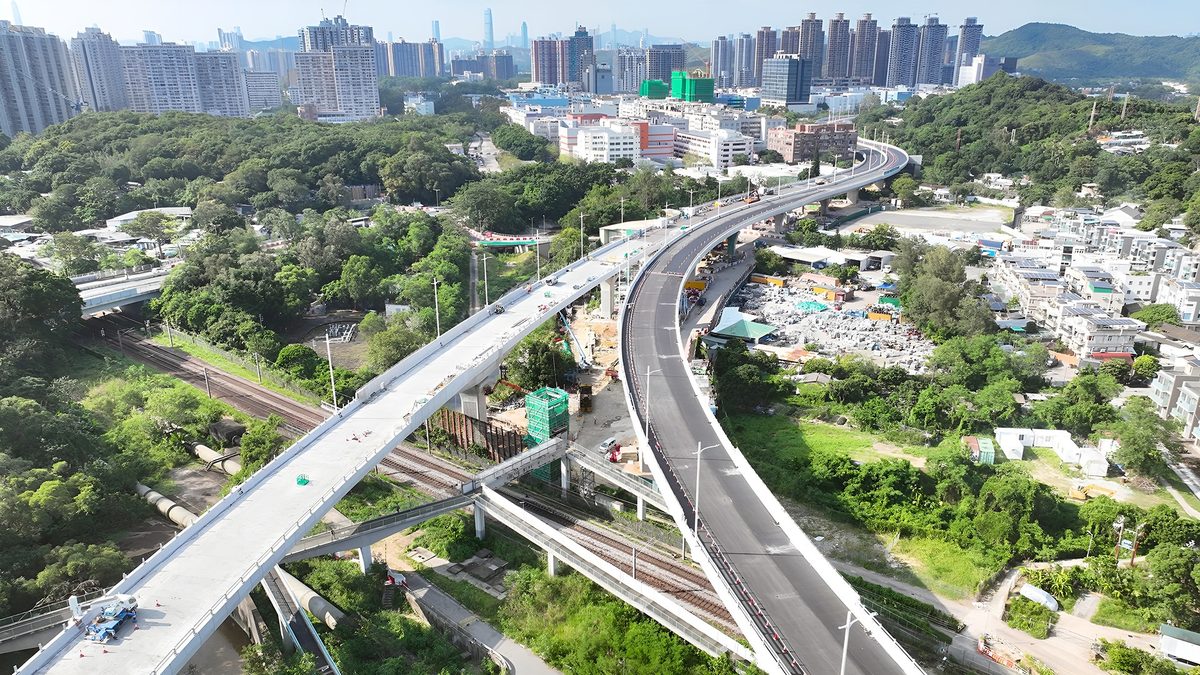
On May 3, 2026, traffic began flowing across the Eastern Section of the Fanling Bypass—a 4-kilometre dual two-lane road that is the first major transport project to open under Hong Kong's Northern Metropolis plan. The new road links Fanling Highway to the Fanling North New Development Area, cutting roughly 10 minutes off peak-hour drives and clearing capacity for tens of thousands of public-housing units due over the next several years.

Why it matters

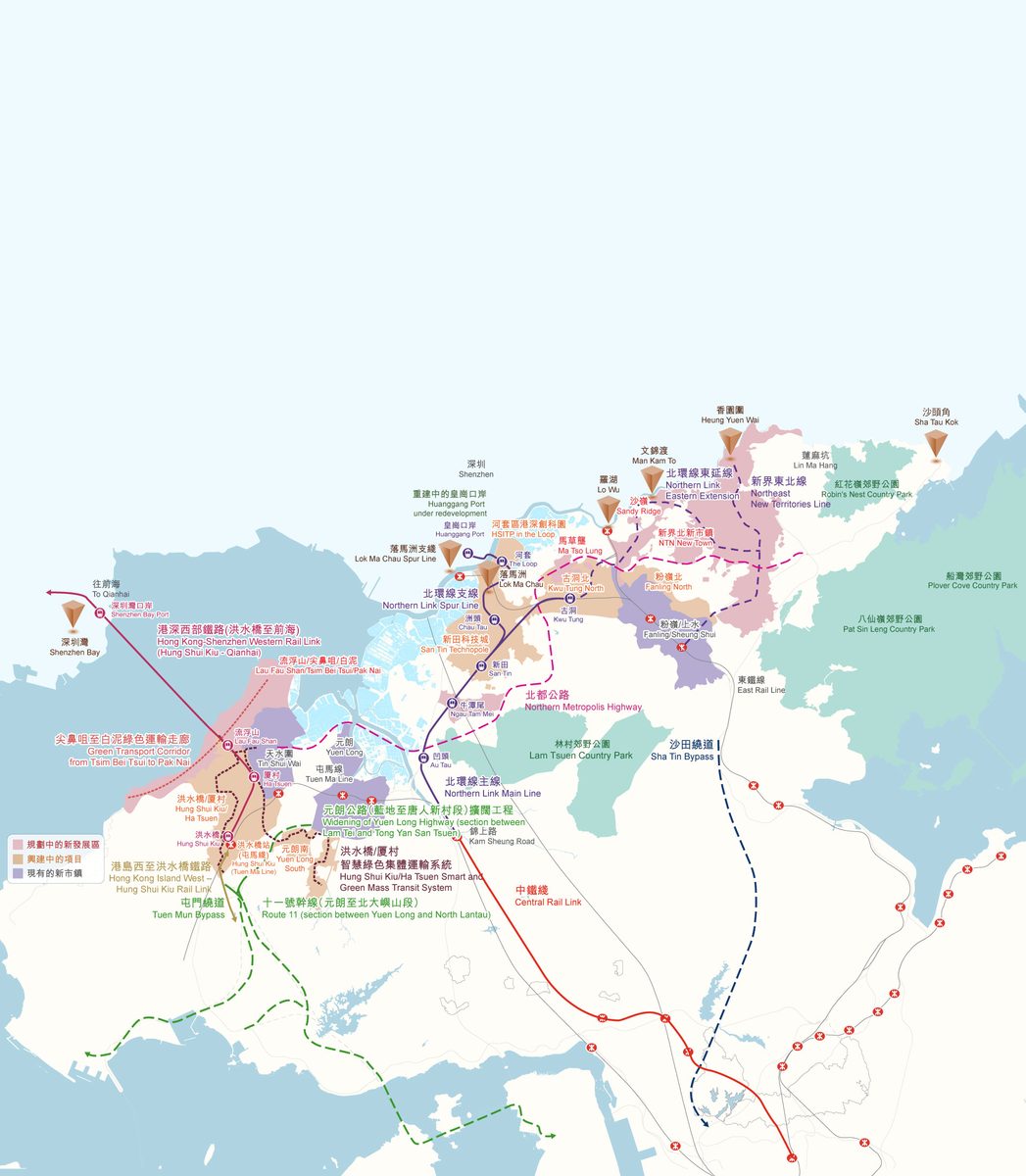
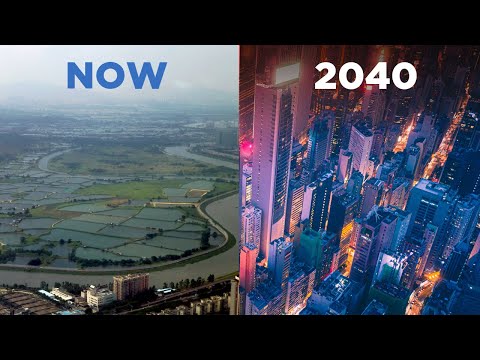
Hong Kong's housing crisis meets mainland integration: a 30,000-hectare megaproject will reshape where 2.5 million residents live, work, and cross the border.

Key Indicators

30,000
Hectares planned
Total area of the Northern Metropolis development zone, roughly one-third of Hong Kong's land mass.
2.5M
Target residents
Planned population for the new urban region, equivalent to about a third of Hong Kong's current population.
650,000
Target jobs
Employment the plan aims to create, focused on innovation, technology, and cross-border services.
4 km
Fanling Bypass length
Length of the Eastern Section dual two-lane carriageway opened on May 3, 2026.
10 min
Peak journey time saved
Estimated reduction in peak-hour travel times on the affected corridor.
2032
First-phase target
Year by which the government aims to complete major land-formation and housing in the early development zones.

Interactive

Exploring all sides of a story is often best achieved with Play.

Ever wondered what historical figures would say about today's headlines?

Sign up to generate historical perspectives on this story.

Sign Up

Debate Arena

Two rounds, two personas, one winner. You set the crossfire.

People Involved

Organizations Involved

Timeline

  1. Fanling Bypass Eastern Section opens

    Infrastructure

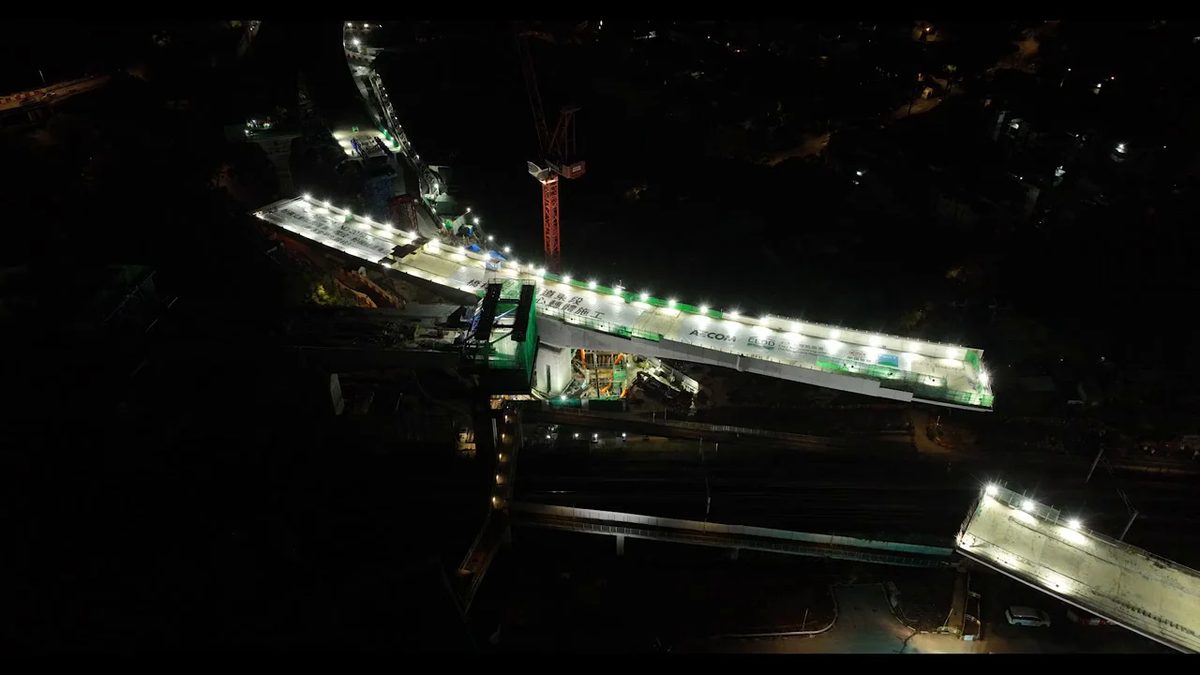
    The 4-kilometre dual two-lane carriageway opens to traffic, becoming the first major transport project completed under the Northern Metropolis program. The works also establish two engineering precedents—first use of China-made S960 ultra-high-strength steel in a footbridge, and Hong Kong's first horizontal bridge rotation over an active rail line.

  2. San Tin Technopole and Hung Shui Kiu plans advance

    Planning

    Statutory plans for two anchor districts—an innovation hub at San Tin and a logistics-and-housing zone at Hung Shui Kiu—move through the Town Planning Board, clearing the way for major land works.

  3. Northern Metropolis Action Agenda published

    Policy

    The Lee administration releases a detailed action agenda dividing the area into four development zones and announces a steering committee to coordinate delivery across bureaus.

  4. John Lee takes office

    Political

    Lee is sworn in as Chief Executive and signals continued commitment to the Northern Metropolis as a top economic priority.

  5. Carrie Lam unveils Northern Metropolis plan

    Policy

    In her final Policy Address, Chief Executive Carrie Lam introduces the Northern Metropolis Development Strategy, designating 300 square kilometres of northern New Territories for a new urban region.

Scenarios

1

Northern Metropolis hits 2032 first-phase targets

Discussed by: Government planners and Hong Kong-based property analysts at JLL, CBRE, and Knight Frank

Land resumption stays on schedule, the San Tin Technopole and Hung Shui Kiu zones begin housing intake before 2032, and cross-border rail links open in stages. Under this path, the Fanling Bypass becomes the first of a steady cadence of openings, and the program meaningfully reshapes Hong Kong's housing supply within a decade.

2

Fiscal pressures slow the buildout

Discussed by: South China Morning Post, Bloomberg, Hong Kong fiscal commentators

Successive budget deficits and weaker land-sale revenues force the government to stretch the program over a longer horizon. Headline targets remain, but housing intake dates slip, lower-priority infrastructure is deferred, and private-sector partners scale back commitments. Under this scenario, projects like the Fanling Bypass open on time but the surrounding districts arrive years later than planned.

3

Cross-border integration accelerates the timeline

Discussed by: Greater Bay Area policy researchers, mainland and Hong Kong tech-industry observers

Closer alignment with Shenzhen on customs, transport, and innovation policy pulls in mainland capital and talent faster than expected. The San Tin Technopole becomes a working extension of Shenzhen's tech corridor, and demand for housing and commercial space in the Northern Metropolis runs ahead of supply, prompting the government to bring projects forward.

4

Scope reduced as demand assumptions falter

Discussed by: Independent economists and demographic researchers

Slower population growth, sustained emigration, and softer office demand prompt a quiet rescoping. The 2.5-million headline target survives on paper, but later phases are redesigned for smaller density, with some commercial zones converted to housing or green space. The Fanling Bypass is built out as planned; later road and rail links are deferred or cancelled.

Historical Context

Hong Kong New Towns programme (1973–1990s)

1973–1990s

What Happened

Beginning with Sha Tin, Tuen Mun, and Tsuen Wan in 1973, the colonial government built nine new towns on reclaimed and rural land to absorb population pressure from urban Hong Kong. By the late 1990s, the towns housed roughly 3 million people and reshaped the city's geography around a network of MTR rail lines and expressways.

Outcome

Short Term

Tens of thousands of public-housing units came online each year, easing acute overcrowding in Kowloon and Hong Kong Island.

Long Term

The new towns became permanent population centres, but several—particularly Tin Shui Wai—suffered from weak transport links and limited local employment, lessons now invoked in Northern Metropolis planning.

Why It's Relevant Today

The Northern Metropolis is essentially the next chapter of this programme—on a larger scale, on the mainland border, and explicitly designed to avoid the jobs-housing imbalance that hobbled earlier new towns.

Shenzhen Special Economic Zone development (1980–present)

1980–present

What Happened

Designated as China's first Special Economic Zone in 1980, Shenzhen grew from a fishing-and-farming county of about 300,000 people into a city of more than 17 million, with a tech-industry base anchoring much of the Greater Bay Area economy.

Outcome

Short Term

Shenzhen rapidly became the manufacturing engine for Hong Kong's trading economy and a magnet for migration from across the mainland.

Long Term

Hong Kong now plans most of its border-zone infrastructure around Shenzhen as a peer city rather than a hinterland, and the Northern Metropolis explicitly aims to integrate transport, talent flows, and innovation links with it.

Why It's Relevant Today

The Northern Metropolis is partly a response to Shenzhen's rise—both an attempt to capture spillover and a recognition that Hong Kong's growth corridor now lies at the border, not the harbour.

Lantau Tomorrow Vision (2018)

October 2018

What Happened

Then-Chief Executive Carrie Lam announced a HK$624-billion plan to reclaim about 1,700 hectares of artificial islands east of Lantau, intended to house up to 1.1 million people. The project ran into political controversy, fiscal pushback, and engineering scrutiny.

Outcome

Short Term

The first reclamation phase was scaled back and partially deferred amid budget pressure and shifting political priorities.

Long Term

Lantau Tomorrow's troubles helped shift the government's strategic focus toward the Northern Metropolis, which uses existing land rather than reclamation and benefits from mainland border adjacency.

Why It's Relevant Today

Lantau Tomorrow shows how a megaproject can stall under fiscal and political stress; the Fanling Bypass opening is, in part, the government's signal that the Northern Metropolis will not follow the same path.

Sources

(4)