

Pull to refresh
Logo
Daily Brief
Following
Why Sign Up
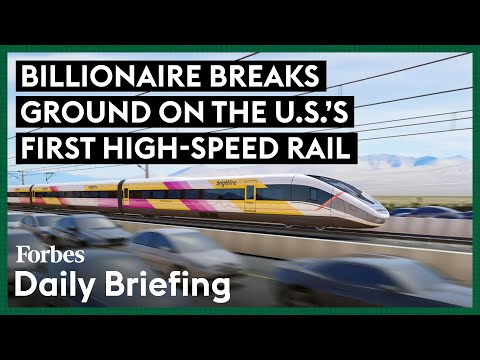
Brightline West breaks ground on first true U.S. high-speed rail

Brightline West breaks ground on first true U.S. high-speed rail

Built World
By Newzino Staff |

Privately financed 218-mile line will link Las Vegas to Southern California at 200 mph

January 14th, 2026: Opening pushed to late 2029

Overview

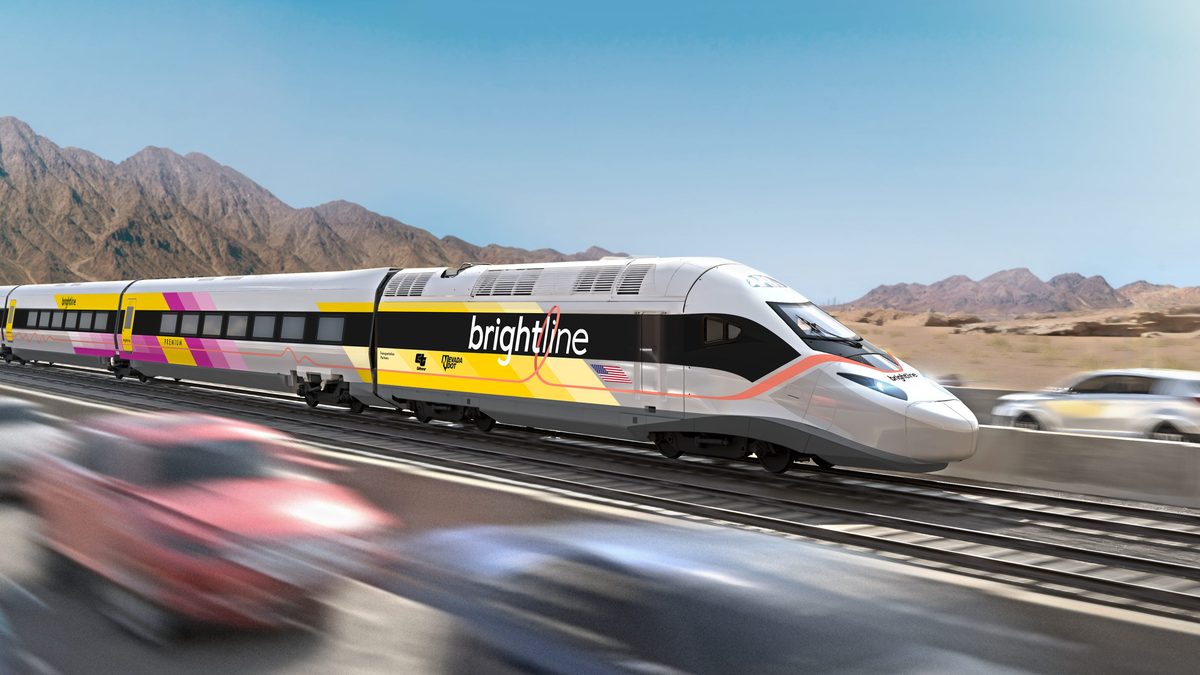
Japan opened its first bullet train in 1964. Sixty years later, the United States has yet to operate a single line that meets the international threshold for high-speed rail. On April 22, 2024, Brightline West broke ground in Las Vegas on a 218-mile route designed to change that, with electric trains running up to 200 miles per hour between the Strip and the Los Angeles suburbs.

Why it matters

If Brightline West works, the U.S. has its first replicable template for true high-speed railβ€”and a benchmark for every corridor that has stalled.

Key Indicators

200 mph
Top operating speed
Roughly double the fastest stretch of Amtrak's Acela and the threshold for true high-speed rail.
218 miles
Route length
Las Vegas to Rancho Cucamonga, mostly inside the I-15 median.
~2h 10m
End-to-end trip time
Versus four-plus hours by car on a clear day, far longer in weekend traffic.
$12B
Original construction budget
Estimates have since climbed toward $16–$21.5 billion as scope and costs grew.
$3B
Federal grant
Awarded in December 2023 from the Bipartisan Infrastructure Law; the rest is privately financed.
10,000
Direct construction jobs
Part of an estimated 35,000 total jobs supported by the build.

Interactive

Exploring all sides of a story is often best achieved with Play.

Ever wondered what historical figures would say about today's headlines?

Sign up to generate historical perspectives on this story.

Sign Up

Debate Arena

Two rounds, two personas, one winner. You set the crossfire.

People Involved

Organizations Involved

Timeline

  1. Opening pushed to late 2029

    Schedule

    Brightline West confirms the line will not open in time for the 2028 Los Angeles Olympics, now targeting service in late 2029.

  2. Major civil works ramp up

    Construction

    Crews accelerate geotechnical, utility, and bridge-pier work along the I-15 corridor; Las Vegas station structures take shape.

  3. Grant agreement signed

    Funding

    The Federal Railroad Administration and Nevada DOT sign the binding $3 billion grant agreement, locking in federal terms.

  4. Siemens picked to build the trains

    Procurement

    Siemens Mobility is named preferred builder for ten American Pioneer 220 high-speed train sets, to be assembled in New York.

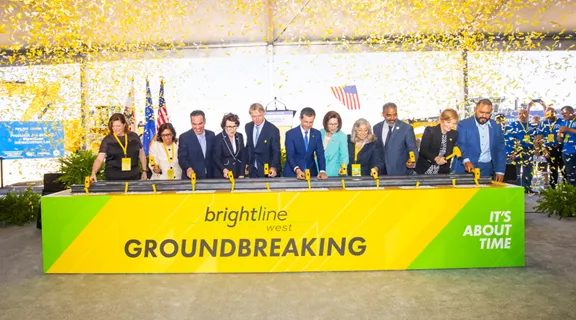
  5. Groundbreaking in Las Vegas

    Construction

    Construction officially begins on the 218-mile route. Federal, state, and company officials gather at the Las Vegas station site.

  6. $3 billion federal grant awarded

    Funding

    USDOT announces a $3 billion Bipartisan Infrastructure Law grant to Brightline West, the largest single federal investment in U.S. high-speed rail to date.

  7. Federal environmental review cleared

    Regulatory

    The Federal Railroad Administration completes environmental clearance for the I-15 alignment, removing a key permitting barrier.

  8. Brightline takes over the project

    Acquisition

    Brightline acquires the rights to the long-stalled XpressWest project and rebrands it as Brightline West.

  9. DesertXpress proposed

    Project Origin

    Private developers first propose a Las Vegas-to-Victorville passenger rail line, the earliest direct ancestor of Brightline West.

Scenarios

1

Brightline West opens in late 2029, ridership beats projections

Discussed by: Brightline executives, U.S. DOT officials, rail trade press (Trains, Railway Age)

Construction holds to the revised late-2029 timeline. Trains start running between Las Vegas and Rancho Cucamonga at 200 mph, with ridership pulled from interstate traffic on weekends and convention travel midweek. The combination of private capital plus federal seed funding becomes a cited template for new corridors in Texas, the Pacific Northwest, and the Southeast.

2

Project opens late and over budget but is treated as a success

Discussed by: Bond Buyer, transportation analysts, regional planners

Costs continue to drift toward or above $21.5 billion and the opening slips into the early 2030s, but the line eventually carries trains at advertised speeds. Reviews compare it favorably with California High-Speed Rail's much longer delays and conclude the model still works, even if the original budget did not.

3

Cost overruns force restructuring or additional federal support

Discussed by: Municipal bond analysts, U.S. DOT inspector general, financial press

Private financing strains as costs climb and a much-discussed federal RRIF loan slips from quarter to quarter. Brightline West restructures debt, brings in new equity, or seeks additional federal backing. The line still gets built, but the privately financed narrative is harder to sustain.

4

Construction stalls and the project is paused

Discussed by: Skeptical infrastructure commentators, project finance analysts

A combination of further cost growth, financing trouble, and political shifts leaves work partially complete along the I-15 median. Construction continues only on the federally funded portions while the broader project is mothballed pending new financing or a new sponsor.

Historical Context

California High-Speed Rail authorization (2008)

November 2008

What Happened

California voters approved Proposition 1A, a $9.95 billion bond for a Los Angeles-to-San Francisco high-speed rail line projected to cost about $33 billion and carry passengers by 2030. The state High-Speed Rail Authority began acquiring land and designing the route through the Central Valley.

Outcome

Short Term

Construction started on a Central Valley segment in 2015 after years of land acquisition disputes and lawsuits.

Long Term

Total cost estimates have grown to roughly $89–$128 billion, the original Los Angeles-San Francisco vision has been deferred, and a partial Merced-to-Bakersfield segment is now the near-term goal.

Why It's Relevant Today

California is the cautionary tale Brightline West is implicitly competing with: same era, same federal hopes, vastly slower delivery. Brightline's pitch is that a private operator on an interstate-median alignment avoids most of what bogged California down.

Acela launch on the Northeast Corridor (2000)

December 2000

What Happened

Amtrak introduced Acela Express service between Boston and Washington, marketed as America's first high-speed train. The service used tilting trains capable of 150 mph but ran on existing tracks shared with commuter and freight rail.

Outcome

Short Term

Acela became Amtrak's most profitable service and the dominant air-shuttle alternative on the Boston-New York-Washington corridor.

Long Term

Average speeds have stayed well below international high-speed rail because of curves, bridges, and shared track; even the new NextGen Acela tops out at 160 mph in short bursts.

Why It's Relevant Today

Acela is the asterisk on every claim about U.S. high-speed rail. Brightline West, on a brand-new dedicated alignment with no freight sharing, is a direct test of what U.S. rail can do when it isn't constrained by century-old infrastructure.

Brightline Florida opens Miami–Orlando service (2023)

September 2023

What Happened

Brightline extended its South Florida passenger service to Orlando, adding 170 miles of higher-speed track and reaching peak speeds of 125 mph. The Florida service was the first new privately operated intercity passenger railroad in the U.S. in roughly a century.

Outcome

Short Term

Ridership and revenue grew through 2024, while the company faced a high rate of trespasser fatalities along the at-grade Florida route.

Long Term

Brightline used Florida as the operational and financial proof point that allowed it to raise private capital and federal support for the much faster, fully grade-separated Brightline West.

Why It's Relevant Today

Florida is the dress rehearsal. The same operator, financing playbook, and station-as-real-estate model now scale to a true 200 mph line, with Brightline West's success or failure largely determining whether the model spreads.

Sources

(10)