

Pull to refresh
Logo
Pakistan anti-terrorism court jails human rights lawyer couple

Pakistan anti-terrorism court jails human rights lawyer couple

Rule Changes

Imaan Mazari and Hadi Ali Chattha get 10 years each over 2024 cricket-team security barriers

Overview

Updated 1 hour ago

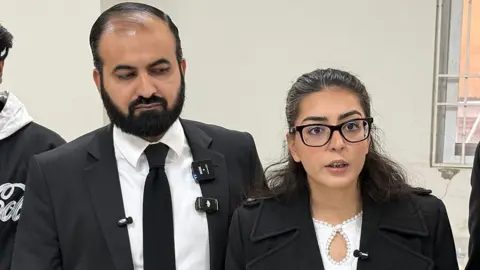
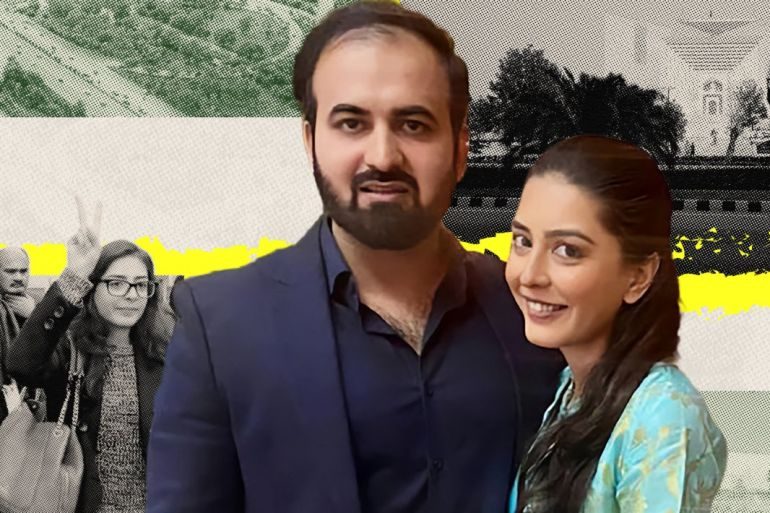
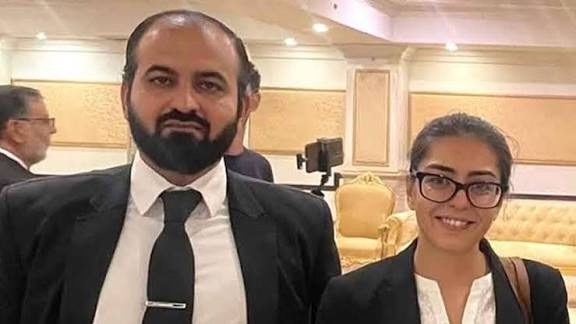
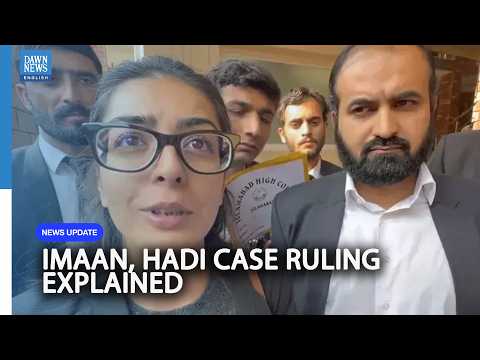
Imaan Mazari and Hadi Ali Chattha, two human rights lawyers, were sentenced to 10 years in prison each by an anti-terrorism court in Pakistan on 29 October. The court found they removed security barriers and obstructed police during England's cricket tour in October 2024.

The sentence adds to a stack of cases against the couple. They had been sentenced to 17 years under a cybercrime law in January, won suspension and bail from the Supreme Court in September, and were re-arrested the same day. Their family says it will appeal.

Why it matters

The case shows how Pakistan's anti-terrorism law can turn a dispute over road barriers into a decade-long prison sentence.

Questions about this story

Free account needed to ask — your question is kept and asked for you right after sign-up. Answers are public.

No questions yet — be the first to ask.

Key Indicators

10 years
Prison sentence for each
The anti-terrorism sentence runs concurrently with shorter terms.
13 years
Total sentence before concurrency
Includes one- and two-year terms for obstructing public servants.
Rs200,000
Fine for each defendant
About £541 or $723 at the exchange rate reported by the BBC.
7
Prosecution witnesses
The trial was held inside Adiala Jail in Rawalpindi.
17 years
Earlier cybercrime sentence
Suspended by the Supreme Court in September 2026.

Voices

Curated perspectives — historical figures and your fellow readers.

Sign up to generate historical perspectives on this story.

People Involved

Organizations Involved

Timeline

October 2024 October 2026

8 events Latest: 2 days ago
Tap a bar to jump to that date
  1. Barriers removed during England cricket tour

    Incident

    Prosecutors say Mazari and Chattha removed security barriers and obstructed police at Zero Point in Islamabad.

Scenarios

1

Islamabad High Court suspends the sentence and grants bail

Possible Resolves by Q1 2027

Discussed by: Legal experts quoted by Aaj English TV expect a challenge in the Islamabad High Court.

The couple's lawyers appeal the anti-terrorism conviction and ask the Islamabad High Court to suspend the sentence while the case is reviewed. If the court finds procedural problems or weak evidence, it could order their release or grant bail.

2

Supreme Court upholds the terror conviction

Possible Resolves by Q2 2028

Discussed by: The couple's family told Reuters it will petition the Supreme Court; Amnesty International has called for charges to be dropped.

The family takes the case directly to the Supreme Court. If the justices decline to hear the appeal or uphold the anti-terrorism court's findings, the 10-year sentence becomes final and the couple remains in Adiala Jail.

3

All charges dropped and the couple walks free

Unlikely Resolves by Q2 2027

Discussed by: Amnesty International and the couple's family have called for release and for all charges to be dropped.

Prosecutors withdraw the barrier case and the other pending cases, or courts acquit the couple on all counts. This would require a major reversal by Pakistani authorities after months of repeated arrests and sentences.

4

New case keeps them jailed after appeal

Possible Resolves by End of 2027

Discussed by: The couple's lawyers and family say the cases are retaliatory; Reuters reported they were re-arrested in a separate case the day bail was granted.

Even if the barrier sentence is suspended, police or prosecutors file new anti-terrorism or cybercrime charges before the couple can leave. Their release would then be blocked by a fresh detention order.

Historical Context

2 moments from history that rhyme with this story — and how they unfolded.

March 2007-March 2009

Pakistan's Lawyers' Movement (2007-2009)

President Pervez Musharraf suspended Chief Justice Iftikhar Chaudhry in March 2007. Lawyers and civil society groups protested across Pakistan, and the state detained many demonstrators. The movement became a broader challenge to military rule.

Then

Musharraf declared emergency rule in November 2007 and removed judges who refused to take a new oath.

Now

The judiciary was partly restored, Musharraf resigned in 2008, and lawyers emerged as a durable political force.

Why this matters now

It shows how Pakistani lawyers have organized against state pressure before, and why prosecuting prominent lawyers can become a broader political test.

January 2015

Expansion of Pakistan's anti-terror courts (2015)

After the December 2014 attack on a Peshawar school, Pakistan's parliament passed a constitutional amendment creating military courts for terrorism cases. The government lifted a moratorium on the death penalty and expanded the role of security courts.

Then

Military courts began trying civilians in closed proceedings, drawing criticism from rights groups.

Now

Pakistan's anti-terror legal architecture became a permanent part of its justice system, with broad powers to detain and try civilians.

Why this matters now

It explains the legal machinery now used against Mazari and Chattha, where a security incident can be routed through a special anti-terrorism court.

Sources

(9)