
Pull to refresh
Logo
Humanoid robot learns to sprint and spin kick using AI trained on human motion data

Humanoid robot learns to sprint and spin kick using AI trained on human motion data

New Capabilities

UC Berkeley and Stanford's BeyondMimic framework taught a Unitree G1 30 movements with one training setup and no per-motion tuning.

Today: Reaches r/science top of the day

Overview

Updated 2 hours ago

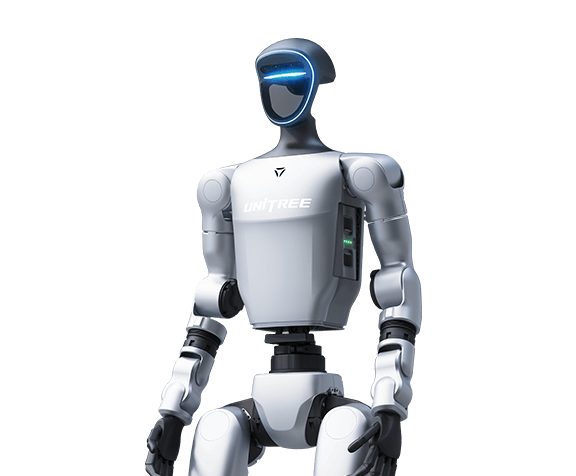
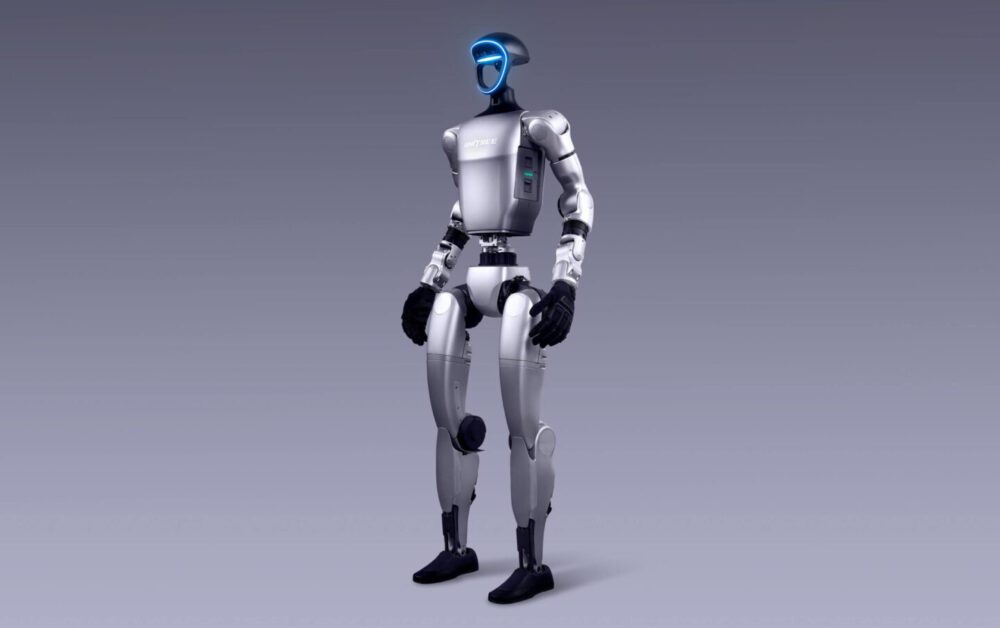
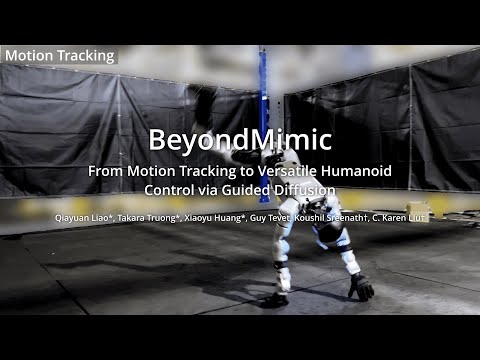
Humanoid robot videos usually show one trick per clip, each engineered until it looks right. Researchers at UC Berkeley and Stanford taught a Unitree G1 robot to sprint, spin-kick, crawl, dance and land aerial cartwheels using one training setup with shared settings.

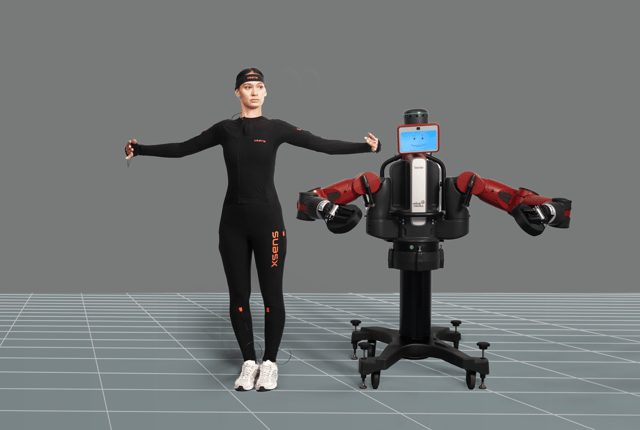
Their framework, BeyondMimic, learned from 2.5 hours of human motion data. In a 77-person study, viewers rated its walking and running as more humanlike than motions from Unitree's own controller in 70.8% of comparisons.

Why it matters

If one training recipe covers sprinting, kicks and crawling, teaching humanoids new skills shifts from specialist engineering to motion capture and data.

Questions about this story

Free account needed to ask — your question is kept and asked for you right after sign-up. Answers are public.

No questions yet — be the first to ask.

Key Indicators

70.8%
Share of comparisons rating BeyondMimic more humanlike
77 participants compared BeyondMimic against Unitree's standard controller for walking and running.
84.7%
Running-gait preference for BeyondMimic
Running was a landslide win; walking was closer, at 57.0% to 43.0%.
30
Motion clips deployed on the physical G1 robot
About 15 minutes of motion, or 10% of the training data, transferred to real hardware.
2.5 hours
Human motion data used for training
Walking, running, dancing, martial arts, jumping, cartwheels and other agile movements.

Voices

Curated perspectives — historical figures and your fellow readers.

Ever wondered what historical figures would say about today's headlines?

Sign up to generate historical perspectives on this story.

People Involved

Organizations Involved

Timeline

August 2026 September 2026

3 events Latest: Today
  1. Reaches r/science top of the day

    Today Public discussion

    The story tops Reddit's r/science for the day, drawing broad public attention to single-setup humanoid training.

  2. Media coverage spreads

    Coverage

    Tech Xplore details the framework, its 2.5 hours of training data and the 77-person humanlikeness study.

  3. BeyondMimic paper published

    Publication

    UC Berkeley and Stanford publish the framework in Science Robotics, showing one setup handles aerial cartwheels, spin kicks, flip kicks and sprinting.

Scenarios

1

BeyondMimic spreads to other humanoid platforms

Likely Resolves by End of 2027

Discussed by: The paper's own final lines note the framework could be adapted to other humanoid robots; Tech Xplore and Progressive Robot echoed this in their coverage.

Because the method needs no per-motion tuning, adapting it to another robot is a matter of retargeting human motion data to that robot's joints. A follow-up paper or public demonstration on a different platform would confirm the approach generalizes beyond the G1.

2

Motion library expands beyond 2.5 hours

Possible Resolves by Q2 2027

Discussed by: Researchers said the framework could be refined and tested with a broader range of motions, per Tech Xplore.

The team used roughly 2.5 hours of motion but deployed only 30 representative clips on real hardware. A larger dataset, or more aggressive real-world validation, would test whether the single-setup approach scales to hundreds of movements.

3

Commercial adoption by Unitree or another maker

Possible Resolves by End of 2027

Discussed by: Progressive Robot noted the approach shifts cost from control engineering toward motion capture and data cleaning, a structure commercial makers could adopt.

If a robot maker builds BeyondMimic or a direct derivative into a shipping product, the cost of adding new skills drops from specialist tuning to recording and retargeting motion. That would mark a structural change in how humanoid skills get produced.

Historical Context

3 moments from history that rhyme with this story — and how they unfolded.

June 2015

DARPA Robotics Challenge (2015)

Humanoid robots competed to drive a vehicle, walk over rubble, and use tools. Many struggled with basic locomotion, falling frequently in the finals in Pomona, California.

Then

The winner, KAIST's DRC-Hubo, completed the course in about 45 minutes.

Now

The event exposed how hard bipedal walking and manipulation remain for real robots.

Why this matters now

A decade later, a single framework teaches a robot to sprint, kick and cartwheel from human motion data. The contrast measures how far the field has moved.

November 2017

Boston Dynamics Atlas backflip (2017)

Boston Dynamics released a video of its Atlas robot performing a backflip, a single move that went viral and set the bar for humanoid agility.

Then

The video drew millions of views and positioned Atlas as the benchmark for humanoid athleticism.

Now

Each Atlas trick was tuned by engineers for that specific motion; the robot had no single recipe covering dozens of skills.

Why this matters now

BeyondMimic's claim is the opposite: one training setup produces many diverse moves. The contrast shows how far humanoid motion control has come.

August 2026

Beijing World Humanoid Robot Games 100m sprint (2026)

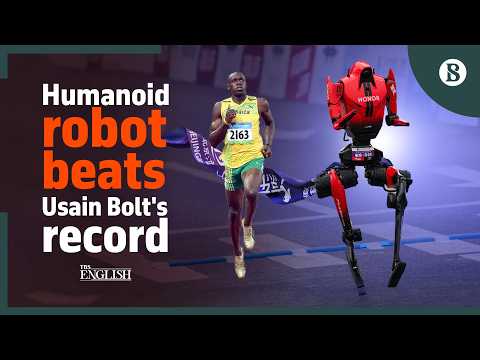
At Beijing's National Speed Skating Oval, 666 teams fielded 2,056 robots across 51 events. Tiangong Ultra, built by the Beijing Humanoid Robot Innovation Center, ran 100 meters in 8.64 seconds in the final, beating Usain Bolt's 9.58-second world record.

Then

The run made sprinting a headline humanoid benchmark and drew global attention to athletic humanoid robots.

Now

Sprinting shifted from a laboratory curiosity to a competitive, measurable achievement.

Why this matters now

BeyondMimic demonstrates sprinting on the G1 alongside kicks and cartwheels. The Beijing games show the same sprinting capability being pushed to record speeds elsewhere.

Sources

(4)