Anchor

Kākāpō population hits 75-year high after record breeding season
New CapabilitiesNinety chicks from a record breeding season lifted the critically endangered parrot's population to 325 birds
2 days ago: Population hits 325, a 75-year highNew here? Follow stories to track developments over time. Create a free account to get updates when stories you care about change.
Overview
Updated 3 hours agoNew Zealand's kākāpō population hit 325 birds on September 1, 2026—the first time the world's heaviest parrot has topped 300 in roughly 75 years. The jump came from a record breeding season: 90 chicks survived to independence and joined the official count.
The rebound began in 1995, when the population had collapsed to 51 birds. Now the program faces a new problem: its predator-free islands are full, and the team is testing how much human help kākāpō still need to keep growing.
Why it matters
Kākāpō rebounded from 51 to 325 birds—but the islands that shelter them are full, so finding new habitat is the next test.
Questions about this story
Free account needed to ask — your question is kept and asked for you right after sign-up. Answers are public.
No questions yet — be the first to ask.
Key Indicators
325
Current kākāpō population
Official population after 90 chicks were added on September 1, 2026.
90
Chicks added in 2026 season
Record number of chicks that reached 150 days old, the independence milestone.
258
Eggs laid in 2026 season
258 eggs laid by 79 nesting females; 106 hatched, 90 survived to independence.
51
Population when recovery began in 1995
Just 20 females remained when the Kākāpō Recovery Programme started.
75
Years since population last topped 300
DOC estimates the last time numbers exceeded 300 may have been 75 years ago.
Related Media
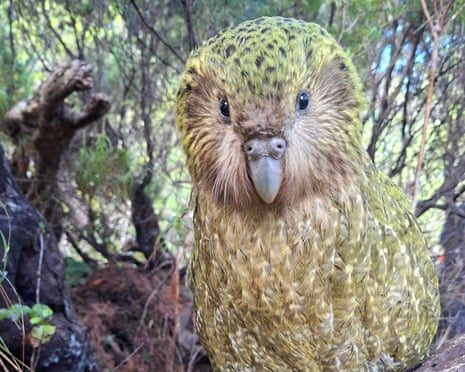
Kākāpō rising: 90 chicks swell population of the world's heaviest parrot | New Zealand | The Guardian
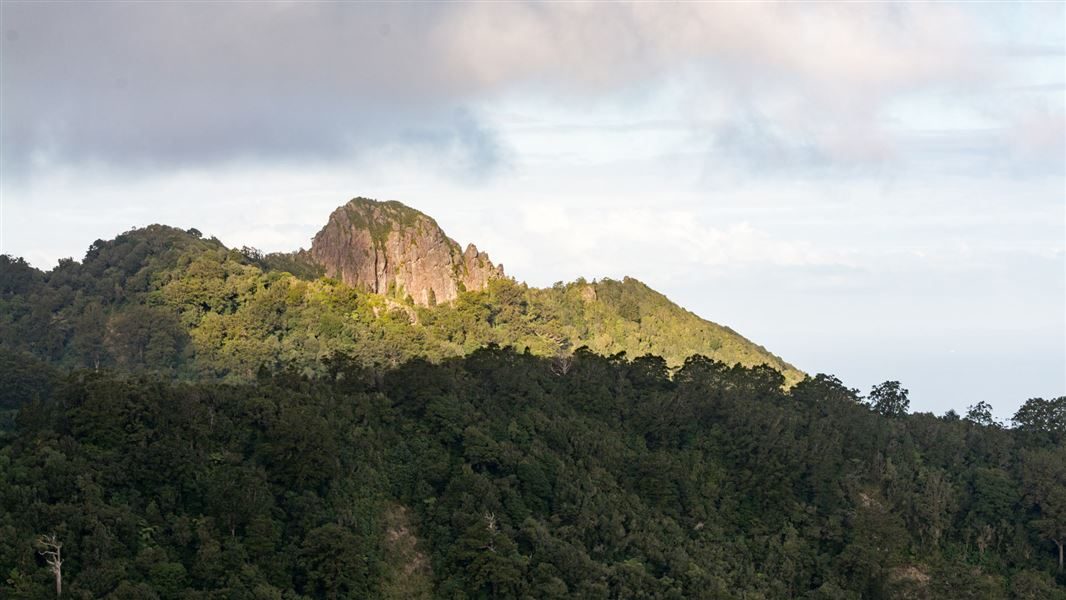
Habitat and islands: Kākāpō
Images from Openverse under Creative Commons licenses.
Voices
Curated perspectives — historical figures and your fellow readers.
Play
Exploring all sides of a story is often best achieved with Play.
Most of these play right now — no account needed. Sign up to save scores, keep a streak, and unlock Debate and Predict.
Log in
Sign Up
WHO SAID WHAT?
Can you match the quotes to the right people?
Rounds
People
Per question
Scoring
- points for each correct match.
- time bonus when you answer in under seconds.
- streak bonus once you hit correct in a row.
Score:
Round /
streak
— Who said this?
Tip: press 1– to answer.
Score:
Round /
streak
+
Base +
⚡ Speed +
🔥 Streak +
Streak reset · the answer was
No answer in time · it was
Next Up
Round
of
Score
points
Correct
Best Streak
Time Bonus
Avg. Time
points — sign up to put that on the leaderboard.
Now try on this story
Higher or Lower
A number from this story, against one from elsewhere in the news — guess which is bigger, then keep the chain going. 5 rounds, 3 strikes; a miss costs a strike and resets your streak.
Example
Anchor
EU tariff revenue
$52B
Big for this kind of number
Mystery
Pentagon AI contract
?
Round 1
Streak: 0
Mystery
?
Keyboard: ↓/L lower · ↑/H higher
0 pts
Best streak: 0 · Rounds: 0
0 points — sign up to put that on the leaderboard.
Now try on this story
Connections
Sixteen names from the news. Find the four hidden groups of four. Four mistakes max.
Loading today's puzzle…
0/4 groups
Mistakes
Sign up to keep a daily streak — a new puzzle lands every day.
Now try on this story
Exit debate?
Your progress in this debate will be lost.
How it works
- 1 Two AI personas square off on this story.
- 2 You predict who'll win each round — correct picks earn XP.
- 3 One crossfire question is yours to fire. Pick it carefully.
Couldn't generate a topic
Select Your Champions
Choose one persona for each side of the debate
DEBATE TOPIC
Choose personas with different perspectives for a more dynamic debate.
SIDE A (PRO)
Select debater for this side:
No debate personas available right now.
SIDE B (CON)
Select debater for this side:
No debate personas available right now.
VS
Get ready to make your prediction...
Round of
Claim
Evidence
Stakes
Crossfire Answer
Closing Statement
Claim
Evidence
Stakes
Crossfire Answer
Closing Statement
Your Crossfire Question
Generating arguments...
Who's Got This Round?
Make your prediction before the referee scores
The referee scores both sides on
Correct predictions earn +20 XP
· Press 1 or 2 to pick
Evidence
40%
Logic
30%
Detail
20%
Style
10%
Round Results
Your Pick
Not this time
(%)
Overall Score
/10
Your Pick
Not this time
(%)
Overall Score
/10
Set the Crossfire
Pick the question both personas must answer in the final round
Crafting crossfire questions...
Choosing a question earns +10 XP crossfire bonus
🏆
Total XP Earned
Cred Change
Predictions
Debate Oracle! You called every round!
Sharp Instincts! You know your debaters!
The Coin Flip Strategist! Perfectly balanced!
The Contrarian! Bold predictions!
Inverse Genius! Try betting the opposite next time!
XP Breakdown
Base completion
+20 XP
Rounds played ( rounds x 5 XP)
+ XP
Correct predictions ( correct x 20 XP)
+ XP
Crossfire bonus
+10 XP
Accuracy
%
Prediction History
Round
You picked:
✓
✗
Now try on this story
Keep debating to level up your credibility and unlock achievements
People Involved
Deidre Vercoe
Kākāpō Recovery Operations Manager, New Zealand Department of Conservation
Overseeing the program after the record 2026 breeding season
Andrew Digby
Kākāpō Recovery science advisor
Leading the program's shift toward less intensive management
Tāne
Kākāpō Recovery programme leader
Pushing for a predator-free Rakiura (Stewart Island)
Organizations Involved
DO
New Zealand Department of Conservation (DOC)
Government agency
Runs the Kākāpō Recovery Programme
New Zealand's government conservation agency, responsible for protecting native species including the kākāpō.
Ngāi Tahu
Māori iwi (tribe)
Treaty partner in the Kākāpō Recovery Programme
The Māori tribe of New Zealand's South Island, whose ancestral lands include kākāpō habitat.
Kākāpō Recovery Programme
Conservation program
Active; managed the record 2026 breeding season
The Department of Conservation program that manages the entire kākāpō population across three predator-free islands.
Timeline
1894 September 2026
8 events
Latest: 2 days ago
Tap a bar to jump to that date
-
Population hits 325, a 75-year high
Latest MilestoneNinety chicks officially added after reaching 150 days; population hits 325.
-
Record breeding season peaks
Breeding season79 females nest, 258 eggs laid, 106 chicks hatch across three islands.
-
Stoats eradicated from Anchor Island
EradicationAnchor Island cleared of stoats, adding a second major breeding site.
-
Rats eradicated from Whenua Hou
EradicationRats removed from Codfish Island, securing a key predator-free breeding site.
-
Recovery programme launches at 51 birds
Program launchPopulation slumps to 51; DOC starts Kākāpō Recovery Programme.
-
Birds evacuated to offshore sanctuaries
ConservationFeral cats drive Rakiura decline; survivors moved to Codfish, Maud, and Little Barrier islands.
-
Kākāpō rediscovered on Rakiura
DiscoveryAbout 200 birds found booming in southern Rakiura; females confirmed by 1980.
-
First rescue attempt fails
ConservationRichard Henry moves hundreds of kākāpō to Resolution Island; stoats arrive within six years.
Historical Context
3 moments from history that rhyme with this story — and how they unfolded.
1941–present
Whooping crane recovery (1941–present)
The whooping crane population fell to about 15 birds in 1941. Decades of habitat protection, captive rearing, and ultralight-led migration training rebuilt it.
Then
Numbers climbed slowly through the mid-20th century as the last wild flock was protected.
Now
The population now exceeds 500 wild and captive birds, though the species remains endangered.
Why this matters now
A long-lived, slow-reproducing bird whose recovery spans decades—the same timescale as the kākāpō's comeback.
1974–present
Mauritius kestrel recovery (1974–present)
In 1974, just four Mauritius kestrels were known to exist, making it the world's rarest bird. Conservationists used captive breeding, nest boxes, and predator control to rebuild the species.
Then
The population recovered to a few hundred birds within two decades.
Now
The kestrel is the classic proof that a bird species can rebound from a founder group smaller than the kākāpō's 1995 low.
Why this matters now
The kestrel shows what sustained, species-specific intervention can achieve—though the kākāpō's reproductive cycle is far slower.
1982–present
California condor recovery (1982–present)
By 1982, only 22 California condors remained in the wild. Scientists captured every surviving bird for captive breeding—a gamble that critics warned could doom the species.
Then
Captive breeding worked; the first condors were released in 1992.
Now
The population now exceeds 500, with more than 300 in the wild—though every bird still wears wing tags and many depend on managed food sources.
Why this matters now
Like the kākāpō, condors were rebuilt from a tiny founder group through decades of intensive management, and they remain dependent on human support today.
Sources
(10)Related Stories
India's cheetah reintroduction after 70-year extinction
New Capabilities
Updated May 29
South Africa approves bird flu vaccination for poultry
Rule Changes
Updated Jun 4
Europe's wildlife comeback
Built World
Updated May 20
The exoplanet revolution: 30 years, 6,000 worlds
New Capabilities
Updated May 19
Taiwan launches first homegrown sounding rocket in maiden test flight
New Capabilities
Updated Aug 23
Scientists pull biodiversity data from thin air using environmental DNA
New Capabilities
Updated May 31