
Pull to refresh
Logo
Daily Brief
Following
Why
India's cheetah reintroduction after 70-year extinction

India's cheetah reintroduction after 70-year extinction

New Capabilities
By Newzino Staff |

Project Cheetah brings African cats to Kuno National Park to revive a lost species

February 18th, 2026: Ninth Litter Born: Population Reaches 38

Overview

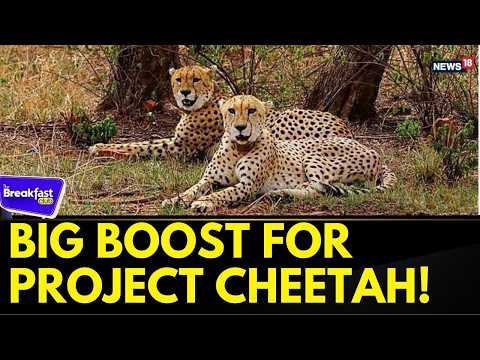
India declared the Asiatic cheetah extinct in 1952—the only large predator to vanish from the country since independence. Seventy years later, the government launched Project Cheetah, flying in 20 African cheetahs from Namibia and South Africa to Kuno National Park in a first-of-its-kind intercontinental carnivore translocation. Three and a half years in, the population has grown to 38, with 27 cubs born on Indian soil.

Key Indicators

38
Total cheetahs in India
Current population across Kuno National Park and Gandhi Sagar Sanctuary
27
Cubs born on Indian soil
Nine successful litters since the program began
20
Cheetahs died
Includes 8 translocated adults and 12 cubs since 2022
70
Years extinct before return
Cheetahs declared extinct in India in 1952

Interactive

Exploring all sides of a story is often best achieved with Play.

Mark Twain

Mark Twain

(1835-1910) · Gilded Age · wit

Fictional AI pastiche — not real quote.

"Man is the only creature who, having first killed a thing off entirely, then moves heaven and earth—and apparently the whole of Africa—to bring it back again, and calls this wisdom. The cheetah, for his part, has not been consulted on the matter, but I suspect he is making the best of his peculiar situation, which is the most any of us can do."

Ever wondered what historical figures would say about today's headlines?

Sign up to generate historical perspectives on this story.

Sign Up

Debate Arena

Two rounds, two personas, one winner. You set the crossfire.

People Involved

Bhupender Yadav
Bhupender Yadav
Union Minister for Environment, Forest and Climate Change (Leading Project Cheetah oversight)
Narendra Modi
Narendra Modi
Prime Minister of India (Project champion and public face of the initiative)
S. P. Yadav
S. P. Yadav
Advisor to Steering Committee for Project Cheetah (Leading day-to-day project management)

Organizations Involved

National Tiger Conservation Authority
Government Agency
Status: Primary implementing body for Project Cheetah

India's apex body for tiger conservation, expanded to oversee cheetah reintroduction under Project Cheetah.

Kuno National Park
Kuno National Park
Protected Area
Status: Primary cheetah habitat in India

A 748-square-kilometer national park in Madhya Pradesh selected as India's primary cheetah reintroduction site.

GA
Gandhi Sagar Wildlife Sanctuary
Protected Area
Status: Second cheetah habitat site established in 2025

A wildlife sanctuary on the Madhya Pradesh-Rajasthan border designated as India's second cheetah site.

Timeline

  1. Ninth Litter Born: Population Reaches 38

    Breeding

    South African cheetah Gamini gives birth to three cubs at Kuno, raising India's cheetah count to 38 on the third anniversary of South African arrivals.

  2. Gandhi Sagar Receives First Cheetahs

    Expansion

    Two male cheetahs relocated from Kuno to Gandhi Sagar Wildlife Sanctuary, establishing India's second cheetah site.

  3. Second Anniversary: Surviving Cheetahs Moved to Enclosures

    Management

    All 24 surviving cheetahs placed in protective enclosures. Supreme Court orders government to identify additional habitat sites.

  4. Mortality Count Reaches Ten

    Mortality

    By early 2024, ten cheetahs have died from various causes including infections, humidity stress, and collar injuries.

  5. Three Deaths in 45 Days

    Mortality

    Deaths of Uday and Daksha follow Sasha's, raising concerns about the program. Daksha died during a mating incident.

  6. First Cubs Born in India

    Breeding

    Cheetah Jwala gives birth to four cubs at Kuno—the first cheetahs born on Indian soil in over 70 years.

  7. First Adult Death: Sasha

    Mortality

    Female cheetah Sasha dies from a pre-existing kidney condition, the first mortality among translocated adults.

  8. South African Cheetahs Arrive

    Milestone

    Twelve additional cheetahs from South Africa join the Kuno population, bringing the total translocated adults to 20.

  9. First Cheetahs Arrive from Namibia

    Milestone

    Prime Minister Modi releases eight cheetahs into Kuno National Park, marking the world's first intercontinental large carnivore translocation.

  10. Supreme Court Reverses Ban

    Legal

    The court allows experimental cheetah imports, clearing the path for Project Cheetah after eight years.

  11. Supreme Court Halts Reintroduction Plans

    Legal

    India's Supreme Court blocks cheetah imports, ruling that Kuno should be reserved for Asiatic lions from Gujarat.

  12. Asiatic Cheetah Declared Extinct in India

    Historical

    After the last confirmed sighting in 1951, India officially declares the Asiatic cheetah extinct—the only large predator lost since independence.

Scenarios

1

Project Cheetah Establishes Viable Population Within Two Decades

Discussed by: National Tiger Conservation Authority, Environment Ministry officials

Continued breeding success at Kuno and Gandhi Sagar, combined with periodic imports from Africa (projected at 12 per year), allows the population to reach 60-70 animals within a decade. By 2045-2055, a self-sustaining metapopulation of several hundred cheetahs ranges across multiple sites in central India.

2

High Mortality Persists, Requiring Indefinite African Imports

Discussed by: Wildlife conservation critics, South African experts cited by Mongabay and TIME

Mortality rates remain elevated due to India's monsoon climate, disease pressures, and habitat limitations. The population survives but never becomes self-sustaining, requiring continuous imports from Africa to maintain numbers—effectively a managed zoo population across multiple sites.

3

Program Scaled Back After Continued Losses

Discussed by: Conservation scientists cited in Frontiers journal, Supreme Court observers

If mortality accelerates or African nations halt exports due to ethical concerns about outcomes, India may be forced to downscale Project Cheetah to a smaller captive breeding program rather than a wild reintroduction effort.

Historical Context

Gray Wolf Reintroduction to Yellowstone (1995)

January 1995

What Happened

The U.S. Fish and Wildlife Service released 14 gray wolves into Yellowstone National Park, 70 years after the species had been deliberately exterminated there. The wolves had been captured in Canada and transported to the park.

Outcome

Short Term

The initial wolves faced high mortality, but survivors bred successfully. The population grew to over 100 within five years.

Long Term

Wolves triggered a 'trophic cascade'—reducing elk overpopulation, allowing vegetation recovery, stabilizing riverbanks, and benefiting dozens of other species. Now considered one of conservation's greatest success stories.

Why It's Relevant Today

Like Project Cheetah, Yellowstone's wolf reintroduction faced early deaths and political controversy. The parallel suggests that initial mortality doesn't determine long-term success—ecological establishment takes decades.

California Condor Recovery Program (1987-present)

1987 to present

What Happened

With only 27 California condors surviving, conservationists captured every remaining bird for captive breeding—a controversial decision at the time. Lead poisoning from ammunition and habitat loss had driven the species to the brink.

Outcome

Short Term

Captive breeding succeeded, and releases began in 1992. Early mortality was high as captive-raised birds struggled with wild conditions.

Long Term

The population has grown to approximately 500 birds, with over 200 flying free. The program took 35 years to reach this point and still requires intensive management.

Why It's Relevant Today

The condor program demonstrates that large vertebrate recovery is measured in decades, not years. Project Cheetah's 30-40 year timeline aligns with this precedent. Both programs also show that 'wild' populations may require ongoing human management indefinitely.

Mughal Cheetah Hunting Tradition (1556-1947)

1556 to 1947

What Happened

Emperor Akbar reportedly kept 9,000 cheetahs for hunting blackbuck antelope—part of a centuries-long practice of capturing wild-born cheetahs for royal sport. Because cheetahs rarely breed in captivity, this required continuous harvesting from wild populations.

Outcome

Short Term

The practice provided spectacular hunting for Mughal and later Rajput courts, with cheetahs honored as prized hunting partners.

Long Term

Centuries of wild capture, combined with British-era trophy hunting and habitat loss, eliminated India's cheetah population entirely by 1952.

Why It's Relevant Today

Project Cheetah is attempting to reverse a human-caused extinction that unfolded over 400 years. The historical context explains why no native Asiatic cheetahs remain for reintroduction, requiring the use of African animals.

Sources

(10)