Anchor

Mexico approves world's first RNA-based fungicide
New CapabilitiesGreenLight Biosciences' Oifirax silences a powdery mildew gene; a $50M–100M plant is planned in Mexico City
2 days ago: World-first RNA fungicide approval gains international coverageNew here? Follow stories to track developments over time. Create a free account to get updates when stories you care about change.
Overview
Updated 1 hour agoMexican grape growers now have the world's first commercially approved RNA-based fungicide. Oifirax, developed by U.S. biotech GreenLight Biosciences, uses double-stranded RNA to silence the CYP51 gene the powdery mildew fungus needs to make ergosterol, a component of fungal cell membranes.
Mexico's health, agricultural, and environmental agencies cleared it August 12 after a nine-month review. GreenLight plans a $50 million to $100 million production plant in Mexico City, betting growers will switch from conventional chemical fungicides to molecules that degrade naturally in the environment.
Why it matters
RNA fungicides could replace conventional chemical sprays with molecules that break down naturally — a shift in how growers fight crop disease.
Questions about this story
Free account needed to ask — your question is kept and asked for you right after sign-up. Answers are public.
No questions yet — be the first to ask.
Key Indicators
9
Months of Mexican regulatory review for Oifirax
Three federal agencies cleared the product in a process GreenLight called record time.
$50M–100M
Planned investment in Mexico City production plant
Announced alongside the approval; expected to create about 500 specialized jobs.
99%
Fungal control rate with Oifirax
Two liters per hectare control more than 99% of mildew versus roughly 80% with conventional chemistry.
10+
Years of research and development
GreenLight tested the technology in Mexican and California vineyards before approval.
Related Media
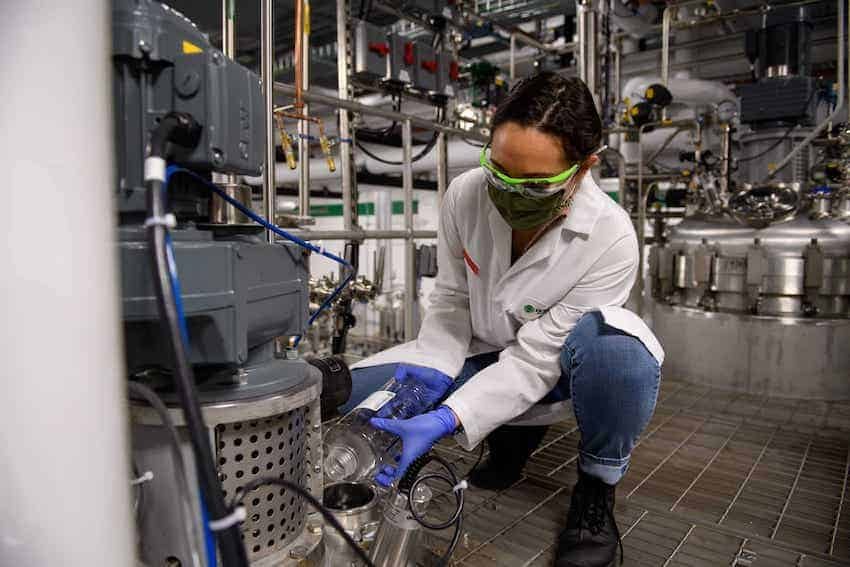
A non-petroleum biofungicide plant is coming to Mexico City

Our first grapes
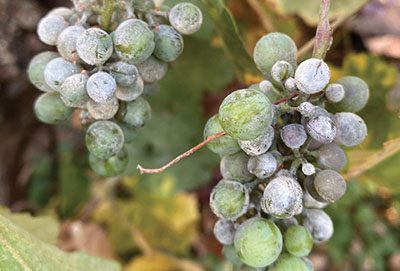
Grape Powdery Mildew | New Mexico State University - BE BOLD. Shape the Future.
Images from Openverse under Creative Commons licenses.
Voices
Curated perspectives — historical figures and your fellow readers.
Play
Exploring all sides of a story is often best achieved with Play.
Most of these play right now — no account needed. Sign up to save scores, keep a streak, and unlock Debate and Predict.
Log in
Sign Up
WHO SAID WHAT?
Can you match the quotes to the right people?
Rounds
People
Per question
Scoring
- points for each correct match.
- time bonus when you answer in under seconds.
- streak bonus once you hit correct in a row.
Score:
Round /
streak
— Who said this?
Tip: press 1– to answer.
Score:
Round /
streak
+
Base +
⚡ Speed +
🔥 Streak +
Streak reset · the answer was
No answer in time · it was
Next Up
Round
of
Score
points
Correct
Best Streak
Time Bonus
Avg. Time
points — sign up to put that on the leaderboard.
Now try on this story
Higher or Lower
A number from this story, against one from elsewhere in the news — guess which is bigger, then keep the chain going. 5 rounds, 3 strikes; a miss costs a strike and resets your streak.
Example
Anchor
EU tariff revenue
$52B
Big for this kind of number
Mystery
Pentagon AI contract
?
Round 1
Streak: 0
Mystery
?
Keyboard: ↓/L lower · ↑/H higher
0 pts
Best streak: 0 · Rounds: 0
0 points — sign up to put that on the leaderboard.
Now try on this story
Connections
Sixteen names from the news. Find the four hidden groups of four. Four mistakes max.
Loading today's puzzle…
0/4 groups
Mistakes
Sign up to keep a daily streak — a new puzzle lands every day.
Now try on this story
Exit debate?
Your progress in this debate will be lost.
How it works
- 1 Two AI personas square off on this story.
- 2 You predict who'll win each round — correct picks earn XP.
- 3 One crossfire question is yours to fire. Pick it carefully.
Couldn't generate a topic
Select Your Champions
Choose one persona for each side of the debate
DEBATE TOPIC
Choose personas with different perspectives for a more dynamic debate.
SIDE A (PRO)
Select debater for this side:
No debate personas available right now.
SIDE B (CON)
Select debater for this side:
No debate personas available right now.
VS
Get ready to make your prediction...
Round of
Claim
Evidence
Stakes
Crossfire Answer
Closing Statement
Claim
Evidence
Stakes
Crossfire Answer
Closing Statement
Your Crossfire Question
Generating arguments...
Who's Got This Round?
Make your prediction before the referee scores
The referee scores both sides on
Correct predictions earn +20 XP
· Press 1 or 2 to pick
Evidence
40%
Logic
30%
Detail
20%
Style
10%
Round Results
Your Pick
Not this time
(%)
Overall Score
/10
Your Pick
Not this time
(%)
Overall Score
/10
Set the Crossfire
Pick the question both personas must answer in the final round
Crafting crossfire questions...
Choosing a question earns +10 XP crossfire bonus
🏆
Total XP Earned
Cred Change
Predictions
Debate Oracle! You called every round!
Sharp Instincts! You know your debaters!
The Coin Flip Strategist! Perfectly balanced!
The Contrarian! Bold predictions!
Inverse Genius! Try betting the opposite next time!
XP Breakdown
Base completion
+20 XP
Rounds played ( rounds x 5 XP)
+ XP
Correct predictions ( correct x 20 XP)
+ XP
Crossfire bonus
+10 XP
Accuracy
%
Prediction History
Round
You picked:
✓
✗
Now try on this story
Keep debating to level up your credibility and unlock achievements
People Involved
Andrey Zarur
Founder and CEO, GreenLight Biosciences
Leading Oifirax commercialization
David Kershenobich Stalnikowitz
Mexico's Secretary of Health
Oversaw the federal health review of Oifirax
Mario Serrano
Agronomist, National Autonomous University of Mexico (UNAM)
Commenting on the approval's significance
Marcelo Ebrard
Mexico's Economy Minister
Promoting the plant investment
Organizations Involved
GreenLight Biosciences
Agricultural biotechnology company
First company to win commercial approval for an RNA fungicide
U.S. biotech that developed Oifirax, the world's first commercially approved RNA-based fungicide.
COFEPRIS (Federal Commission for Protection against Sanitary Risks)
Federal health regulator
One of three agencies that cleared Oifirax
Mexico's health regulator, responsible for sanitary risk protection, part of the joint approval of Oifirax.
NS
SENASICA (National Service for Agrifood Health, Safety and Quality)
Federal agricultural regulator
One of three agencies that cleared Oifirax
Mexico's agri-food health and safety regulator, part of the joint approval of Oifirax.
SEMARNAT (Secretariat of Environment and Natural Resources)
Federal environmental regulator
One of three agencies that cleared Oifirax
Mexico's environmental ministry, part of the joint approval of Oifirax.
Timeline
October 2025 September 2026
5 events
Latest: 2 days ago
Tap a bar to jump to that date
-
World-first RNA fungicide approval gains international coverage
Latest CoverageHuman Progress reported the milestone, confirming Mexico as the first market to approve an RNA-based fungicide for sale.
-
Mexico approves Oifirax, world's first RNA biofungicide
MilestoneCOFEPRIS, SENASICA, and SEMARNAT cleared the product for use against grape powdery mildew after a nine-month review.
-
GreenLight announces $50M–100M Mexico City production plant
BusinessThe plant would integrate research, mass production, and export, creating about 500 jobs.
-
Active ingredient named erysichrona
RegulatoryThe International Organization for Standardization assigned a common name to the double-stranded RNA active ingredient.
-
GreenLight files for RNA fungicide registration in US, EU, and Brazil
RegulatoryThe company submitted Oifirax for approval in three major markets ahead of Mexico's decision.
Historical Context
3 moments from history that rhyme with this story — and how they unfolded.
May 1994
Flavr Savr tomato (1994)
The Flavr Savr tomato became the first genetically engineered food approved by the U.S. Food and Drug Administration. It carried an antisense gene that slowed fruit softening, letting tomatoes ripen on the vine before shipping.
Then
Flavr Savr sold in U.S. supermarkets but failed commercially because of costs and bruising; its developer, Calgene, was later acquired by Monsanto.
Now
The approval opened the path for Roundup Ready soybeans and other engineered crops that now cover a large share of global farmland.
Why this matters now
Like Oifirax, Flavr Savr was the first commercial approval of a wholly new crop-technology class. Its history shows a regulatory green light and market success are different things.
March 2002
Bt cotton in India (2002)
India approved the first genetically modified Bacillus thuringiensis (Bt) cotton, which produces a protein toxic to bollworms. Heated debate over safety and seed pricing preceded rapid farmer adoption.
Then
Bt cotton spread to cover most of India's cotton acreage within a decade, reducing insecticide spraying.
Now
The adoption transformed Indian cotton farming but left lasting disputes over seed costs and farmer debt.
Why this matters now
Shows how a single country's approval of a pest-control technology can rapidly reshape farming practice, and how safety-versus-benefit debates accompany such decisions.
2010s
RNAi insect traits reach the field (2010s)
Crop science companies commercialized the first RNA interference traits, using double-stranded RNA against corn rootworm in insect-protected corn. It was the first field-scale deployment of RNAi in agriculture.
Then
The traits proved RNAi worked in the field against insects and opened the door for regulatory review of other RNA products.
Now
RNAi is now positioned for broader crop protection; Oifirax extends the same gene-silencing mechanism to a fungus.
Why this matters now
Oifirax applies a mechanism already commercialized for insect control to a new pathogen class, following the same regulatory and adoption path.
Sources
(8)Related Stories
Drug Farm advances first potential therapy for rare ROSAH syndrome
New Capabilities
Updated Jul 14
FDA approves first gene therapy for the cause of Glycogen Storage Disease Type Ia
New Capabilities
Updated Aug 20
FDA approves Lisraya, first targeted therapy for dermatomyositis
New Capabilities
Updated 6 days ago
CRISPR enters the photosynthesis frontier, targeting the oldest bottleneck in food production
New Capabilities
Updated May 31
Pfizer's oral drug restores skin pigment in vitiligo trials
New Capabilities
Updated Aug 5
FDA approves Mimrylo, first-of-its-kind drug for polycythemia vera
New Capabilities
Updated 2 days ago