
Pull to refresh
Logo
Hungary recovers millions in cash buried in forests during Orbán-era graft probe

Hungary recovers millions in cash buried in forests during Orbán-era graft probe

Rule Changes

Nearly $20m found in safes, warehouses and woodland in the case against former development minister Miklós Seszták

Overview

Updated 58 minutes ago

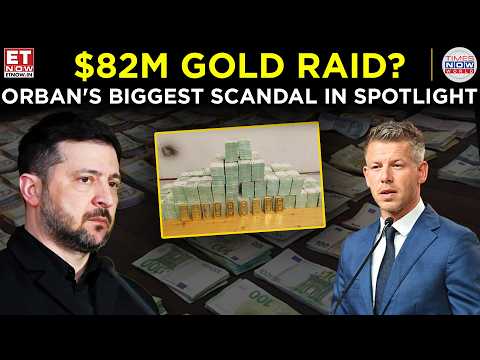
Hungarian investigators spent two days in November digging in forests and opening safes. They found 5.07 billion forints, €2.66 million and $1.26 million in cash, about $19.5 million, stashed in farm buildings, warehouses and a home. The money sits in a case against Miklós Seszták, development minister from 2014 to 2018.

The recovery is the first large physical seizure by a new agency built to investigate Orbán-era corruption. Prime Minister Péter Magyar, who ended Viktor Orbán's 16 years in power in April, called it the end of the "Fidesz-KDNP mafia." Whether the case produces convictions or becomes a political weapon is the open question.

Why it matters

If Hungary's new government can trace and seize Orbán-era money, it tests whether a corruption cleanup can be both independent and politically survivable.

Questions about this story

Free account needed to ask — your question is kept and asked for you right after sign-up. Answers are public.

No questions yet — be the first to ask.

Key Indicators

$19.5M
Cash recovered
Combined value of forints, euros and dollars found during the two-day search.
5.07B HUF
Forints seized
The largest single currency component of the haul.
$37.2M
Alleged bribes
Amount prosecutors suspect Seszták received in the Volánbusz bus and construction cases.
11B HUF
Allegedly acquired by Seszták and Szivek
Prosecutors' estimate of what the two men gained through overpriced deals.
70%
Want Orbán-era corruption investigated
Share of respondents in a Median poll for HVG who called accountability very important.

Voices

Curated perspectives — historical figures and your fellow readers.

Sign up to generate historical perspectives on this story.

People Involved

Organizations Involved

Timeline

April 2026 November 2026

7 events Latest: Yesterday
Tap a bar to jump to that date
  1. Tisza wins election, ends Orbán era

    Politics

    Péter Magyar's party wins a landslide, ending Viktor Orbán's 16 years in power.

Scenarios

1

Seszták Is Convicted and the Cash Is Forfeited

Likely Resolves by Q2 2028

Discussed by: Hungarian prosecutors and the NVVH, whose case rests on the Volánbusz procurements

Prosecutors build on the recovered cash and the alleged 11 billion forint scheme to secure a conviction. A court orders the seized money forfeited to the state treasury, turning the recovery into a template for other Orbán-era cases.

2

Case Widens to More Orbán-Era Officials

Possible Resolves by End of 2027

Discussed by: Hungarian and international press covering the NVVH's expanding docket

The Seszták case pulls in more former ministers, MNV officials or Fidesz-KDNP figures as investigators trace the bus and property money. Each new charge raises the political stakes for the new government.

3

Seszták Is Acquitted or Charges Are Dropped

Unlikely Resolves by End of 2028

Discussed by: Seszták's defense and Fidesz, which calls the investigations political revenge

The prosecution's case weakens, or a court finds the evidence insufficient. Seszták is cleared, and the government's flagship anti-corruption drive suffers its first major courtroom defeat.

4

Court Overturns the Cash Seizure

Possible Resolves by Q2 2027

Discussed by: Defense lawyers and legal commentators examining the seizure's evidentiary basis

Seszták's lawyers challenge the search and seizure, arguing the cash is not his. A court rules the seizure unlawful and orders some or all of the money returned, undercutting the recovery's symbolic value.

Historical Context

3 moments from history that rhyme with this story — and how they unfolded.

February 1992 - 1994

Italy's Mani Pulite (1992-1994)

Milan prosecutors investigating a minor bribery case uncovered a system of kickbacks across Italian politics and business. The probe, known as Clean Hands, reached senior figures in the Christian Democrats and Socialists and helped collapse the parties that had governed Italy since World War II.

Then

Dozens of politicians and executives were arrested; the First Republic's governing parties disintegrated.

Now

The investigation's aggressive tactics and political use became a cautionary tale about prosecutorial overreach, even as it reshaped Italian politics.

Why this matters now

Hungary's post-Orbán cleanup faces the same tension: a sweeping probe can reset a political system, but its methods and motives will be contested for years.

March 2014 - 2021

Brazil's Lava Jato (2014-2021)

Brazilian investigators uncovered a multibillion-dollar kickback scheme centered on state oil company Petrobras, leading to convictions of business executives and politicians, including former president Luiz Inácio Lula da Silva.

Then

The probe became a global model for anti-corruption enforcement and jailed powerful figures.

Now

Brazil's Supreme Court later annulled Lula's convictions on procedural and jurisdictional grounds, and the case's reputation was damaged by evidence of bias.

Why this matters now

It shows how a celebrated anti-corruption drive can be reversed in court, a risk Hungary's NVVH cases will also run.

2017-2018

South Korea's Presidential Prosecutions (2017-2018)

After mass protests, South Korea impeached and removed President Park Geun-hye, who was later convicted of corruption. Former president Lee Myung-bak was also convicted in a separate case.

Then

Both former leaders were jailed, signaling that high office did not guarantee immunity.

Now

Both were later pardoned, and the prosecutions remained politically divisive even as they established a precedent for accountability.

Why this matters now

It offers a model for how a democracy can prosecute former leaders without collapsing, and how those cases stay contested long after the verdict.

Sources

(5)